
Category: Metal Detecting
What have the Romans…
So having found my first silver hammered coin I didn’t think it could get much better. Even though it’s a coin that’s fairly common in the world of hammered’s, it was still a thrill to find my first. But my continued desire to find objects from further back in time has once again been rewarded, and this time it was Roman!
It was another cold and wet day but I was getting some pretty good signals. A lot of it turned out to be trash, but you keep going because you know at some point it will be something good. The field I’m detecting on has thrown up all sorts in the short time I have been searching it, and from a wide range of periods in time. I have always been confident that I would find something Roman at some point due to the close proximity of the known site of a Roman villa. Finally it’s happened, I’ve found my first Roman coin!
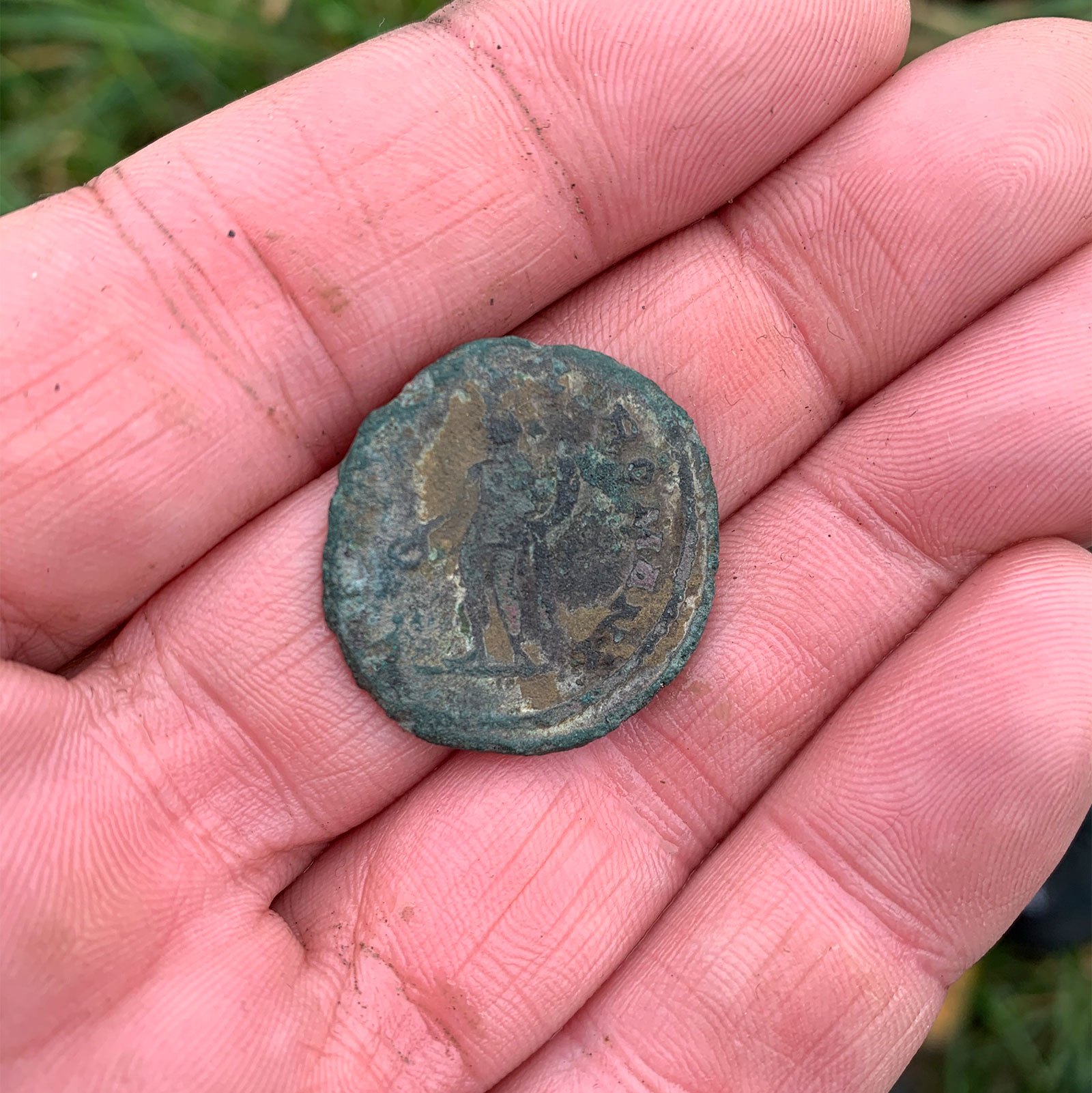
When I first pulled it out of the ground I thought it might be a toasted George III penny, it was about the same size and because of the mud it looked like it would be faceless. But after rubbing away some of the mud a figure slowly appeared, a figure that looked positively roman. I could also just about make out the word ROMANI, that was it, no question that I had my first roman coin!
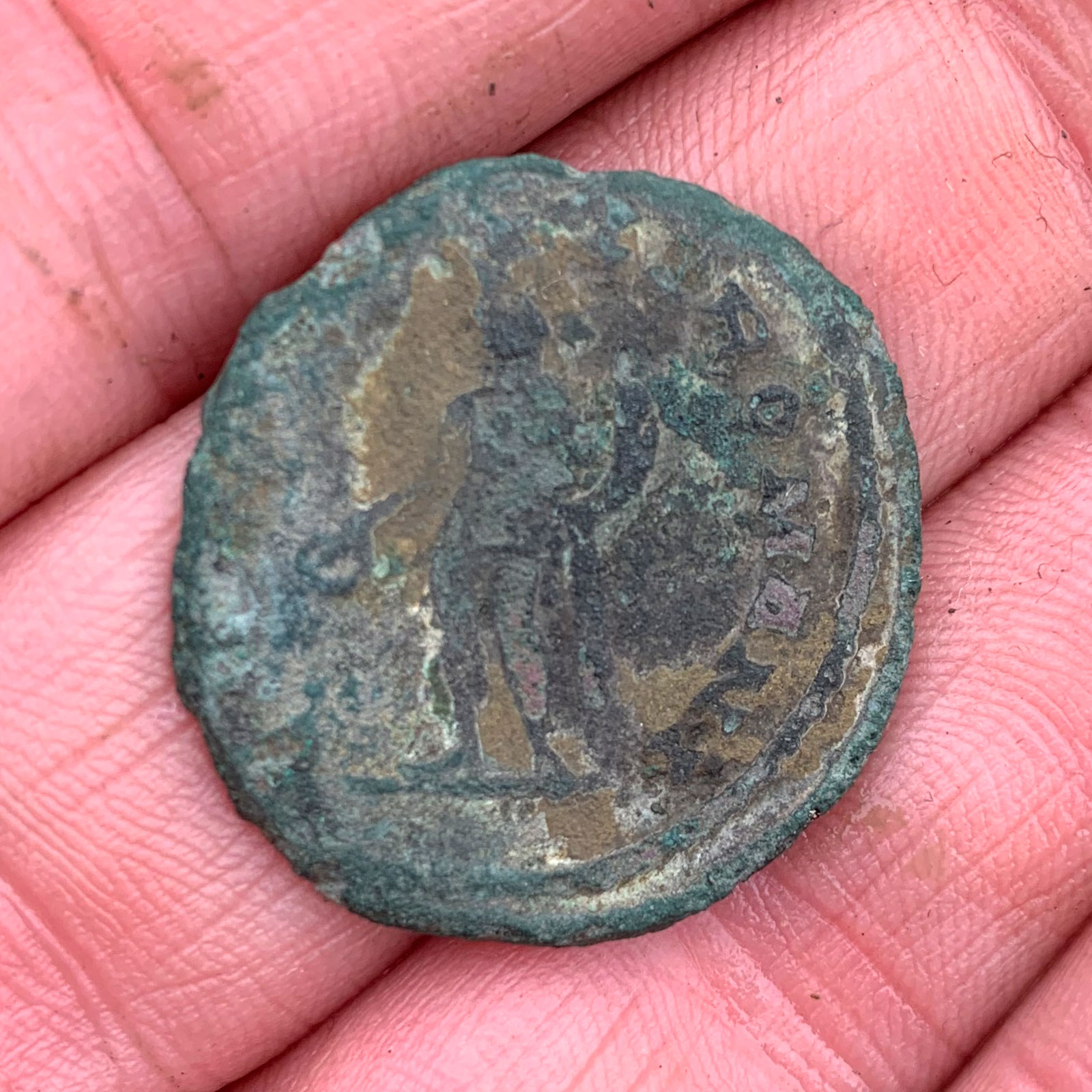
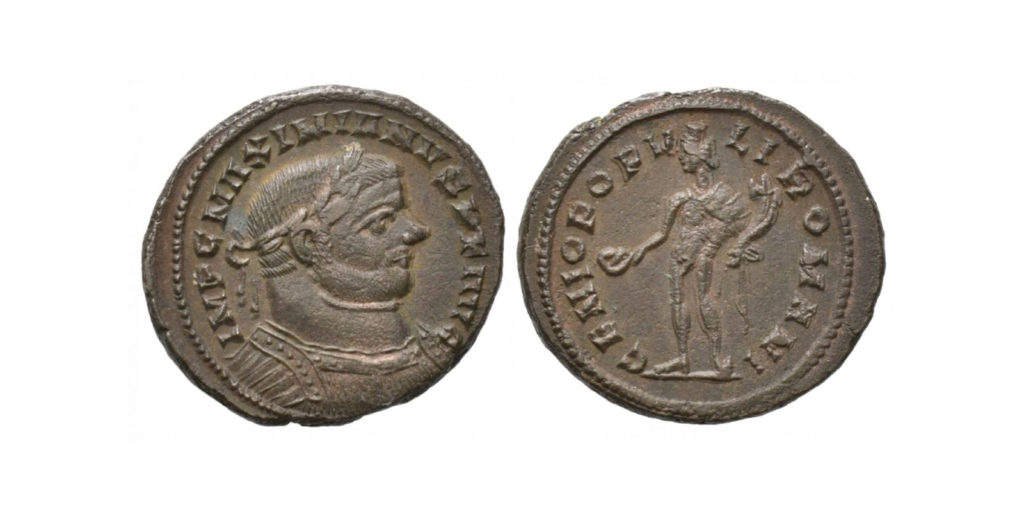
I immediately sent a photo on messenger to the curator of my local museum and he came back fairly quickly to confirm it was indeed my first Roman coin. I was over the moon! When I got back home I was straight on to google to try and research my new find. The first thing I found out is that the word ROMANI belongs to the phrase ‘GENIO POPULI ROMANI’. The use of the dative (Genio) shows the inscription to be dedicatory and means “To the guardian spirit of the people of Rome”. The standing figure represents this Genius, and holds a cornucopiae, from which all riches flow, and a patera, a small circular dish used when making sacrifices.
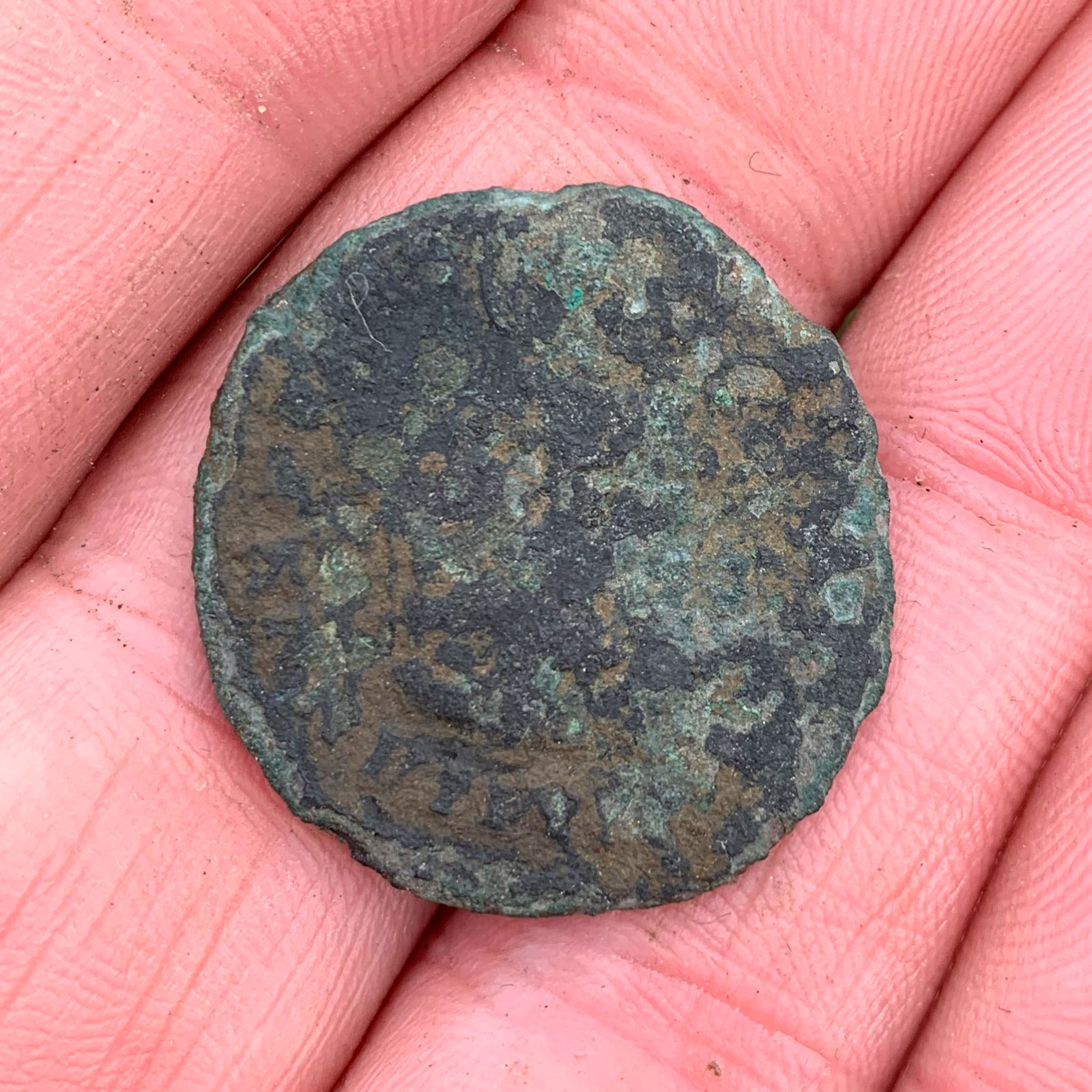
Because the bust on the other side has been so badly worn its difficult to know who to attribute it to, but it’s most probably from the Maximian period. He was Roman emperor from 286 to 305 which would mean this coin is over 1700 years old. That’s the bit that sends shivers down my spine, the fact that the last time a person held this coin was over 1700 years ago!
I don’t think I’m ever going to tire of this hobby. Even though a lot of the time I’m pulling up rusty nails, ring pulls, screws and bits of old farm machinery, the fact that every now and then you will find things like a Roman coin make it all worth while. I know this particular coin is in bad condition, and in monetary terms isn’t worth very much. But again, it’s about the history this coin holds, that connection to someone in the past, 1700 years in the past!
The most rewarding part is that I found this little piece of history. I went out in search of it and I found it, which leaves me with one thought, what else is left out there for me to find? What ever it is, keep following my blog and we will find out!
Update…
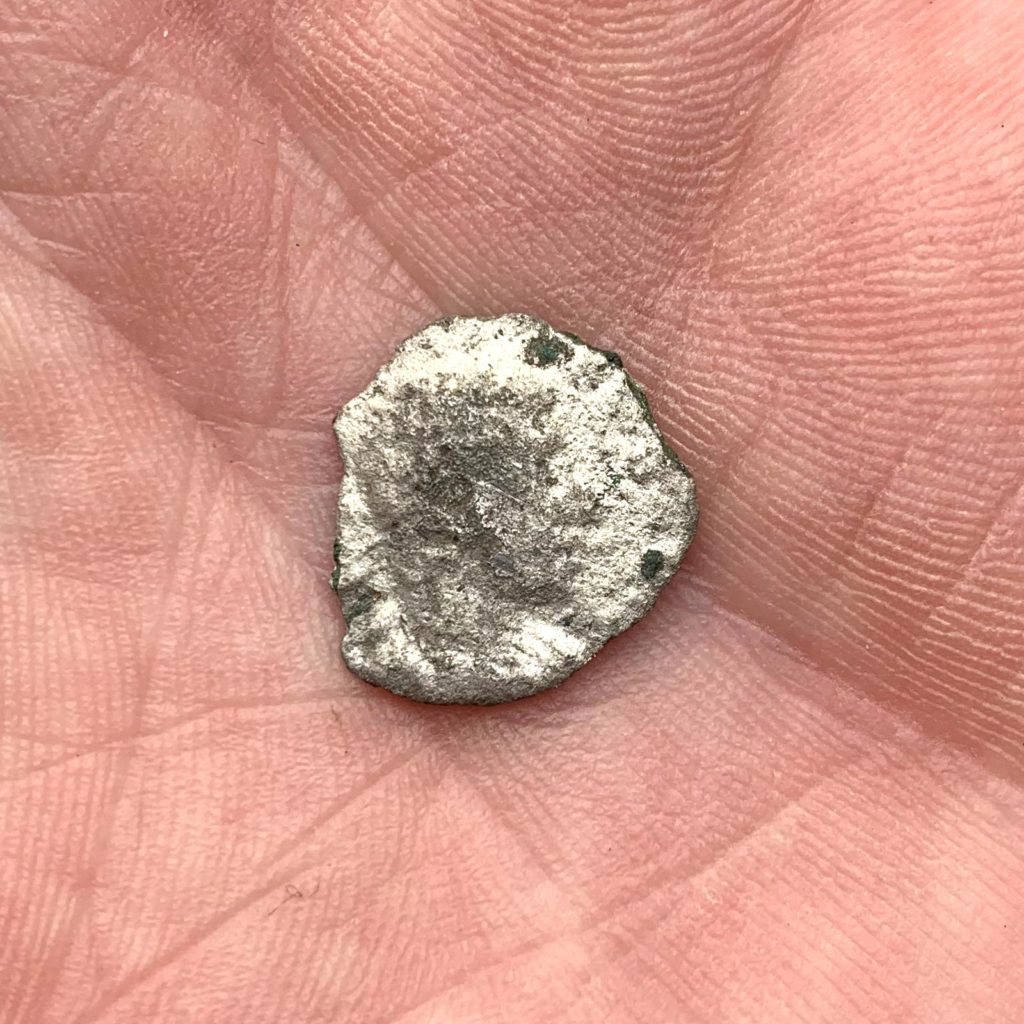
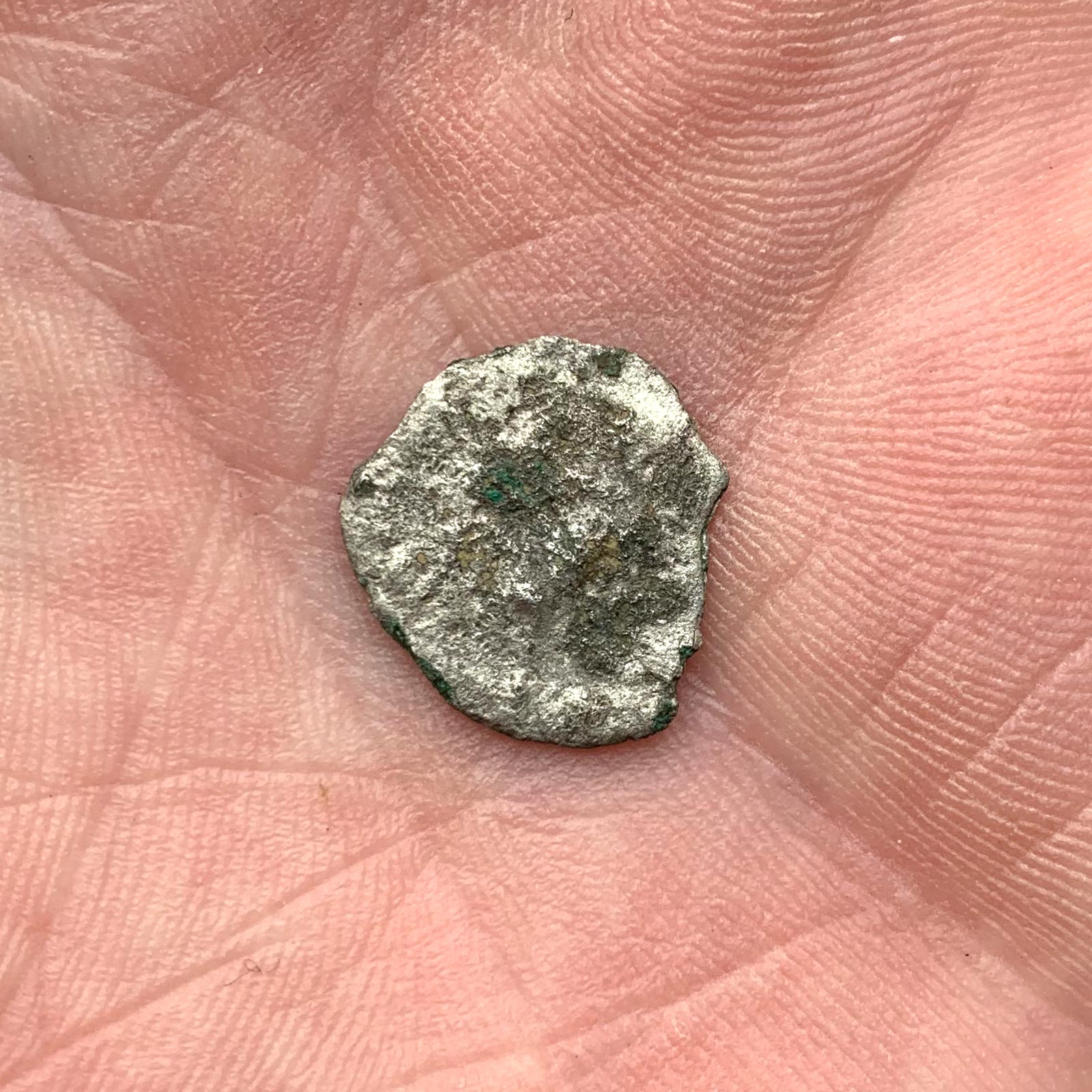
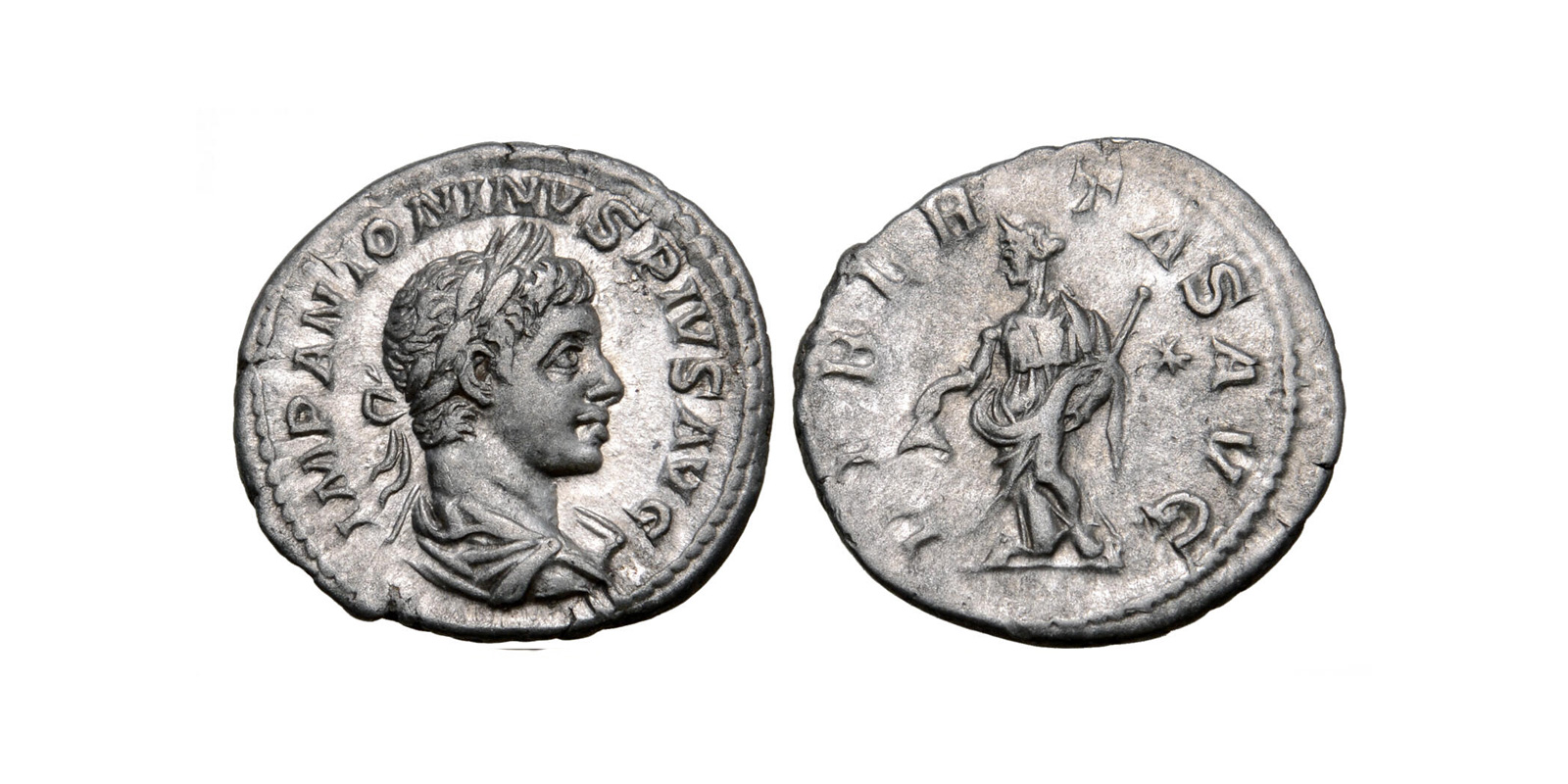
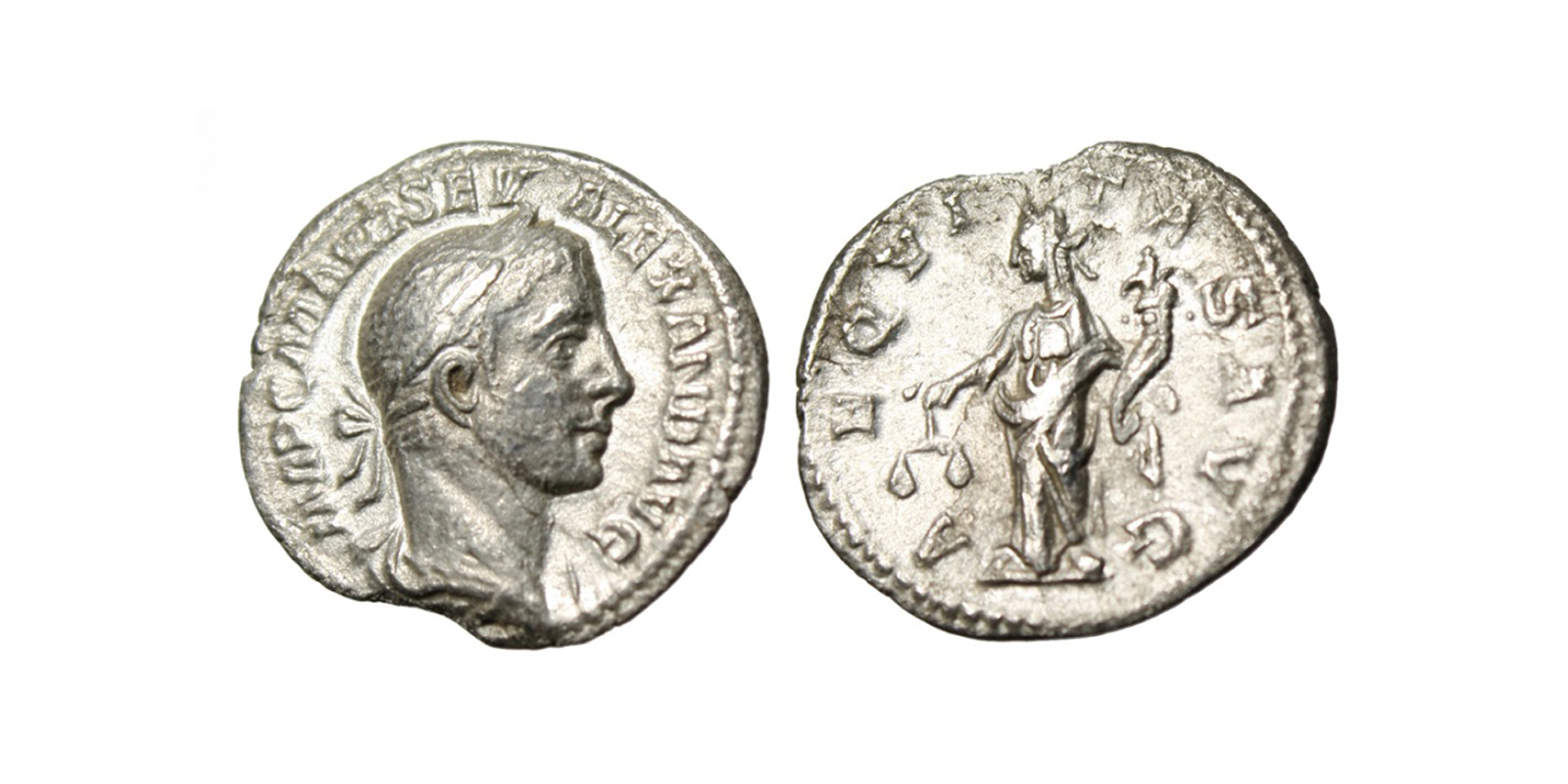
A quick update to this blog as I have just found my second Roman coin! This one was found in the second field that I have permission on which is just a few hundred yards from the first. This time it’s silver and like the first Roman coin is pretty beaten up! You can just about see the bust and surprisingly that seems to be enough to identify it. The coin is now registered on the PAS database as a denarius, possibly of Elagabalus, the bust does look to have similarities!
Doing a little research I have found out that Elagabalus officially known as Antoninus, was Roman emperor from 218 to 222, while he was still a teenager. Yet again the finds keep going back further in time and hopefully at some point I will find a roman coin in much better condition!
Another update…
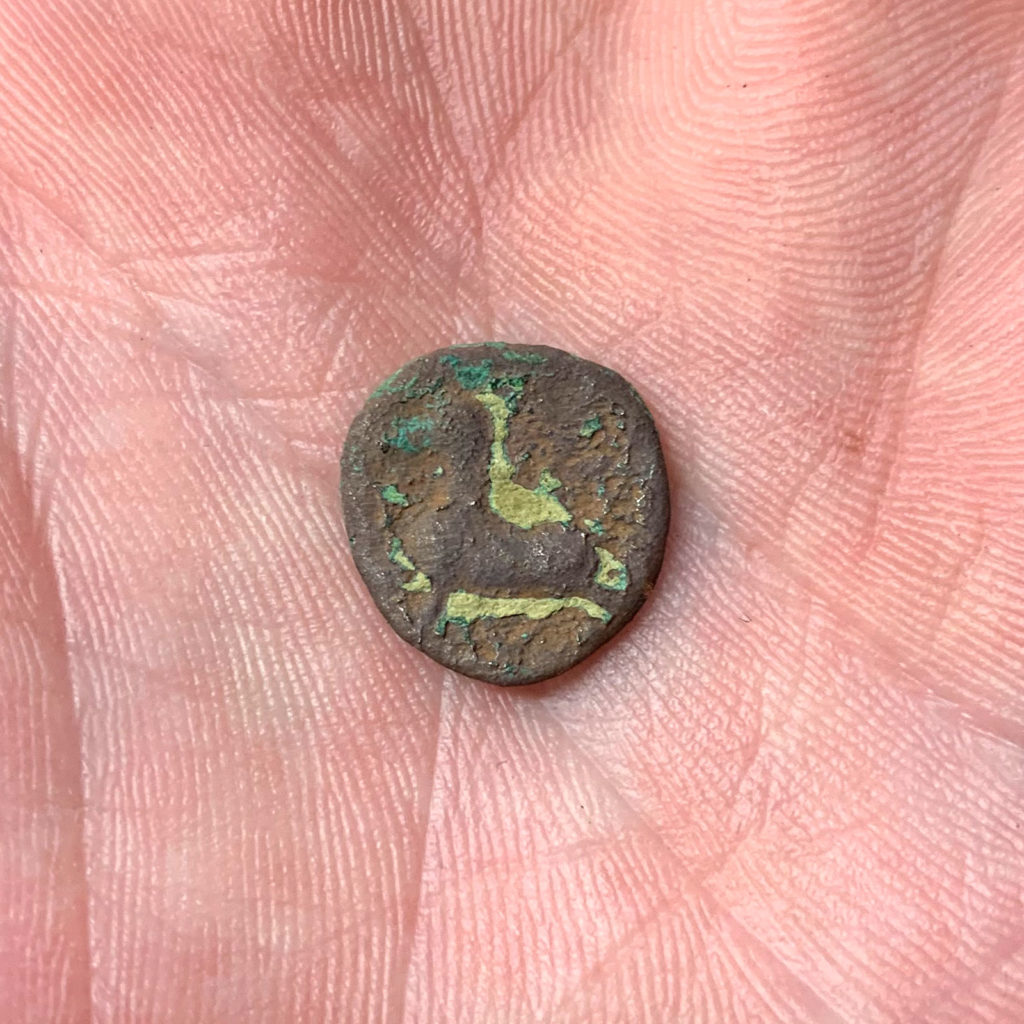
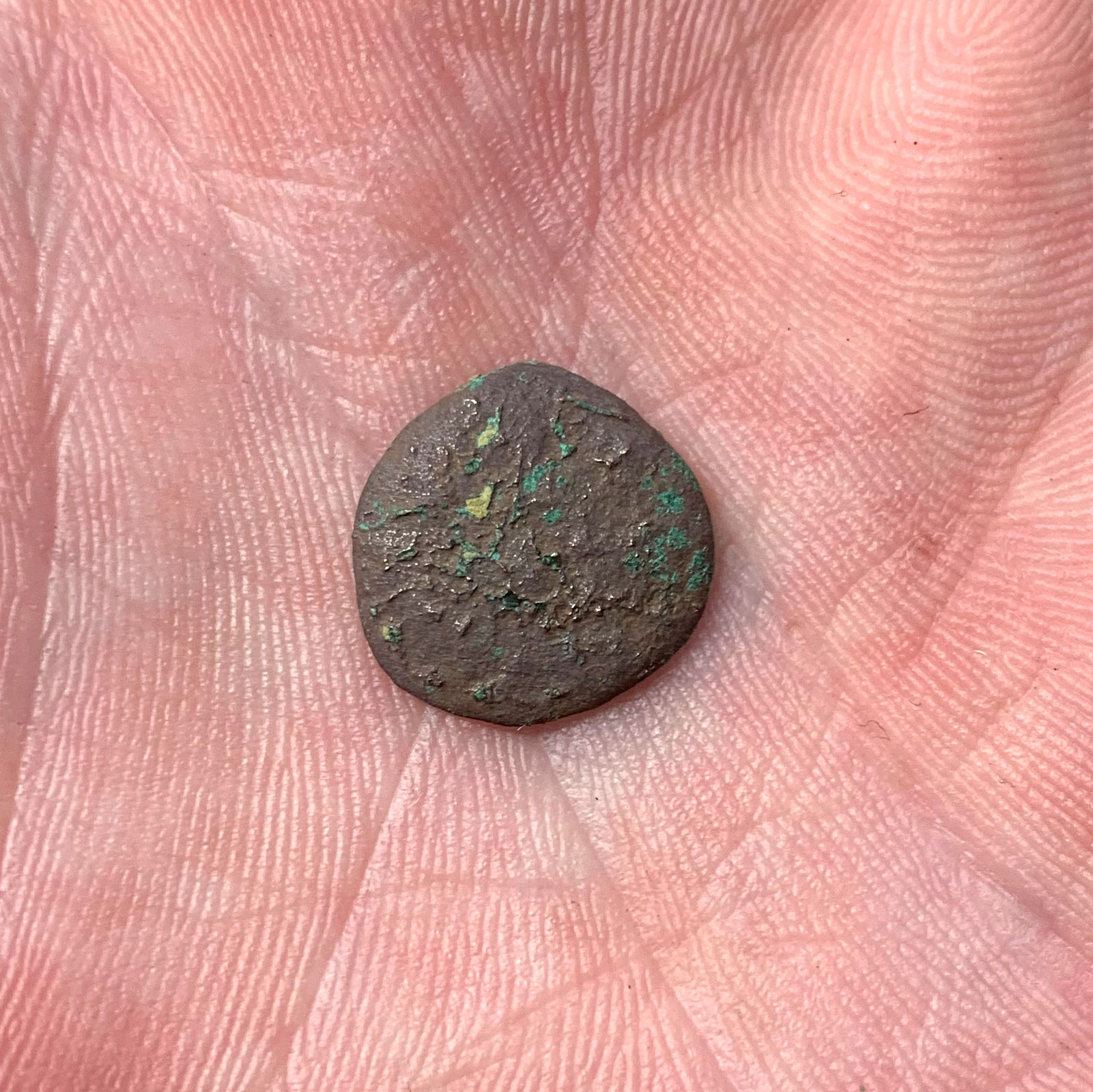
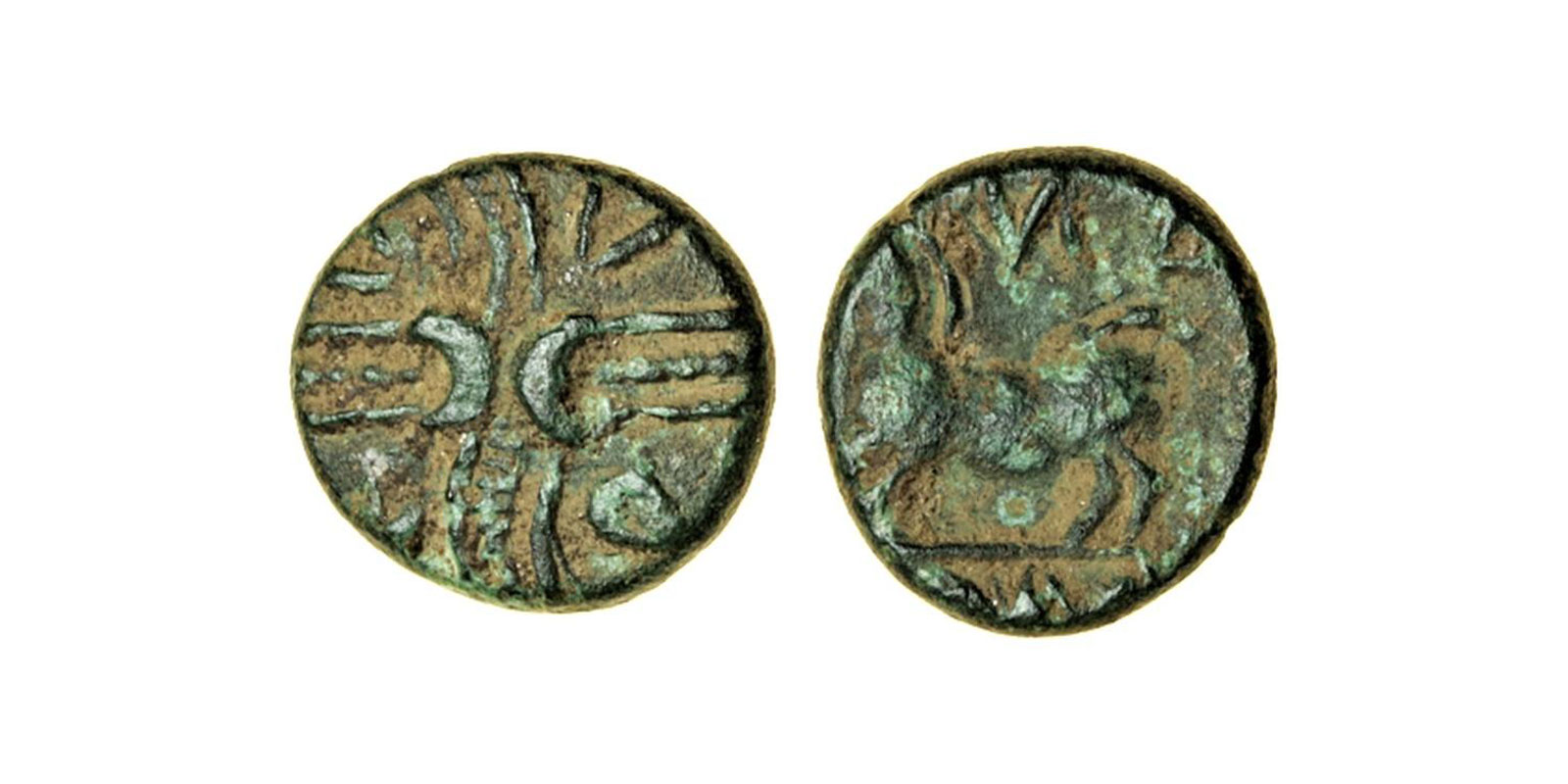
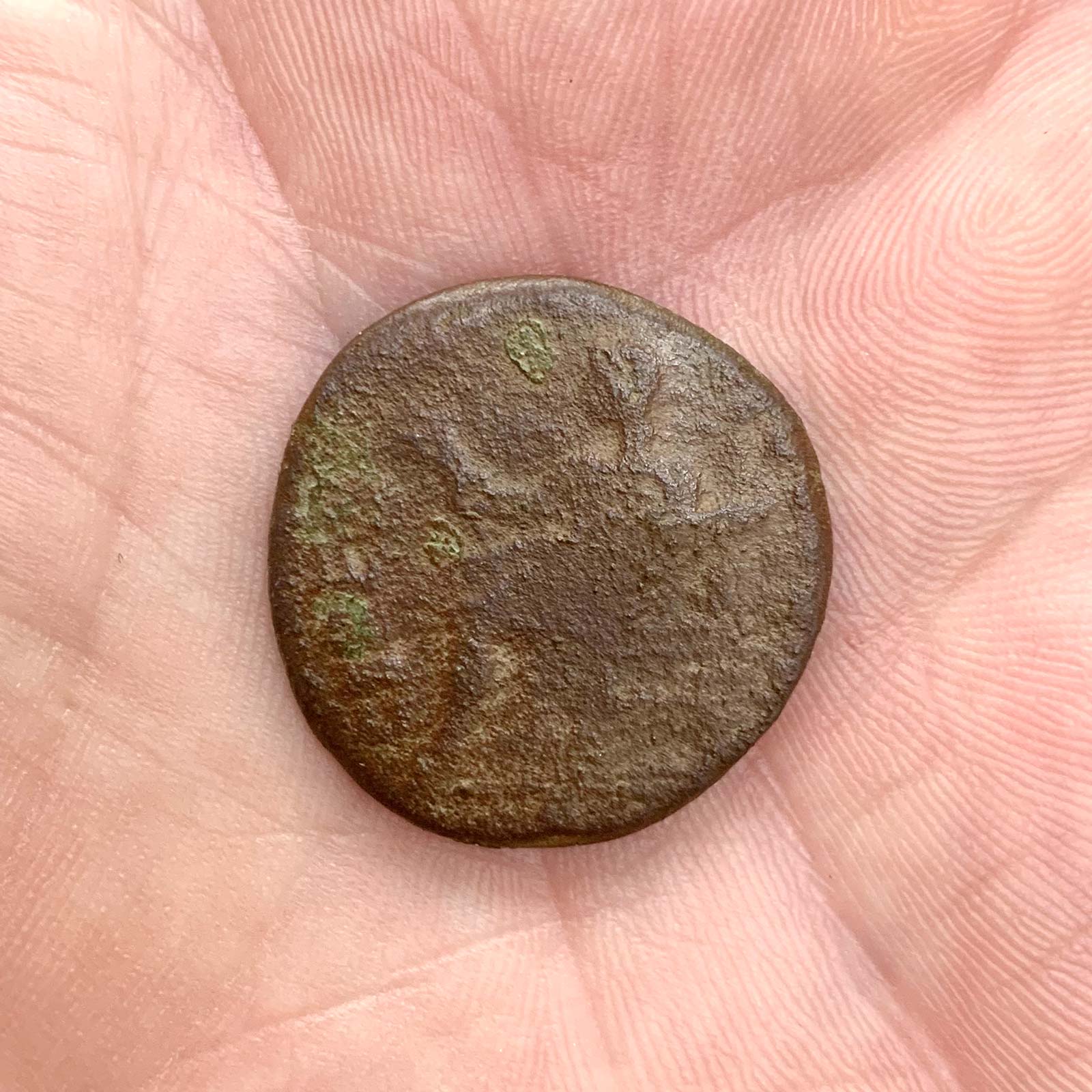
So it would seem I’m not done with my journey back in time. This weekend the fields are taking me back to the iron age as I have just discovered my first celtic coin. Again like both of the roman coins I have found its pretty beaten up, but on one side you can just about make out the outline of a horse. This coin can most likely be attributed to King Tasciovanus, who ruled from 20BC to 9AD before the Roman occupation of Britain. King Tasciovanus ruled out of Verlamion (the site of modern-day St Albans) which is not that far from where I am detecting in Hitchin.
I have been told this coin is either a copper core or bronze unit but I’m not sure which. What I am sure of is that being over 2000 years old it is the oldest coin I have found to date. I keep saying it but the coins really do keep going back further in time. I wonder just how much more history is in this little patch of land that I am learning my detecting skills on? What ever history is still there to be discovered you can rest assured I will be doing my best to find it, all I can say is watch this space!
Yet another update…
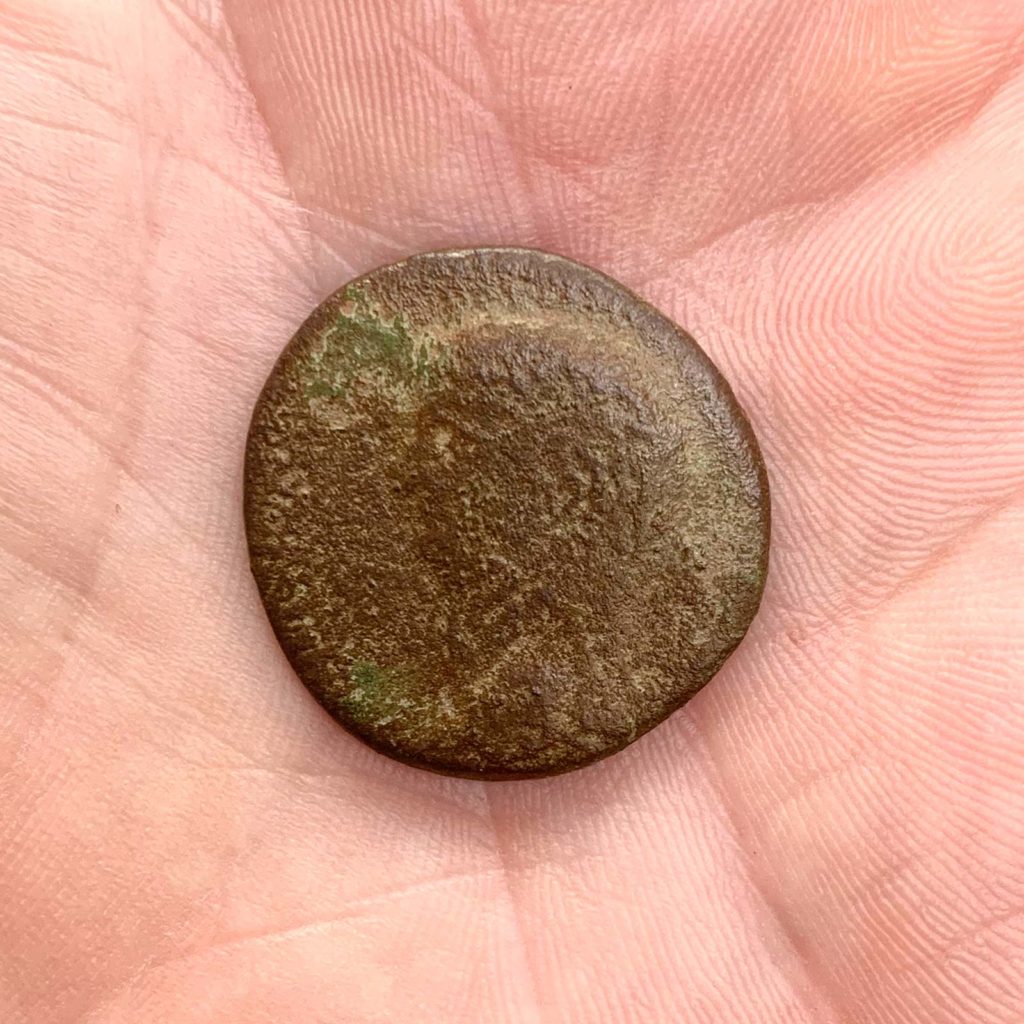
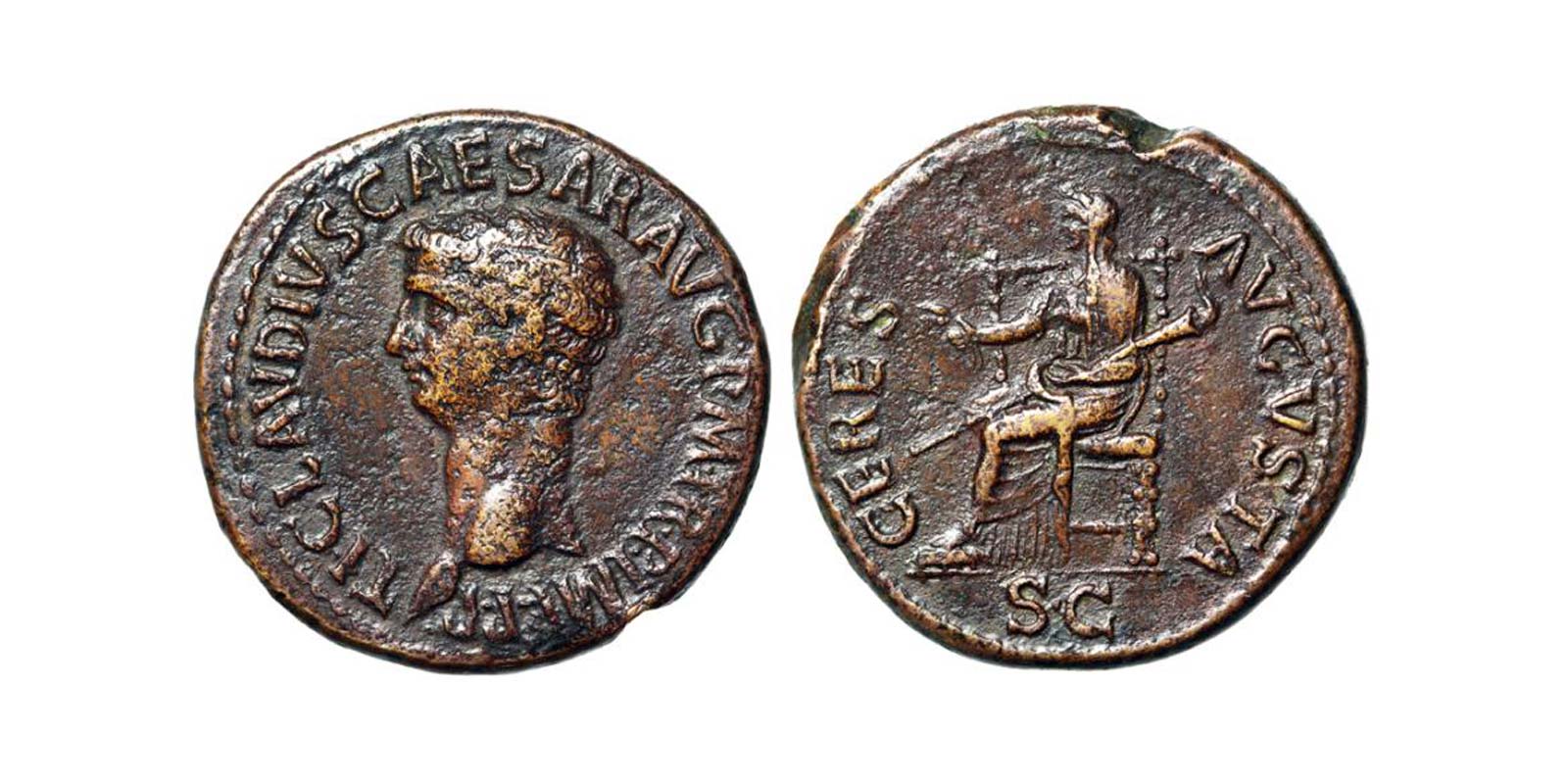
This time the Romans are back in town. Like all finds of this type I have sent it through to my local Finds Liason Officer and he came back to me with this reply “It looks like a copper-alloy Dupondius of Claudius I, contemporary copy, dating to the period c.AD 41-54, probably with Ceres on the reverse”.
So this would place it right at the beginning of the Roman occupation of Britain which began in AD 43 during the reign of Claudius. I wonder who lost this coin, maybe a Roman soldier of some description? Obviously I will never know, but it’s great to imagine these things and that’s what I love about this hobby. Imagining the people and times that these objects came from and belonged too, I wonder how much more history this field will give up?
First silver hammy…
Since the latest lockdown and what seems to be a never ending list of restrictions, it’s been really tough not being able to go out detecting. For the most part, I find detecting is a pastime that enriches my soul and I’m sure I’m not alone in thinking it’s a great tonic for mental health too, something a lot of people are struggling with during this pandemic.
Thankfully the government has changed it’s guidance on detecting so for those of us that have local permissions it means we are able to get back out. I will often take the dog with me giving both her and myself some much needed exercise. It’s great to have her company although it is frustrating at times when she decides to dig up the holes I’ve just filled!
In my last detecting blog I wrote about the coins that I have been finding, in particular a trade token that dated back to 1664. I also expressed my confidence in hopefully finding coins that will predate that trade token, but I really didn’t expect it to happen on my first time back out!
It was a very cold, wet day so I didn’t stay out for that long, just over an hour. I didn’t have any finds to speak of either, there is usually a button or two, the odd modern coin and such like but this time nothing. It was only after deciding to call it a day and walking back to the entrance of the field that I happened to walk over the right spot.
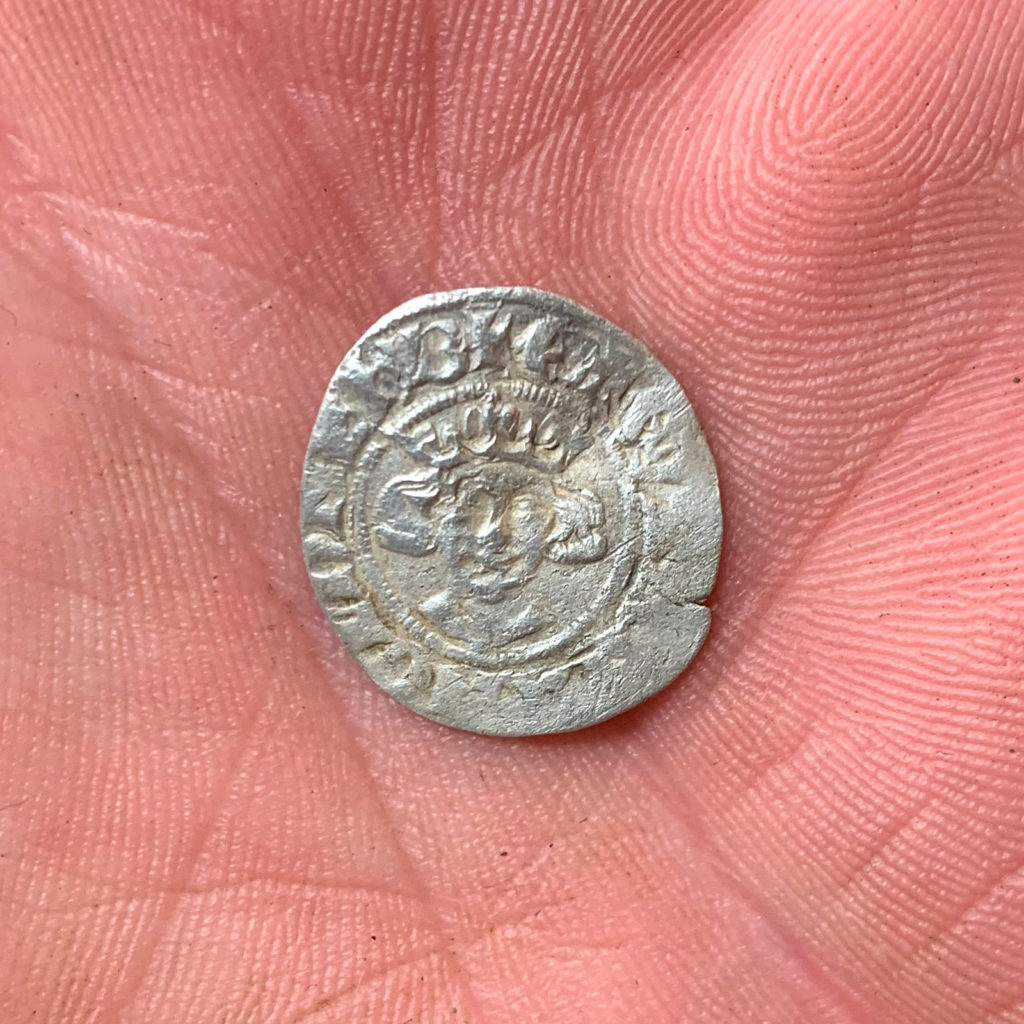
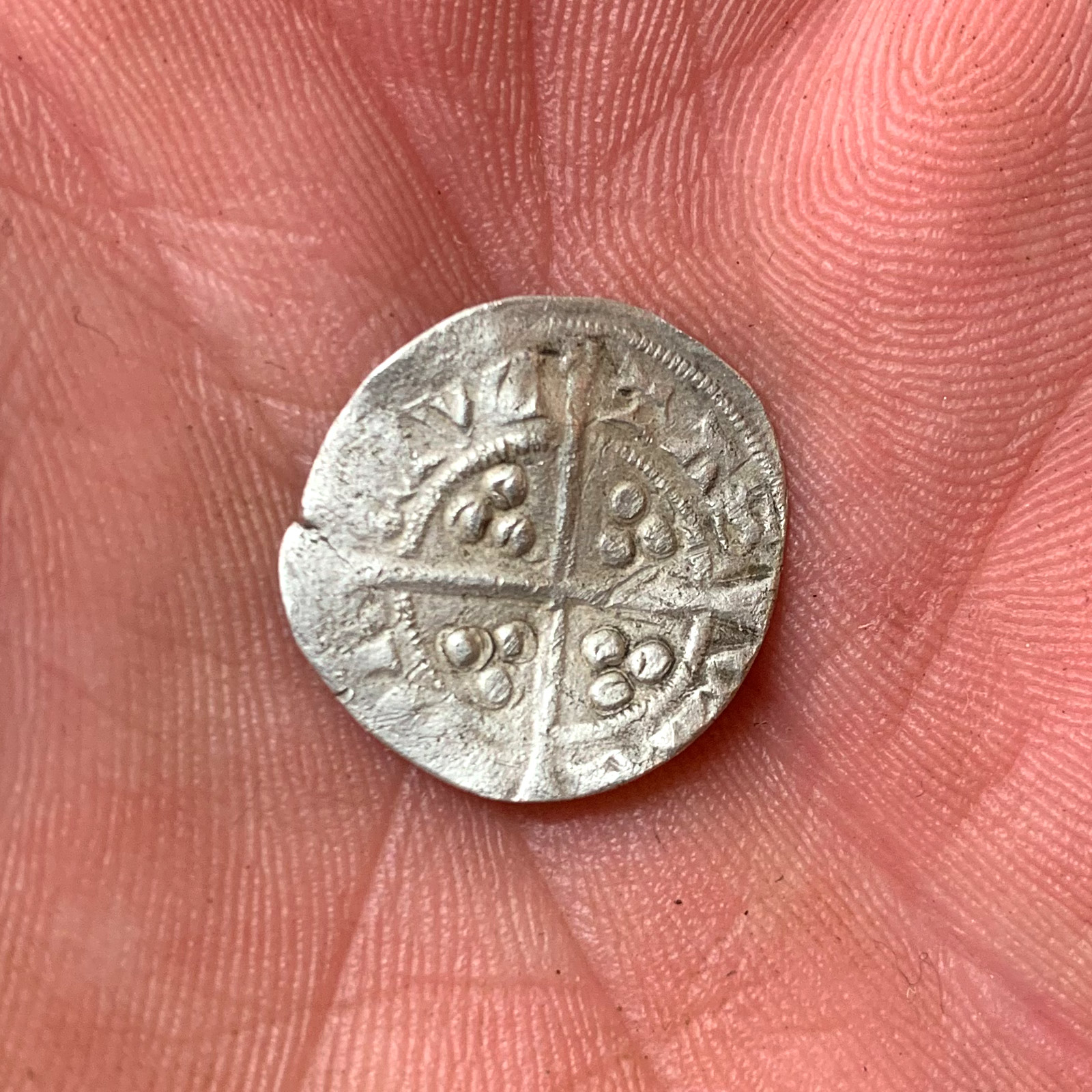
This was the day I found my first silver hammered coin! I’ve been longing to find a hammered coin since I started detecting again last year and because of that it feels like a real achievement. There was no silver dance upon finding the coin though, that felt a little too excessive. Instead there was an air grab with a fairly elated YES, that response felt a little more Andy Stone.
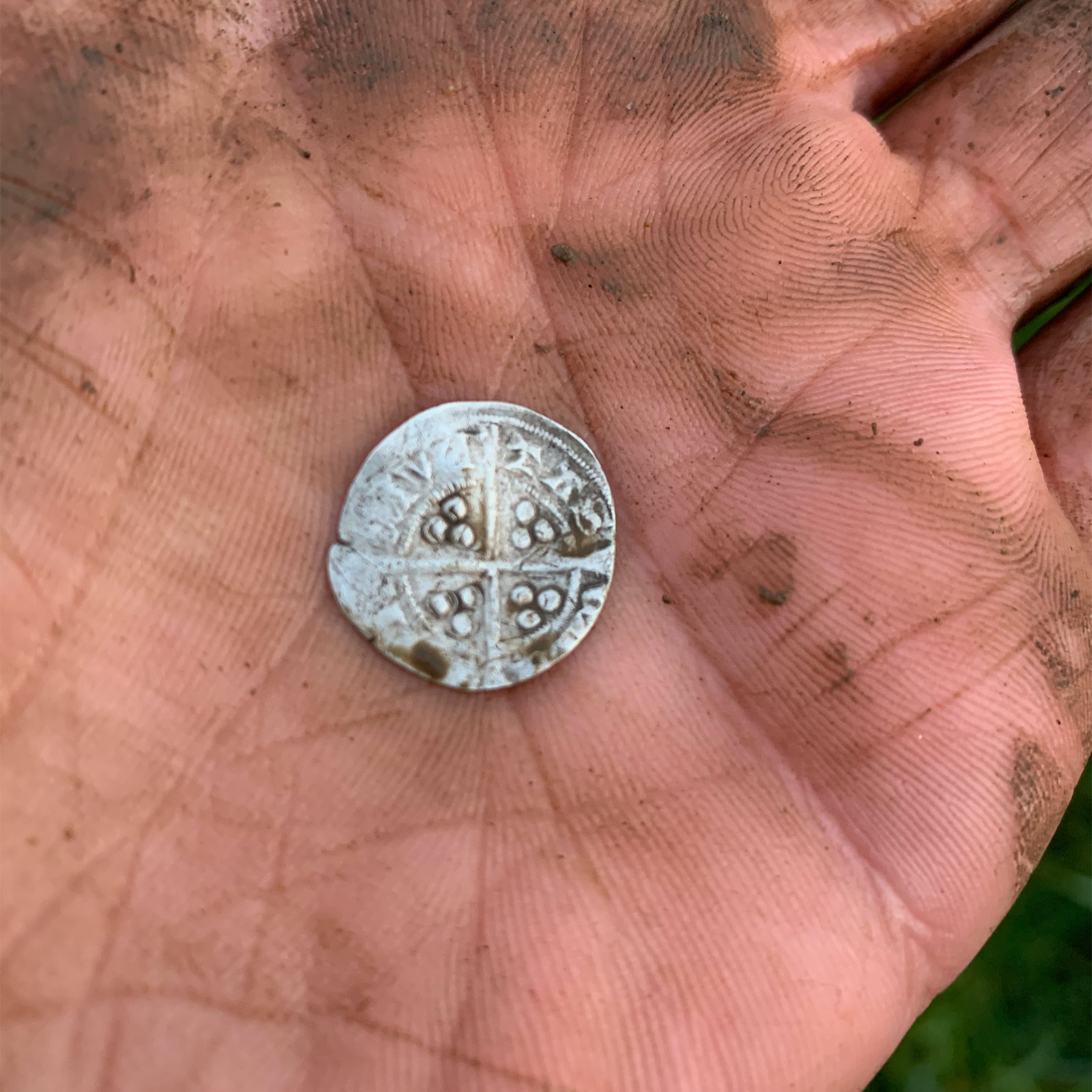
The coin I found is an Edward I Silver Penny, although in truth it could be one of 3 Edwards as they followed in succession and all used Edward I’s portrait on their coinage. The inscription CIVI TAS LON DON can just be seen which means its London minted but it’s difficult to see who the Moneyer is and because of that it’s hard to attribute it to a specific Edward. This means the the coin is dated between 1272 – 1377, the combined reign of the 3 Edwards.
Again there is the thought of connecting with history, something detecting has a unique way of bringing. The possibility that the last person to touch this coin before me was nearly 700 years ago. Then the questions, who did this coin belong to, what were the circumstances that led them to loose it, and was it missed? These questions I know will never be answered but that fact it makes me think and fills my head with images of what the past might have been like is an added bonus that makes detecting the wonderful hobby it is.
All that aside, it’s my first hammered coin which for me feels like a landmark find. I’m sure there will be more to come as I continue my detecting journey, but for now i’m basking in the joyous feeling that finding my first silver hammered has brought.
Half a denari…
Unfortunately no denaris, but I couldn’t resist a little python nod! This blog is about the coins I have found on my metal detecting journey so far. I haven’t found anything that would be considered valuable, but I have managed to find out the history behind some of them which is treasure in itself.
As most detectorists know, it’s a great feeling when you find something good, but for me it’s even better when you are able to research the history, and sometimes even find out who made and held what you found.
Towards the end of last year I found what I thought was a halfpenny from the 1970’s, it was about the same size but too muddy to be sure. I put it in my finds bag and carried on detecting. When I got home I cleaned up all my finds but left the halfpenny until last thinking it wasn’t anything special.
Giving it a light rub between my fingers under a running tap it soon became clear it wasn’t a halfpenny. The markings were quite faint and unclear but I had a feeling there was some age to it. When I have trouble identifying finds my first port of call is a metal detecting social media group that I’m a member of. Nine times out of ten someone will know something and sure enough people started suggesting that it might be a trade token, the unraveling of history began.
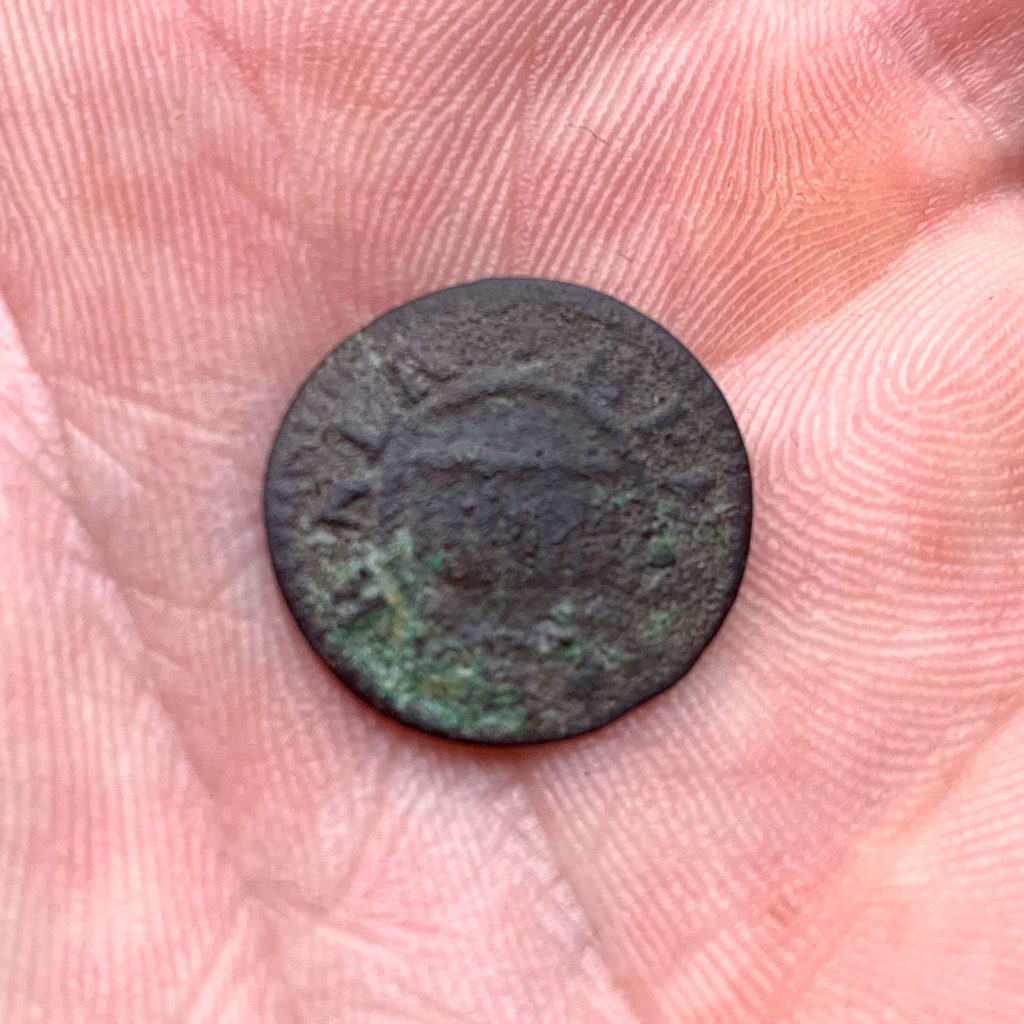
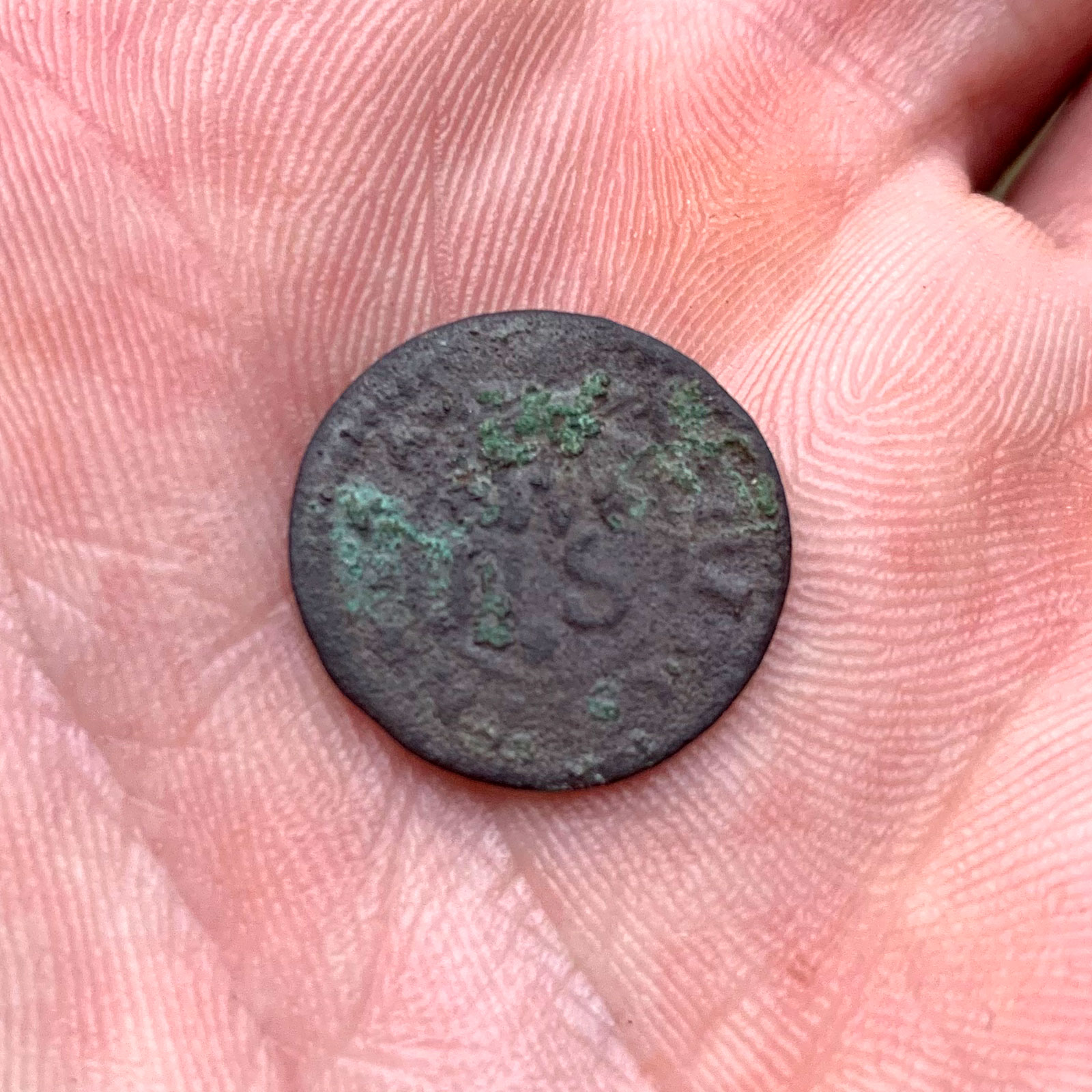
For those who don’t know about trade tokens which included me before this find, they were used after the abolition of the monarchy in 1649. Merchants and municipalities issued farthing and halfpenny tokens as well as some penny tokens which were usually depicted with a symbol of their trade. With no law against the use of tokens they remained in circulation until 1672 after which they were suppressed and replaced by royal copper halfpennies and farthings issued by Charles II.
So, if it was a trade token, that meant it would have been made between 1649 and 1672 so I was right in thinking it had some age to it, but at this point I still couldn’t make out the markings. This is when someone on the social media group suggested rubbing a bit of wax on it as this can sometimes better reveal the detail. To my amazement it worked, now I could just about make out a name… Henry Warner.
I quickly started a google search on the name Henry Warner and on the first page of results there it was. The token I had found was listed and photographed in the British Museums online archive, I was over the moon! This little token that I almost discarded was made and held by Henry Warner, a candle maker from my local area, dated 1664.
This is what I love about my hobby, the connection it gives me to people from the past. I would never have known about the candle maker Henry Warner if it wasn’t for searching the field with my detector and unearthing his little lost trade token, I think that’s just brilliant!
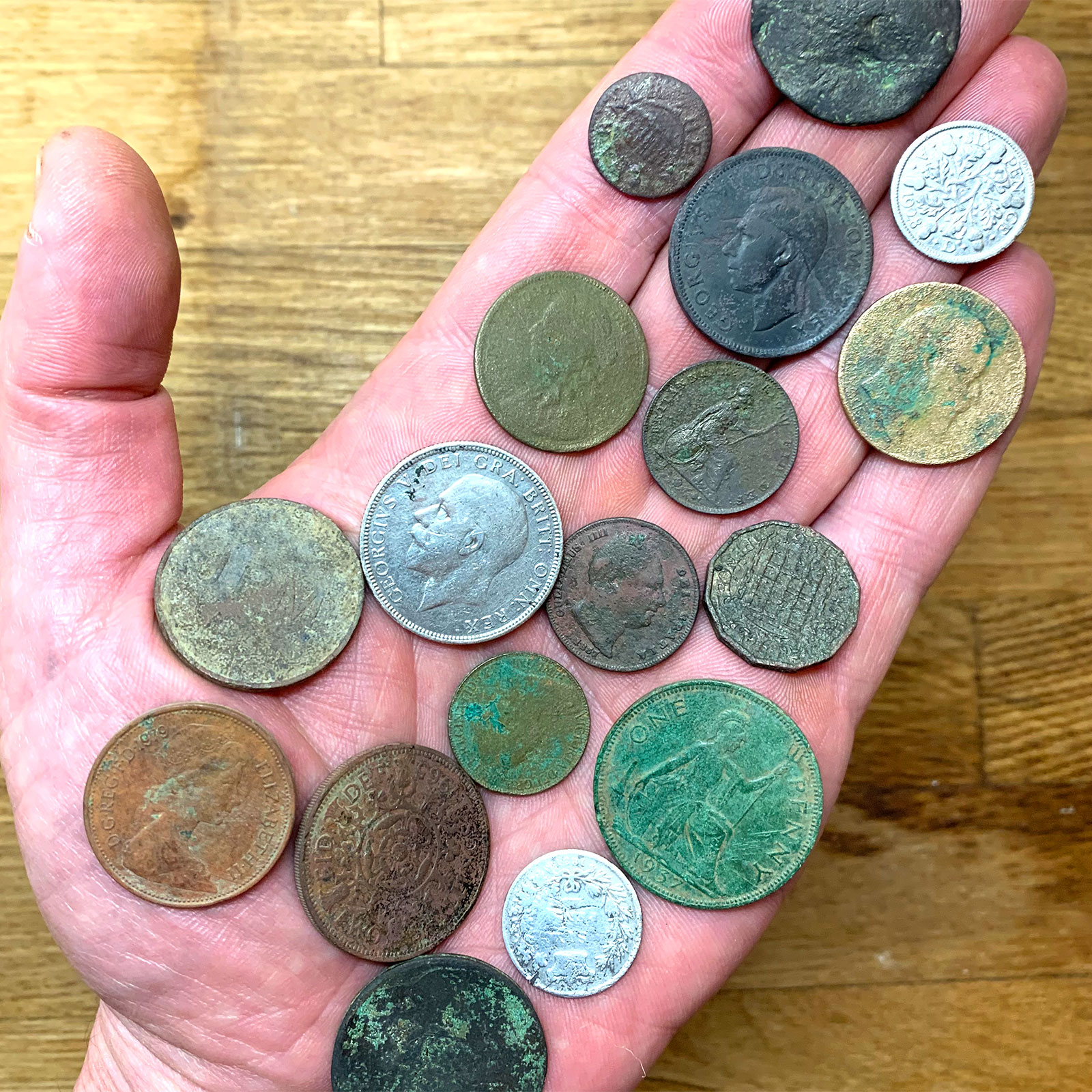
I have found various other coins on the one permission I have which are shown in the images below. Nothing dating back further than the trade token as yet but I’m confident there will be. Not far from where I’m detecting there is the site of a Roman villa and I have also found part of an early Anglo Saxon cruciform brooch. The fact that there is a history of activity here, through my finds and the proximity of the Roman villa, gives me hope that there is more to come!
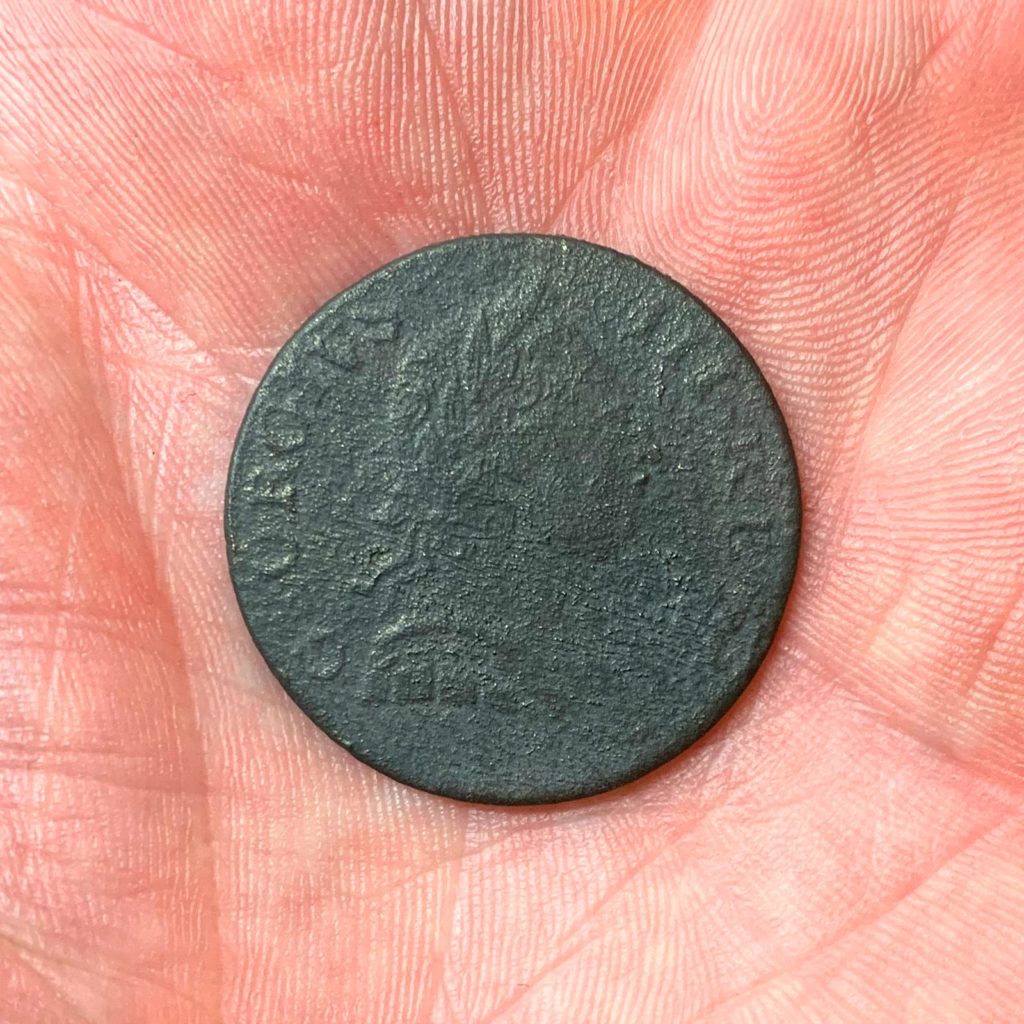
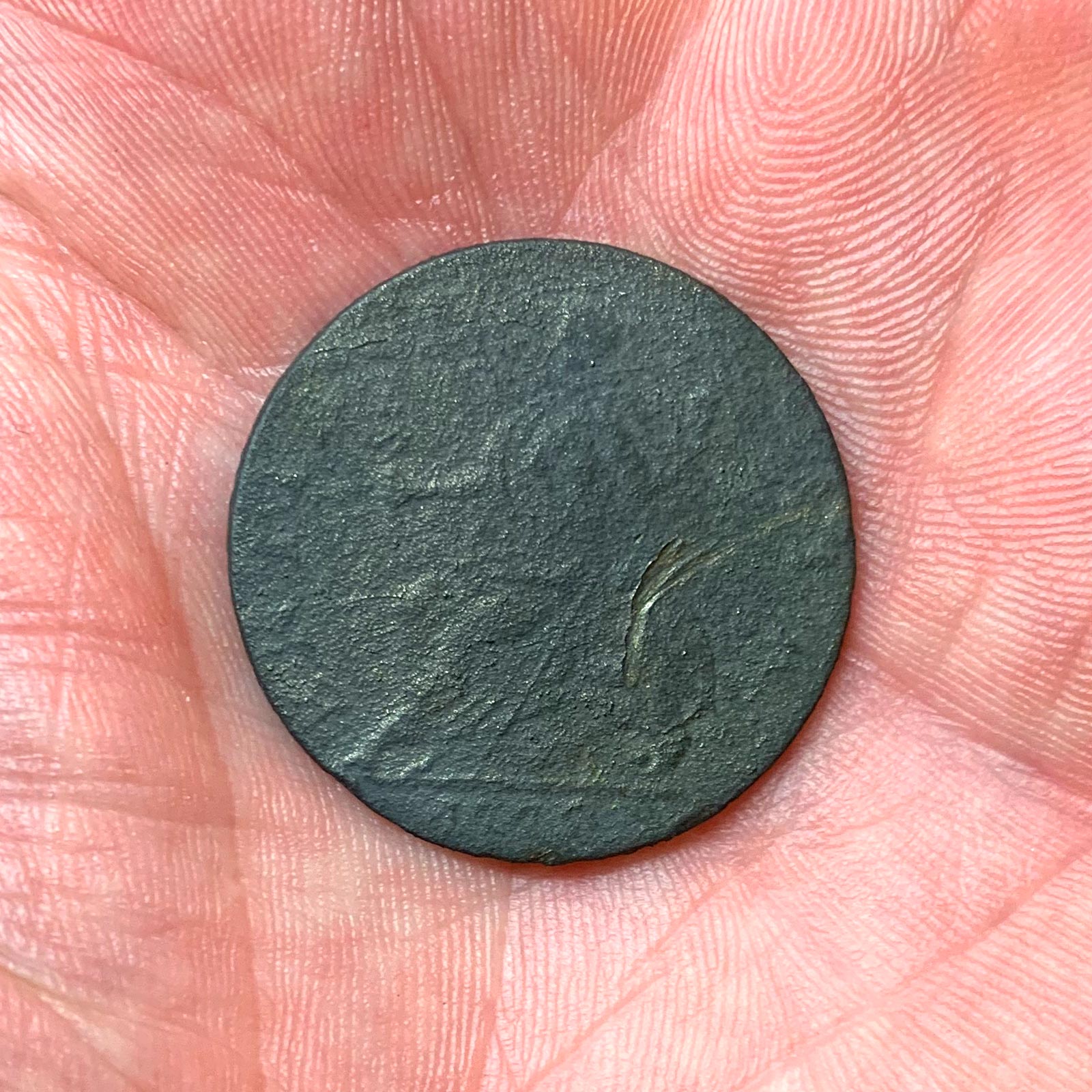
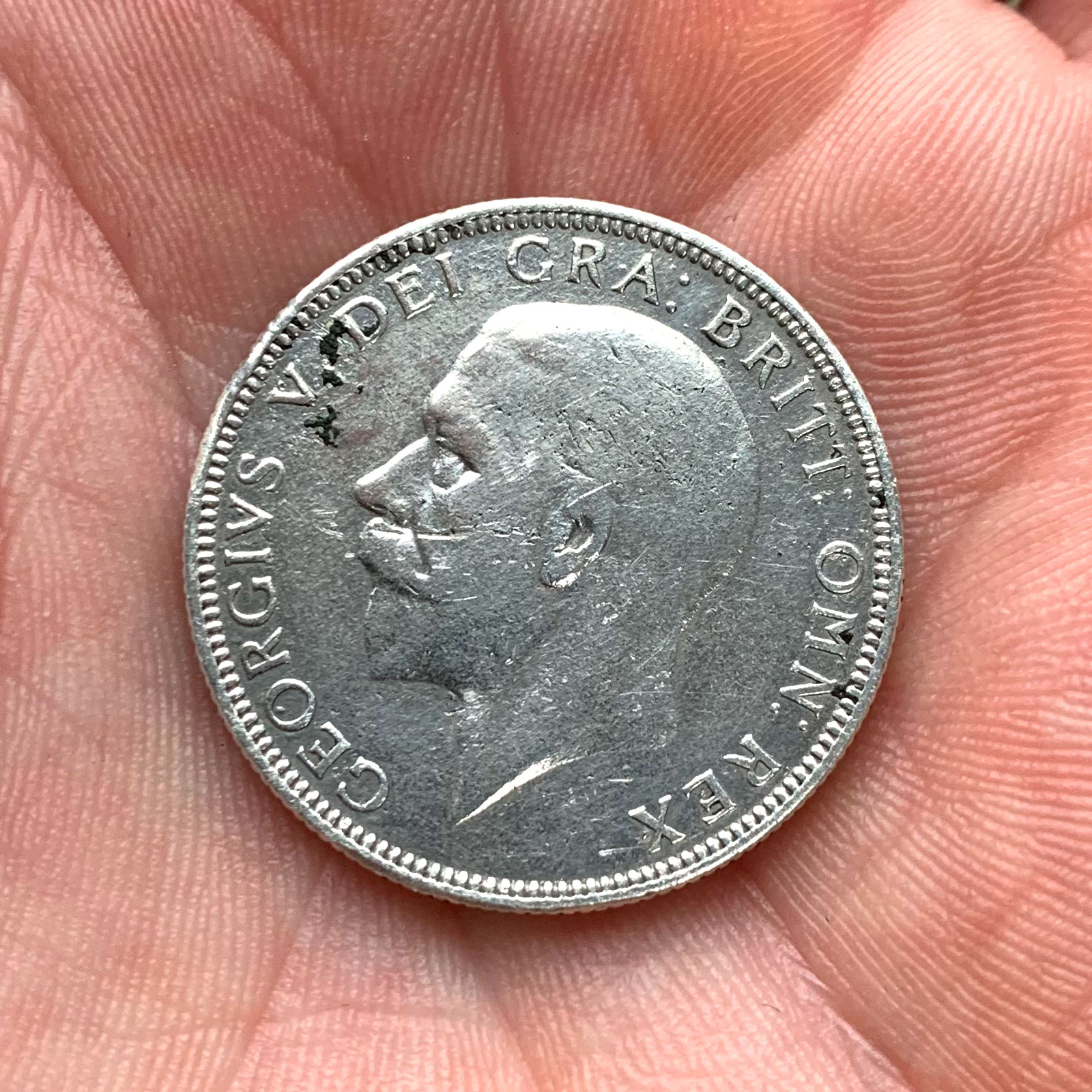
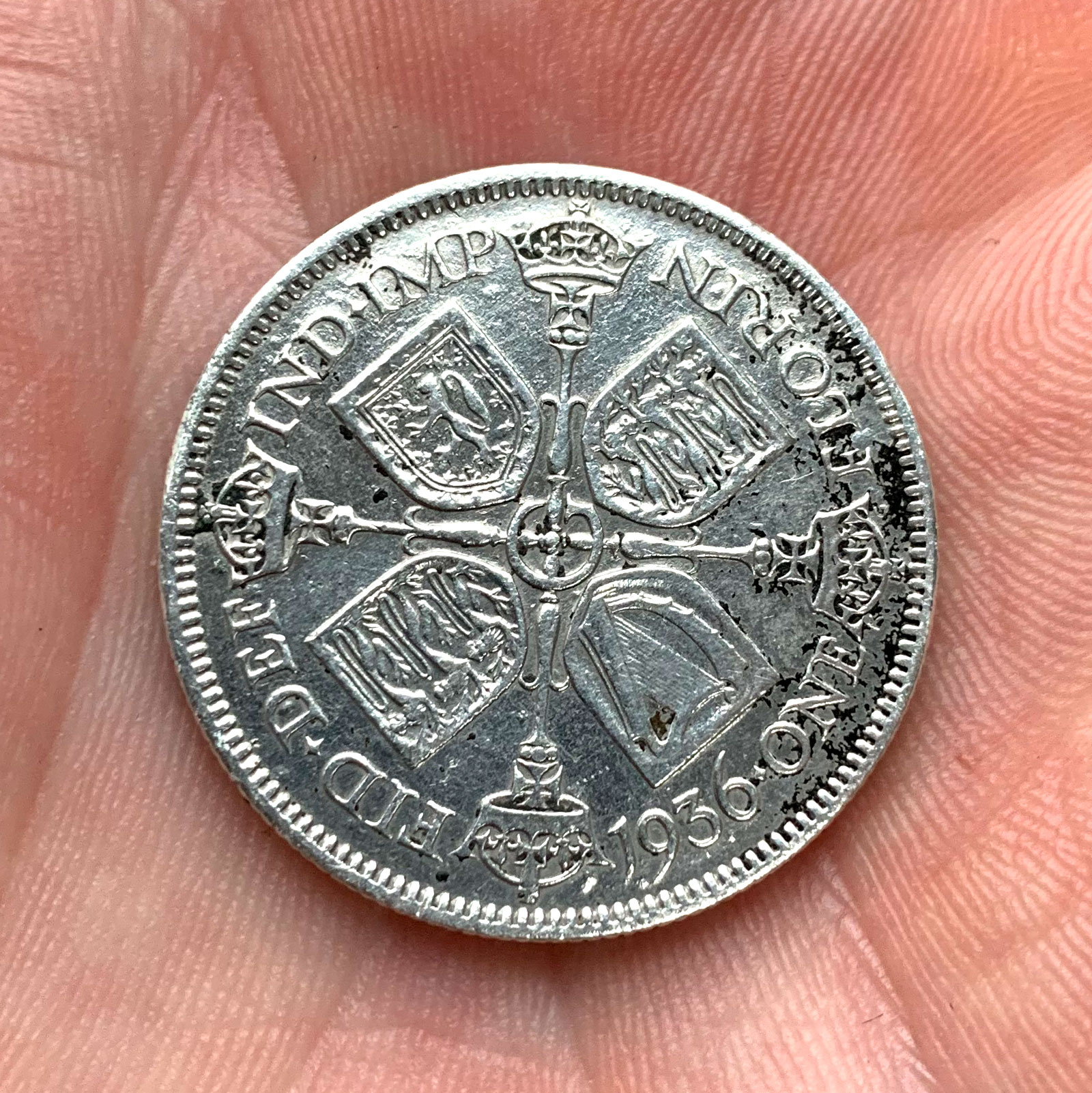
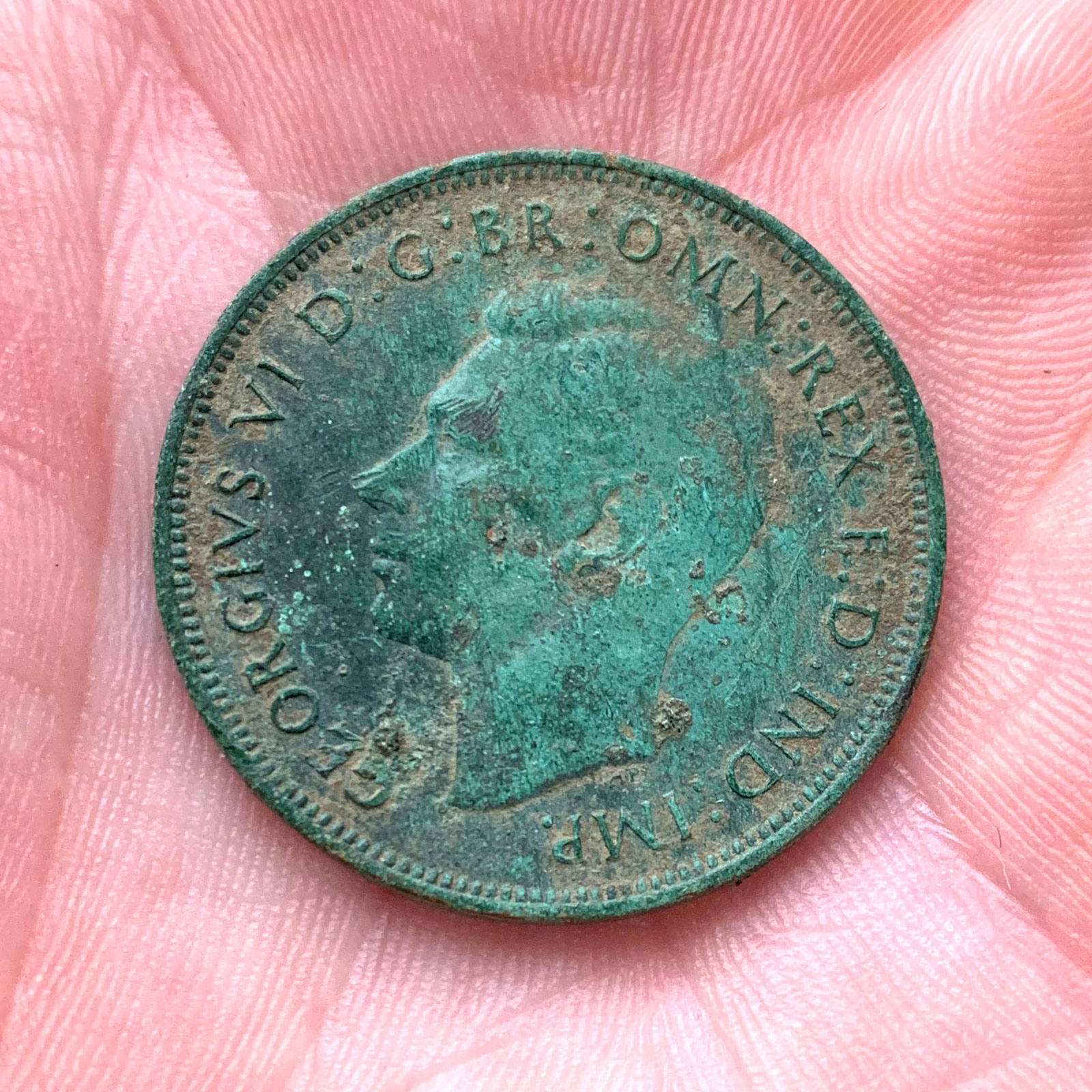
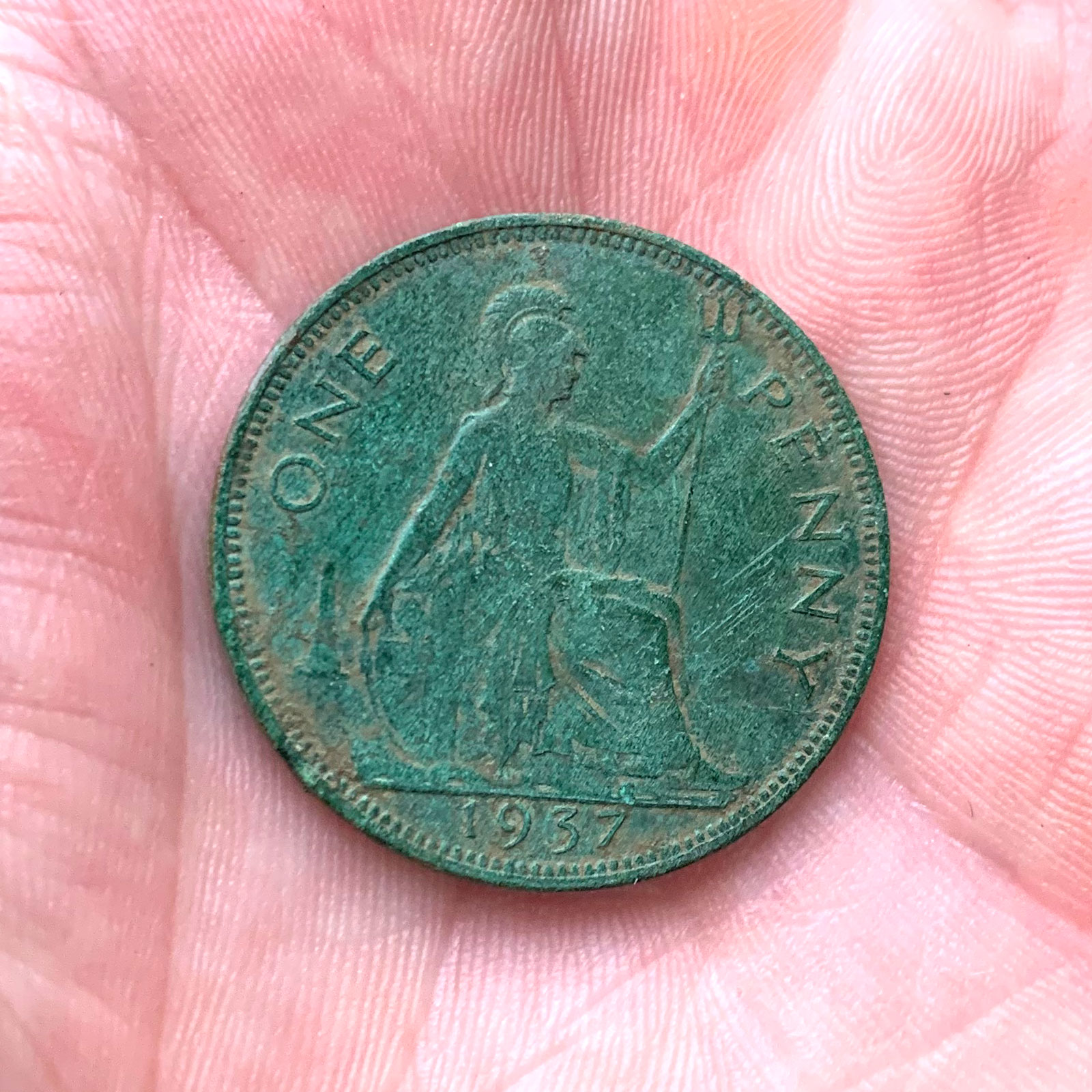
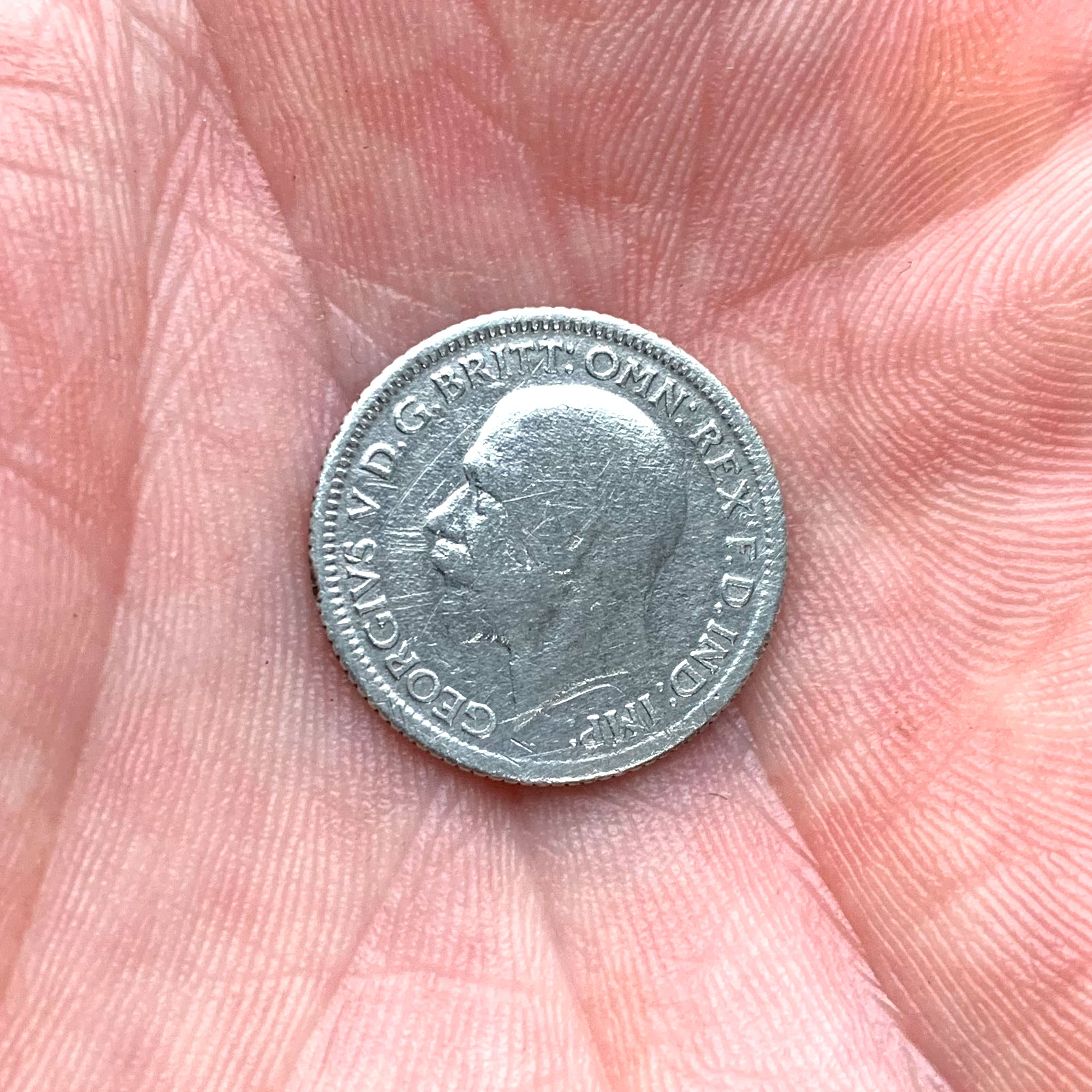
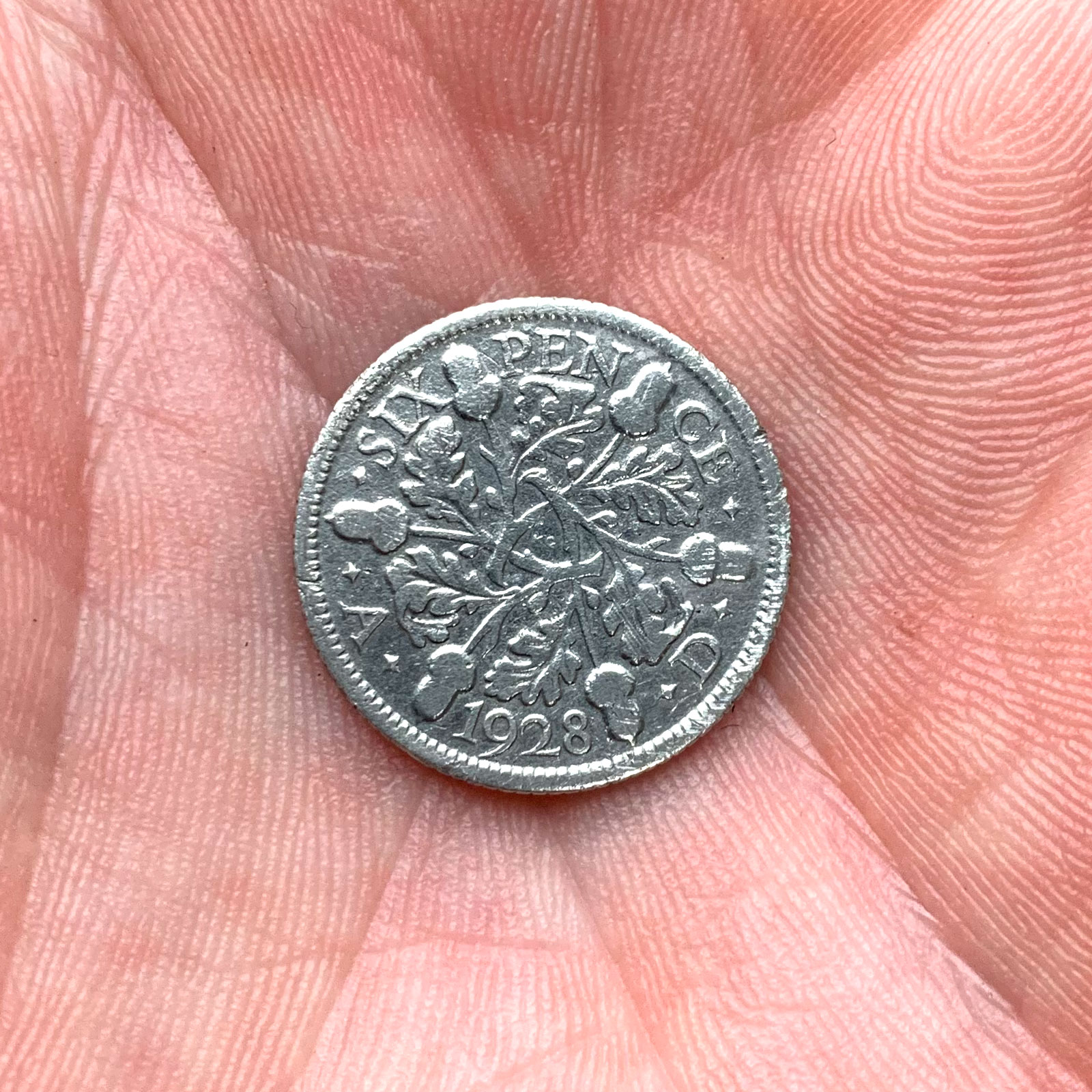
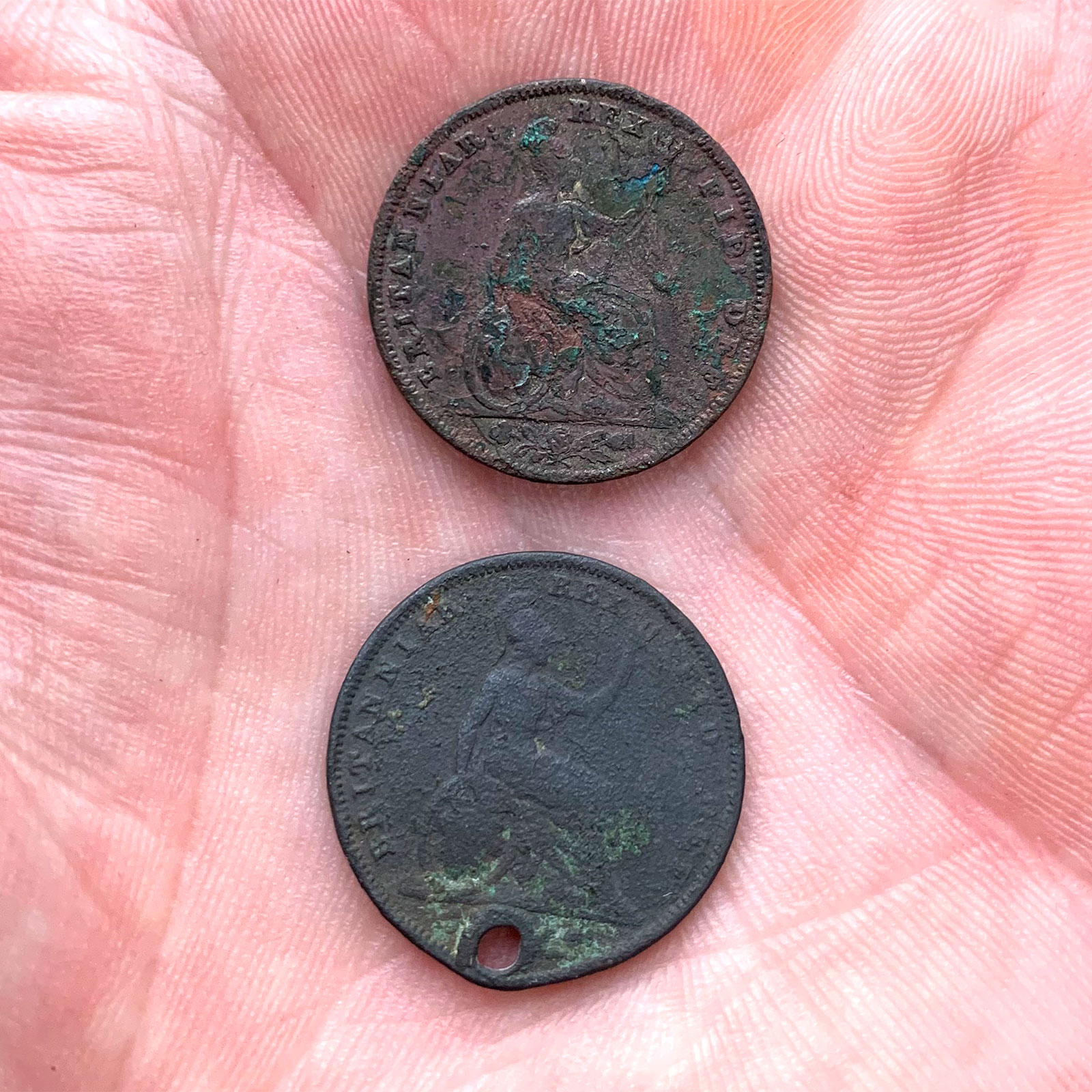
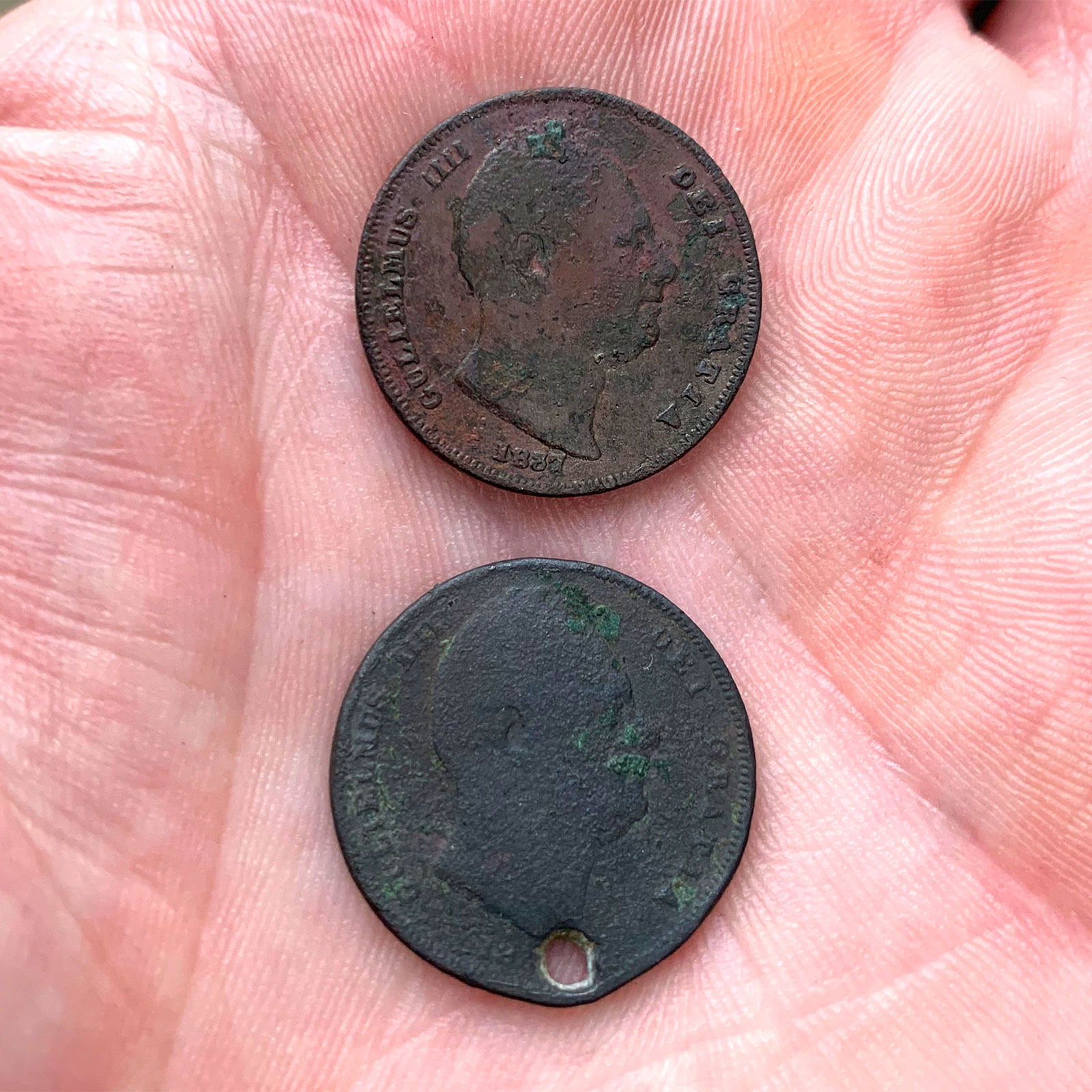
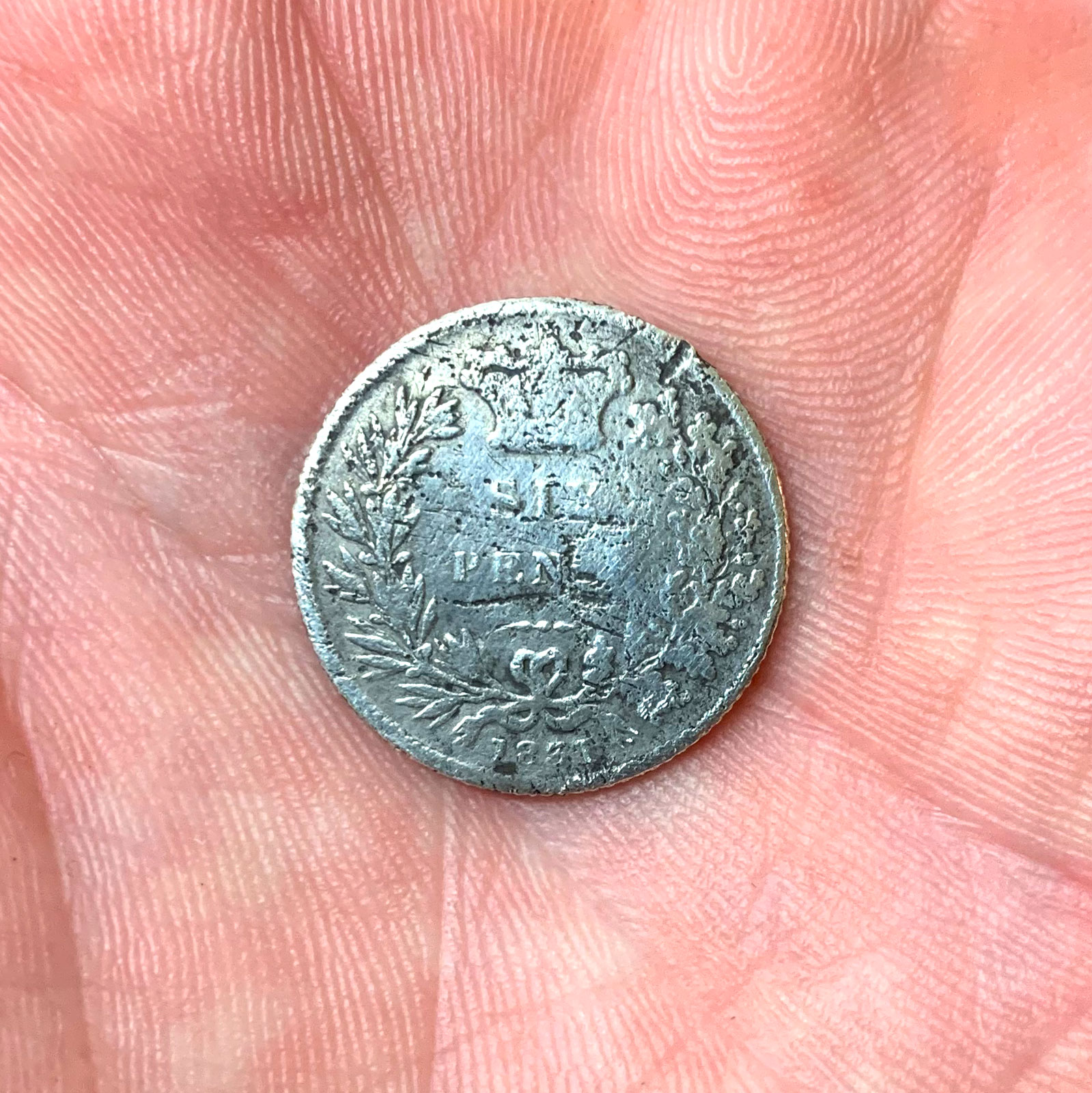
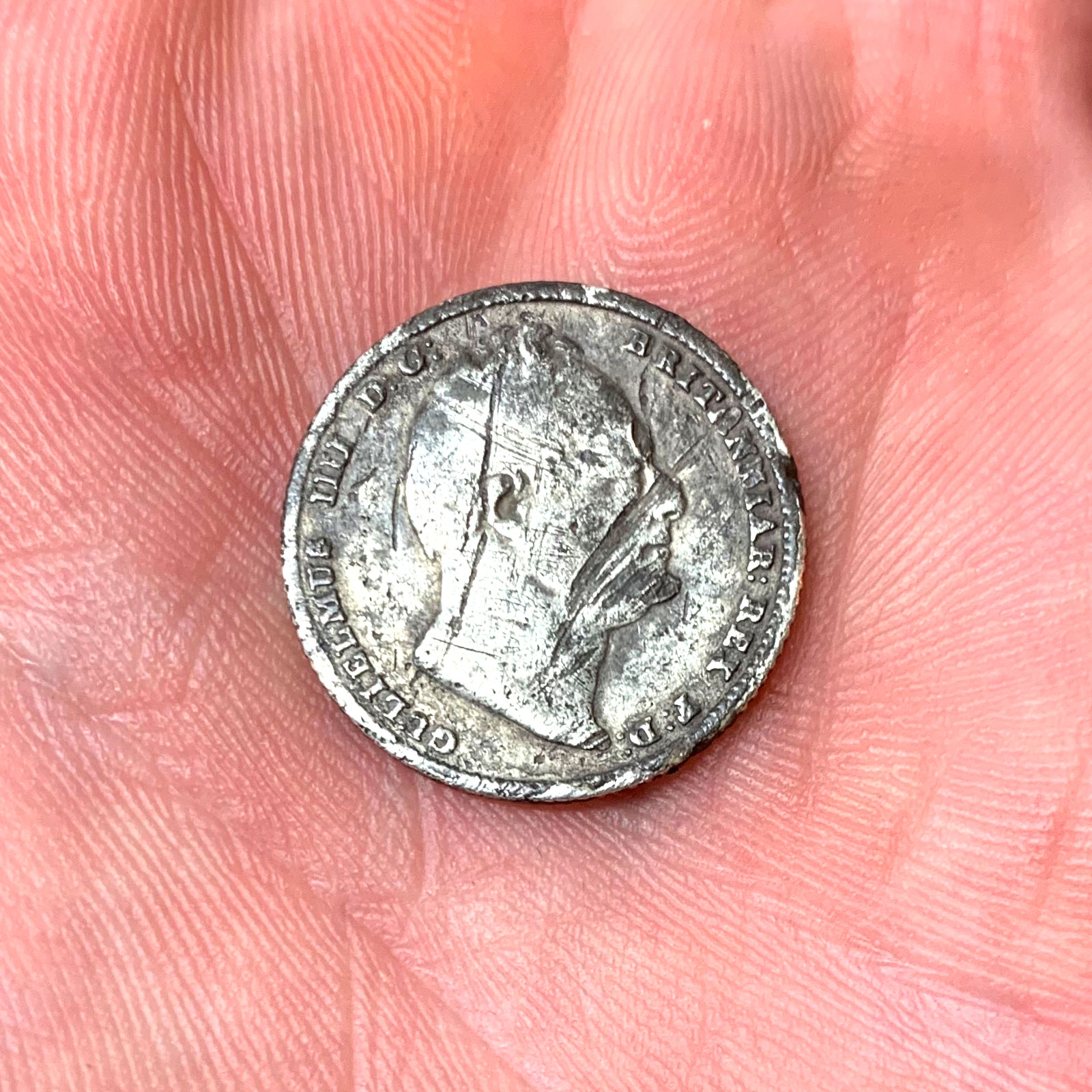
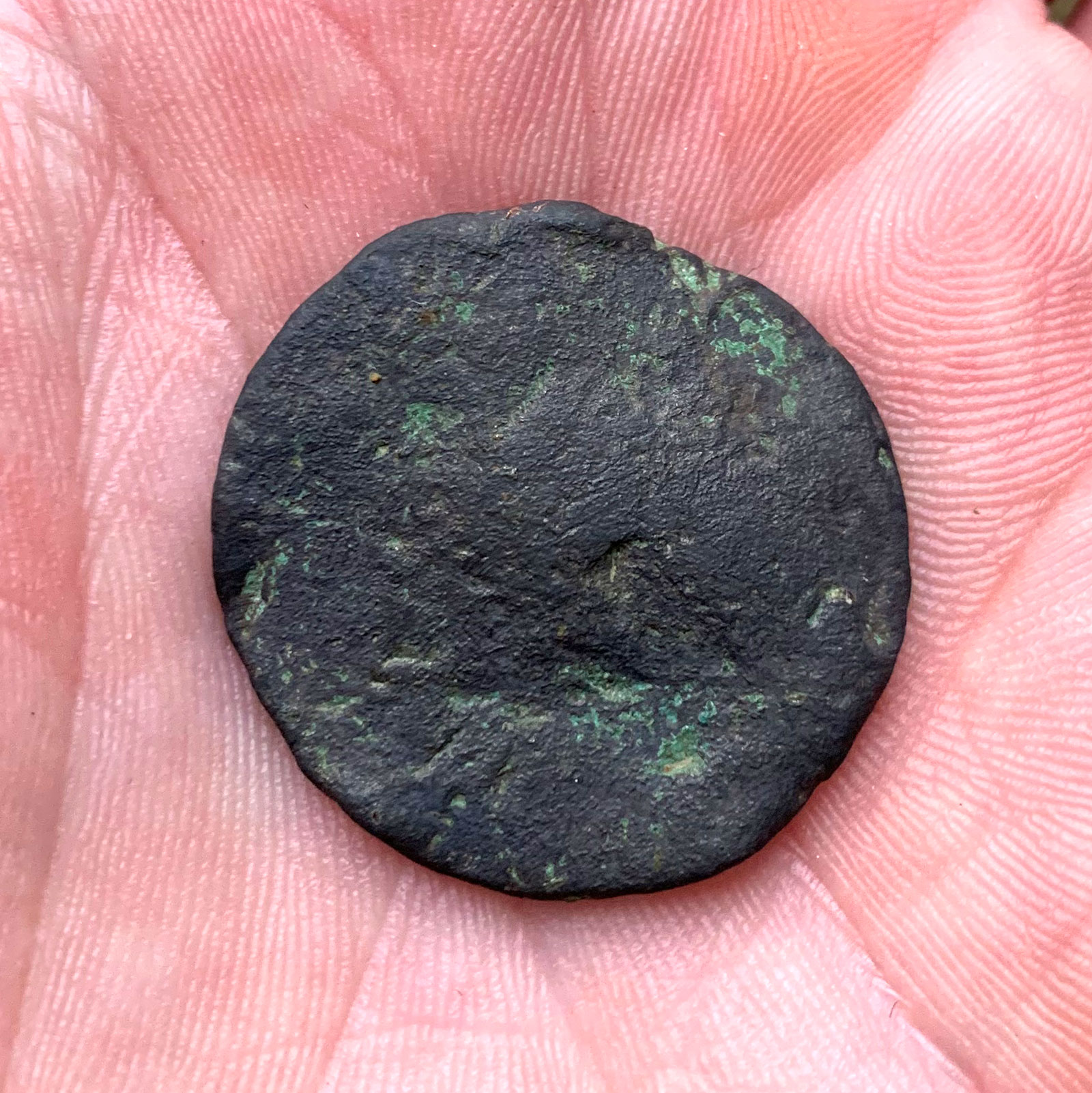
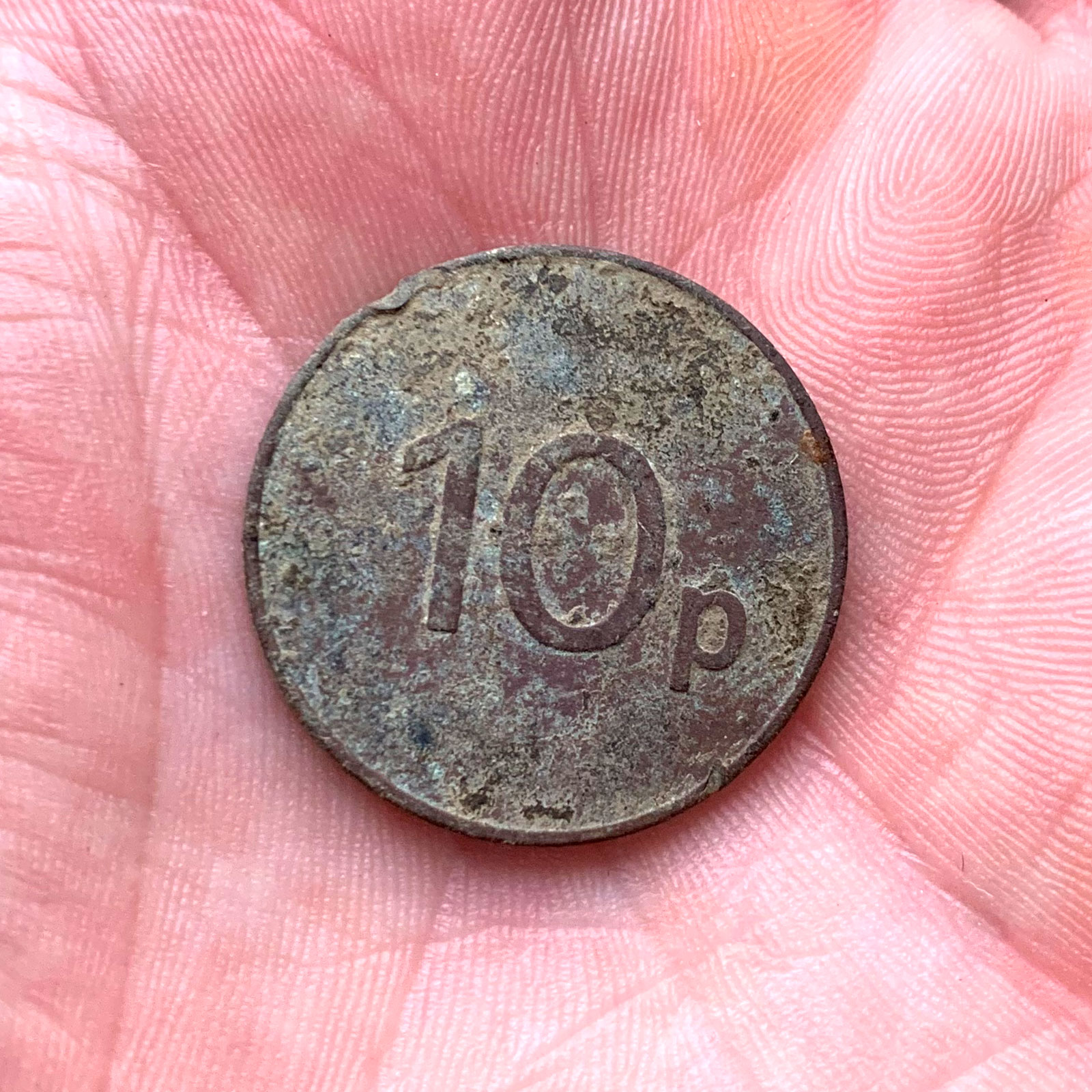
If you are interested in my detecting journey then please do keep following the blog, who knows what will be unearthed next!
Below is a link to the British Museum website which reference the Henry Warner trade token.
History is in the lead
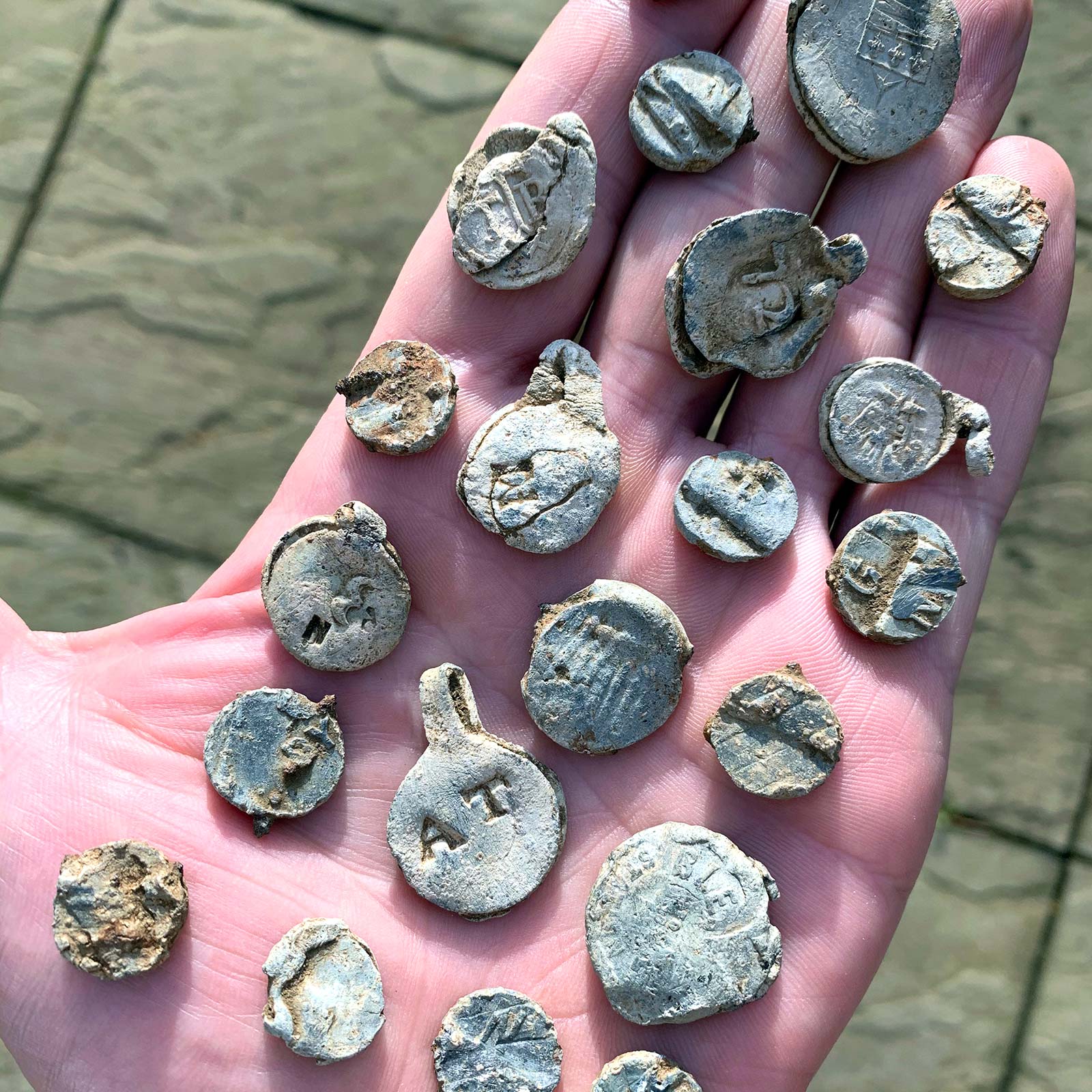
Since I started my new journey back into this amazing hobby I have been finding all sorts of things of the metal persuasion. A lot of the time I find quite a bit of rubbish, nails, tin cans, ring pulls, the list goes on but that makes it all the more special when I do find something good. Sometimes though it is hard to decipher what is rubbish and what isn’t until you have taken it home, cleaned it up and had a good look.
In the fields I’m lucky enough to detect on I started to find quite a lot of lead, just small molten lumps of lead. I mostly discard these items as rubbish but it did make me wonder why I was finding so much of it. Pretty soon it started to become clear.
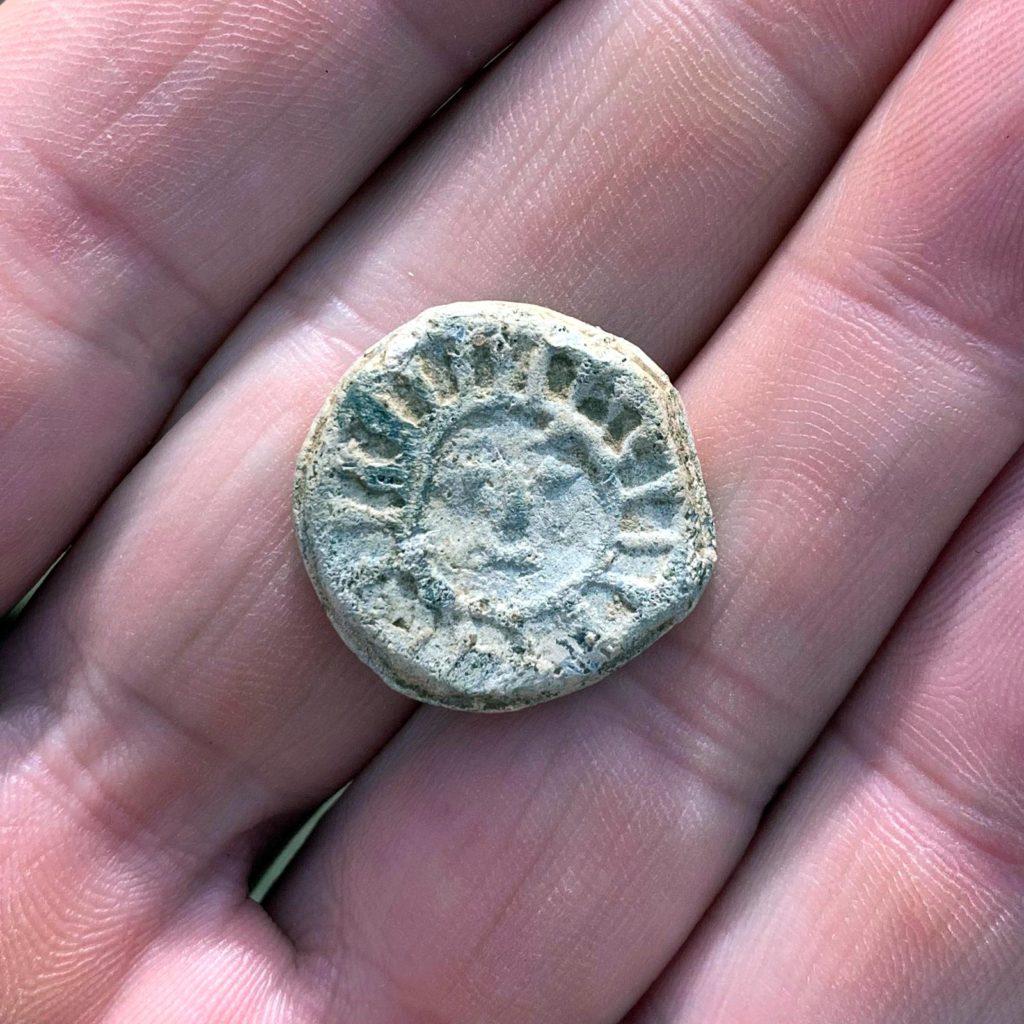
Every now and then I was finding little lead discs, the ones I have found so far are varying sizes and at first I didn’t think anything of them, I almost disregarded them as rubbish too, it’s a good thing I didn’t. On the most part the ones I have been finding are quite small and nondescript but then I found one which was a little bit bigger and as it turns out in terms of history, a little more special.
I put it in my finds bag and didn’t think anything of it, that was until I got home and cleaned it up. As lead is a soft metal you do have to be quite careful with how you clean it, I usually just use some distilled water and gently rub off the dirt with my fingers. In doing this it soon became clear that this piece of lead had markings on it, it was a cloth seal.
Quite excited by this I posted the find on my metal detecting social media group and a lot of members soon confirmed it was indeed a lead cloth seal. It turns out that lead seals were used throughout the centuries as a means of identification, regulation and quality control for various tradable items such as textiles etc.
One of the members pointed me to a specific social media group dedicated to identifying lead bag seals which is where I was lucky enough to find out the history behind this particular seal.
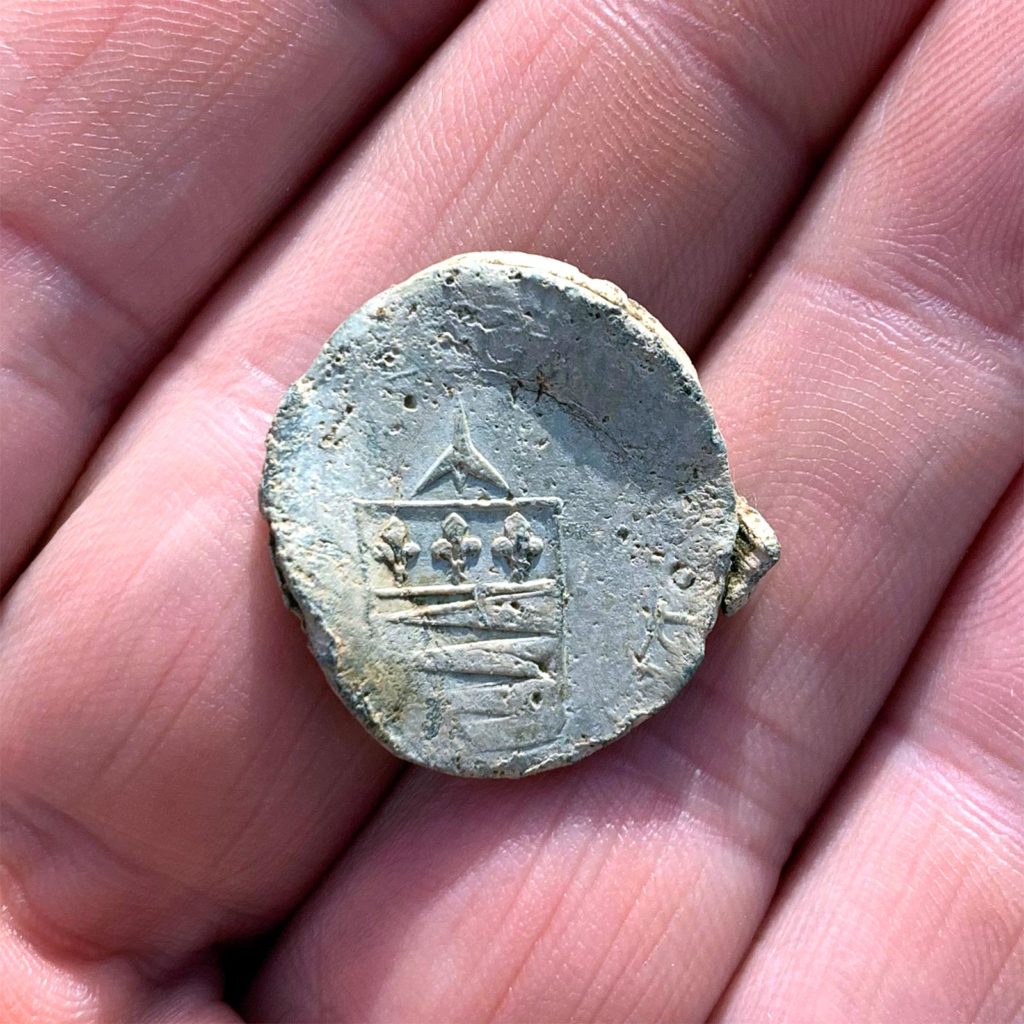
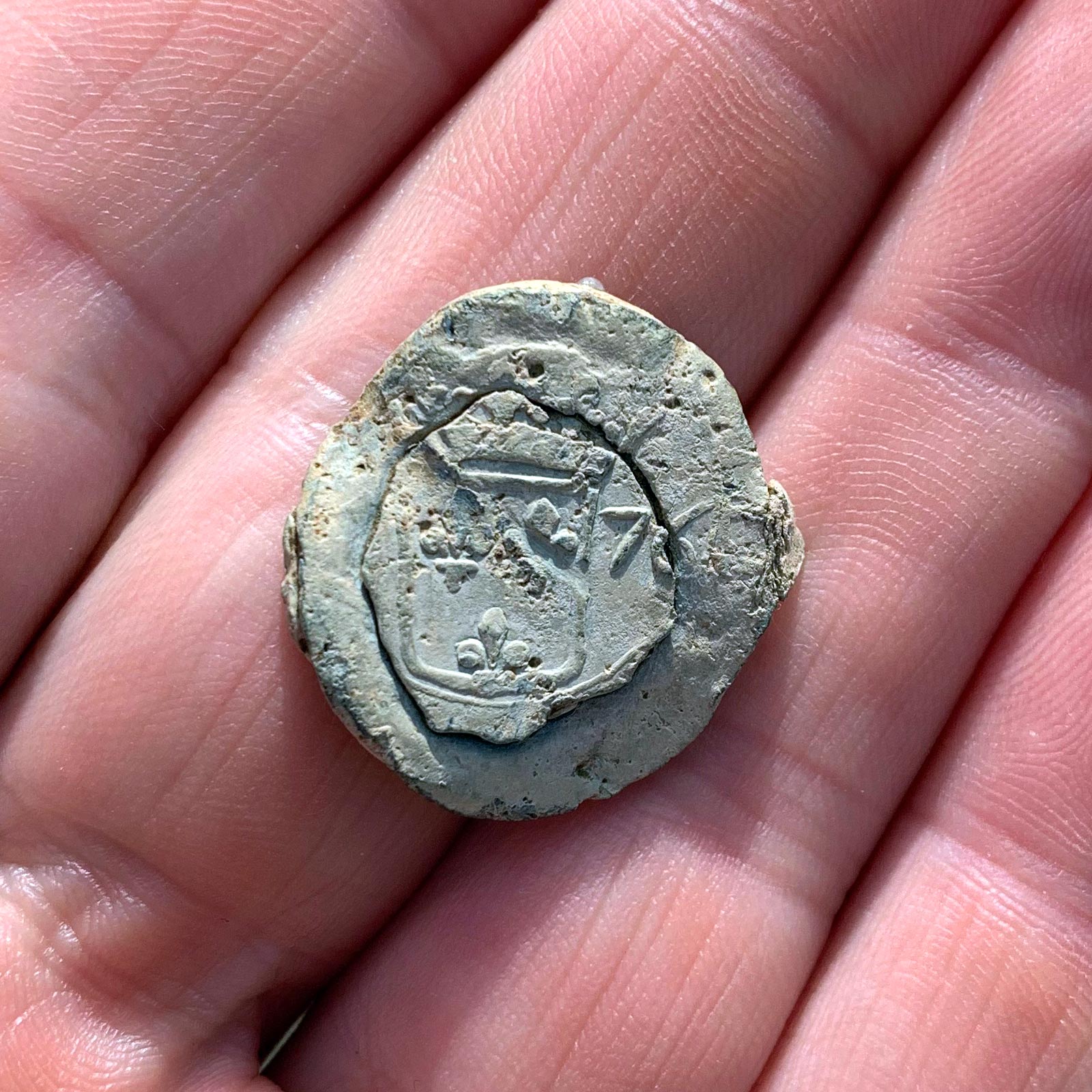
The coat of arms that can be seen on this cloth seal is of the French town Castres which is located in the Occitanie region of France. The town was known to have traded in various goods including textiles. On the reverse you can see the Fleur de Lys and on the right of that is the number 76, this gives a precise date for this seal which is 1676!
So a little pice of lead that I almost threw away is actually an insightful piece of history of the land I’m detecting on, and on the trades and businesses that have gone on here over the years. This and a few more of the lead seals I have found have been documented on the bagseals.org website, the curator of which was very helpful in identifying and providing this historical insight.
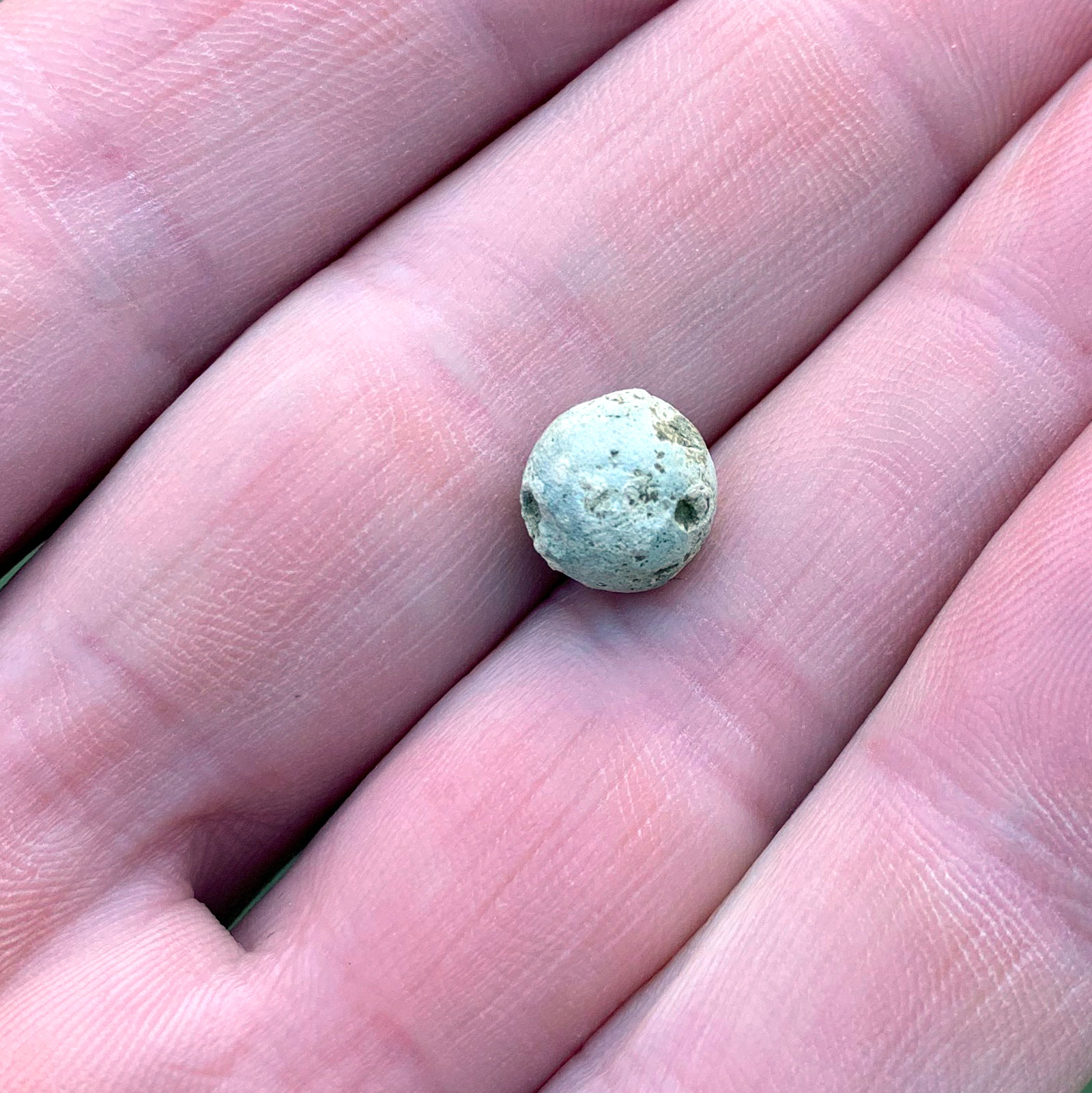
But these aren’t the only lead items that I have been finding. I’ve also found what could be a farmers token and musket balls (shown below), both of which I’ve not been able to find much information on as yet. I will persevere on researching the farmers token and if I do find anything out about it I will be sure to share it in a future post!
As I have said before and it’s something I firmly believe, the treasure isn’t always in the value of things but in the connection with the history of our ancestors!
Detecting – what a hobby!

Back in 2004 I bought a fairly cheap metal detector, I took it out a few times but never really connected with it or the hobby so it was left to gather dust in the garage. Then years later I happened to be flicking through the TV channels and came across this little gem of a comedy called ‘Detectorists’.
I completely fell in love with the show and this subsequently reignited my interest in detecting. This time round I decided to do things properly, I did a lot of research into various detectors, the pros and cons, read loads of reviews and blogs into all aspects of detecting so that I would be fully prepared and ready to enjoy this hobby.
I think most detectorists would agree that choosing your first detector is a bit of a minefield, but if you take enough time to do the research you will find something that suits you and your budget. I went with the Minelab Equinox 600 as it ticked a lot of boxes and so far has been a brilliant machine which has given me good results and hours of pleasure.
But it’s not just about having the detector, there are a whole load of accessories that make detecting so much easier and enjoyable. One accessory above all others that I personally couldn’t be without is the pinpointer. This little gadget makes finding the targets your detector picks up so much easier, it’s like having a trained sniffer dog that tells you exactly where the metal is! More often than not if I hit on a fairly shallow target I will stick the pointer in the ground to exactly locate the find so my holes are fairly small, neat and tidy. There are lots of other important accessories you will need like digging tools, finds bags, clothing etc and again there is a lot of choice in all these categories, so like with the detector it’s what best suits you and your budget.
The biggest stumbling block I think you will come across in the world of detecting is finding that first permission! To detect on private land you need the permission of the landowner and I guess this is where I lucked in. I knew that years ago, way before I was born in fact that my family used to be orchard farmers and did have quite a bit of land in and around my local area in Hertfordshire. As far as I knew this had all been sold off for housing but luckily for me it turns out the family kept a couple of fields so I had my first, and up until this point, only permission.
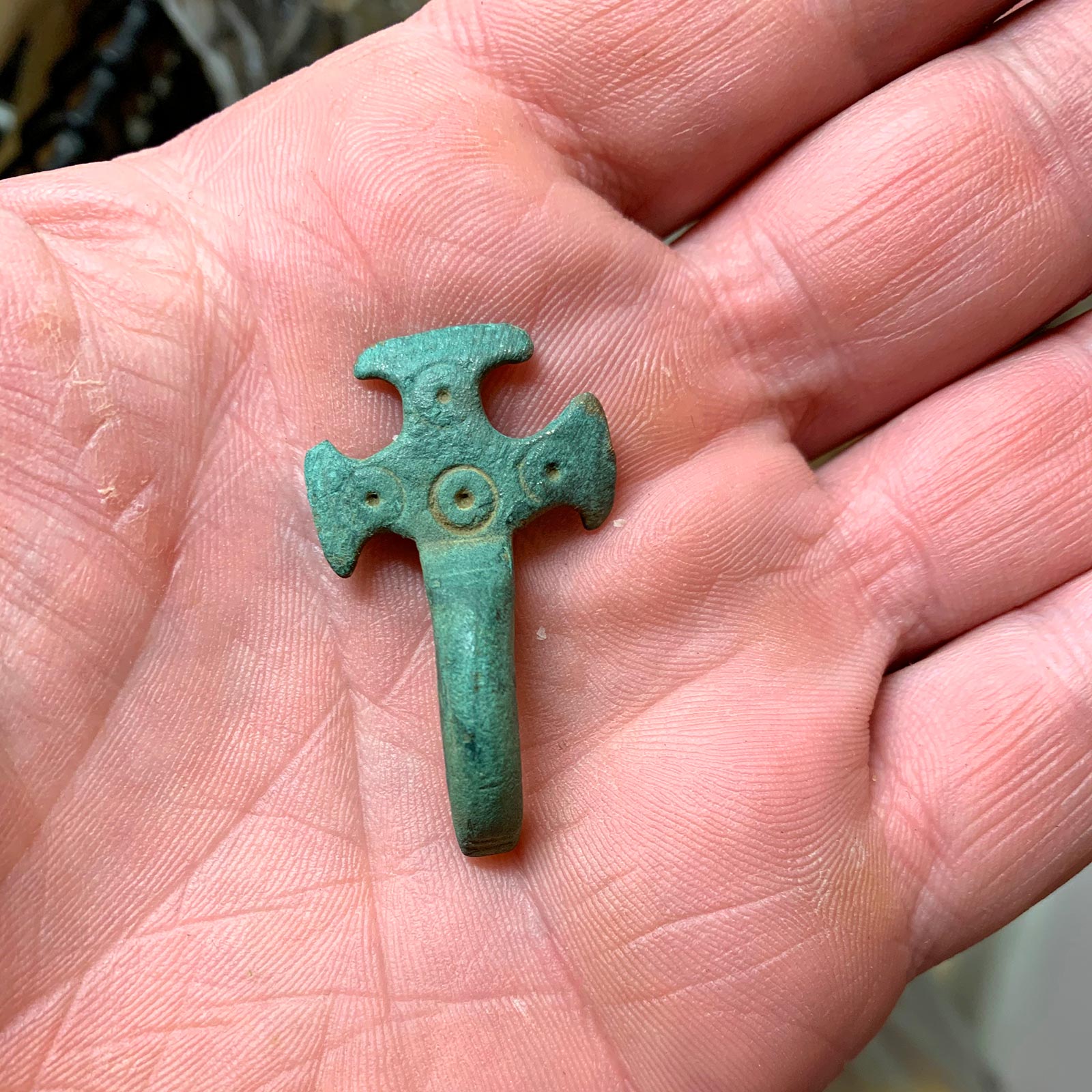
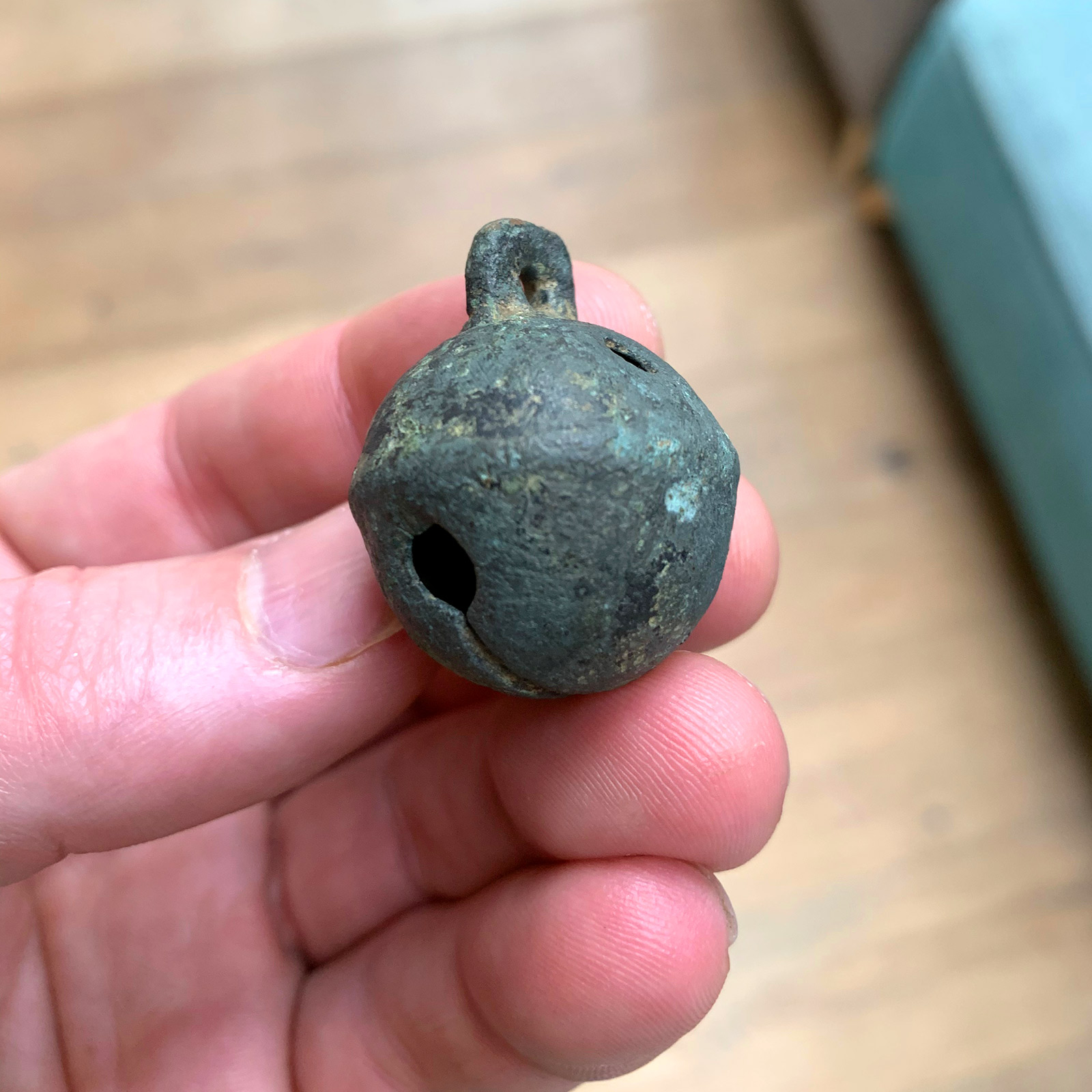
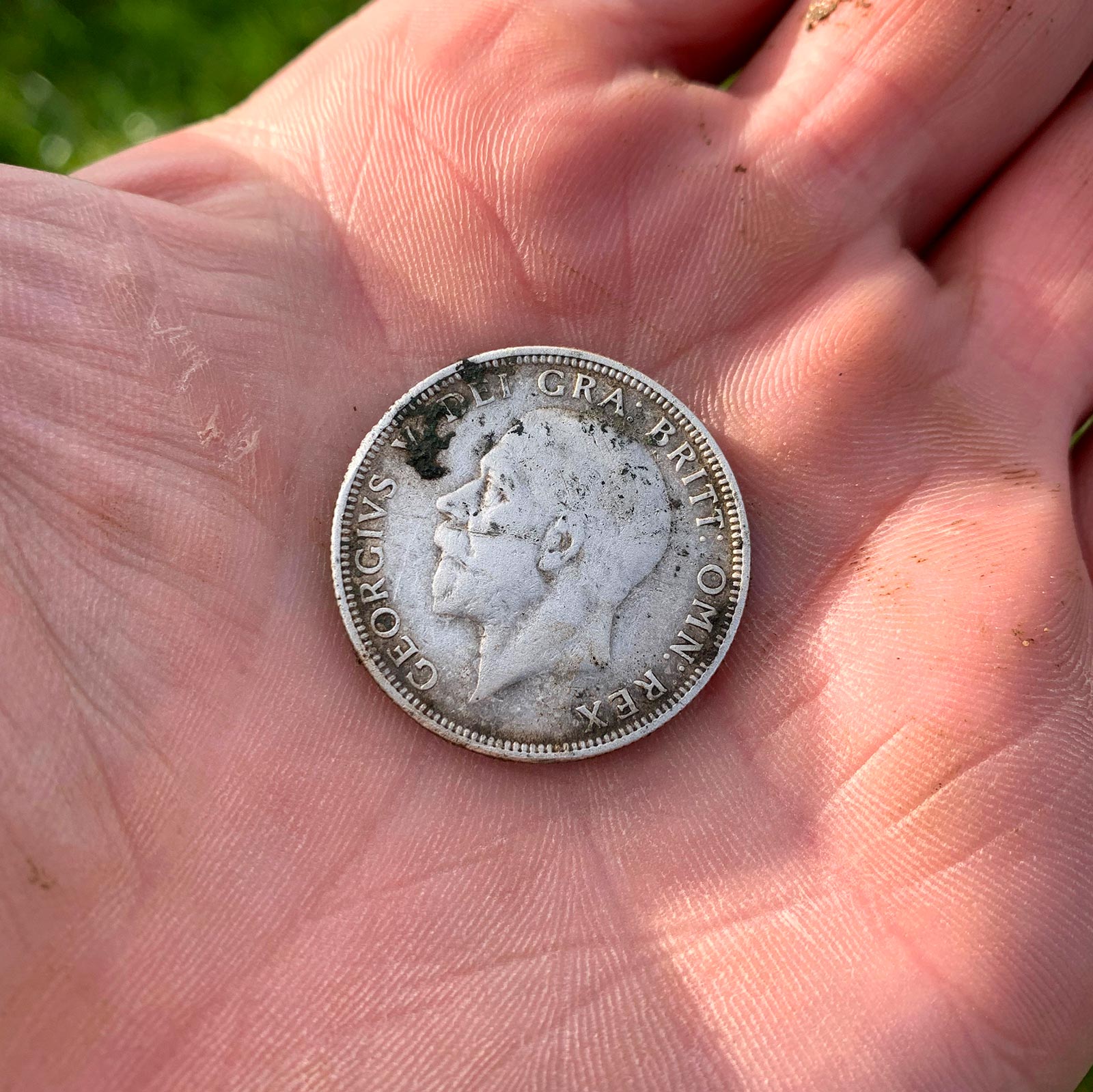
I only started detecting again in September 2020 and quite obviously some of this time has been hampered by covid restrictions but so far I think I have done pretty well on the finds front. There hasn’t been a hoard of Roman or Saxon coins as yet but it turns out there has been quite a bit of activity in these fields over the years which you will see in this and future posts. My favourite find so far is what is believed to be part of a Saxon Cruciform Brooch (shown above) which has been dated by the curator of my local museum between 420 – 500.
I have recently joined a metal detecting group on social media. Generally the people on there have been really friendly and willing to help out with most questions I have had, they have also been an invaluable resource in providing info and identifications on my finds. I have also joined The National Council for Metal Detecting, another great resource for all kinds of information you will need to help you on your way.
I’ve not taken up this hobby with the sole purpose of finding a hoard of lost treasure (although it would be nice), I think the treasure is in connecting with the countryside, connecting with the history in objects that have been lost or left behind and very personally for me connecting with my own family’s past.
In detecting I have found a hobby that I truly love and one I know will keep me (and the dog) occupied and happy for years to come. Through this blog you can follow my detecting journey and the finds that will hopefully reveal the history of times gone by in my local area!