Category: Metal Detecting
Detecting, writing & work
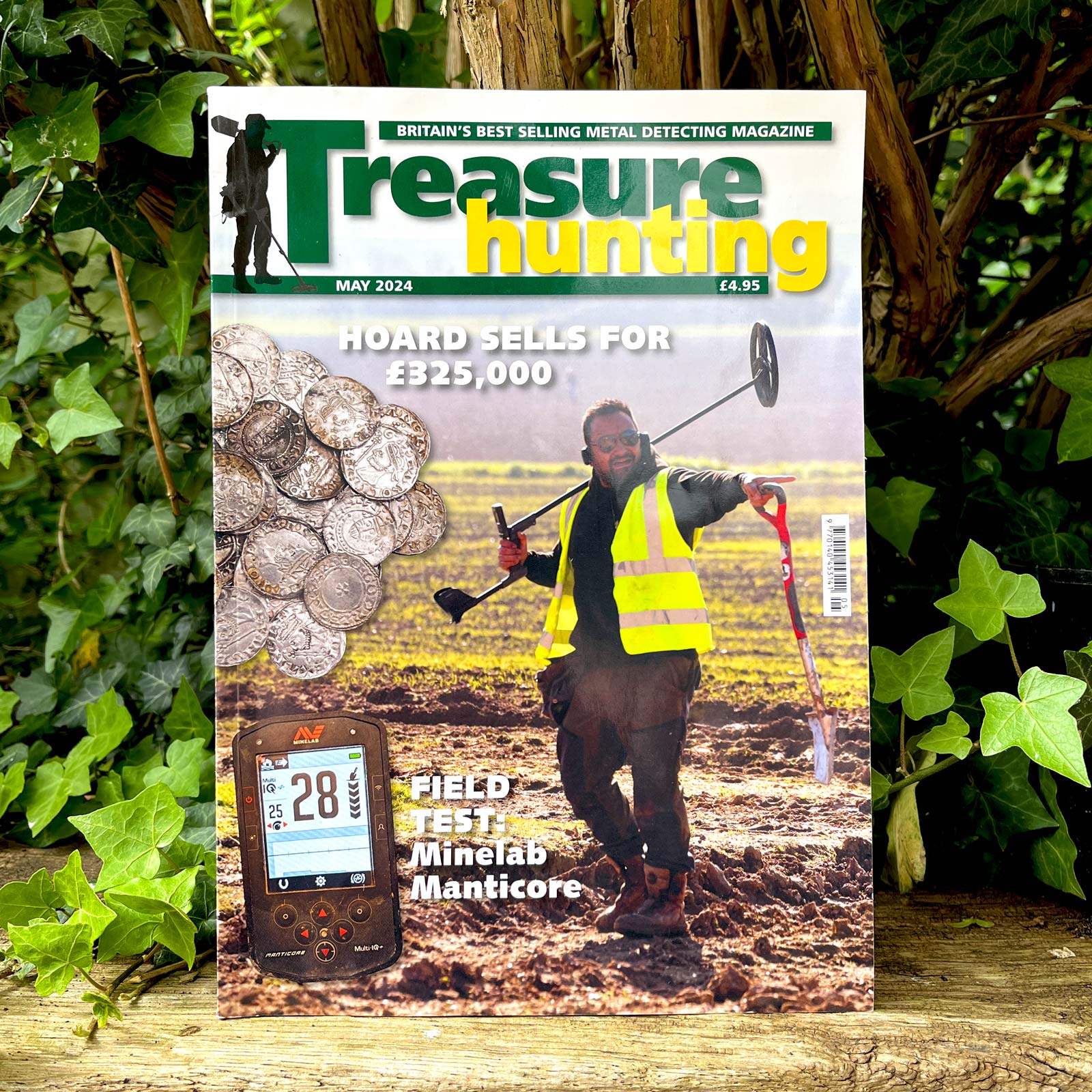
It’s that time again where I’ve had another of my articles published in Treasure Hunting Magazine, and this time it’s more of an interview based affair with the retired archaeologist Gilbert Burleigh. It all came about through a chance meeting on a Facebook group, which led to me meeting Gil and talking about his long career, his valued and trusted relationships with detectorists, and the wonderful archaeological discoveries that those relationships have unearthed. This particular article was published in the May 2024 edition of Treasure Hunting Magazine but is also available to read here on the Hertfordshire History Hunter blog.
It’s always a great feeling to see my articles published in the magazine, but things have gone that one step further as I’m back working on the magazine again. Around this time last year the guys at Treasure Hunting approached me to help out with the layout of a few sections of magazine whilst their design and layout department were busy with other projects. I did this for a couple of issues working on News & Views, Readers Finds and Auction Round-Up. Things worked out pretty well and it was fun to get my hands dirty doing magazine work again, a design discipline I hadn’t been involved with since the late 1990’s.
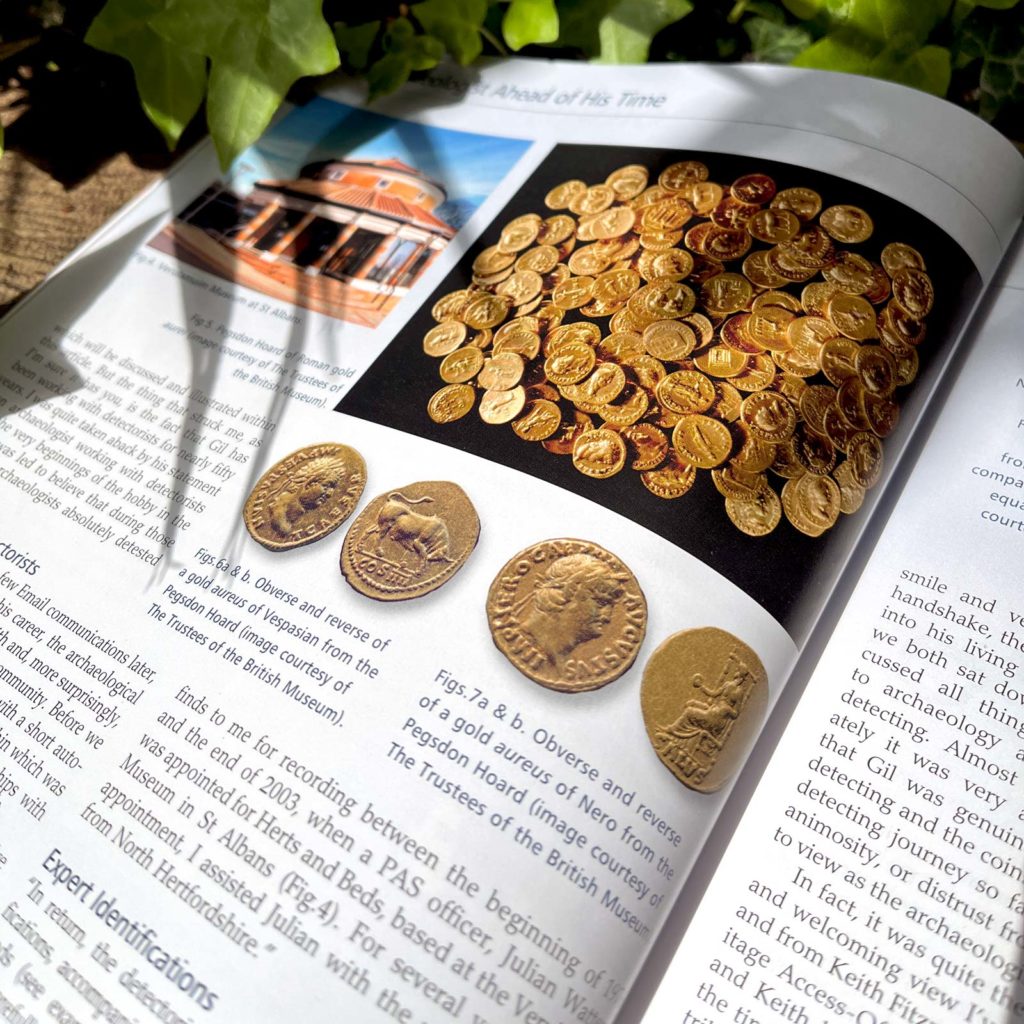
So, just recently I have been asked to help out on the magazine again but this time round it wasn’t just a couple of sections, it was the whole magazine. The guys at Treasure Hunting were in the process of looking for a new artworker, so they asked if I would cover for a few issues to give them time to find the right person for the job. I was more than happy to help out as I really enjoyed working on the magazine last time around, and again it’s proved to be an enjoyable experience.
Obviously there was a lot more work to do this time, but on the whole it fitted in quite well around the existing design work that I had in my schedule. So for the May and June editions of Treasure Hunting Magazine in 2024 you will see my name under the layout & design credits on the contents page. But in a strange twist of fate the only article that I did not layout for the May edition was my own. This had already been put together for a previous issue which the editor pushed back to the May edition. Still, I can’t complain because I see it as a privilege to work on the magazine, and as Julian Evan-Hart said to me in one of our email conversations, “who’d have believed our first contact would have led to this eh?”. But led to this it has and it’s been brilliant working on the magazine again and I’m sure it won’t be the last time.
It has to be said that this hobby has enriched my life way beyond my expectations, and I can’t thank my partner Heather enough for buying me the Equinox 600 for my birthday in 2020. The 600 has now been upgraded to the 900, but I have kept the 600 as backup (it’s too good a detector not to keep it). This hobby really has filtered through into all aspects of my life which now includes work, and I wonder, can this hobby give anymore? Well actually yes, if the detecting gods are listening, that hoard of gold Romans coins would be nice to discover in the not to distant future. Lol, joking aside, this hobby has already bestowed me with more than enough riches for which I will be forever thankful (but that hoard would be nice).
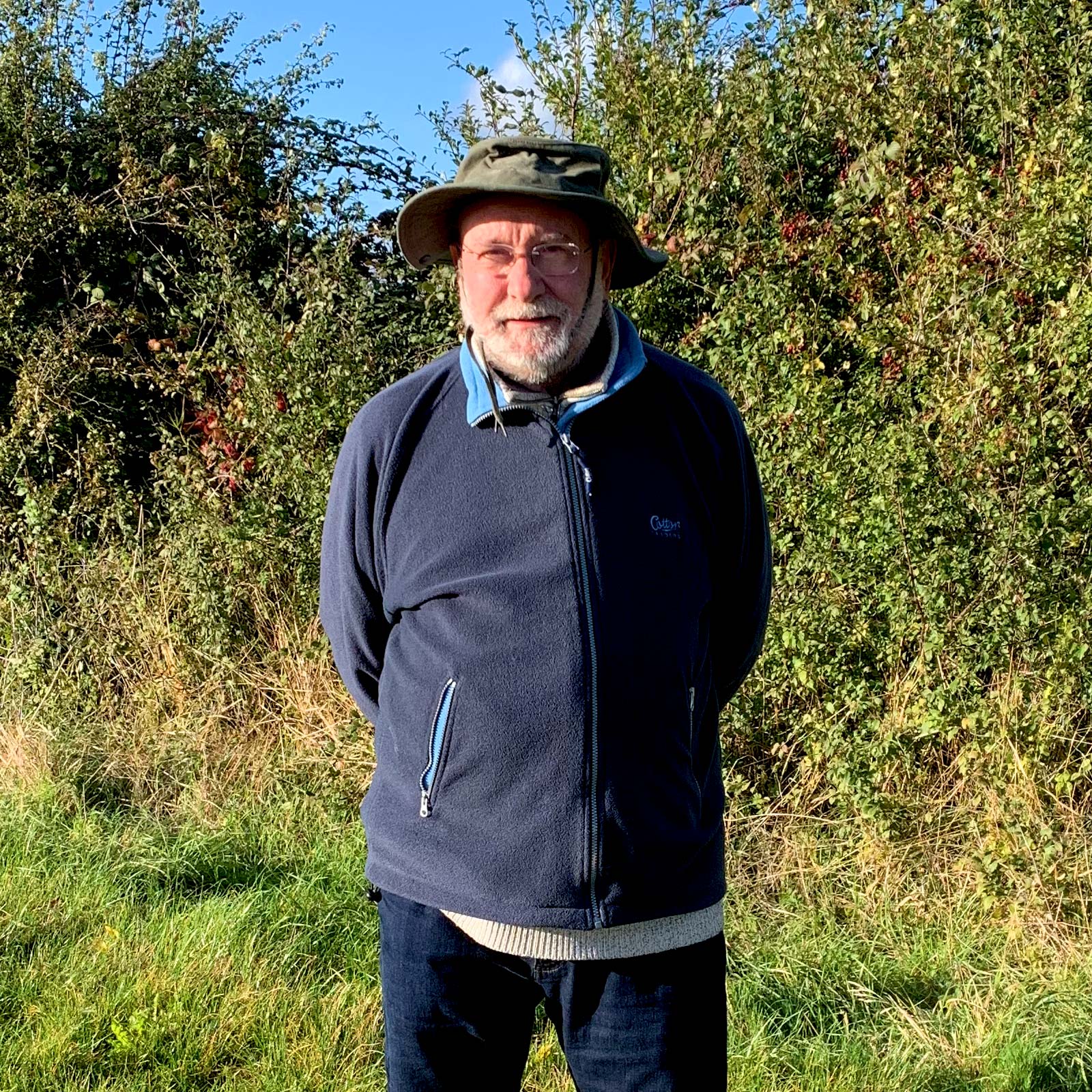
Gil Burleigh – archaeologist
Somebody, somewhere said to me that a great way to obtain permissions is to politely ask the question on Facebook community pages. Specifically ones which are hosted by villages, the reasoning being that local farmers and landowners are more likely to be living in villages than big towns and cities. I liked the logic so I decided to give it a go. I put out a small post on several community groups of the local villages near me and waited for the permissions to roll in… hhmmm!
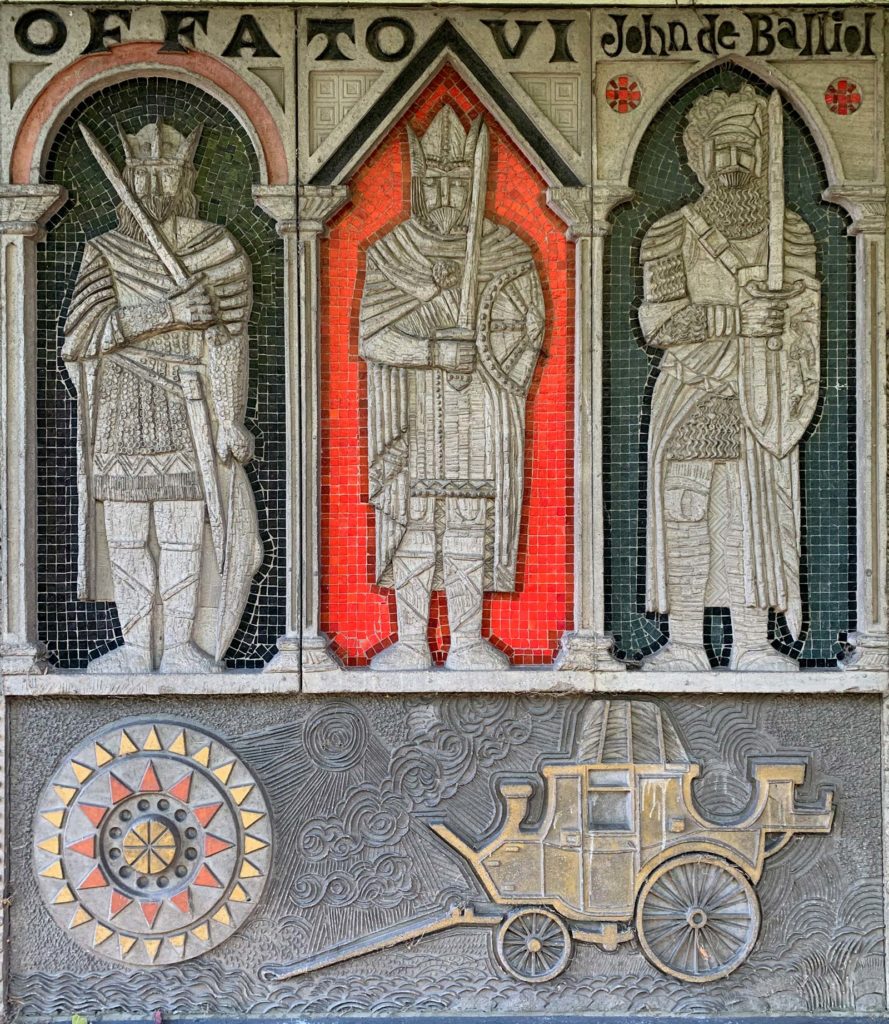
I would love to say that the permissions came in by the bucket load… sadly they didn’t, but I did get a response which led me to writing this article. I had some inquisitive and very positive comments which was really good to see, but one comment mentioned that there was a battle site close to one particular village which involved King Offa (Fig. 1). This is something I had read about in local history books so I thought it was fact, but then another member of the village replied with the following insightful post.
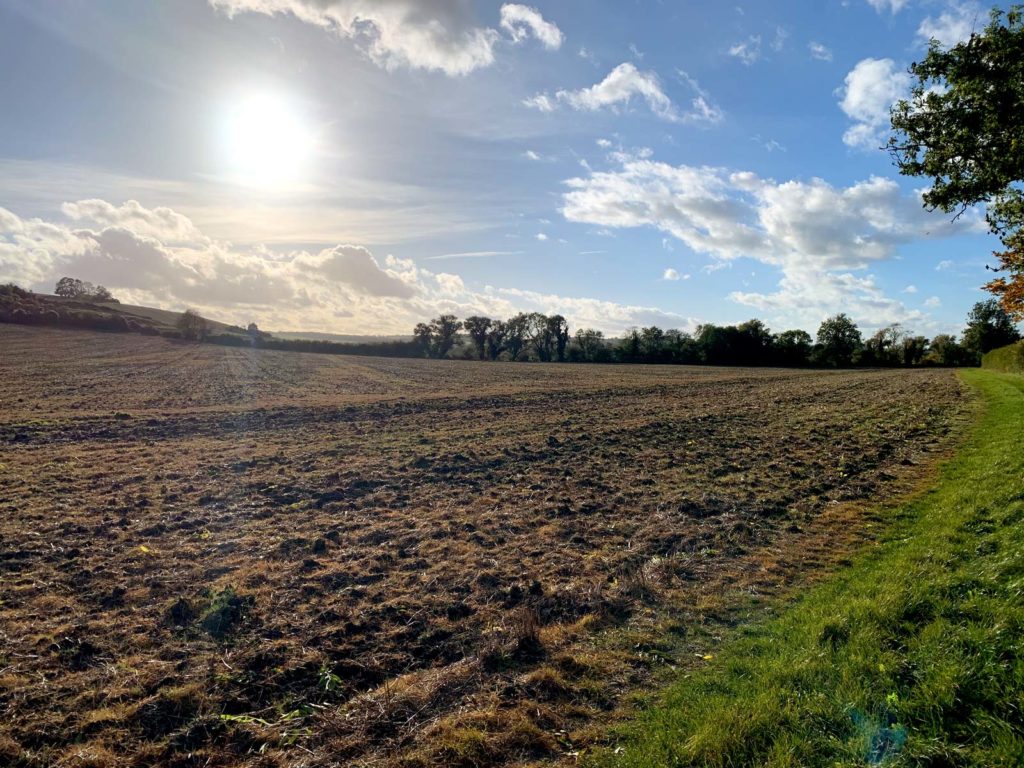
“This is a local myth that arose in the 19th century after quarrying in the 1790s and 1830s uncovered the remains of a graveyard in which some of the skeletons were accompanied by weapons – swords, spears and shields. Nineteenth century antiquarians leapt to the conclusion that the burials must have been warriors killed in a battle between Anglo-Saxons and Danes – hence the subsequent name given of Dane Field (Fig. 2). More likely it is an earlier pagan Anglo-Saxon cemetery when it was not uncommon for some of the dead to be buried with their weapons, having usually died of natural causes, not in battle. Archaeological excavations on the field close to the burial ground in the 1990s revealed an early Anglo-Saxon settlement to which the cemetery probably belonged. I’m an archaeologist and resident of the village and have been working with responsible metal detectorists for nearly fifty years, if you want to get in touch.”
It goes without saying that I got in touch, and to my surprise the archaeologist in question was Gilbert Burleigh. Gil has been involved with some major archaeological discoveries in his time, some of which will be discussed and displayed within this article. But the thing that struck me, as I’m sure it has you, is the fact that Gil has been working with responsible detectorists for nearly 50 years. I was quite taken aback by his statement, an archaeologist working with detectorists since the very beginnings of the hobby in the 1970’s? I was lead to believe that during those early years archaeologists absolutely detested detectorists? There is an old saying that ‘never the twain shall meet’, and as you will see it resulted in the discovery of some amazing treasures. As a side note I think there’s inspiration here for Mackenzie Crook to write a new series, maybe Andy and Lance as kids trying out their first detectors and the 1970’s/80’s soundtrack would be brilliant. Apologies, I daydream and digress.
After making contact and a few email communications later, Gil agreed to let me meet with him to discuss his career, the archaeological delights that he’s been involved with and more surprisingly his inclusion of metal the detecting community. Before we met, Gil was kind enough to provide me with a short autobiographical background about his career, with in which was the following insight to his views and relationships with detectorists (it’s almost like this article is writing itself).
“Over the years, some people have said to me that I’ve been very lucky in some of the spectacular discoveries I’ve been involved with and I reply that one can help make one’s own luck. For example, at North Herts Museums I began recording responsible metal detectorists finds in January 1976, in the early days of the hobby. Like the late Tony Gregory at Norfolk Museums and Kevin Leahy in Scunthorpe, independently, I continued recording their finds and working with them all through the years, including the many years from the late 1970s through to the late 1990s when the detecting and archaeology communities were, largely, vigorously opposed to each other.”
“I took the pragmatic view that the detectorists would carry on detecting regardless of what archaeologists thought, so we might as well record as many finds as possible. Most of the archaeological community finally came to this view with the launch of the Portable Antiquities Scheme (PAS) in 1997. I think that because I had good relationships with many in the local detecting community they brought their finds to me for recording between the beginning of 1976 and the end of 2003, when a PAS officer, Julian Watters, was appointed for Herts and Beds, based at the Verulamium Museum in St Albans (Fig. 3).”
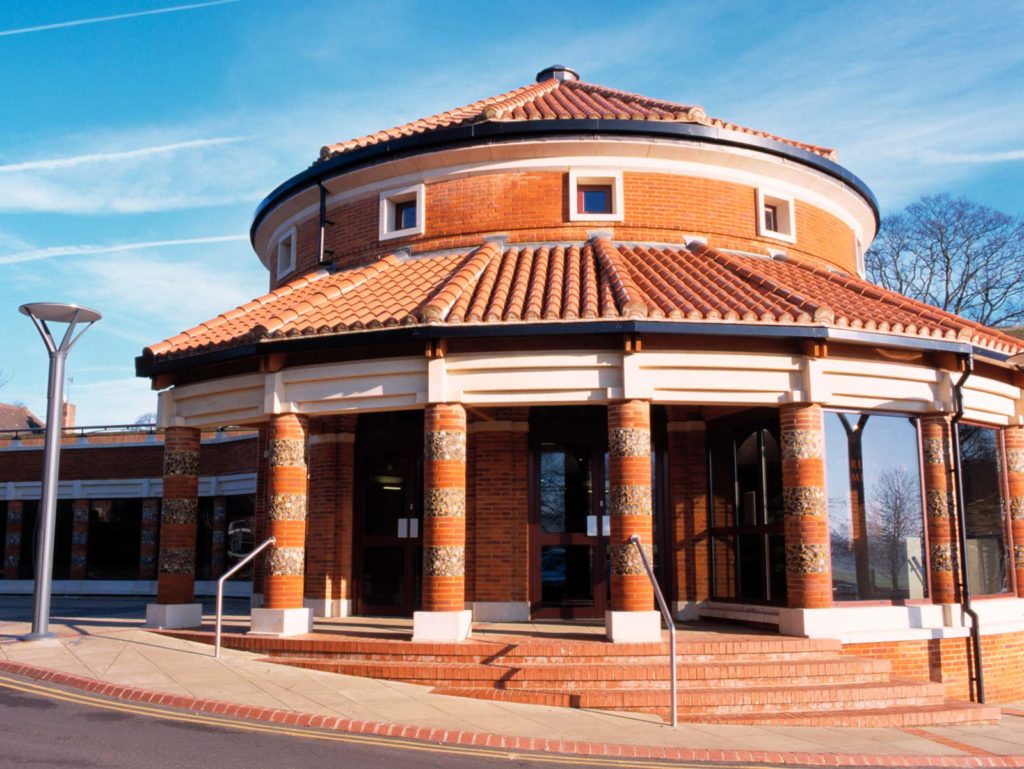
Photo copyright St Albans Museums.
“For several years after his appointment, I assisted Julian with the recording of finds from North Hertfordshire. In return the detectorists received expert written identifications, accompanied by top-quality illustrations (Fig. 15) of their finds. Undoubtedly, because of this carefully nurtured relationship over many years some extraordinary finds were reported to me by detectorists which might not have been had the good relationship not existed.”
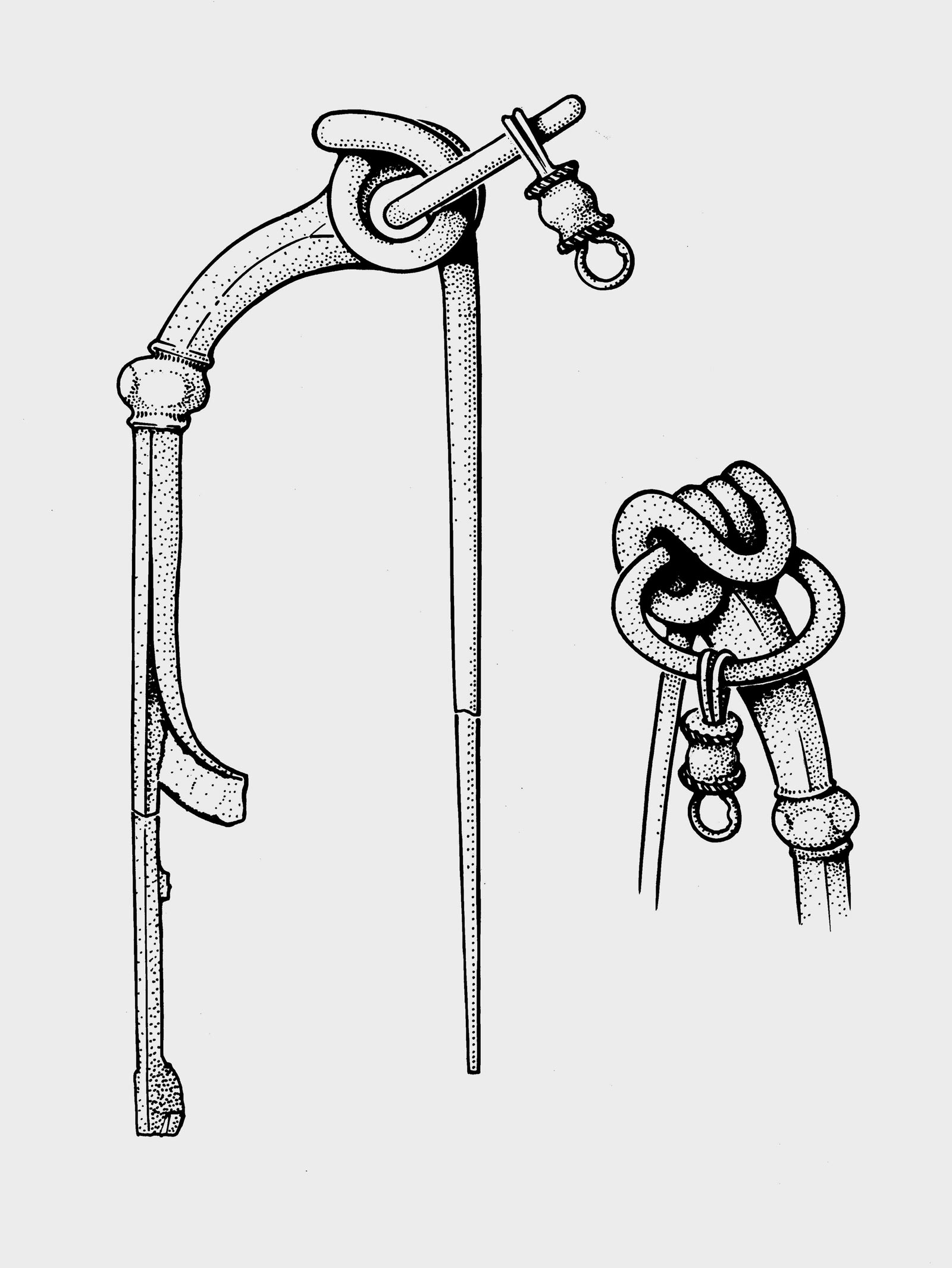
“Amongst these, I count the unique Pegsdon 1st-century AD Roman gold coin hoard found in 1998 (Curteis and Burleigh 2002); the Pegsdon 1st-century BC Iron Age decorated copper-alloy mirror and accompanying silver bow-brooch found in 2000, from a cremation burial, one of the earliest and most complete in the contemporary mirror series (Burleigh and Megaw 2007); and the Ashwell 4th-century AD Roman gold and silver temple treasure hoard found in 2002, only the third such hoard found in Britain and the first since the 18th-century (Jackson and Burleigh 2018).”
Meeting gil
It was a weekday afternoon when I met Gil who had very kindly invited me to his home. He greeted me with a warm smile and very welcoming handshake, then showed me into his living room where we both sat down and discussed all things relating to archaeology and metal detecting. Almost immediately it was very apparent that Gil was genuinely interested in me, why I got into detecting and the coins and artefacts that I had found on my detecting journey so far. There was no sense of snobbery, animosity or distrust from him which a lot of people seem to view as the archaeologists standard stance on detectorists. In fact it was quite the opposite and it’s the same warm and welcoming view I’ve had from My Finds Liason Officer Matt Fittock and from Keith Fitzpatrick-Matthews the Curator and Heritage Access-Officer at North Herts Museums. Both Matt and Keith have been very patient and accommodating in the time that I have known them and they have also contributed to some of my past articles which have featured in Treasure Hunting Magazine.
Chatting with Gil went at a very leisurely pace and it was great to get more insight from him about the wonderful discoveries he has been involved with which he puts down to his long lasting relationships with detectorists. Gil has also very kindly provided a lot of the imagery for this article from the sites’ archives, so there is plenty for all of us to ogle at. But the best thing is that all of these wonderful treasures were found by detectorists, which gives me hope that one day you or I could be the finders of such amazing artefacts. Before we met, Gil provided me with his CV to read which included more detailed information about each of these discoveries, so I have included some extracts from those as well as Gil’s personal insights he discussed with me. Hmmm, this article is back to writing itself again.
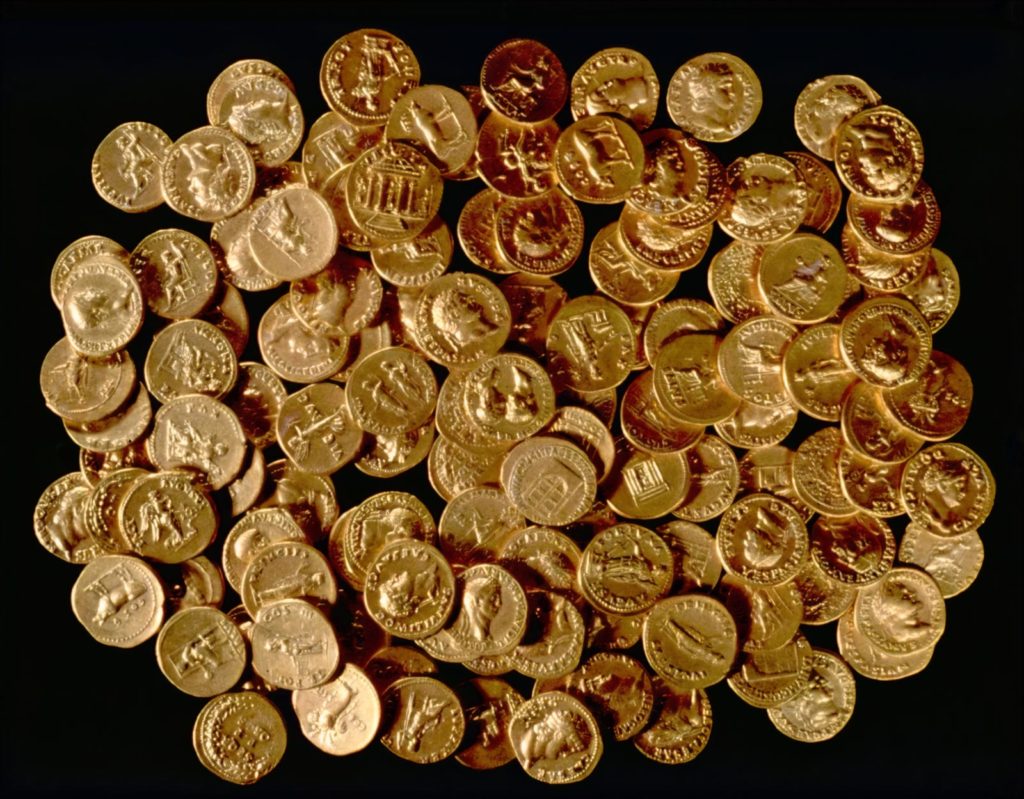
Photo © The Trustees of the British Museum.
Pegsdon gold coin hoard
“Shillington A & B, Bedfordshire: 127 aurei to AD 78, 18 denarii to AD 128”, in Richard Abdy, Ian Leins & Jonathan Williams (eds.), Coin Hoards from Roman Britain Volume XI, with Mark Curteis, 2002, Royal Numismatic Society Report on the discovery by metal detectorists in 1998 of an early Roman hoard of gold coins and its significance.
The Pegsdon Gold coin hoard (Figs. 4, 5 & 6) is a discovery that I personally remember as it was often talked about down the pub at the time. This was way before I got into detecting but it was one of those things that became a bit of local legend as there was speculation about the amount of money that the detectorists received for finding the hoard. When I asked Gil about his memory of it I stayed away from the monetary side of things and he recounted the following.
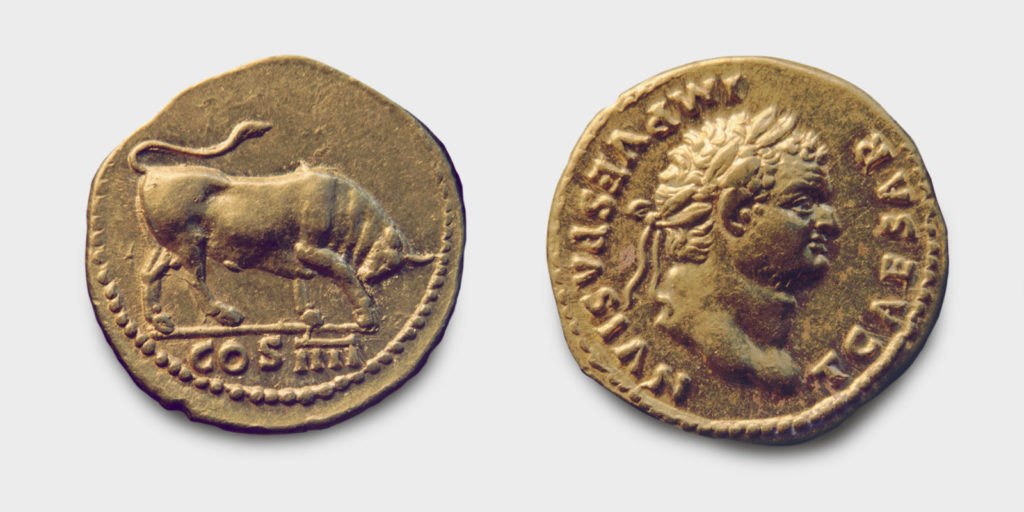
Photo © The Trustees of the British Museum.
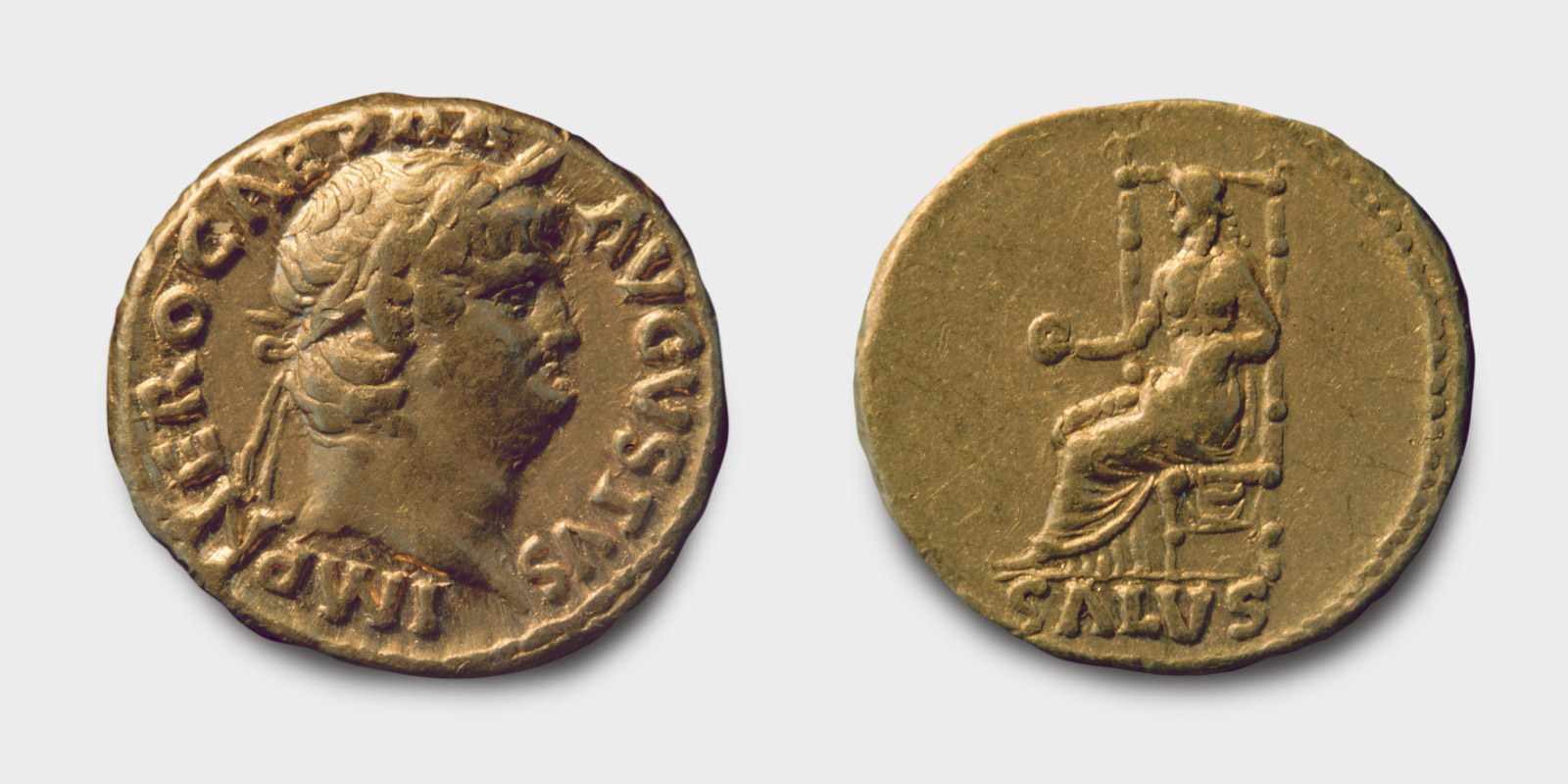
Photo © The Trustees of the British Museum.
“The hoard was found in 1998 and that is an interesting story. The two detectorists who found the hoard, who were on the land with the permission of the land owner, discovered it just a stones throw from the main farm house. They had been reporting things to me off and on for a few years up until that point, but this particular day was a day off of mine and they called me on my home phone and said, “Gil, we have something that you might like to see”.
“A couple of hours later the two detectorists turned up at the house with a brief case and proceeded to tip the contents of it onto the kitchen table. There was something like 112-113 gold Roman coins in mint condition that were staring back at me. The detectorists told me they had all been found in a relatively compact area, so I said we have to go back because there’s going to be more!”
“So myself and the two detectorists went back to the site and we started searching outwards from the find spot. We found another 16 gold Roman coins, so that made it 127 gold aureii in total. We found these along with some other silver denarii, I suspect they were from a separate hoard which were later in date, second century I believe and there were around 17 or 18 of those.”
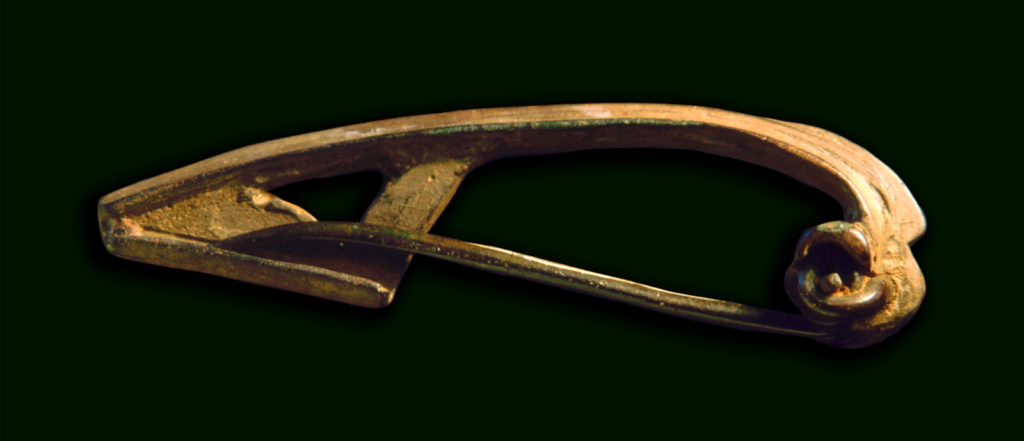
Photo by Jane Read, North Herts Museums.
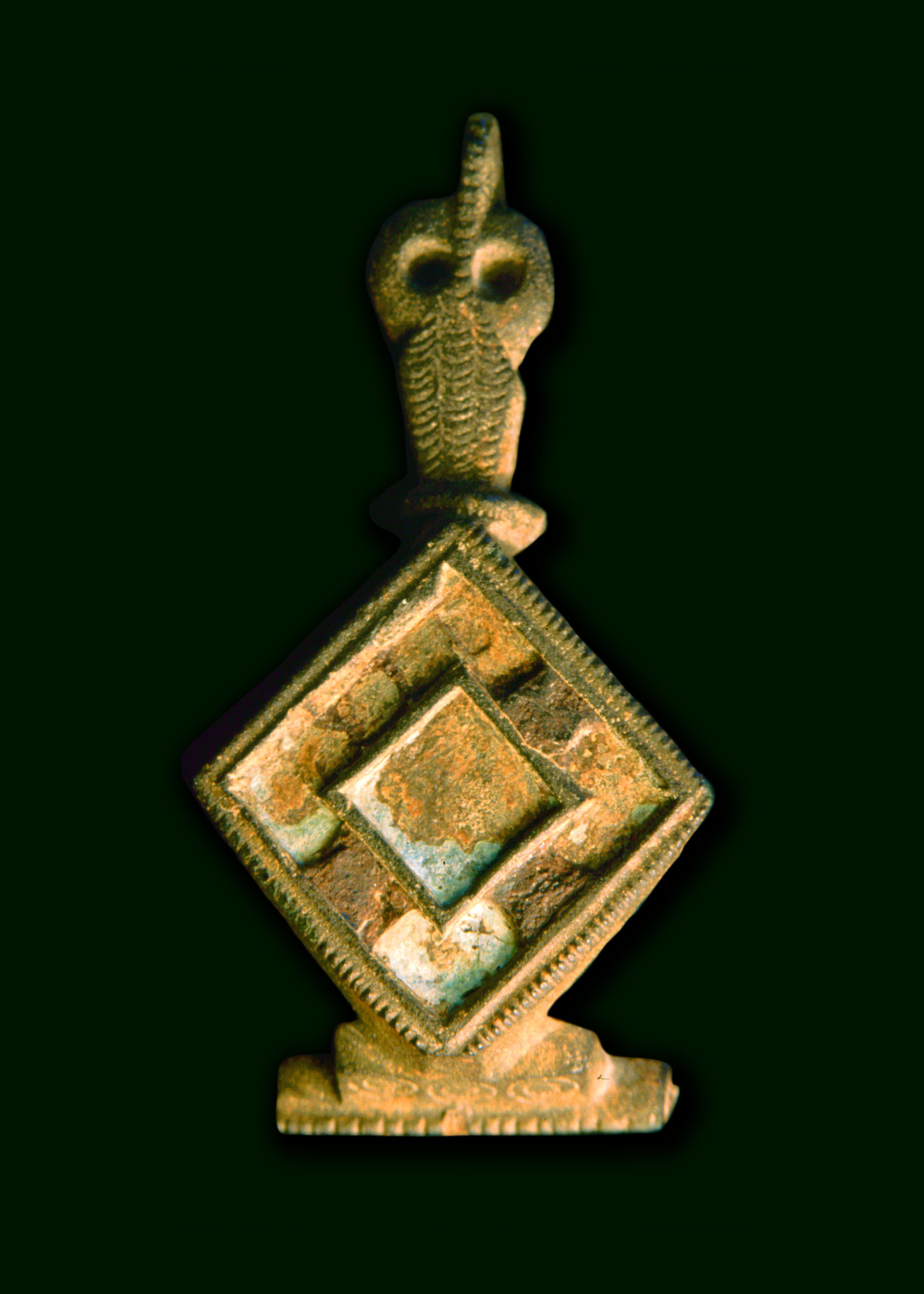
crested owl plate-brooch. The owl was a companion of Minerva who was equated
with Senuna. Enq.2308. Photo by Jane Read, North Herts Museums.
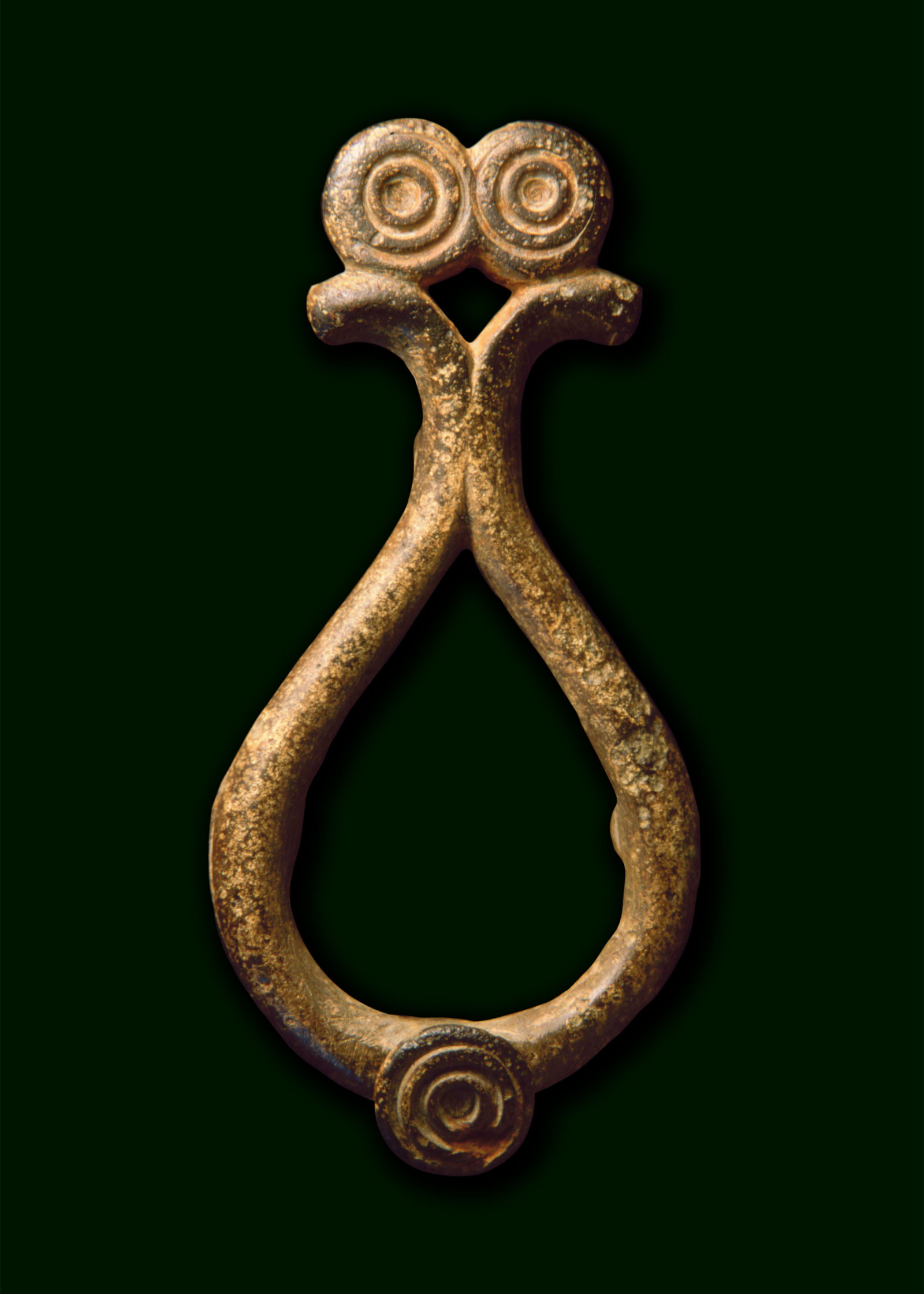
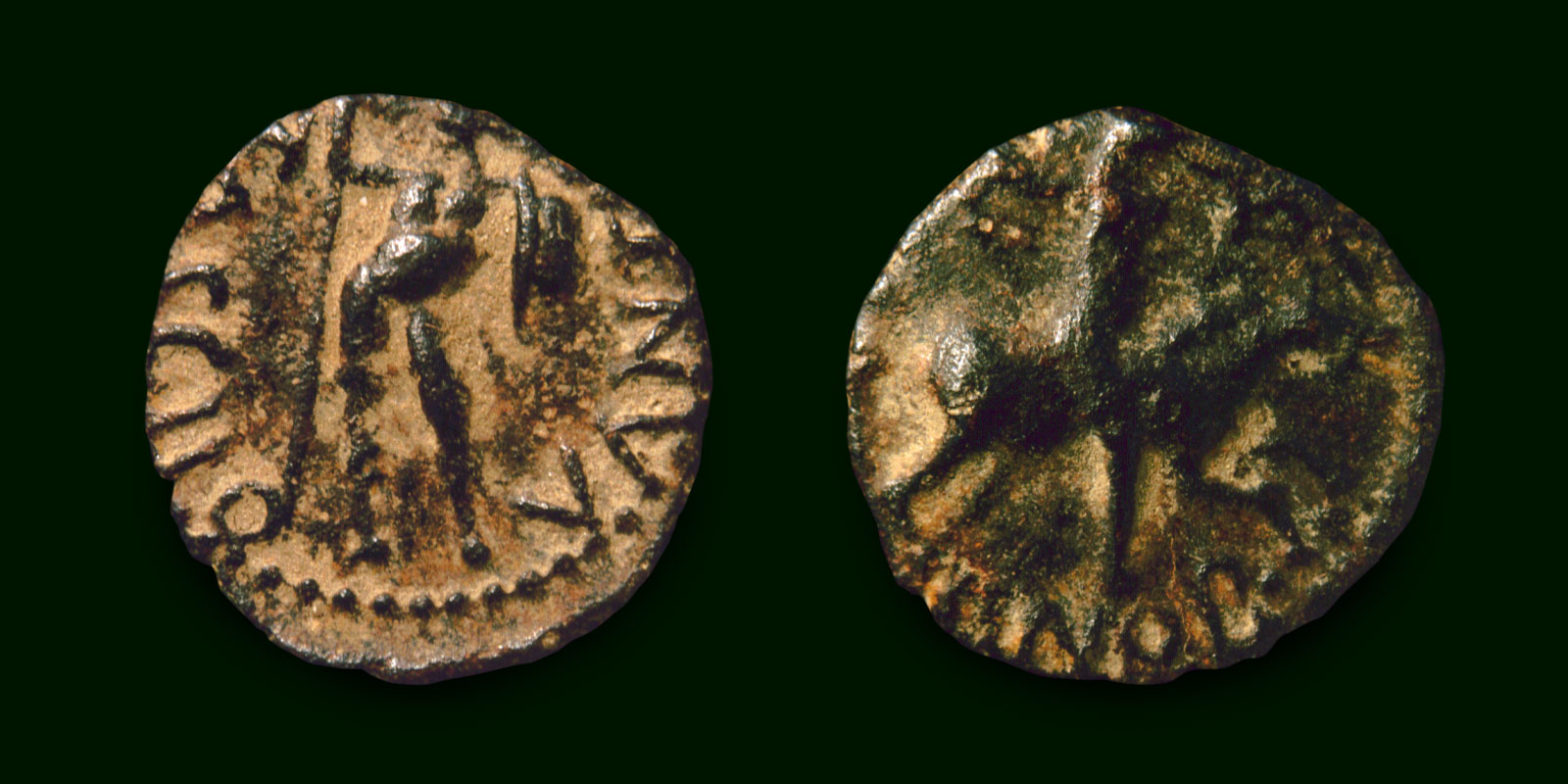
Photo by Jane Read, North Herts Museums.
Hearing Gil recount his memory of the gold Roman coins made me think how amazing it would be to find even one such coin, but 127 that are in mint condition, that really is the stuff that dreams are made of! Gil also provided some images of other finds that have been made around the same area (Figs. 7, 8, 9 & 10) which are also amazing artefacts in their own right.
Pegsdon Iron Age mirror
“The Iron Age mirror burial at Pegsdon, Shillington, Bedfordshire: an interim account” With Vincent Megaw in the Antiquaries Journal, vol. 87, 2007, pp.109–40; Society of Antiquaries of London
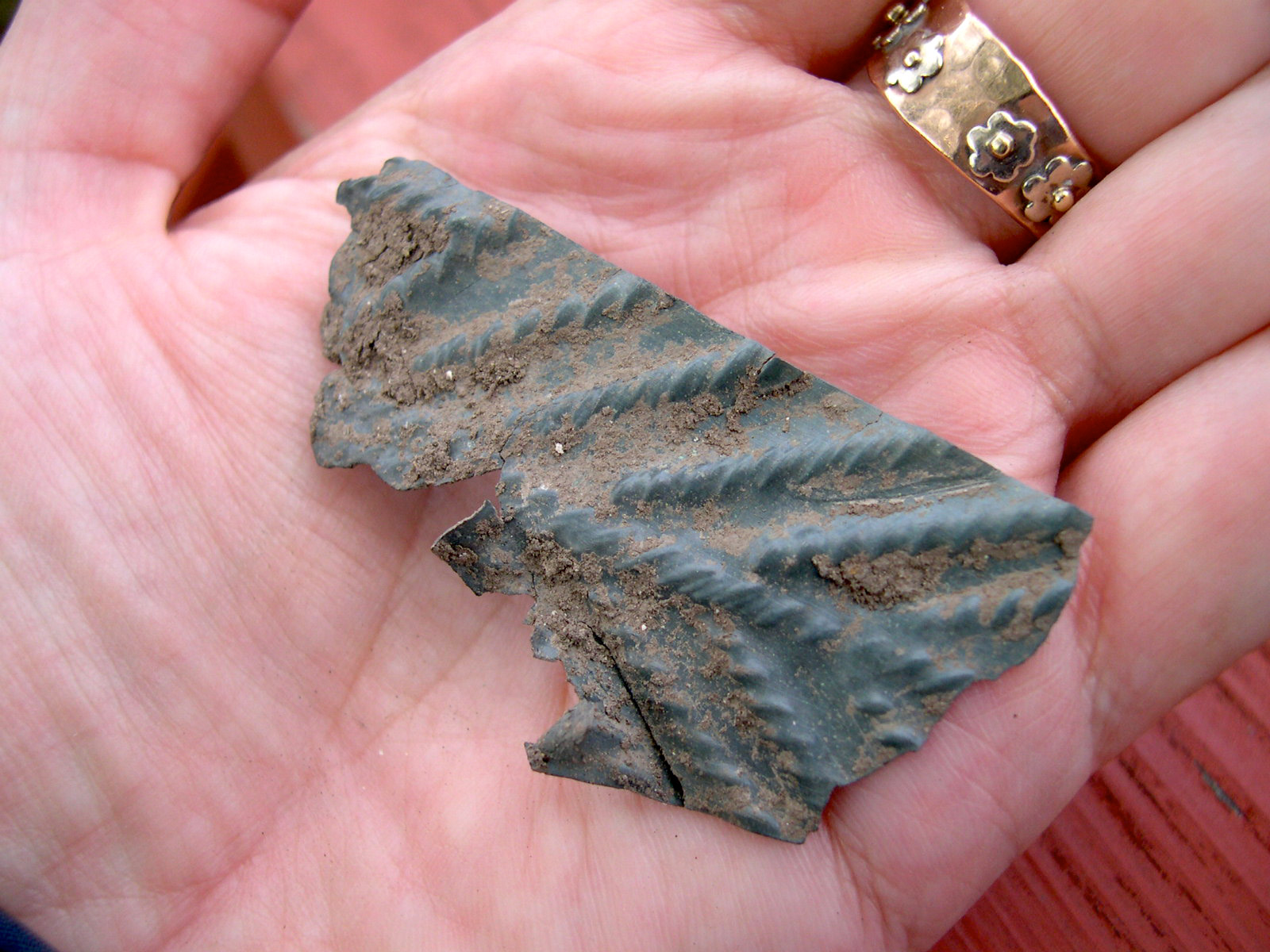
Abstract: In November 2000 metal detectorists located a decorated copper-alloy mirror, a single silver Knotenfibel brooch and some pottery sherds at Pegsdon, Shillington, Bedfordshire. Subsequent excavation of the findspot uncovered a Late Iron Age cremation burial pit associated with further pot sherds and a single fragment of calcined bone. The opportunity is taken in this preliminary account to revisit both the occurrence in southern England of the brooch type and to discuss the mirror’s decoration in relation to the variation of views as to the British mirror series as a whole, and in particular with regard to other recent mirror discoveries. The burial is discussed in its local context and the possible significance of the topography in relation to the site is highlighted.
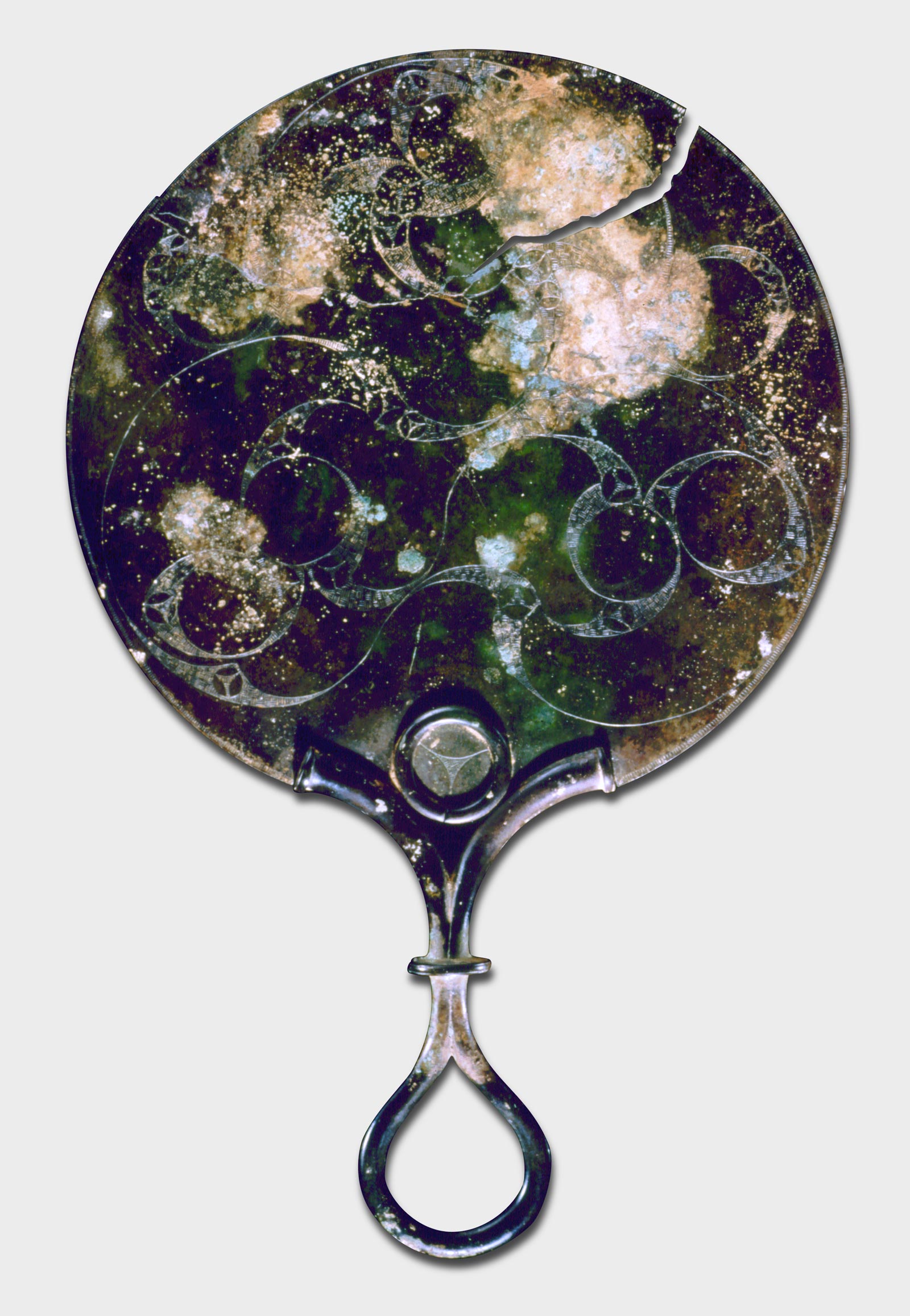
It amazes me that the things we unearth are sometimes in superb condition, especially with the amount of time they have spent in the ground. In the case of the Pegsdon Iron Age Mirror (Figs. 11 & 12) that’s over two thousand years. But it also amazes me that these things often shed light on the fact that day to day life 2000 years ago was not all that different to how it is today. Even back then taking pride in your appearance was made all the easier with the use of a mirror, although I do believe they had a lot more significance and meaning than they do today. Gil reflected (see what I did there, lol) the following about this wonderful find…
“A few years later the same detectorists who had found the Roman gold coin hoard found a late Iron Age decorated bronze mirror accompanied with some broken pot fragments along with a silver brooch which was also late Iron Age (Fig. 13). This time we couldn’t go back to do further investigation at the find spot until a year later because of crops being sown and the farmer didn’t want us poking about (incidentally this was the same field that the Roman gold coins were found in). So when we did go back to carry out a small excavation, just the two detectorists and me, I was able to define a grave pit”.
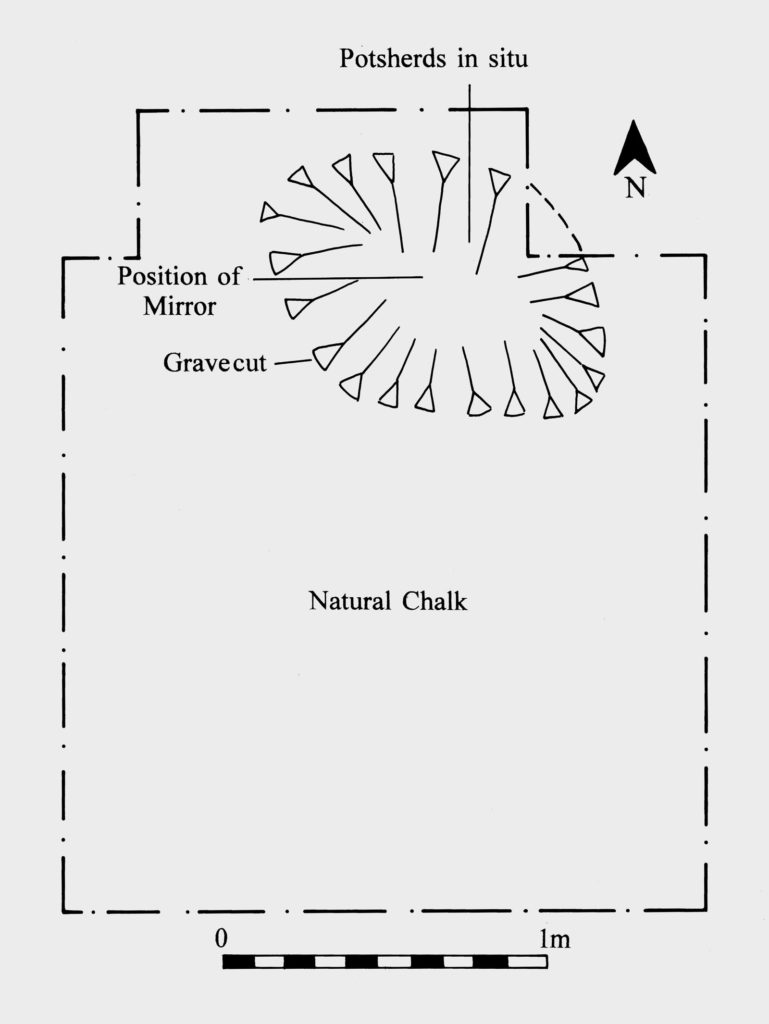
“There had been a cremation burial in a pot with a pedestal base, a very distinctive late Iron Age urn type, accompanied by a flat-based jar, and we found some more fragments of the urn along with some cremated bone. With that I was able to work out where everything was positioned in the grave pit (Fig. 14), it’s incredibly useful to be able to put the discovery in its archaeological context, which as an archaeologist is the main thing you want to achieve, so that was brilliant”.
“Of course, Iron Age mirrors, rarely found artefacts, were of much greater significance than simply for personal grooming, with their implied attributes of power and of the magic associated with the imagery of light and reflection, fire-making, and capability to dazzle, they were used in religious ceremonies to impress, usually by priestesses; for when associated with burials the identified human remains are almost all female”.
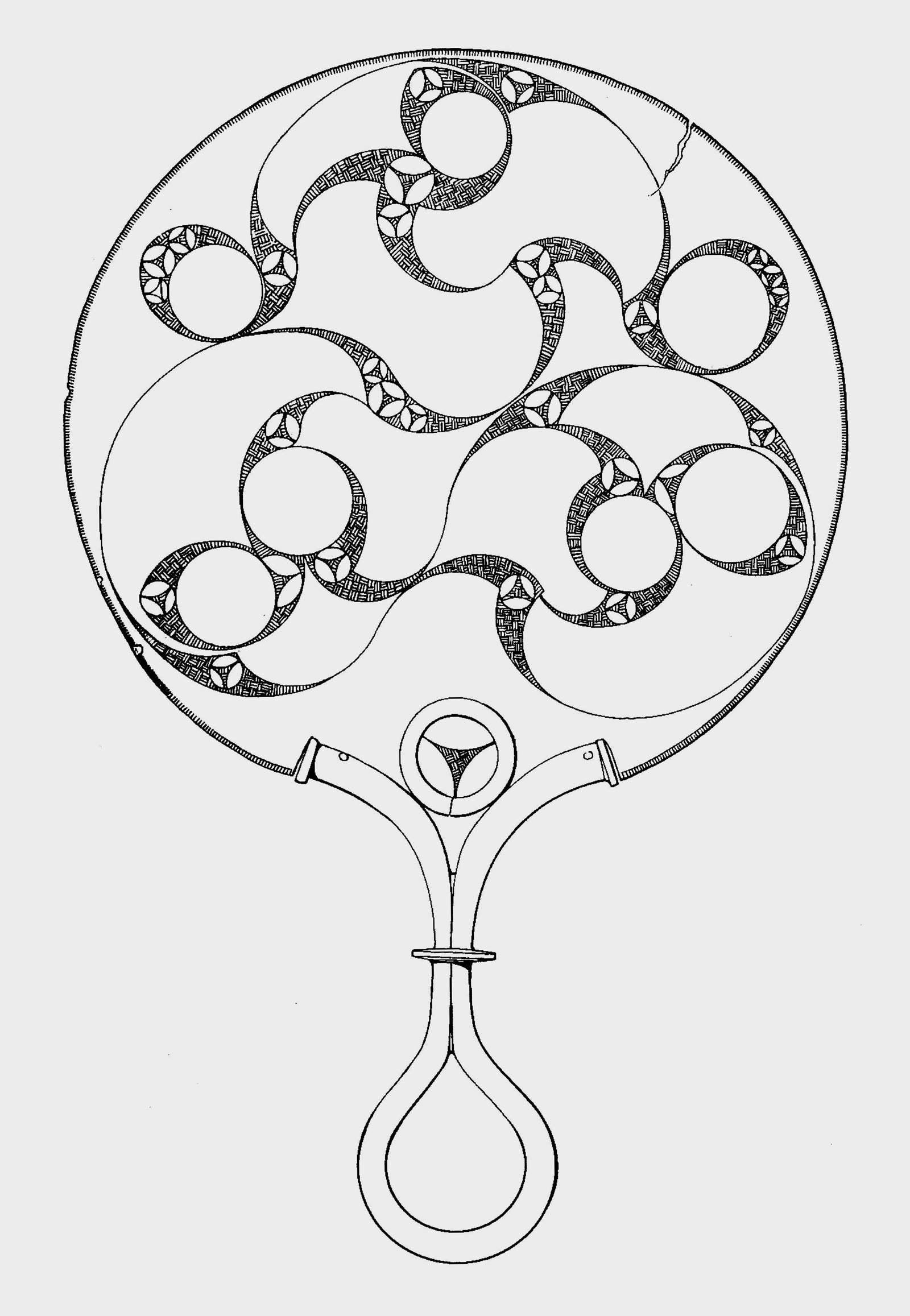
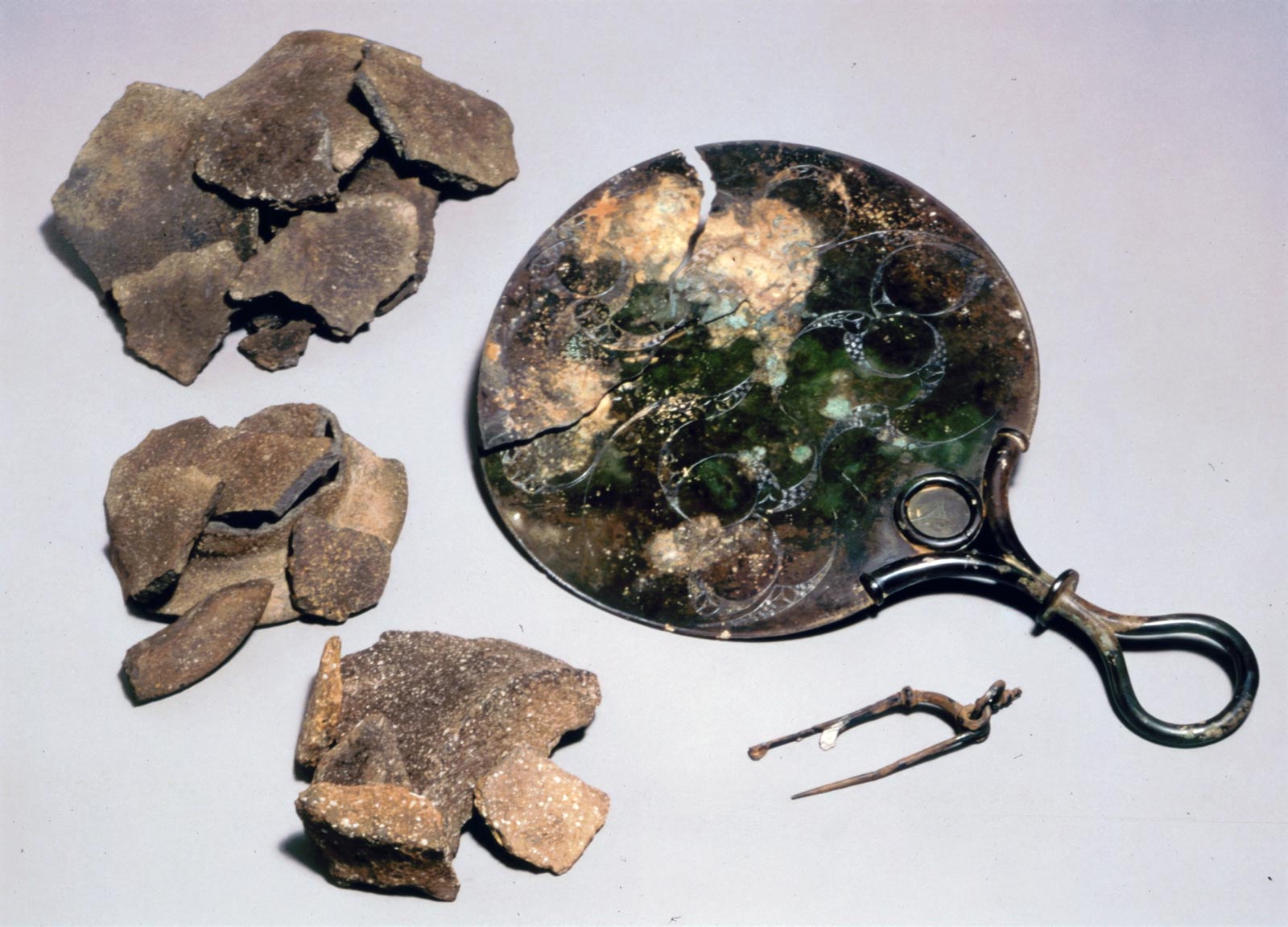
Image © The Trustees of the British Museum.
“The mirror itself was intact but with the detectorists eagerness to get it out of the ground they were a little bit rough with it, so it had split in a couple of places. When it was conserved that was all repaired but surprisingly the handle was still attached, usually you find these things are separated buy the plough so it’s quite rare to find something like this in one piece. So it was in pretty good nik really, and the decoration had been very well preserved, it would have been polished on one side with the decoration on the back”.
“The silver brooch (Fig. 15) found with it would have been part of a pair that were connected by a chain, but as is often the case you get one of the pair and you don’t ever find the other one. But I think in this case where we found a brooch which was quite quite obviously of a pair, the reason we don’t find the other one is because it wasn’t put in the ground in the first place. It may have been deliberately separated so that the mourners kept it as keep sake as way of a connection to the burial. The detectorists did search far and wide for the brooch’s twin and the chain but they never found anything, which is why I came to the conclusion that it was never in the ground in the first place”.
“As an archaeologist you know that these things are being brought to your attention because over the years you’ve built up a relationship with the hobbyists out there detecting, and then they trust you, and you in turn trust them, sometimes ending up with spectacular results. It’s all about relationships and trust”.
Sea Senuna the unknown deity
Dea Senuna: Treasure, Cult and Ritual at Ashwell, Hertfordshire, with Ralph Jackson and other contributors, March 19, 2018, The British Museum
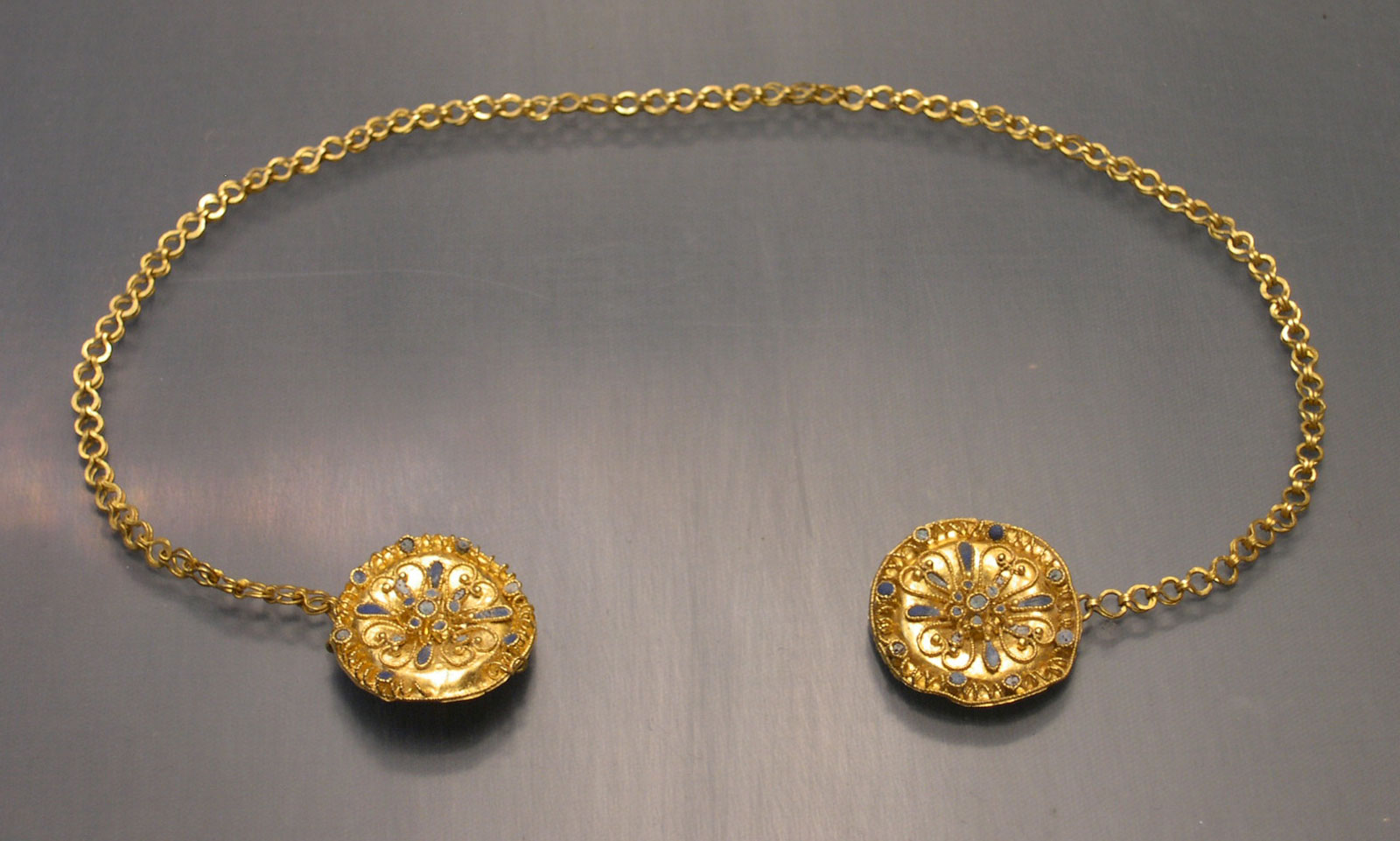
Abstract: The Ashwell Hoard is an unprecedented find both in Britain and in the wider Roman world. In Britain there has been no equivalent discovery of ‘temple treasure’ within living memory. It is paralleled only by the 18th-century finds from Barkway, Hertfordshire (1743) and Stony Stratford, Buckinghamshire (1789). In contrast to the Ashwell Hoard those two finds preserve almost no information concerning their discovery or archaeological context. In terms of its finding circumstances, then, the Ashwell Hoard is exceptional even amongst the small number of precious metal votive hoards from Roman Britain. But it is exceptional in other ways, too, most notably in the inclusion of a silver figurine, unique gold jewellery and votive plaques of gold and by the proportionately large number of plaques with votive inscriptions and with die-stamped figural decoration. The silver figurine of Senuna, a hitherto unknown native British goddess, is unparalleled in Roman Britain. If the dedication of a large, high-quality, silver-gilt figurine is evidence of a votary of some means amongst the followers of Senuna so, too, and even more so, is the gold jewellery, which may be interpreted as a suite. It is a very rare survival outside Rome itself. Numerically, the greater part of the Ashwell Hoard is the collection of 20 gold and silver votive leaf plaques, which, in form and number, are a unique survival. The importance of the hoard, whose ‘new’ goddess caught the imagination of the public as well as the academic world, was such that it demanded an archaeological investigation of the find-spot. Its discovery triggered the fieldwork that illuminated the immediate setting of the hoard and then expanded that setting into the wider landscape. The progressive results of fieldwalking, geophysical surveys and excavations led to a fuller understanding of the circumstances surrounding the choice of site for the burial of the hoard, of the nature and use of the site itself and of its relationship to surrounding structures, settlements and natural landscape features. Almost the first find from the excavations was the missing silver pedestal from the silver-gilt figurine, a key find, and, better still, inscribed. In reconnecting the image of the female deity to the dedicatory vow, inscribed for the votary Flavia Cunoris, it instantly multiplied the meanings and hugely enhanced the significance of an already important object. That discovery set the tone for the excavations, which went on to reveal not a formal temple building, as initially suspected, but a unique and fascinating open-air ritual site, where feasting, religious activity and ritual deposition took place over a long period of time, seemingly extending as far back as the Bronze Age.
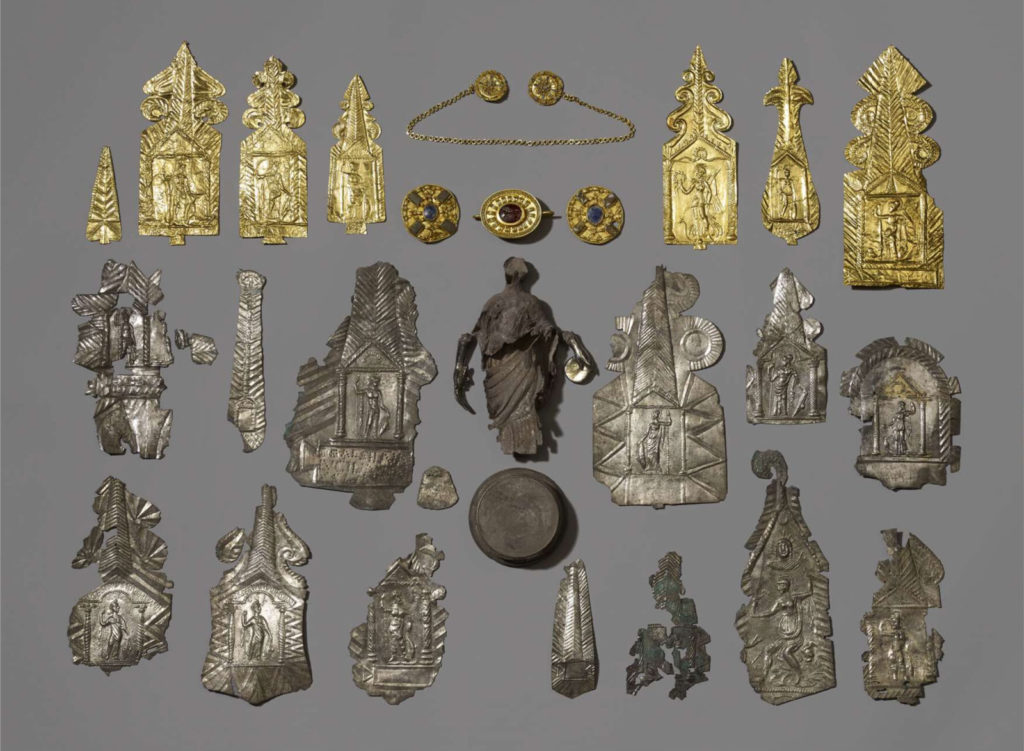
So the Ashwell Hoard (Fig. 16) is the big one in the context of archaeological significance, it was the discovery of a deity that had never been heard of or recorded before. I could see by the beam on Gils face and the enthusiasm in which he spoke about this discovery that it was the biggest highlight of his long career. And again it’s something that Gil freely admits would not have been possible if it weren’t for the detecorists who were out searching the fields that day. The good relationships that Gil had built with local detectorists over the years certainly paid dividends for the archaeological world with this incredibly significant find. With a glint in his eye Gil recounted the following about this wonderful treasure.
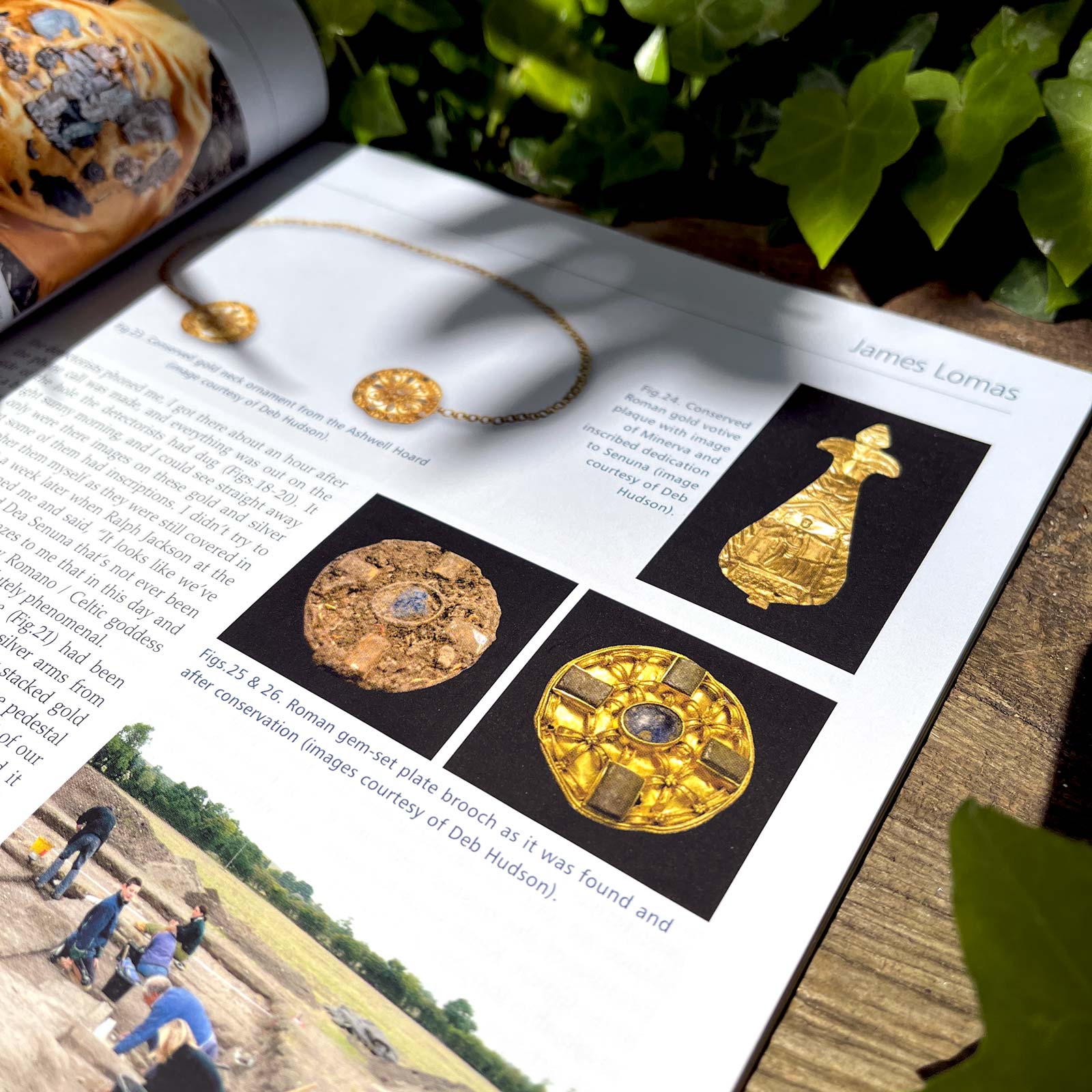
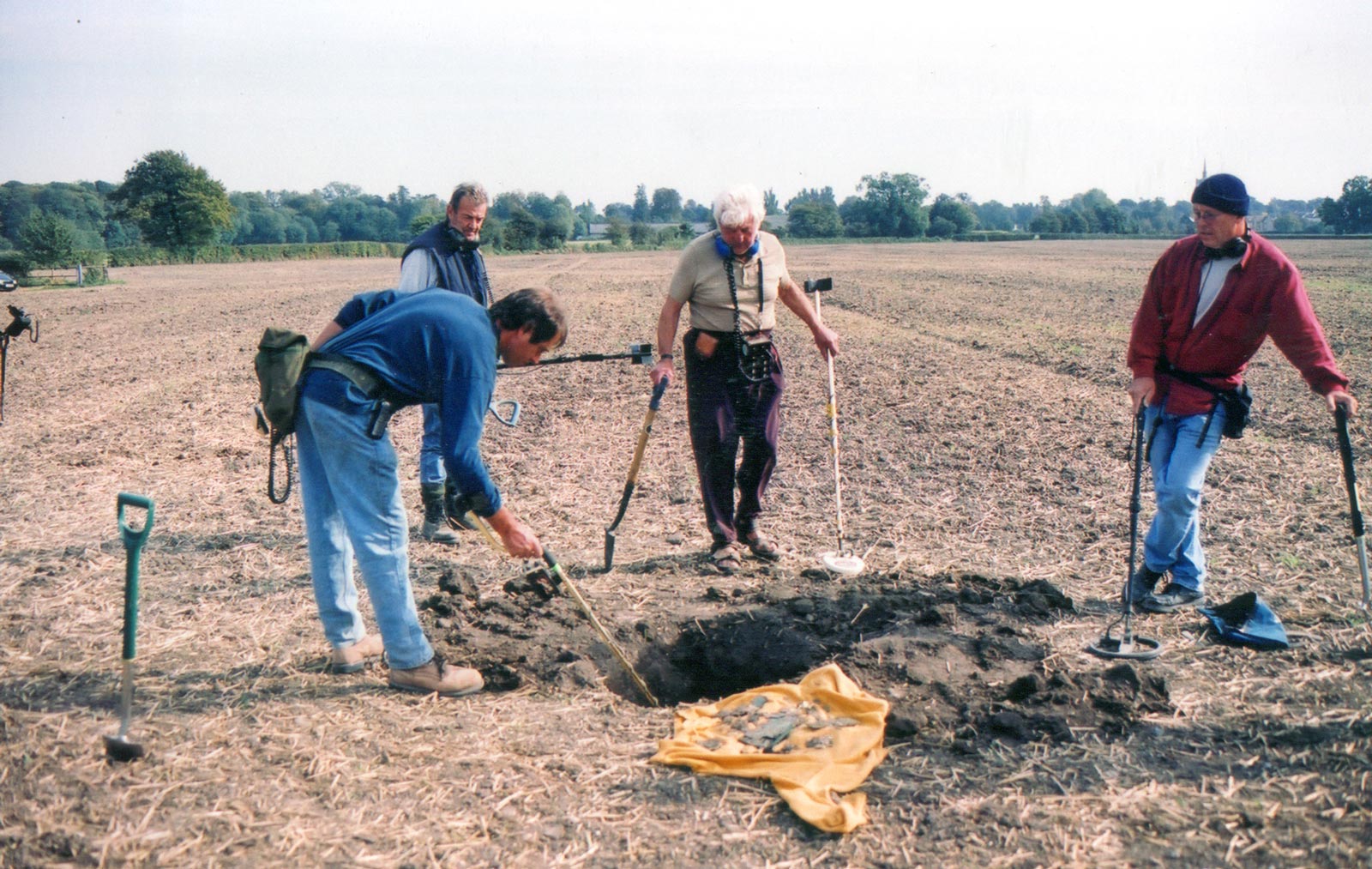
“I went out to the site on the day the detectorists phoned me, I got there about an hour after the phone call was made, and everything was out on the side of the hole the detectorists had dug (Figs. 17, 18 & 19). It was a bright sunny morning and I could see straight away that not only were there images on these gold and silver plaques but some of them had inscriptions. I didn’t try to read and decipher them myself as they were still covered in dirt. It was about a week later when Ralph Jackson at the British Museum phoned me, he said, “It looks like we’ve got a new goddess called Dea Senuna that’s not ever been recorded before”. It still amazes me that in this day and age you can come across a new Romano/Celtic goddess that’s unrecorded, and that’s absolutely phenomenal.”
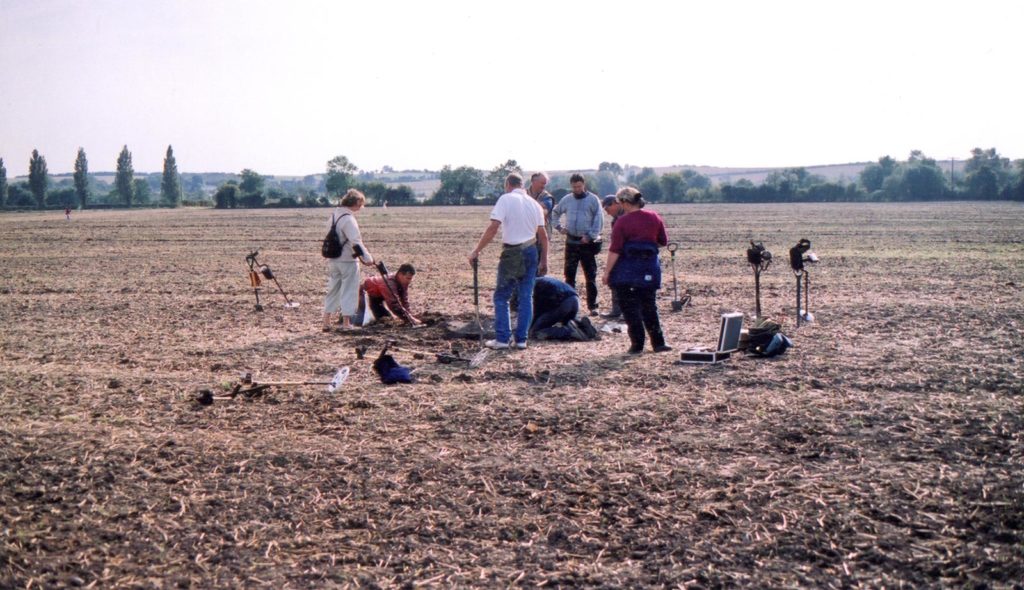
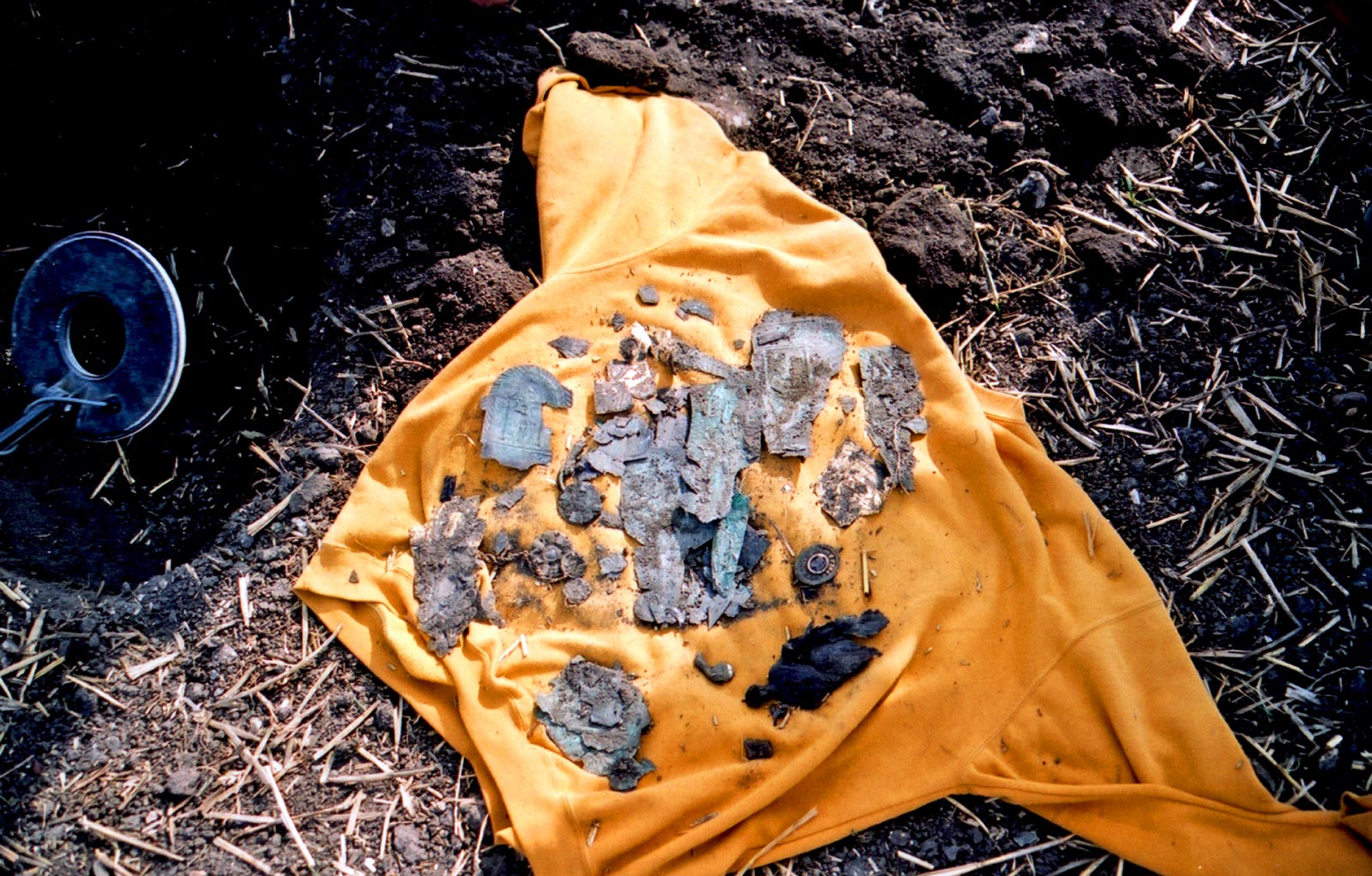
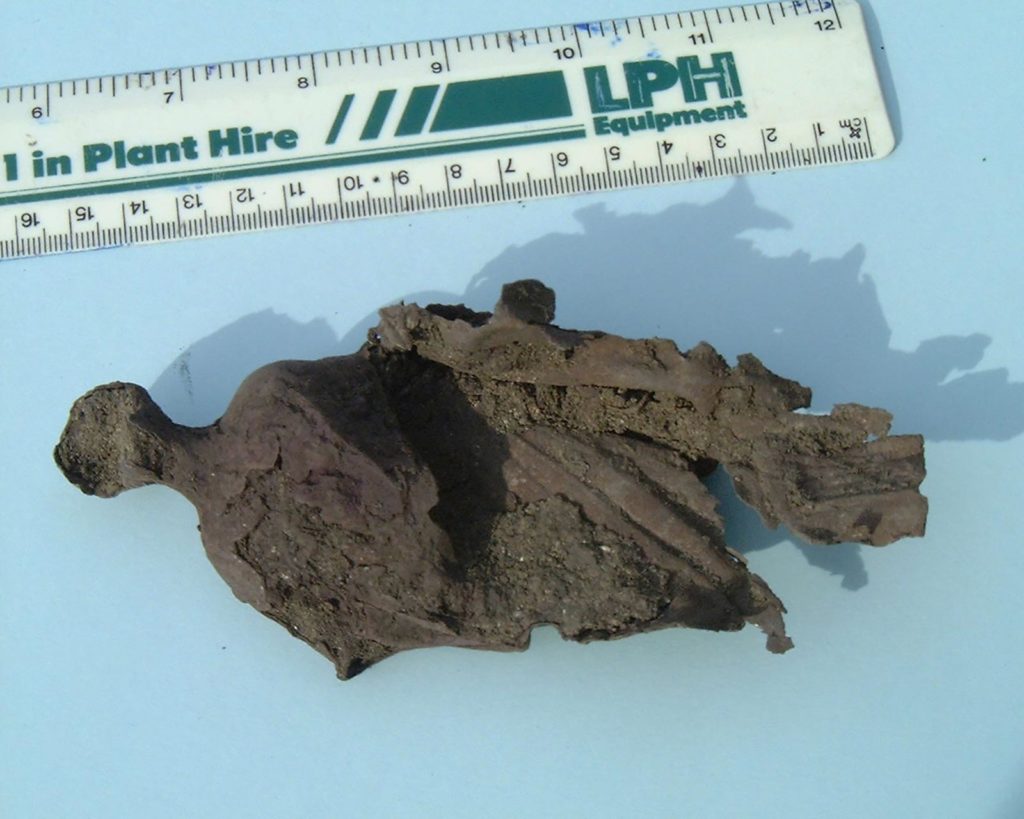
“If I remember rightly the figurine (Fig. 20) had been placed on top of the gold jewellery and silver arms from the figurine, beneath which were the closely stacked gold plaques and then the silver-alloy plaques, but the pedestal base for the figurine was not in that pit. At the start of our excavations it was found about 5 metres away and it appears to have been deliberately buried separately. You can never really understand why people do these things, but they did, and that’s how we found it. It was definitely the base for the figurine which the conservators were able to prove without doubt because the figurines feet matched with the outline of the solder on the base. Why they would bury these things separately is anyone’s guess, but it may have been that one person had buried the bulk of the hoard and a relative was burying just the pedestal base as their separate and personal act of ritual.”
Gil carried on to say…
“Again on the Ashwell dig, and this was also deliberate I’m sure, we found part of a copper alloy plaque depicting a bull placed on a surface on one part of the site right in the centre of the ritual enclosure. We found the other half of the plaque deliberately placed in a little pit a few meters away. They were very clearly broken, separated and then buried separately for whatever motive, who knows. It could be two different devotees making an offering of one thing but they each wanted to make a separate offering so they broke it in two.”
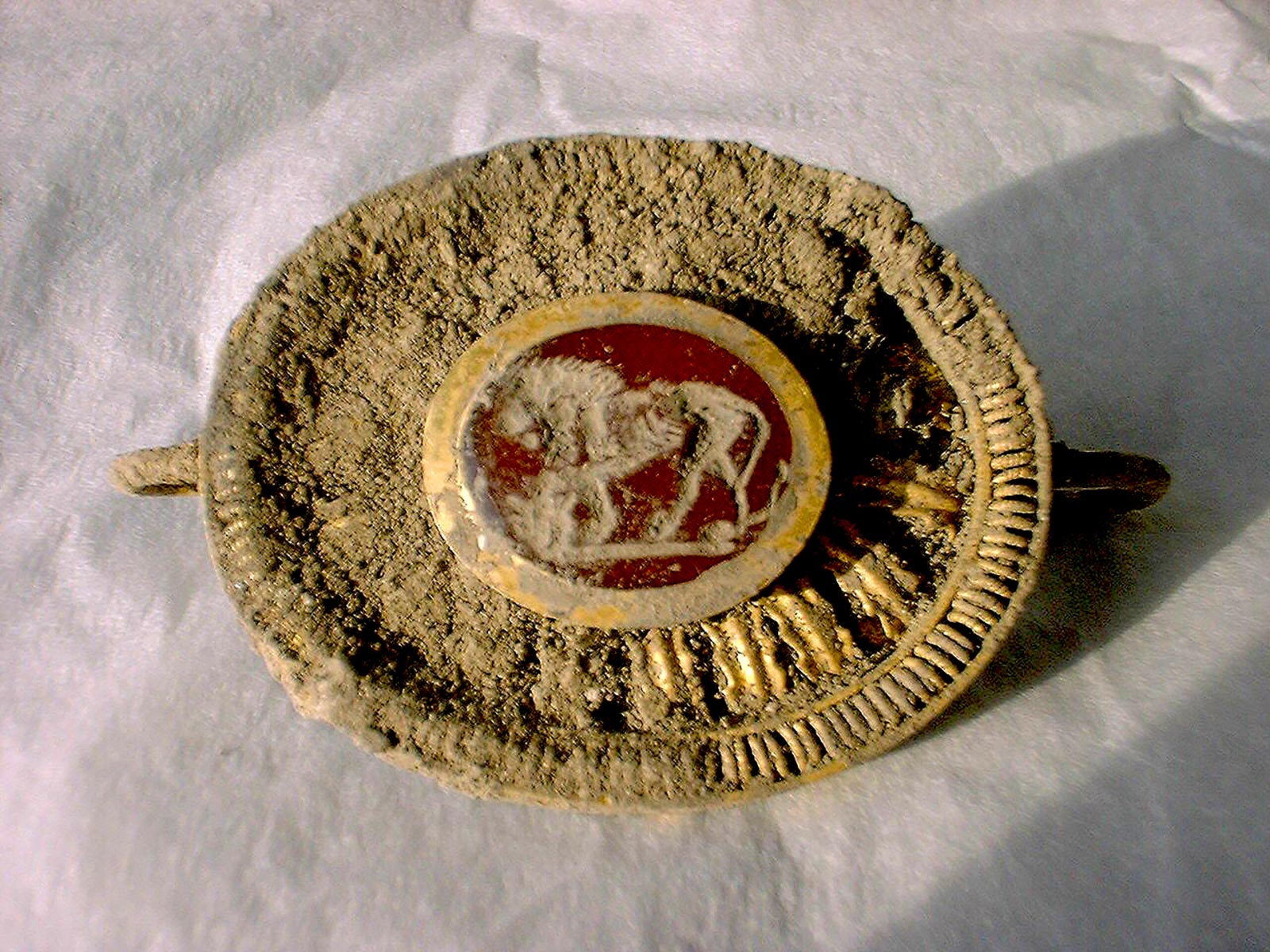
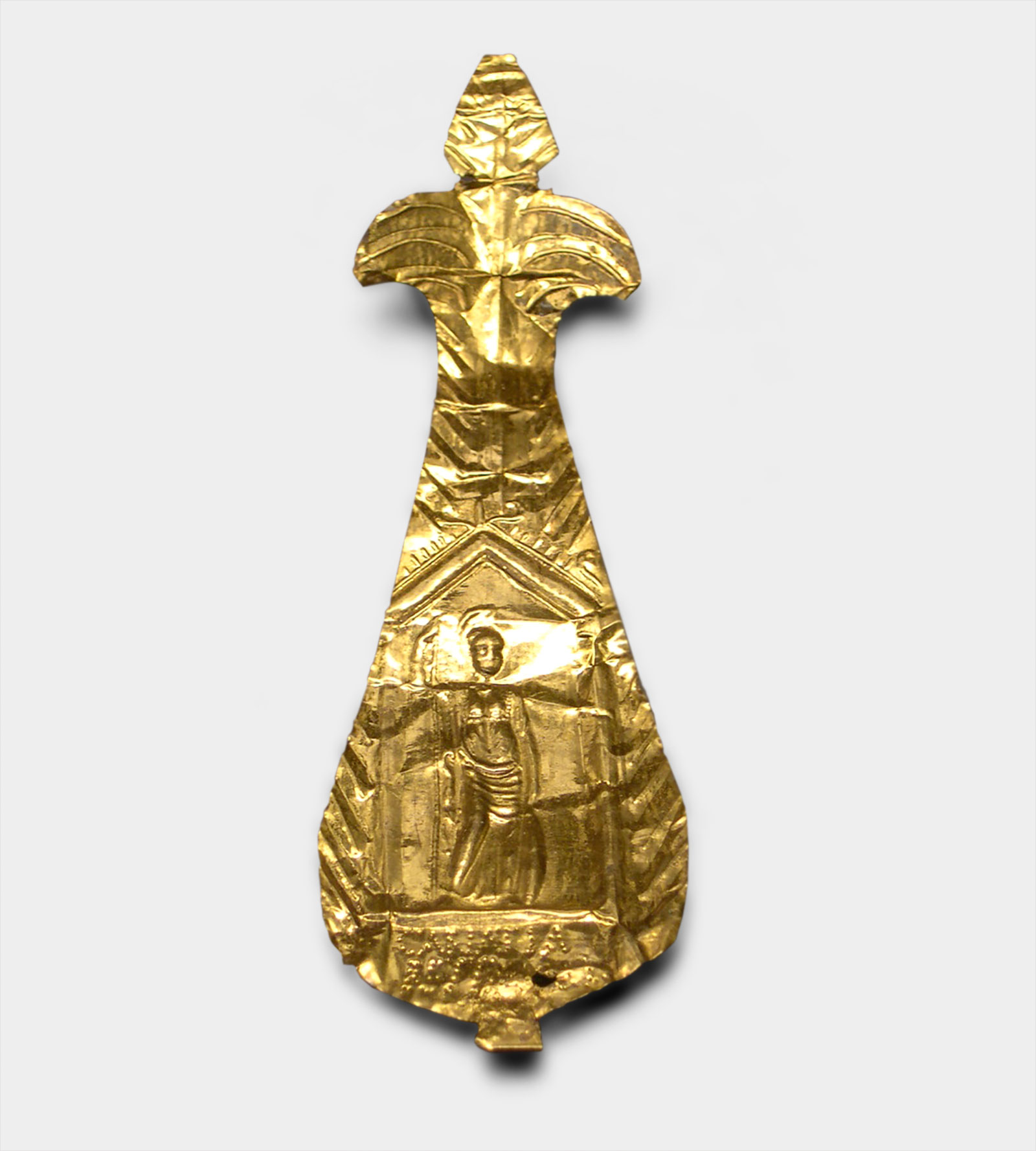
and inscribed dedication to Senuna. Photo by Deb Hudson.
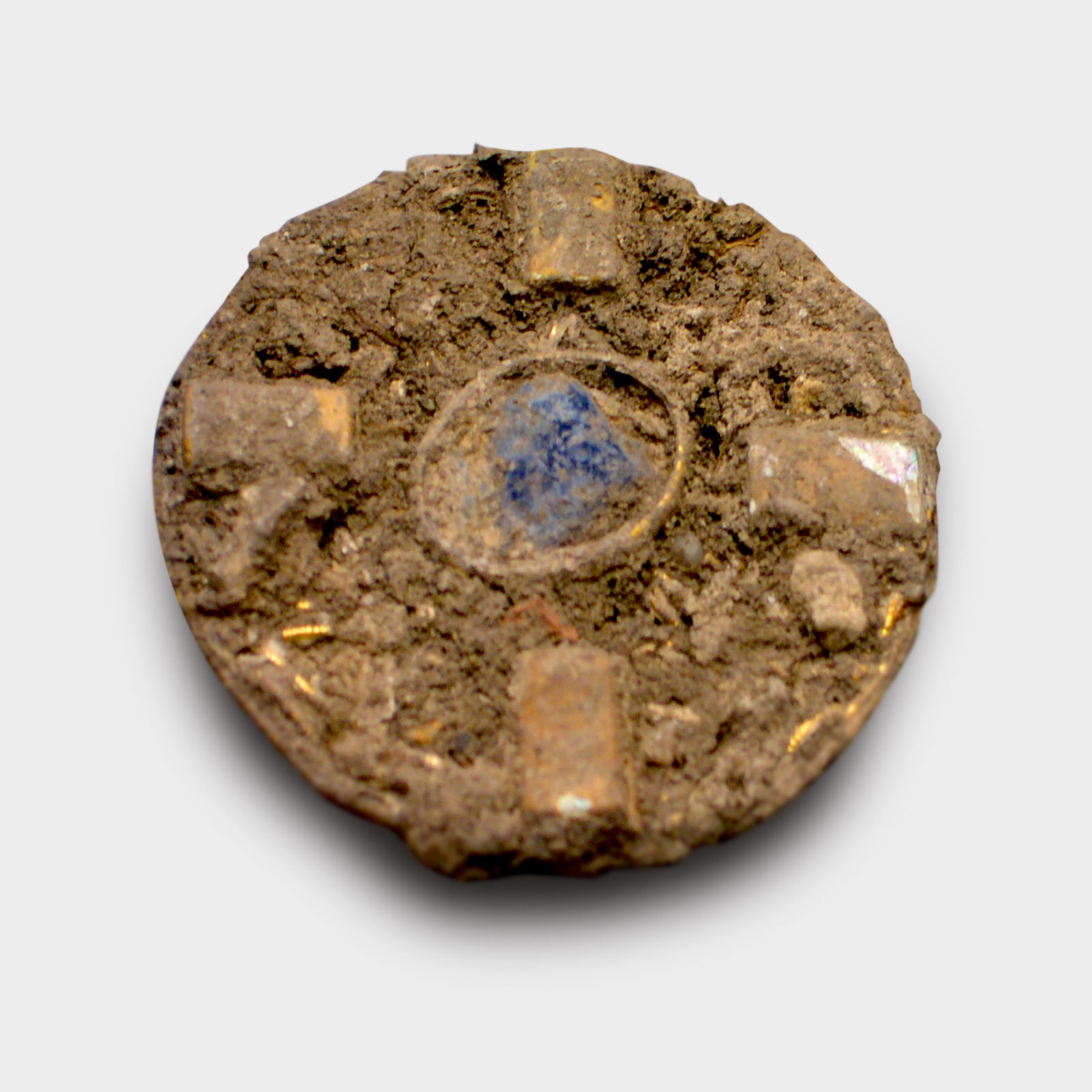
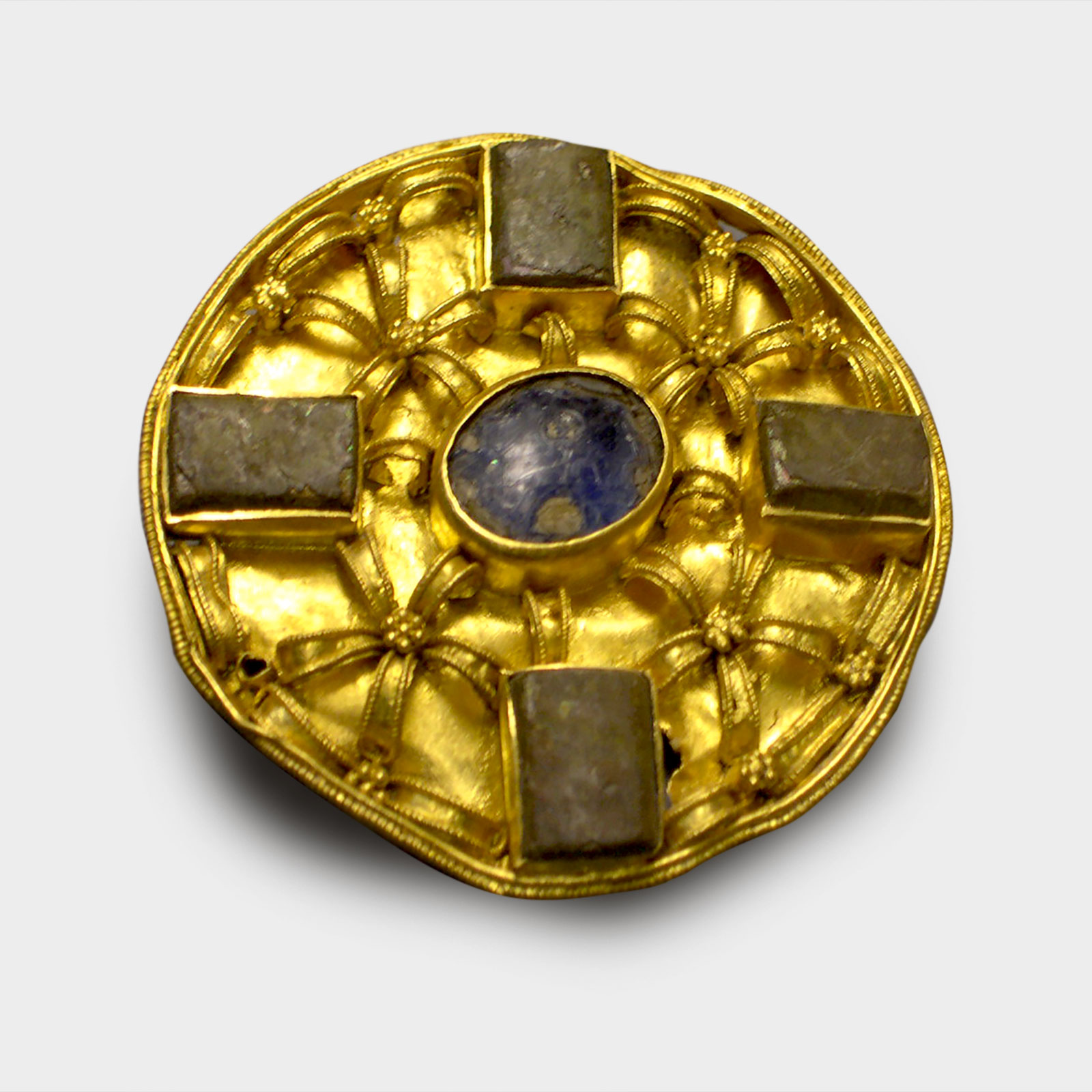
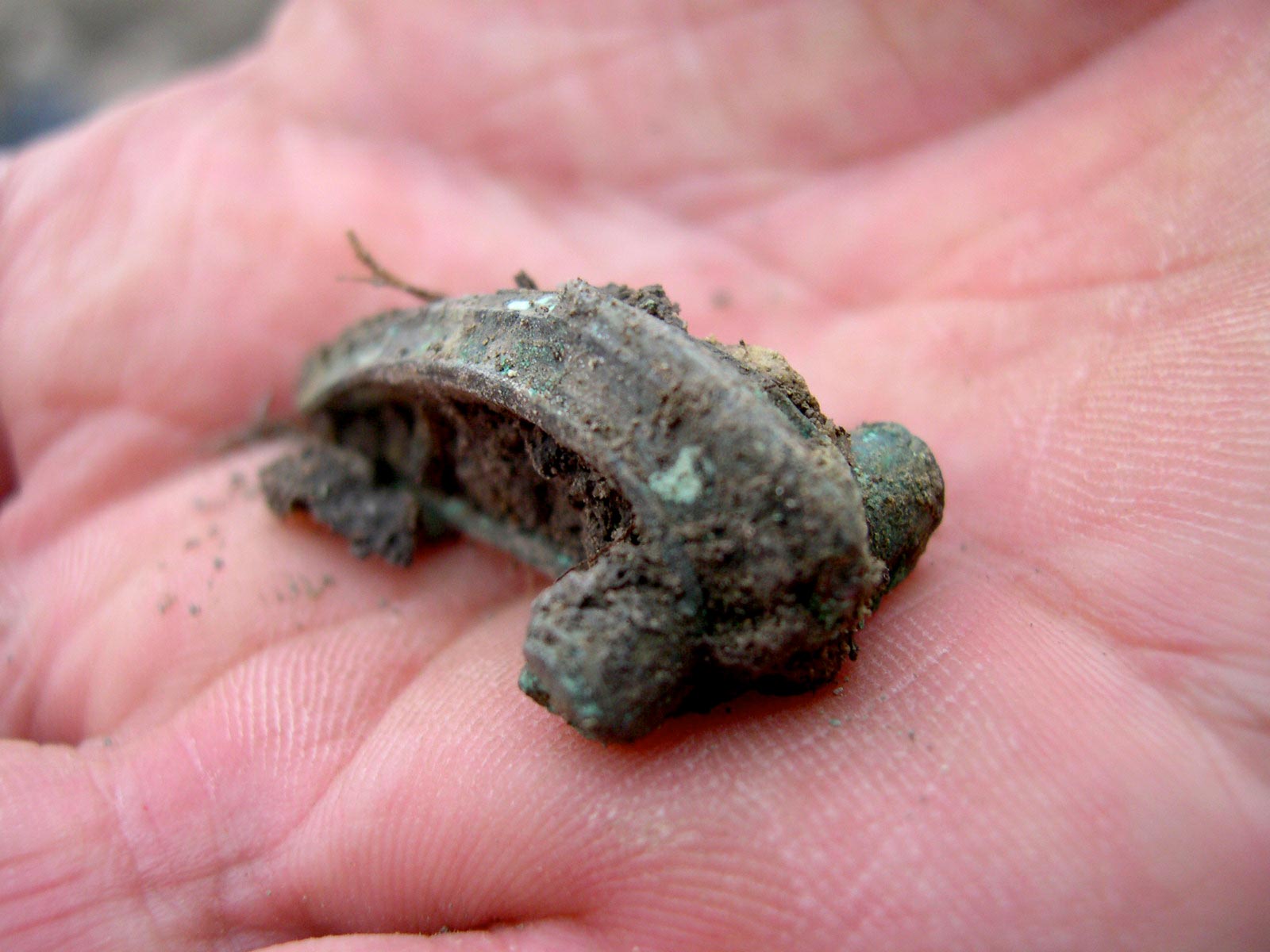
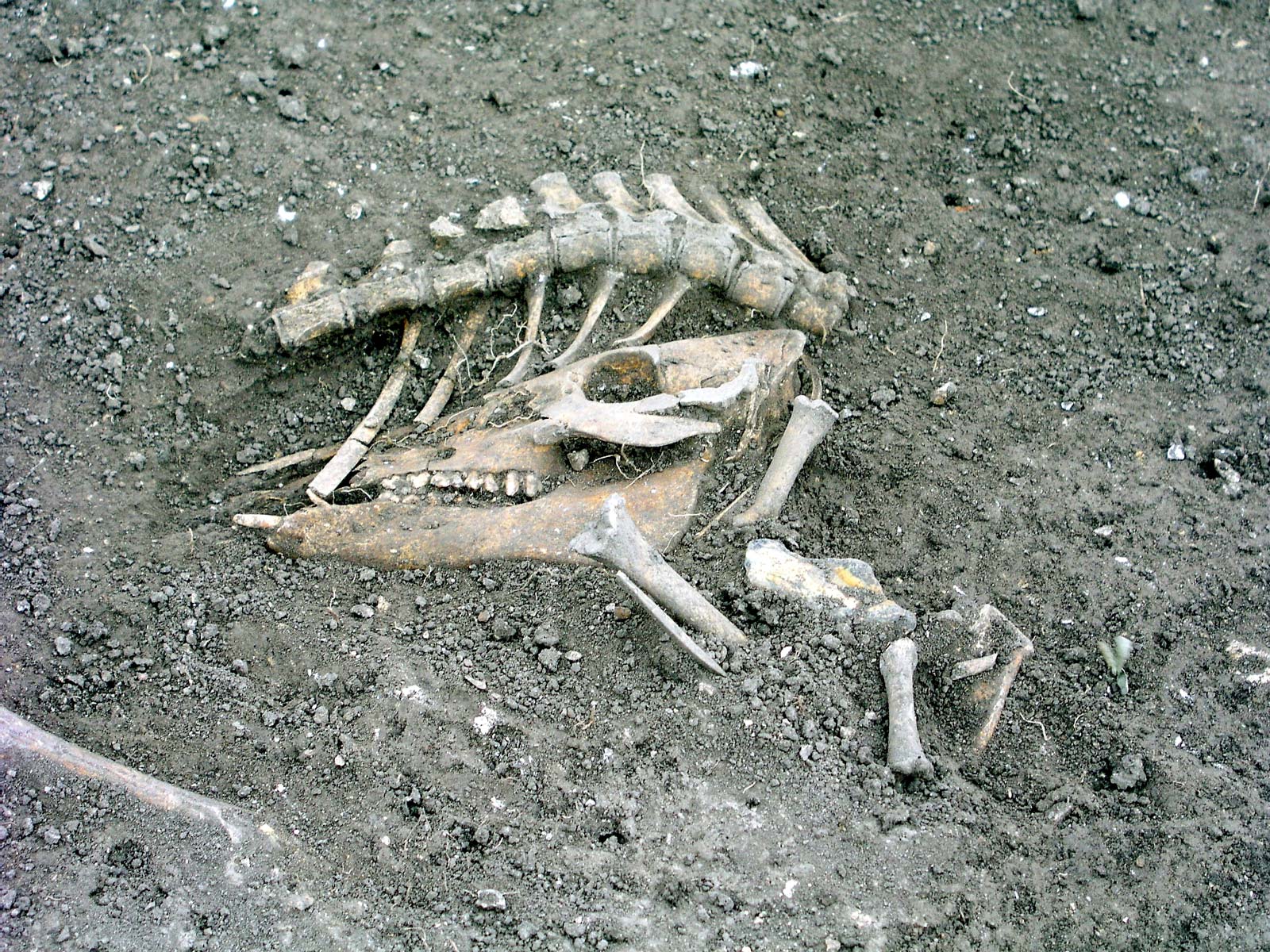
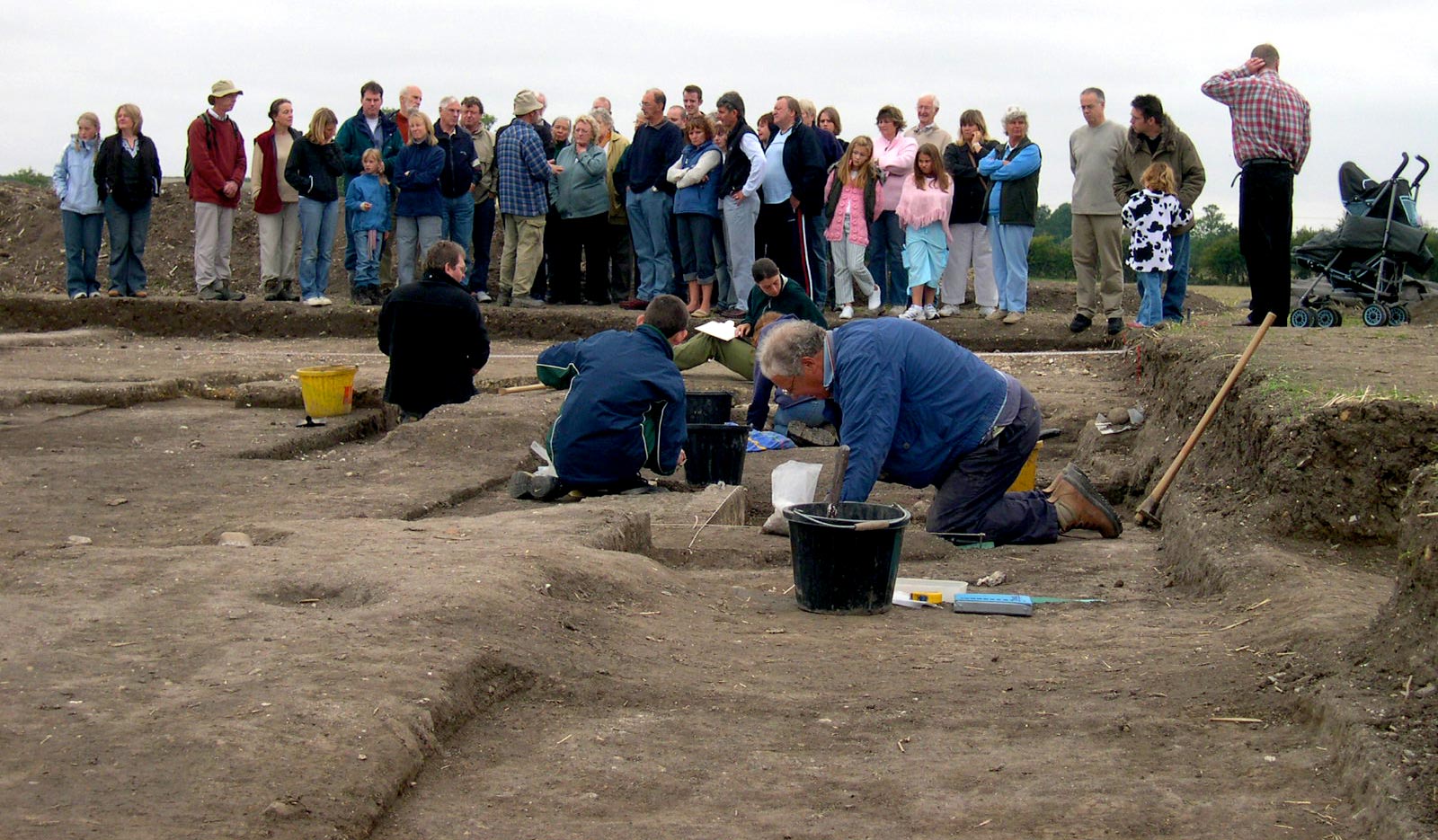
It was great to hear Gil’s recollections of these amazing discoveries and even better to be able to share them, along with some of the photos from the sites’ archives as well as other photos which Gil has provided (with permission) for use in this article (Including Figs. 21-25). Gil was also involved with more extensive excavations that took place at Ashwell in the following years which produced further insight to add to the archaeological understanding of the area (Figs. 26 – 33).
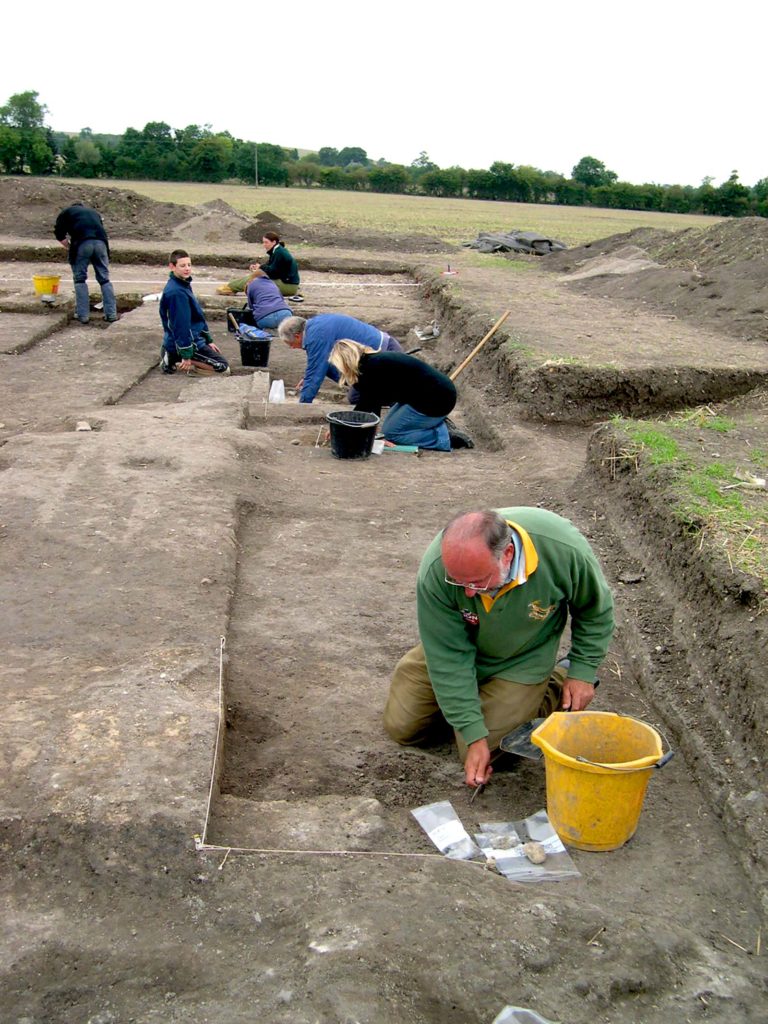
They are excavating clay oven bases used for cooking joints of meat consumed at religious
feasts in honour of Dea Senuna and other deities. Photo by Deb Hudson.
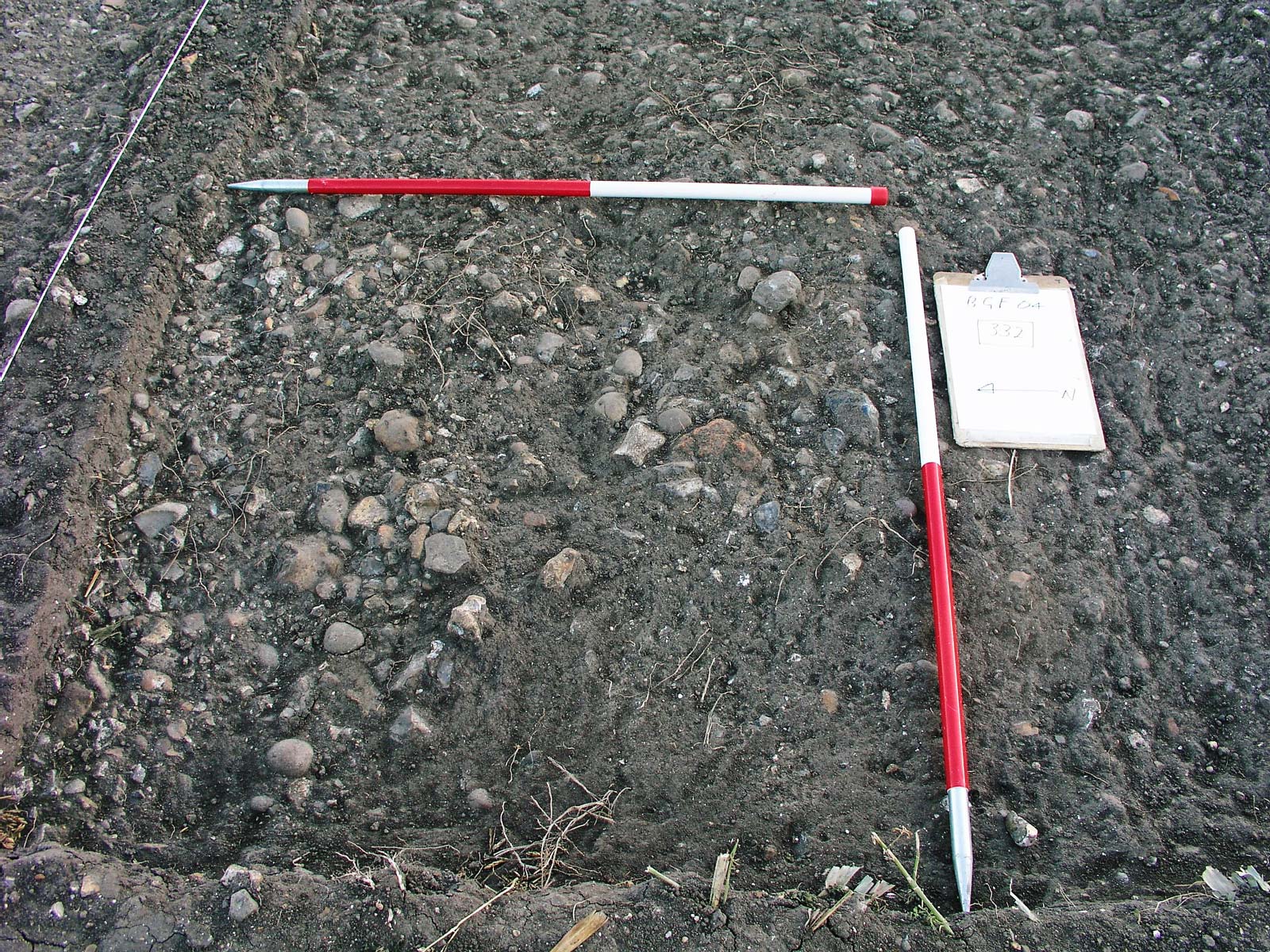
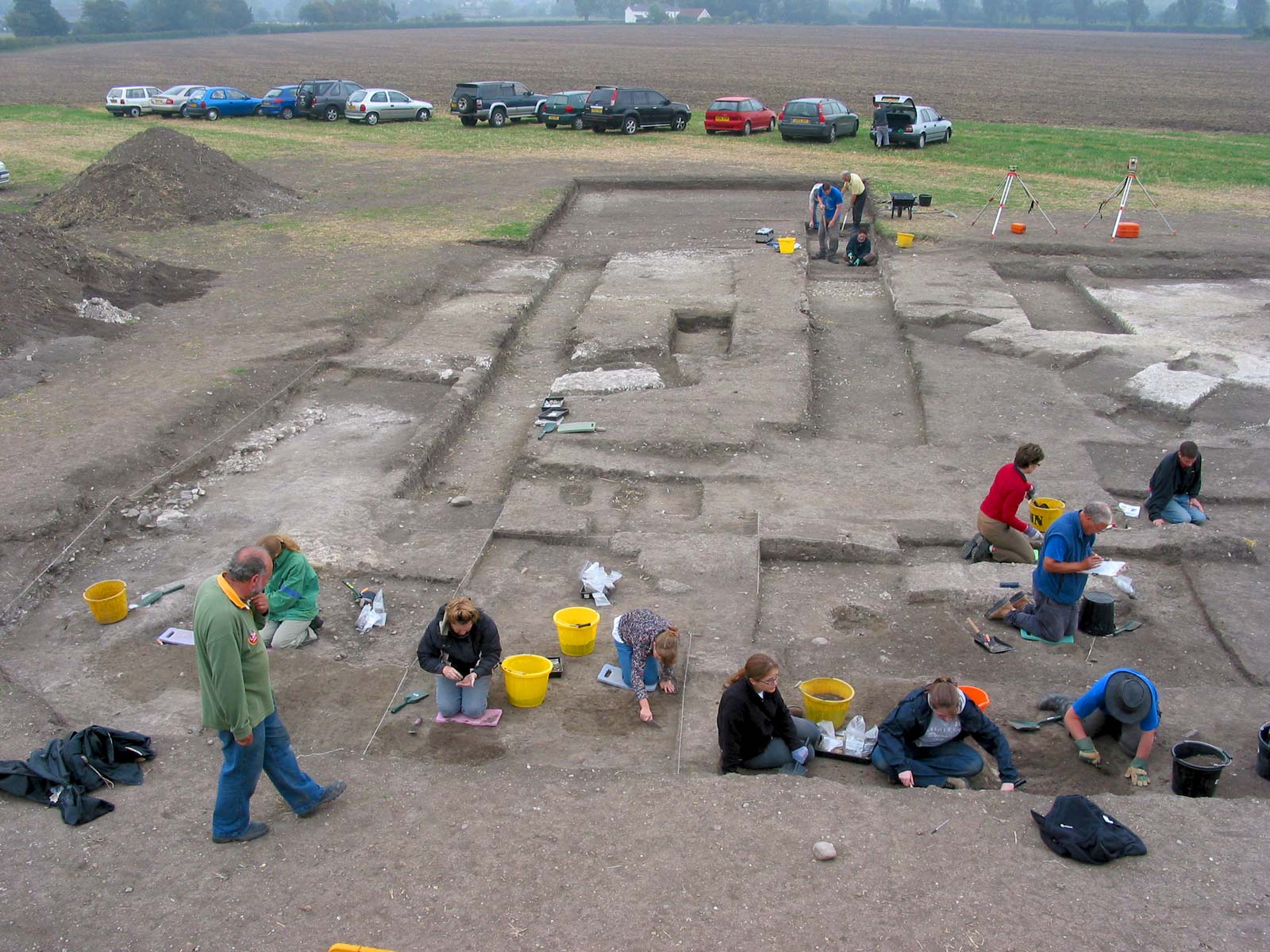
Photo North Herts Archaeological Society.
Passing the batton
Shortly after making contact with Gil I happened to mention it to Keith at North Herts Museums. Keith revealed that Gil has been a direct influence on many aspects of his own archaeological working life. I feel sure that Gil’s views on detectorists has played its part in shaping Keith’s own stance on our endeavours, and this feels quite evident because of the trusted relationship that I now share with him. Given Keith’s enthusiasm and willingness to add invaluable insights and contributions to some of my previous articles, it seemed only fitting to ask him to share a little of his experiences and memories about Gil.
“I was born and grew up in Letchworth Garden City, and was familiar with the former Letchworth Museum, which I often visited. This became especially frequent after I started at the Grammar School, on the opposite side of the Town Square. During 1974, I skipped revision for my O-Levels to help out on the excavation at Wilbury Hill, run by the then curator, John Moss-Eccardt, and the North Herts Archaeological Society. I joined the Society, and later that year, met Gil, who had been appointed Keeper of Field Archaeology for the Museums Service. Gil was someone I looked up to enormously, as he had a job that I wanted when I was older.”
“I remained a member of the Archaeological Society until going to University in 1977, studying Archaeology (of course!). On graduating in 1980, I made the decision to stay in northwest England, although I was unable to get any work in my hoped-for profession. After drifting through a succession of short-term jobs, I ended up as a nightclub DJ in Manchester, something I had never expected. Following a row with my boss (who I discovered had been cheating on his girlfriend in my flat) I returned to the south in late 1985. One of the first jobs I saw advertised in Hitchin Job Centre was for excavators in Baldock. Naturally, I applied and started work (now 38 years ago) with Gil as my boss.”
“Gil has a knack for recognising things that many other archaeologists would just ignore. This included a significant sequence of fifth- and sixth-century ‘post-Roman’ deposits in Baldock, something that remains exceedingly rare on this type of site. He has high standards for excavation (vertical sections, ultra-clean trowelled surfaces and so on) that I have carried with me since then. His keenness to work with metal detectorists was apparent from the moment I joined the team: they would scour the spoilheaps and surrounding farmland for artefacts that would add to the picture gained from digging with trowels and mattocks. When I eventually moved on in 1990, I took his ideas with me and tried to apply them in Chester. In one of the great ironies I could never have foreseen, I returned to North Herts in 2004 to take up what had effectively been Gil’s old job!”
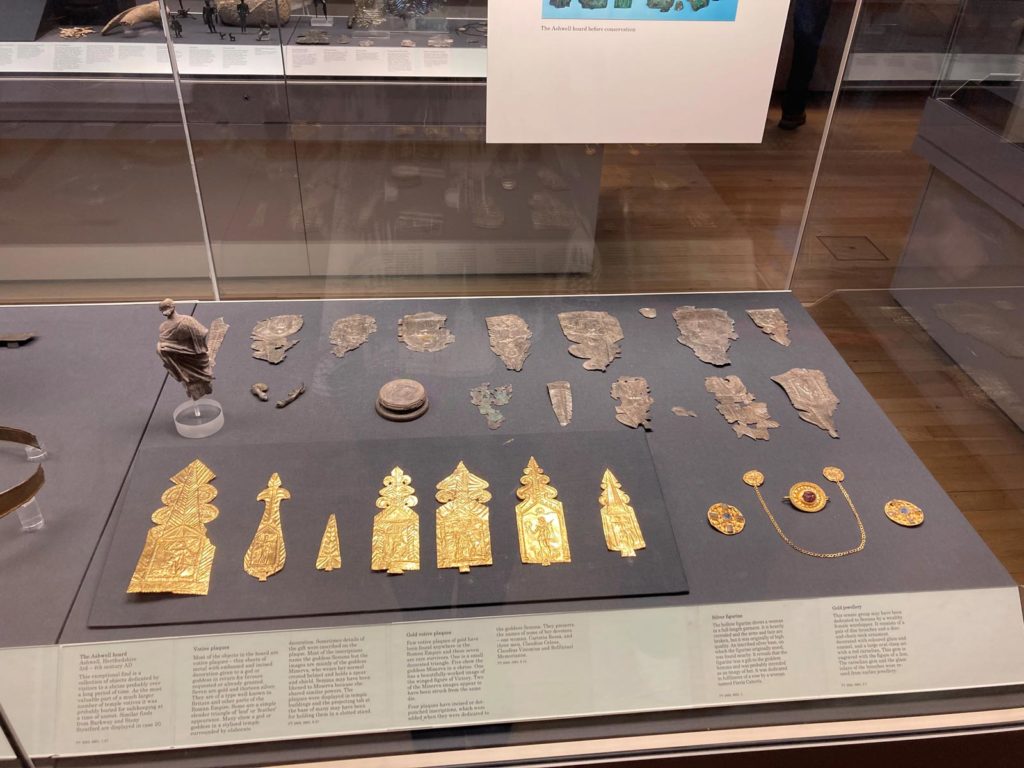
Photo courtesy of the British Museum.
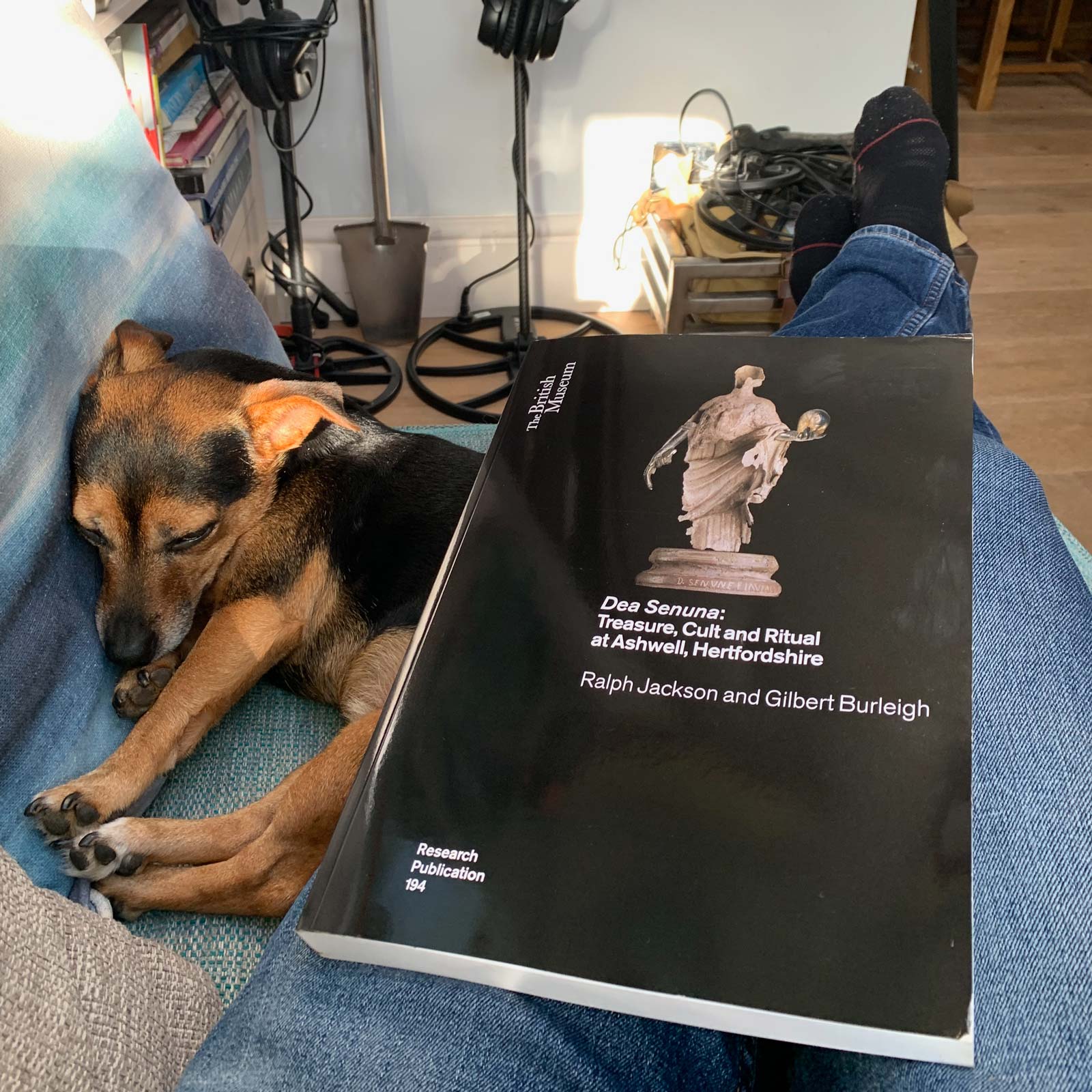
British Museum Research Publication that Gil co-wrote. You can purchase a copy
of Research Publication 194 on the link at the end of this article.
The way forward
After meeting Gil and having the chance to talk about these amazing discoveries, it’s left me with no doubt about the importance that us detectorists play in stitching together the archaeological tapestry that is our history. It seems to me that Gil was ahead of his time with his views on the detecting community and knowing the importance of tapping into that resource, and make no mistake, the metal detecting community is a valuable resource. By building the trusted relationships that he did, the discoveries highlighted here have been properly recorded, researched and preserved for future generations to marvel at. The Ashwell Hoard in particular is still on display at the British Museum and it’s well worth a visit, along with all the other amazing exhibits they have on display. Further information about the Ashwell Hoard can be found on the Ashwell Museum website by clicking the link at the end of this article.
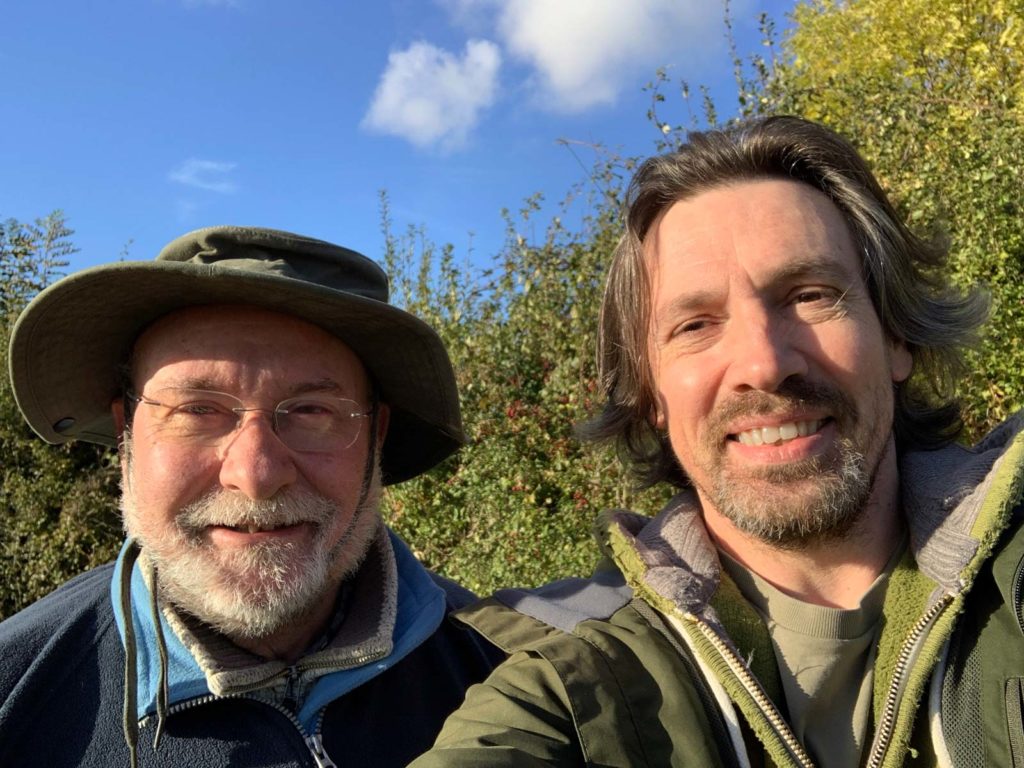
My meetings with Gil revealed that not all archaeologist’s were against the metal detecting community during the 1970’s/80’s when the STOP (Stop Taking Our Past) campaign was in full swing, which for me was a real eye-opening surprise. Suffice to say things have come a long way since Gil started recording detectorists finds back in 1976 and even more so since the introduction of the Portable Antiquities Scheme in 1997, and in my experience general relations between detectorists and archaeologists has much improved too. Thats not to say that there aren’t still mishaps and mistakes made on both sides of the fence, but the realisation that detectorists and archaeologists do well to work together will ultimately pay dividends for our historical heritage. Working together to protect that heritage is definitely the way forward. Finally, I will end this article with a hope that maybe one day I will turn up at Keith’s door with a briefcase full of gold Roman coins, after all, it’s not like it hasn’t happened before!
Writing about detecting
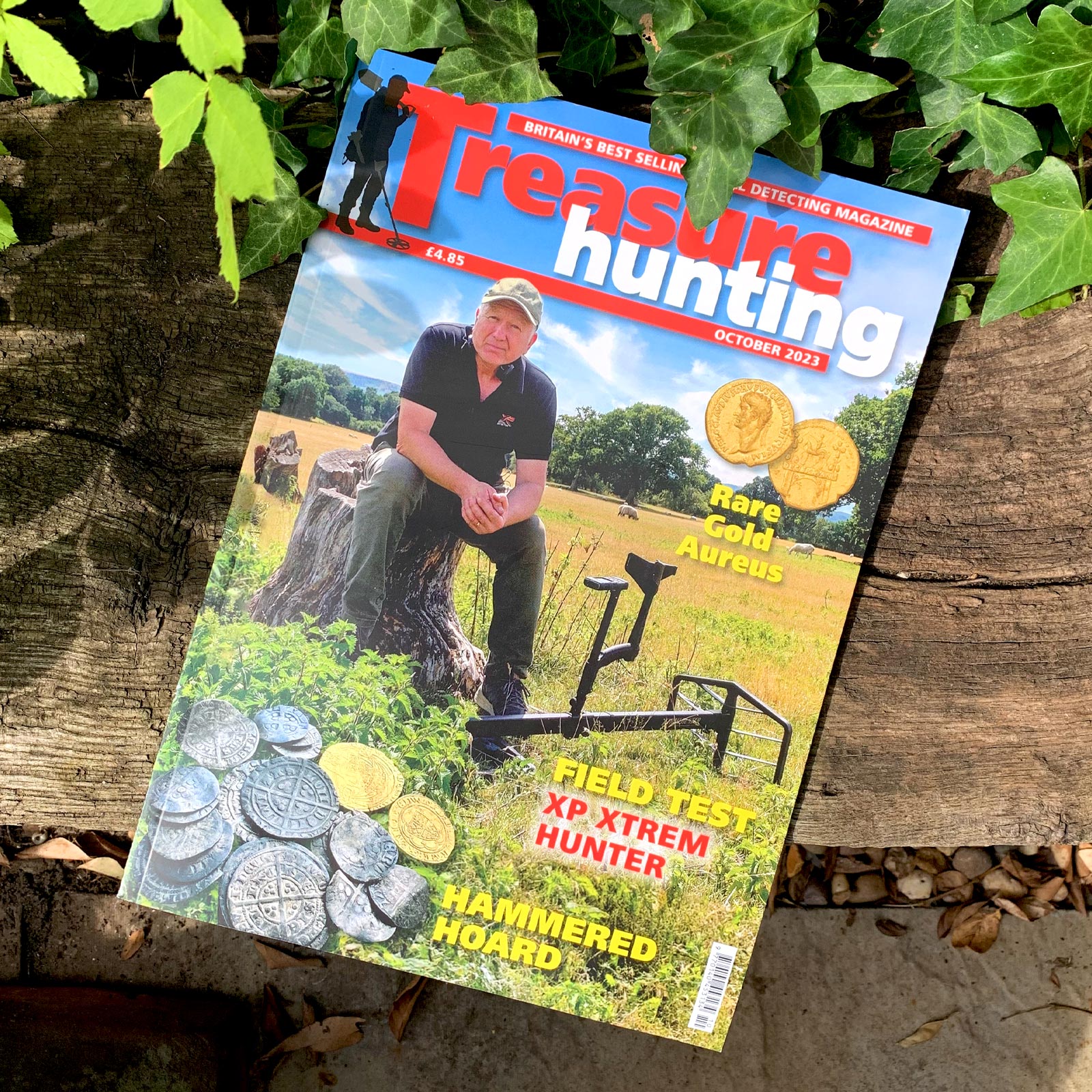
It’s quite clear that over the past few years metal detecting has had a huge impact on my life. From my first trips out on the family fields finding iron scraps and lead seals, to now finding Roman artefacts and being a regular writer for Treasure Hunting Magazine, it’s been a real journey.
I have well and truly been bitten by all aspects of this hobby but in particular I have really fallen in love with writing about it. This is quite evident with my continued contributions to Treasure Hunting Magazine and it still amazes me that my efforts are deemed good enough to make publication.
I have said before that I never thought in a millions years that I would enjoy writing as much as I do as I was never really that academic in school. It does makes me wonder what has changed to bring out the writer in me and I don’t have to think to hard to provide myself with an answer. Quite simply it’s the passion for the hobby and for history!
I’m so enthusiastic about both of these things that it makes it incredibly easy to write about. Don’t get me wrong, I do spend a lot of time trying work out how best to communicate the things I want to say and that’s not always easy. But my love for the hobby always provides me with the fuel I need get the words out of my head and onto the page (well, computer screen).
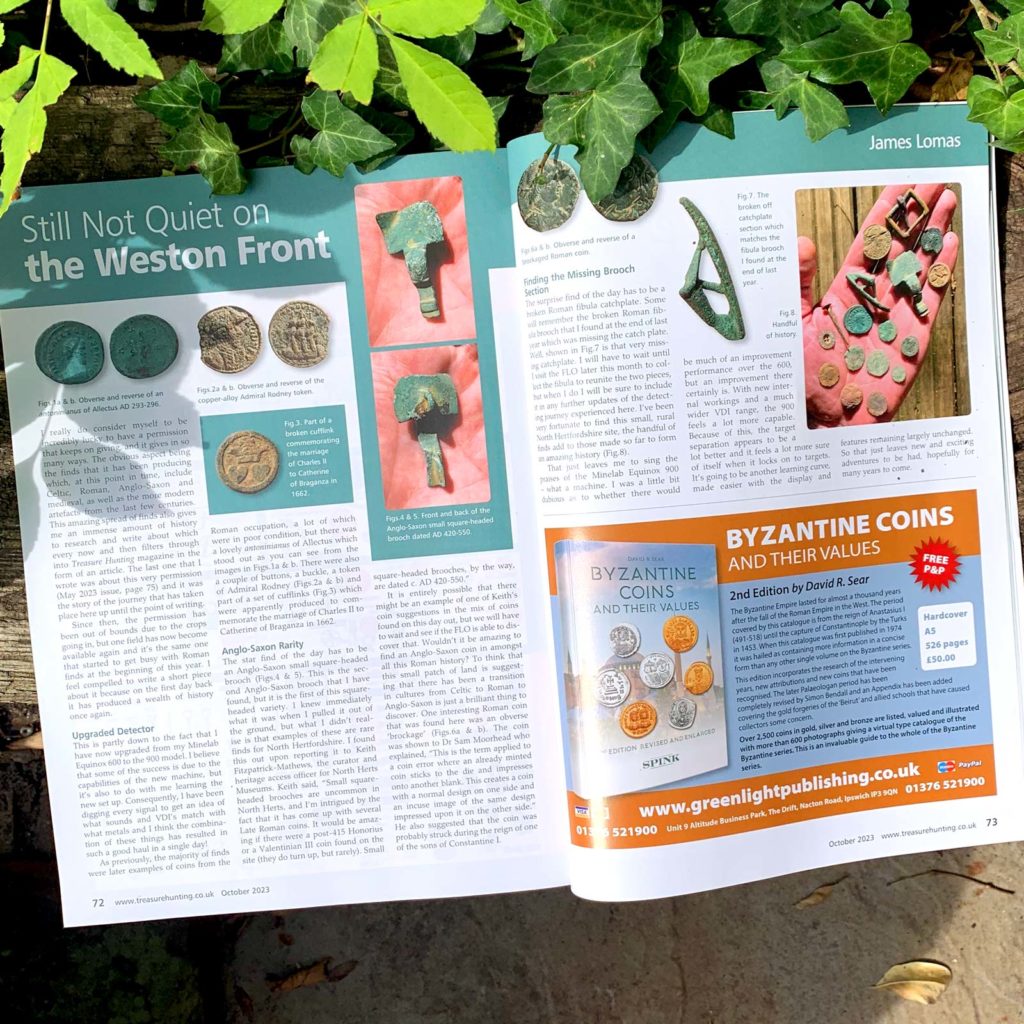
Writing about the hobby and researching for my articles has also brought me into contact with some amazing people. I’m lucky to be in regular contact with Keith Fitzpatrick-Matthews the Curator and Heritage Access Officer at North Herts Museums. Keith has been an invaluable source of information and advice since I started detecting and he is always happy to make contributions to my articles. To be honest he has made contributions to most of my articles so far by providing historical insights, archaeological maps and diagrams as well as countless finds identifications. Having Keith’s input provides me with a real sense of validation that the things I write about might actually be worth reading, lol.
I have also had contact with Sam Moorhead who is the National Finds Adviser for Iron Age and Roman Coins at the Portable Antiquities Scheme (British Museum). He has been kind enough to provide valuable insight for some of the coin finds in my articles, and again this brings another feeling of validation for what I’m doing.
I also have to mention my Finds Liaison Officer Matt Fittock, who is based at the Verulamium Museum in St Albans. He too has contributed to the odd article but more than that he has been incredibly knowledgable and patient with assessing and recording my finds. This is no easy task when you consider the poor condition that some of these Roman coins turn up in. How he can decipher a worn Emperor’s portrait is beyond me, I reckon he must be a master of the dark arts!
Last but not least a huge amount of thanks must go to Julian Evan-Hart, the editor at Treasure Hunting Magazine. He has been a great support to the budding writer in me and has always been encouraging and incredibly helpful with advice and tips. Being able to email him over the past few years about everything detecting has been both enjoyable and fruitful, hopefully a friendship that will last for years to come.
This just leaves me to say that if you ever want to write about this amazing hobby and the things that you find, then definitely do it. There are plenty of people out there who will be willing to help you along the way, and if you get to the point where you want to submit something to Treasure Hunting Magazine the do contact Julian Evan-Hart. You will find contact details for the magazine at the bottom of the main blog page along with some other useful links. Happy hunting (and writing!).
Still noisy at Weston
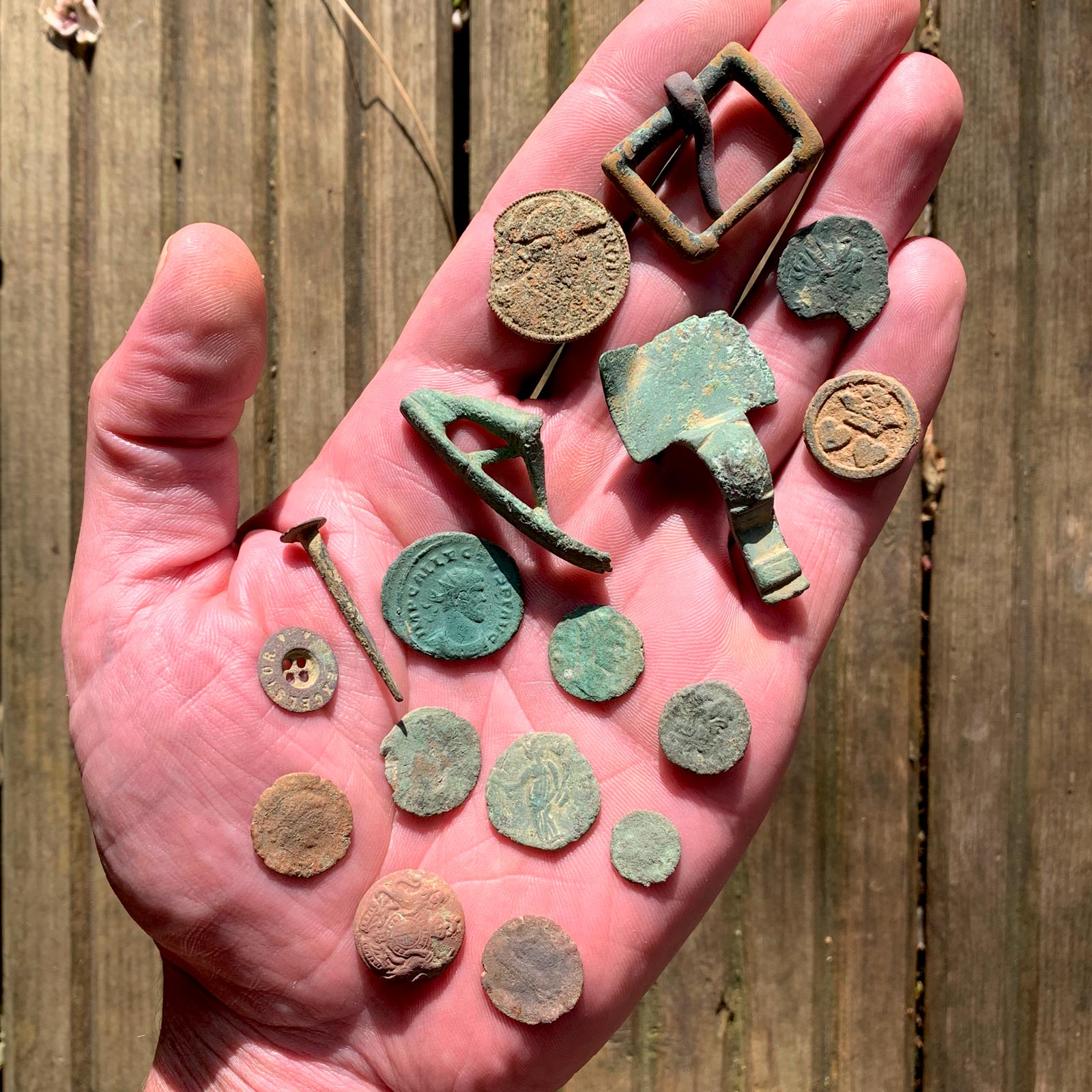
I do consider myself to be incredibly lucky to have a permission that keeps on giving, and it gives in many ways. The obvious being the finds that it has been producing which at this point in time include Celtic, Roman, Anglo-Saxon, Medieval as well as more modern finds from the past few centuries. But this also gives me an imense amount of history to research and write about which every now and then filters through into Treasure Hunting Magazine in the form of an article.
The last article I wrote was about this very permission and it was the story of the journey that has taken place here up until the point of writing that article. Since then the permission has been out of bounds due to the crops going in, but one field has become available again and it’s the field that started to get busy with Roman finds at the beginning of this year. I feel compelled to write a short blog about it because on the first day back it has produced a wealth of history again!
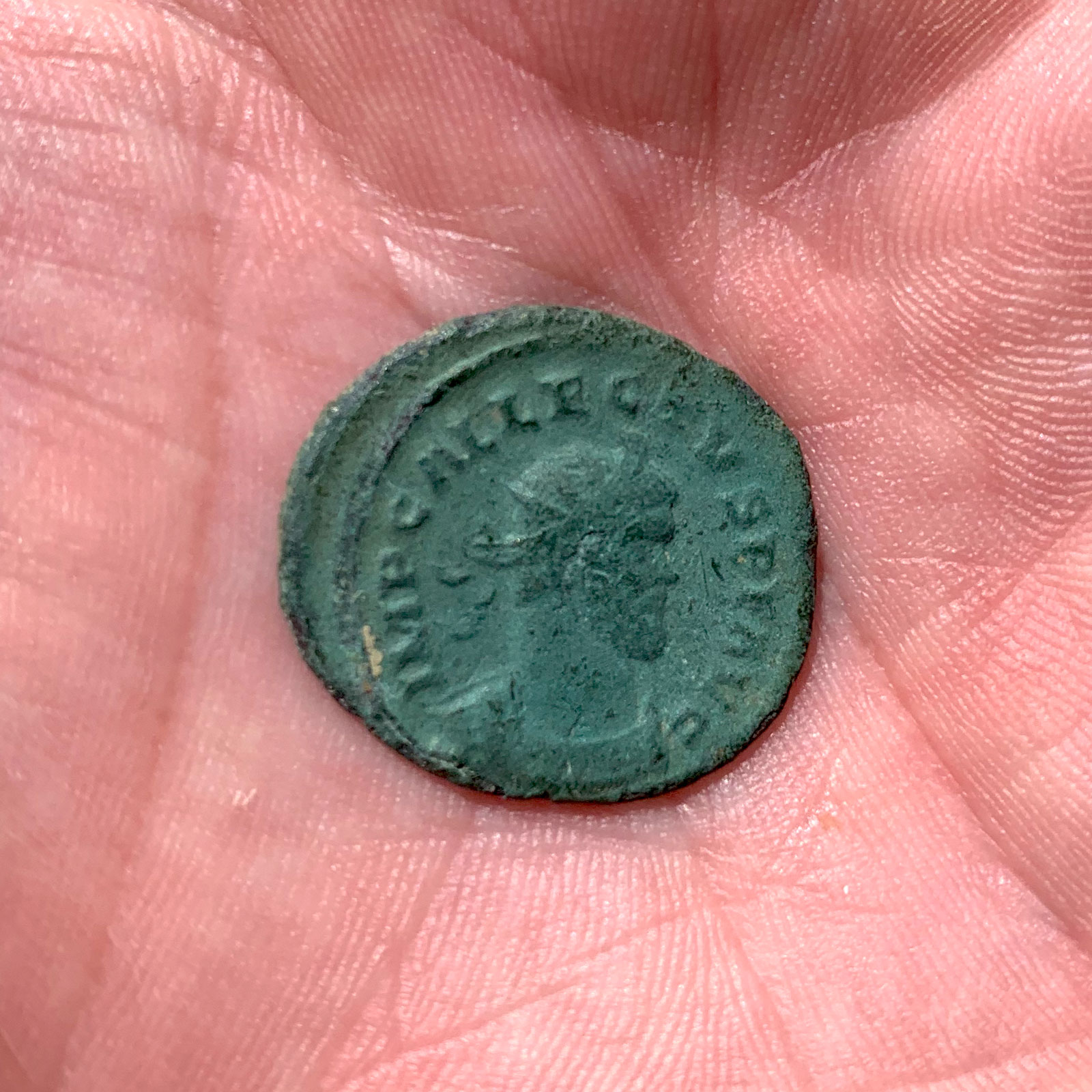
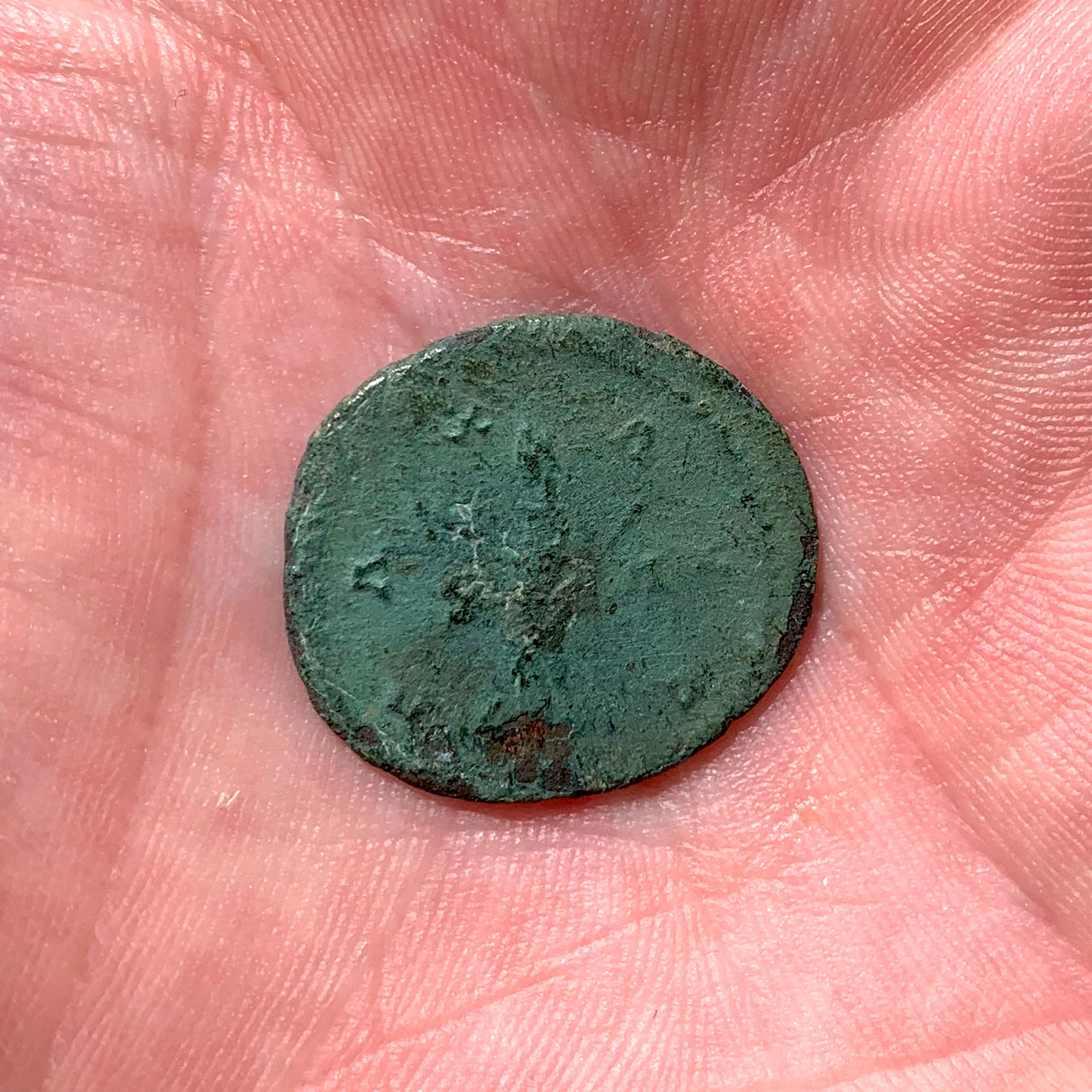
This is partly down to the fact that I have upgraded my Equinox 600 to an Equinox 900. I believe that some of it is due to the capabilities of the new machine, but it’s also to do with me learning the new set up. Consequently I have been digging every signal to get an idea of what sounds and VDI’s match with what metals and I think the combination of these things has resulted in such a good haul in a single day!
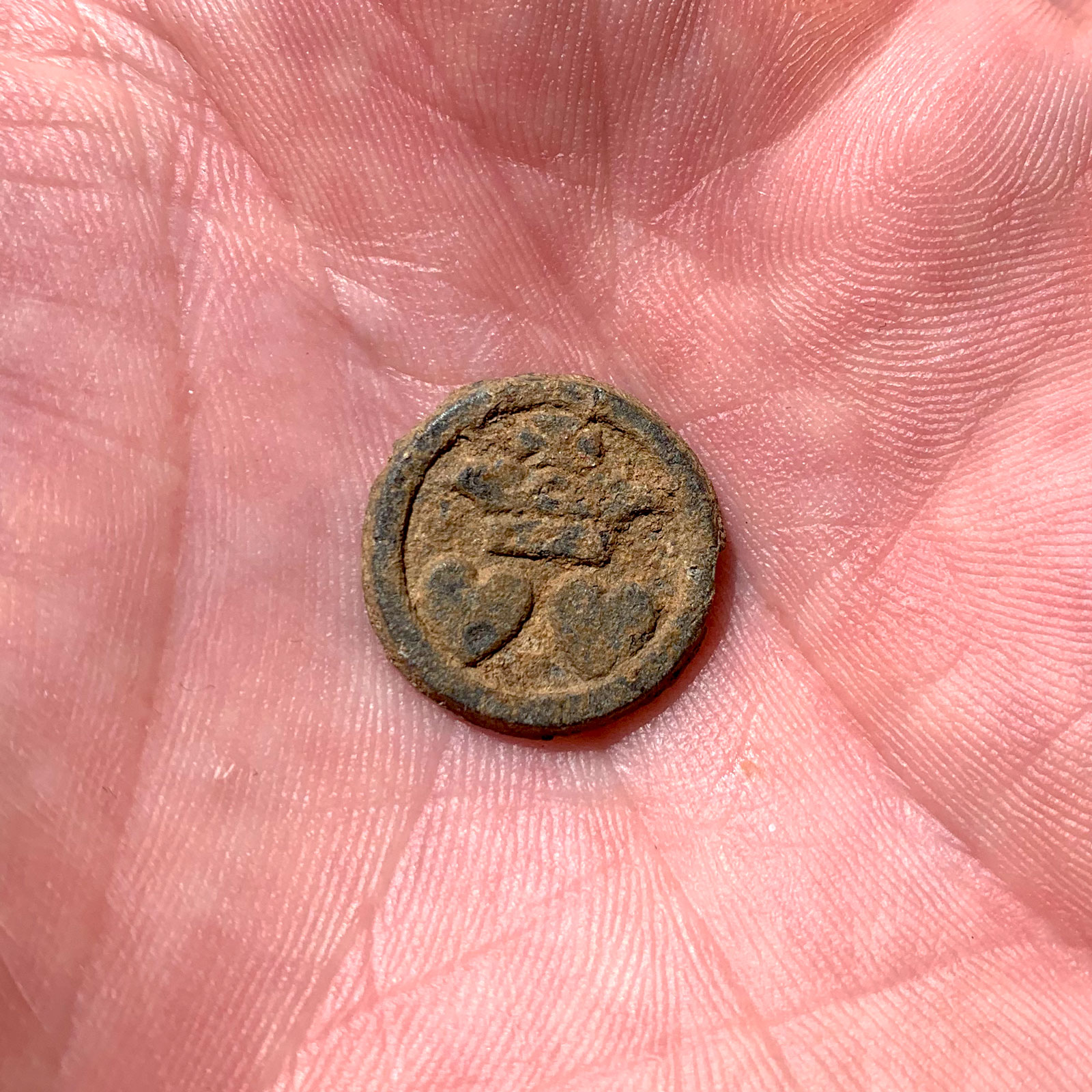
Again the majority of finds were later examples of coins from the Roman occupation, a lot of which were in poor condition but there was a lovely Antoninanus of Allectus which stood out as you can see by the photos. There were also a couple of buttons, a buckle, a token of Admiral Rodney and part of a set of cufflinks which were apparently produced to commemorate the marriage of Charles II to Catherine of Braganza (1662).
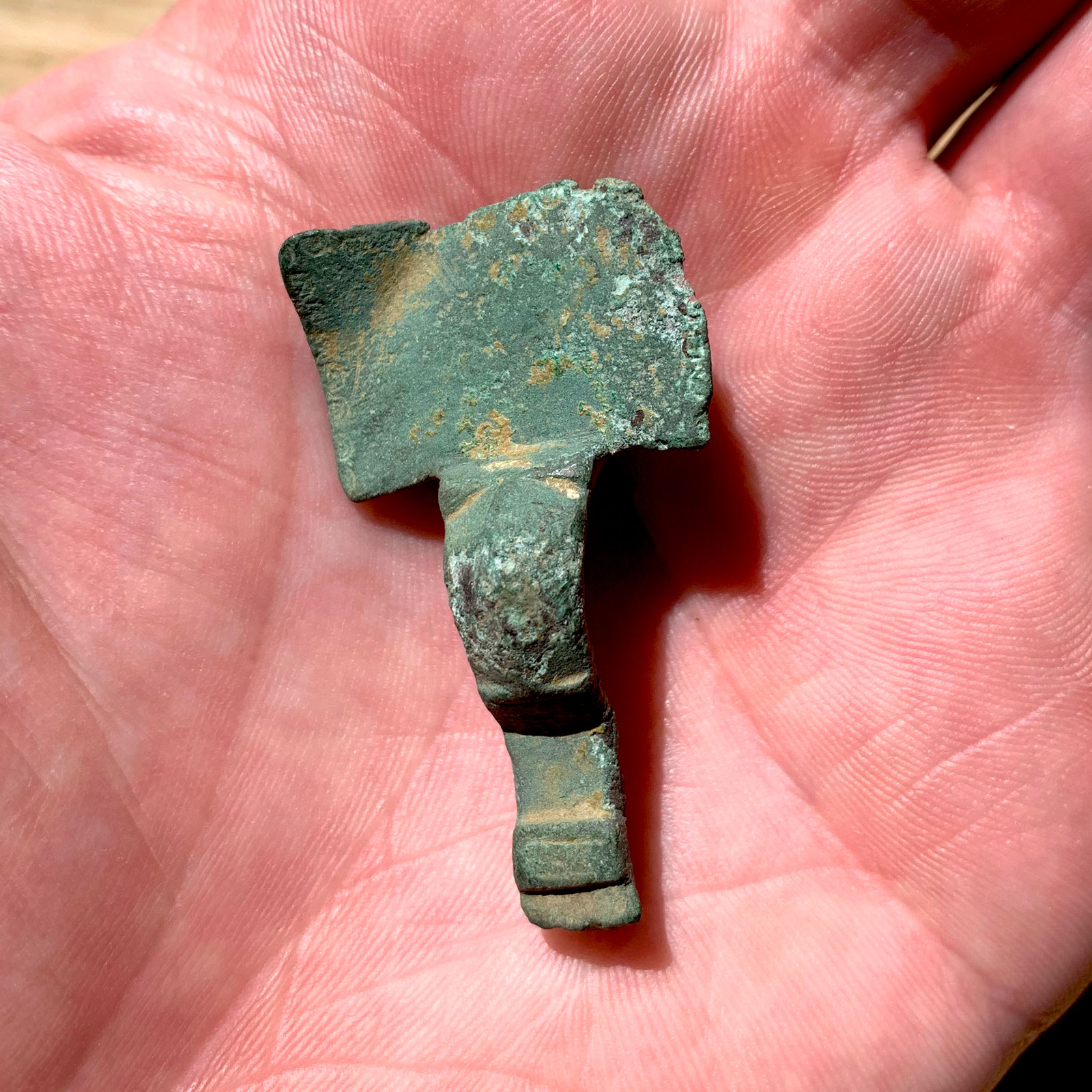
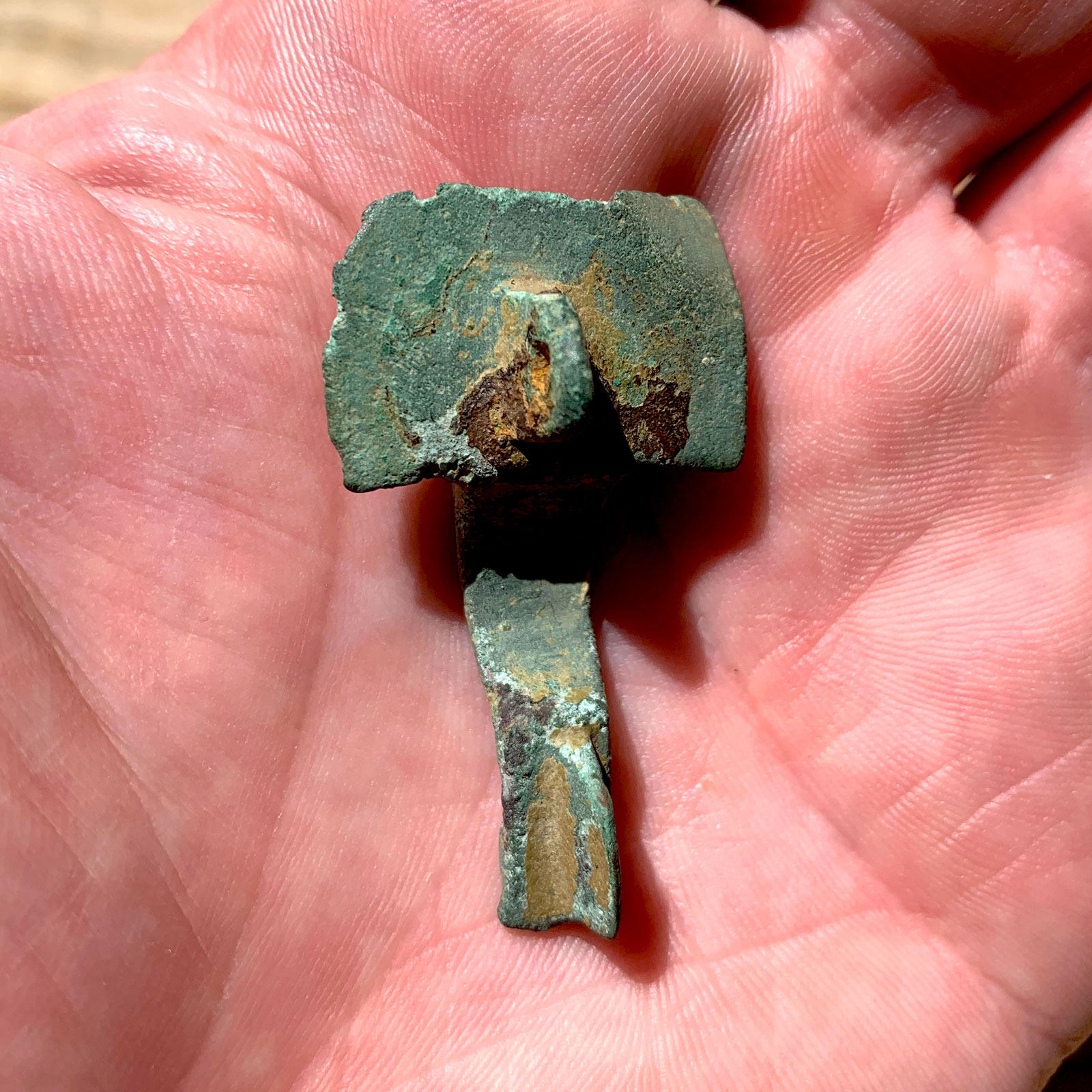
The star find of the day has to be the Anglo-Saxon small-long brooch. This is the second Anglo-Saxon small-long brooch that I have found but it is the first of this square head variety. I knew immediately what it was when I pulled it out of the ground but what I didn’t realise is that it’s a rare find for North Hertfordshire. I found this out upon reporting it to Keith Fitzpatrick-Mathews, the curator and heritage access officer for North Herts Museums.
Keith said “Small-long brooches are uncommon in North Herts, and I’m intrigued by the fact it’s come up with Late Roman coins. It would be amazing if there were a post-415 Honorius or a Valentinian III coin (they do turn up, but rarely). Small-longs, by the way, are dated c 420-550 AD.”
It’s entirely possible that there might be an example of one of Keith’s coin suggestions in the mix of coins found on this day out, but we will have to wait and see if FLO is able to discover that. But wouldn’t it be amazing to find an Anglo-Saxon coin in amongst all this Roman history. To think that this small patch of land is suggesting that there has been a transition in cultures from Celtic to Roman to Anglo-Saxon is just a brilliant thing to discover!
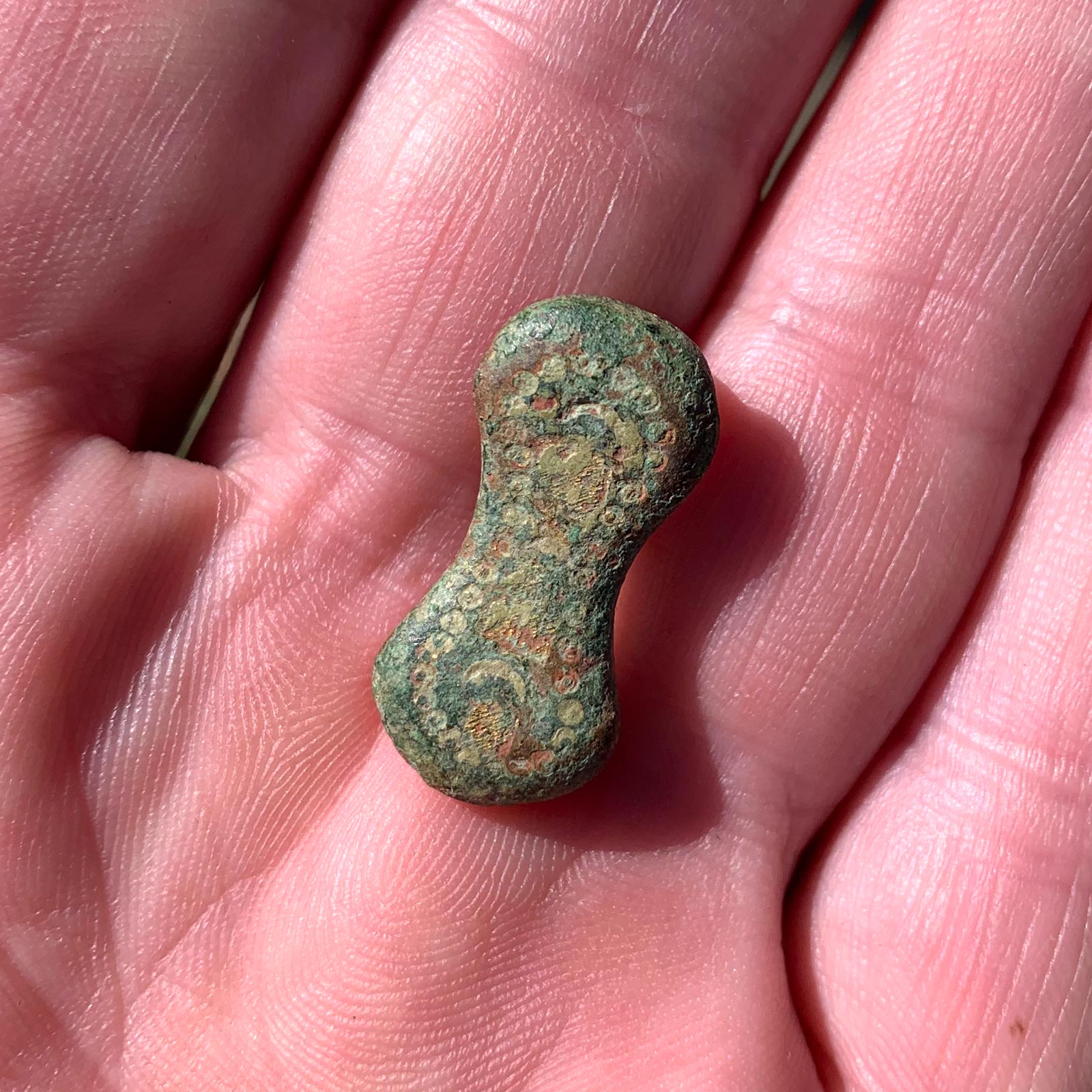
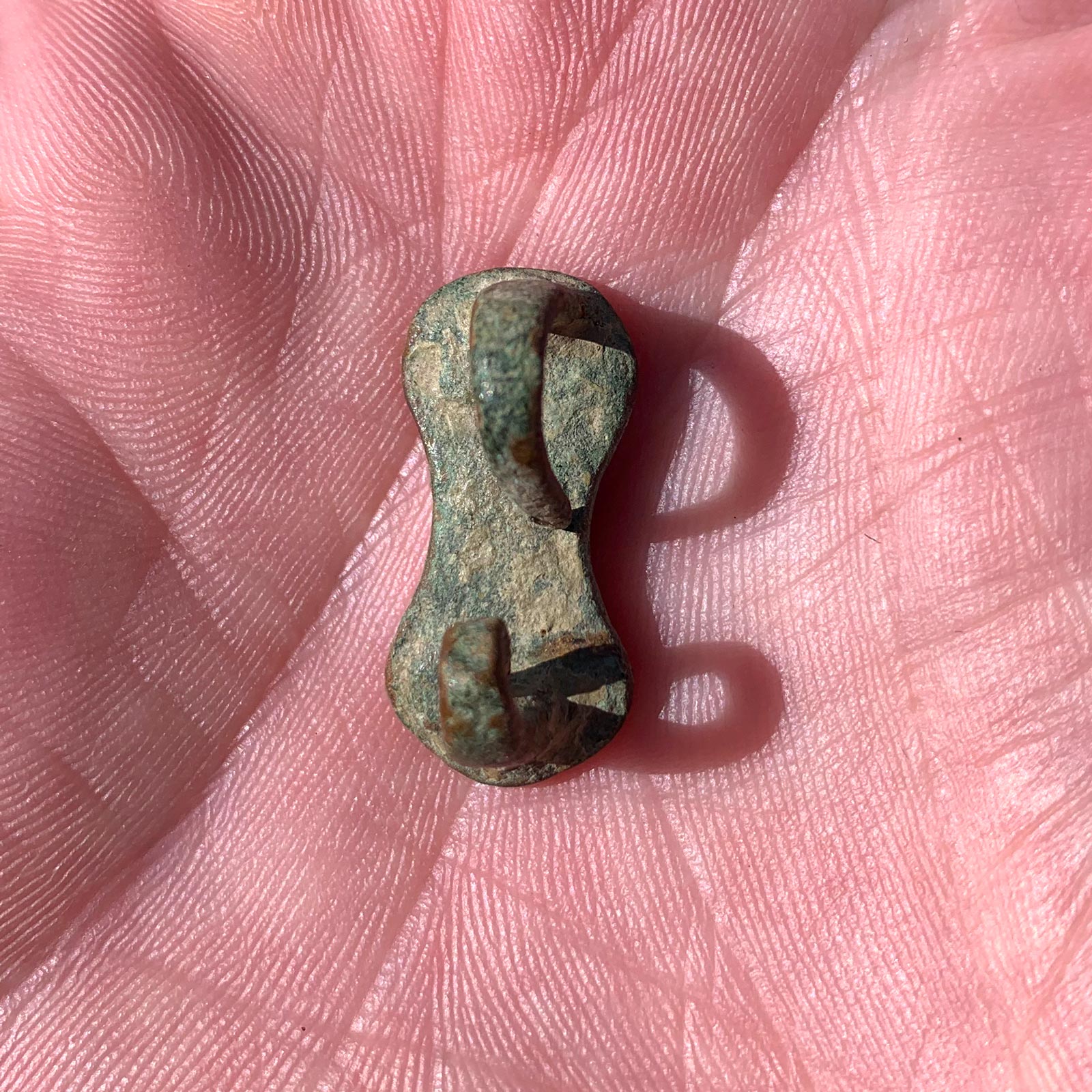
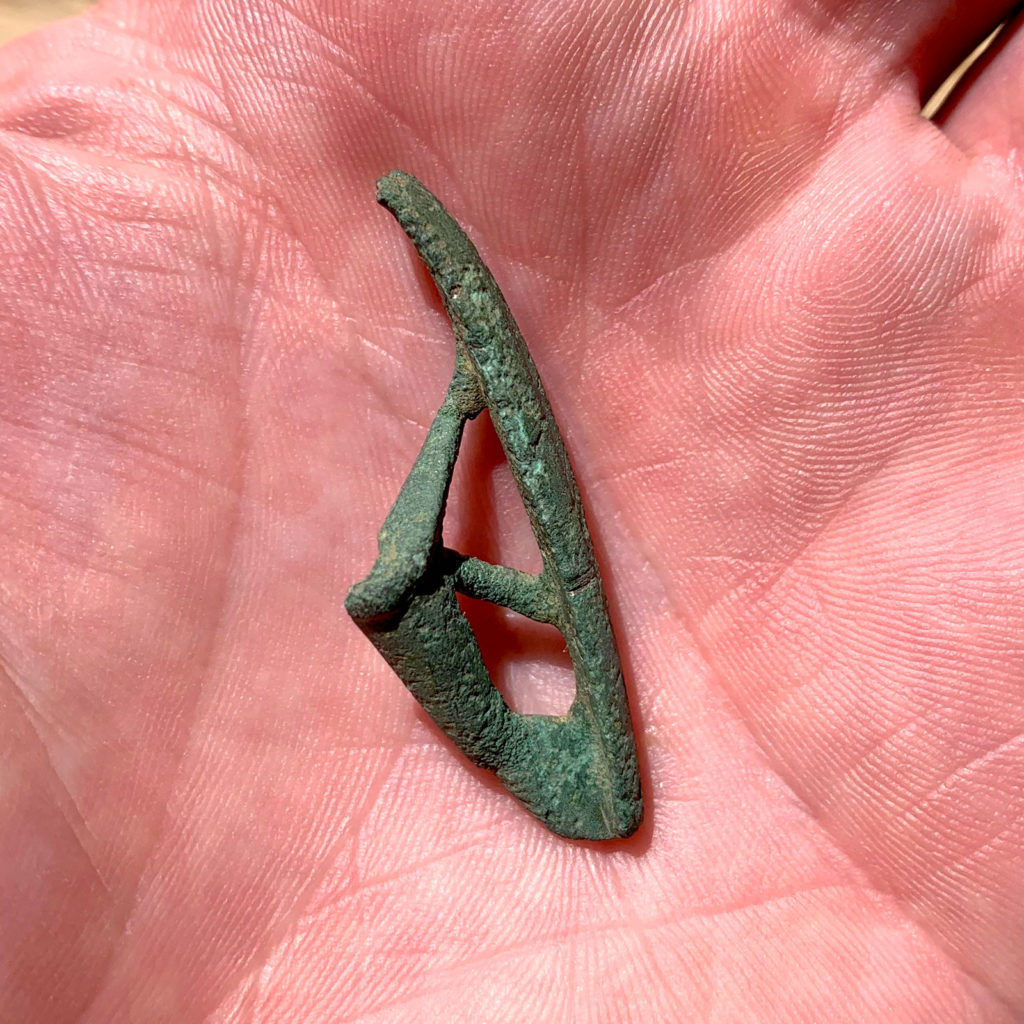
The surprise find of the day has to be the broken Roman fibula catch plate. Some will remember the broken Roman fibula brooch that I found at the end of last year which was missing the catch plate. Well this is that missing catch plate! I will have to wait until I visit FLO later this month to collect the fibula to reunite the two pieces, but when I do I will be sure to include it in any further updates of the detecting journey here.
That just leaves me to sing the praises of the Equinox 900, what a machine. I was a little bit dubious as to whether there would be much of an improvement over the 600, but an improvement it certainly is. With new internal workings and a much wider VDI range the 900 feels a lot more capable. Because of this the separation appears to be a lot better and it feels a lot more sure of itself when it locks on to targets. It’s going to be another learning curve but it is made easier with the display and features remaining largely unchanged. So that just leaves new and exciting adventures to be had, hopefully for years to come!
Update…
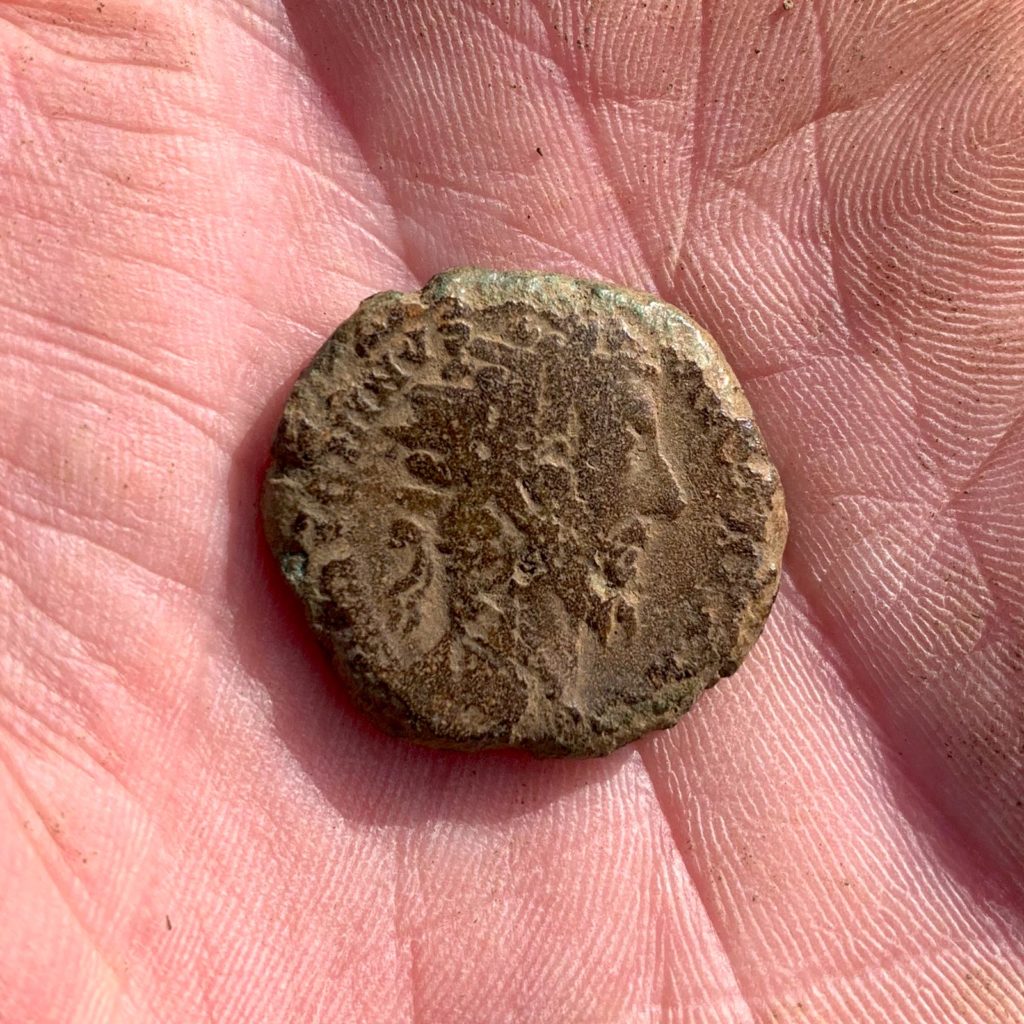
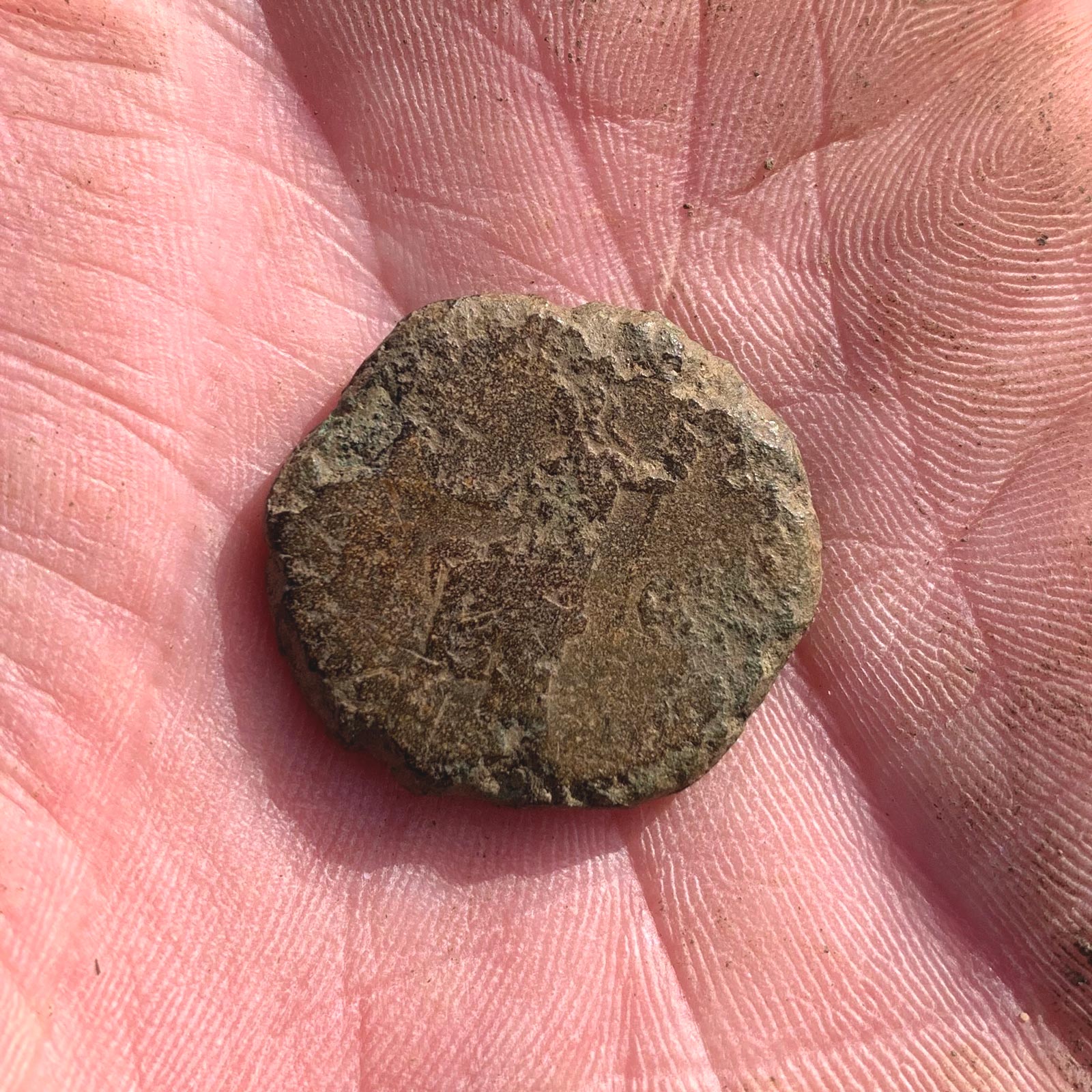
A week after writing this blog I was back out on the same permission and I had rather an unusual find come up. Again I had a mix of later end Roman coins, but there was one which stood out from the others. Apart from the fact that it was in better condition than the rest it also had a very strange reverse.
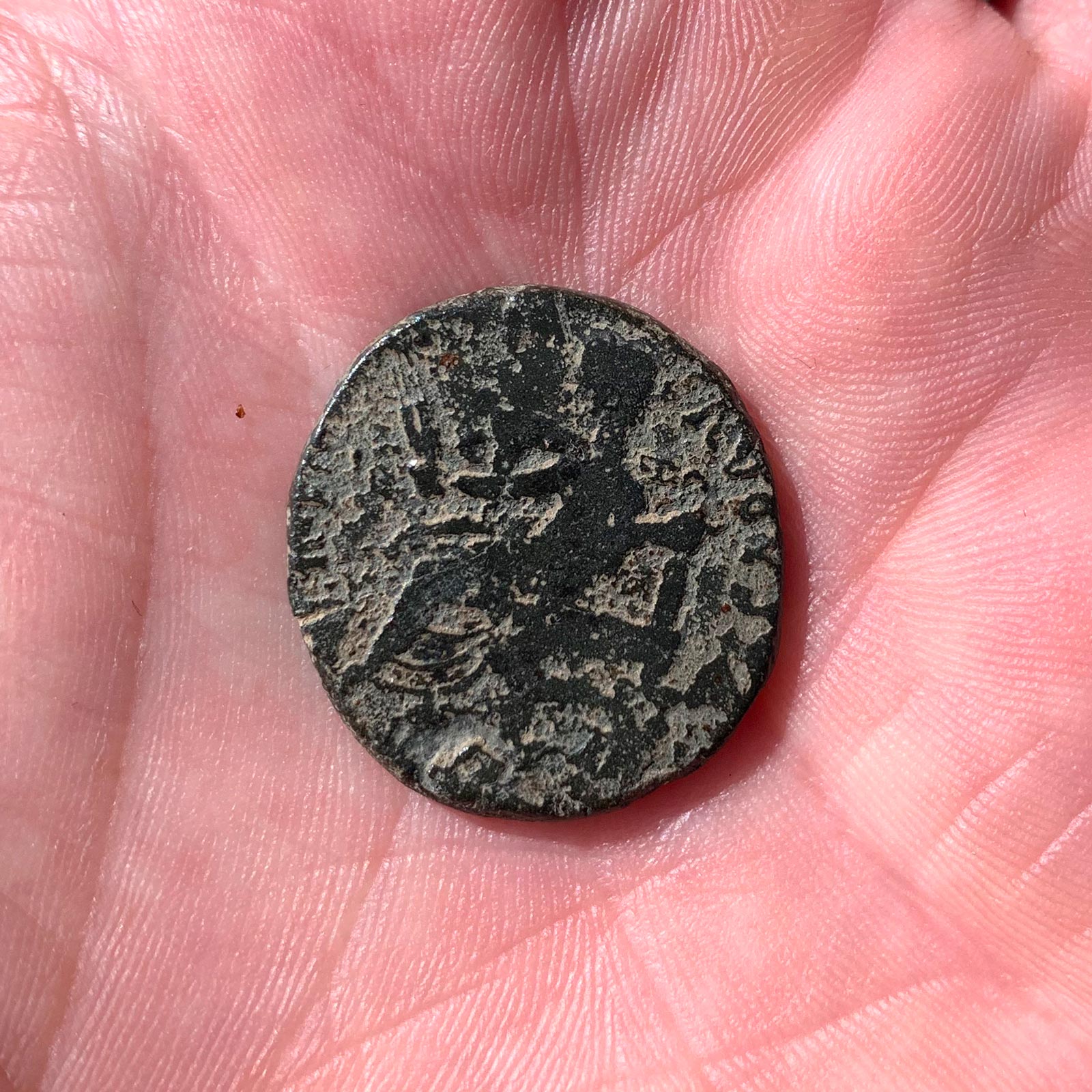
At first when I brushed away the dirt with my thumb I could see the obverse was in relatively good condition, but the reverse looked completely worn. It was only on closer inspection that there appeared to be another bust on the reverse but it looked like it was concaved. I decided to email Sam Moorhead at the British Museum to see if he could shed any light on the anomaly to which he kindly replied…
“This is known as a brockage. It happens when the previous coin remains stuck to the die and strikes an incuse reverse with the obverse die, it’s a nice example. I think this is probably a son of Constantine I, dating to c. AD 330-41.”
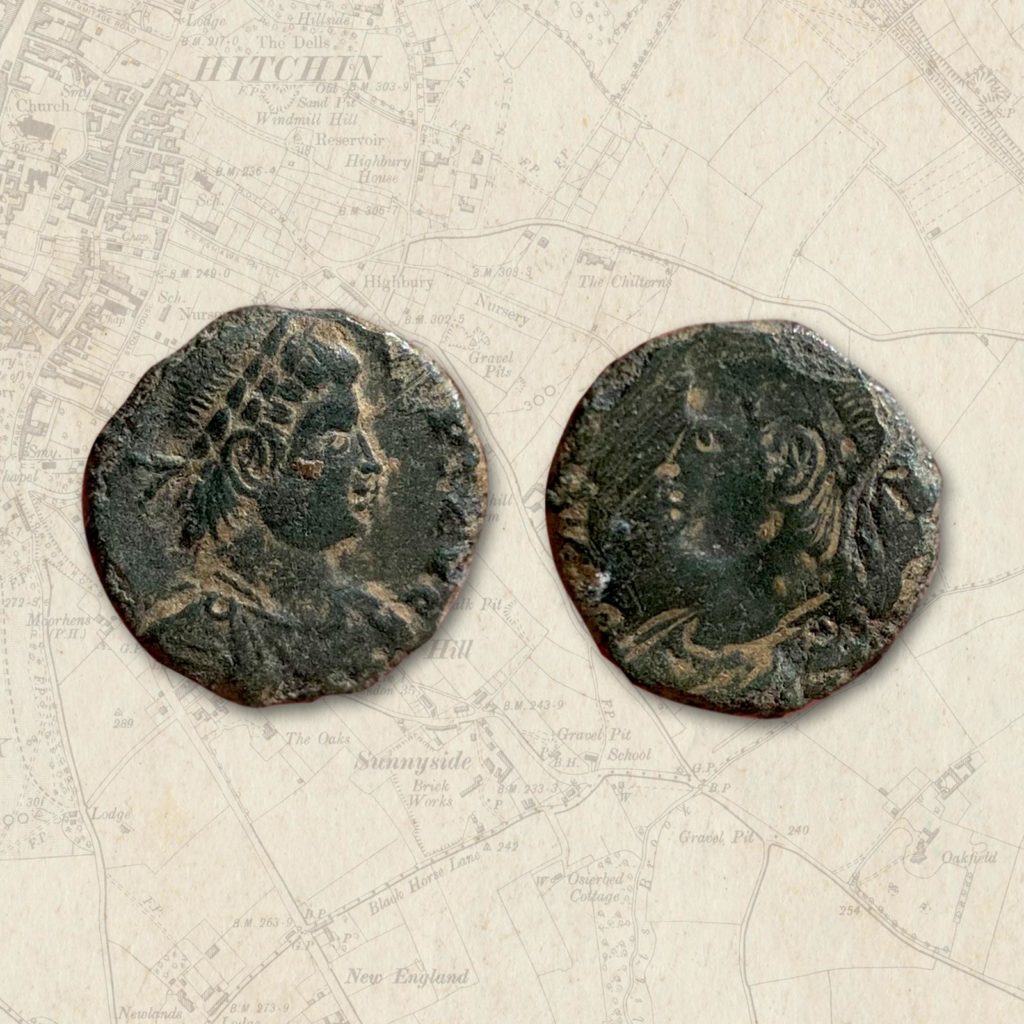
It would also appear that this coin anomaly is quite possibly a rarity in the detecting world as Julian Evan-Hart commented that it’s the first time that he had seen a ‘brockage’ metal detecting find. This is one of the many reasons that I love the hobby, it has that ability to present you with finds which are unusual and once found are unique to the finder, a definite bucket lister I never knew was on my list! You can view the Portable Antiquities Scheme record for this ‘Brockage’ Roman coin on the button below.
Don’t forget you can follow my detecting adventures on instagram and read more in-depth articles here on the printable website. For those that do follow me, thank you for the continued support, it’s all very much appreciated!
The hobby becomes work!
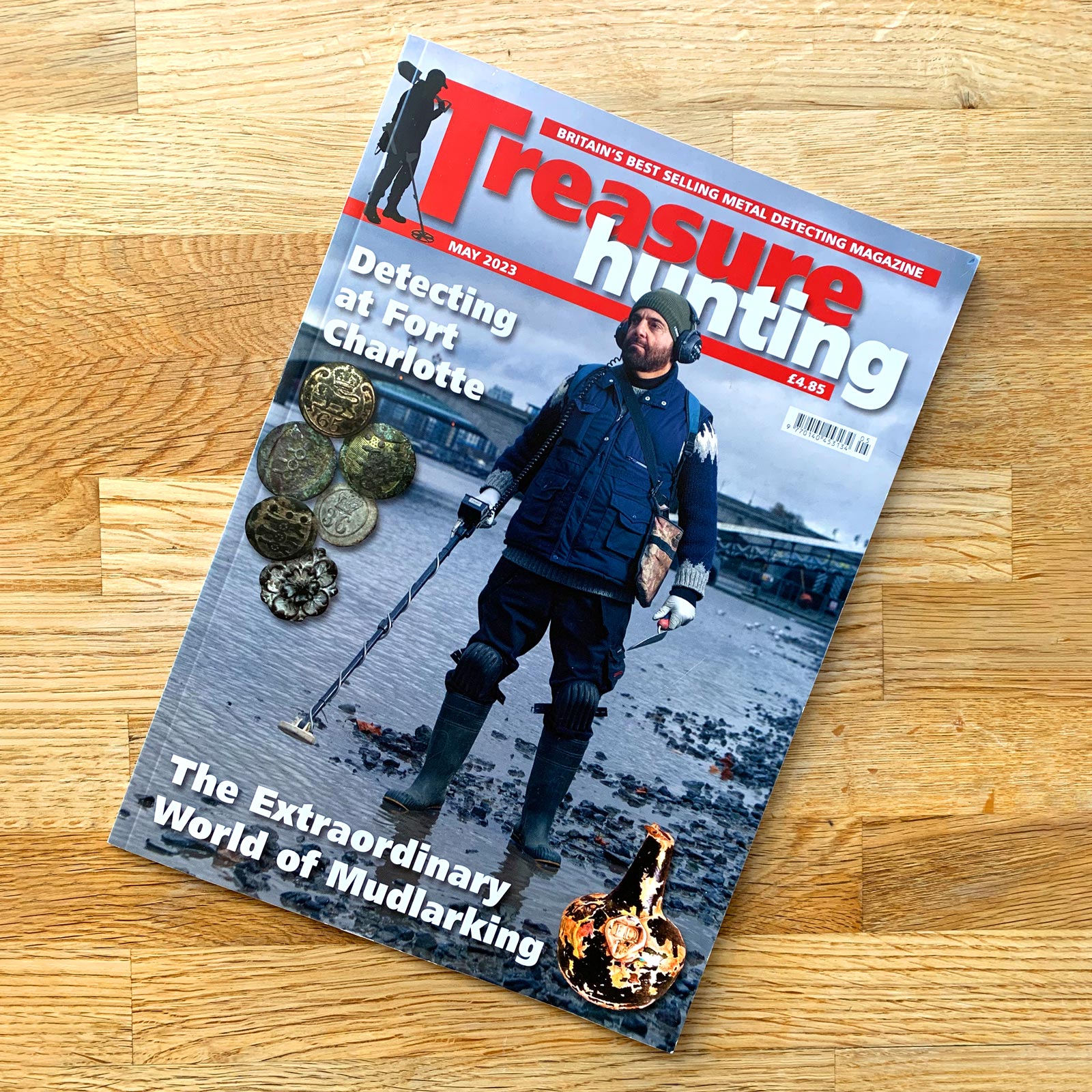
So here I go again, yet another set of my metal detecting ramblings to make it into Treasure Hunting Magazine. This time it’s all about the Roman discoveries that me and a friend have been finding in the village of Weston. Up to the point of completing the article we had been on the permission at Weston for 8 months and this article is the story of our journey there so far.
This time I had a massive 7 pages dedicated to my efforts which is just a brilliant thing to see in the magazine. Quite how people responded to it I guess I will never know, but at the very lest it’s great to have it as a printed record of my finds as well as the experiences and historical discoveries that have been made.
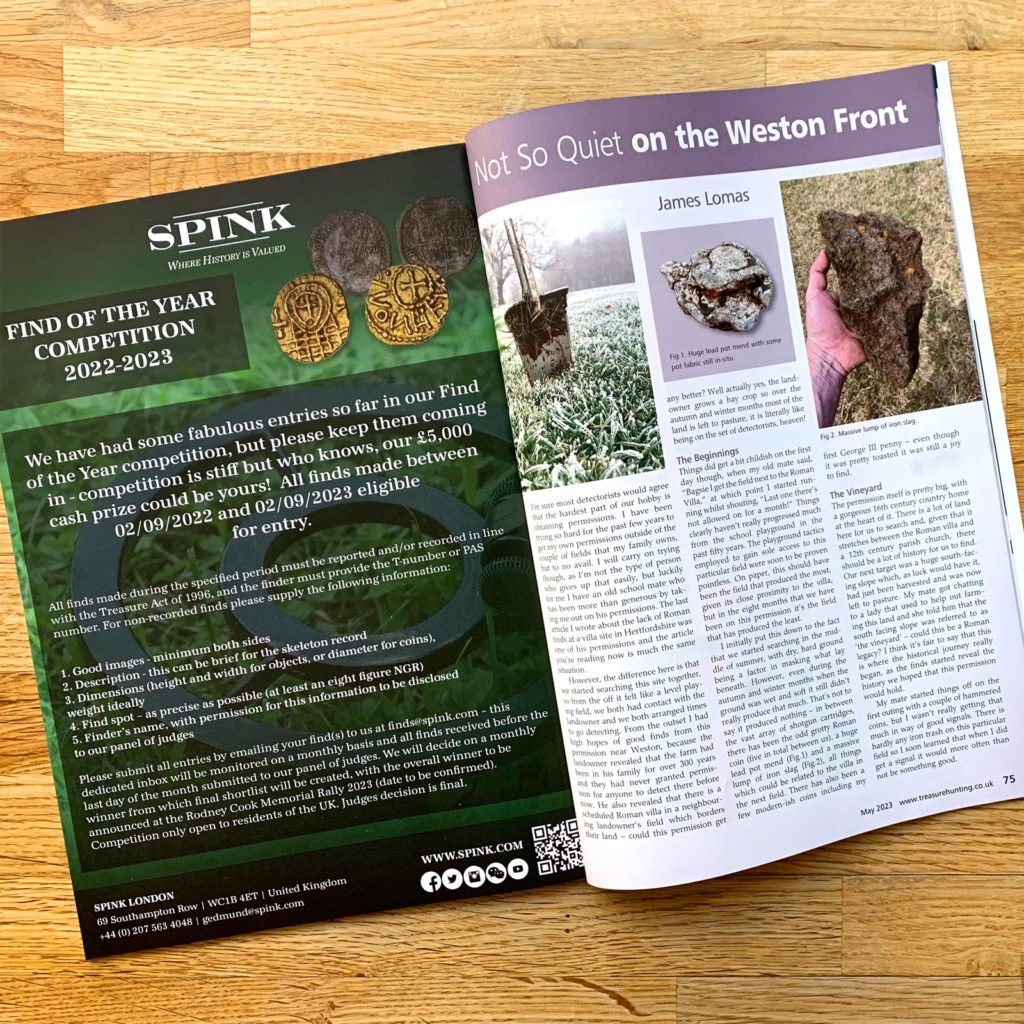
As some will have gathered, Weston is where Julian Evan-Hart grew up and consequently he has a keen interest in the things we have been finding there. Once the article had been submitted to Treasure Hunting Magazine he was kind enough to write a little piece about it on their facebook page which read as follows…
NEW MATES AND METAL DETECTING MEMORIES – This is truly a marvellous hobby a great breeding ground for positivity and let’s face it over the last 2-3 years almost all of us have needed that. Several years ago a new-starter detectorist called James contacted me for some advice on an area I was familiar with in North Herts – Now I’ve never actually met him other than email but over the years we have become good buddies and I hope to one day rectify that non-meeting status. We can share a joke or two and in the last year or so he has blossomed into a regular writer for Treasure Hunting magazine.
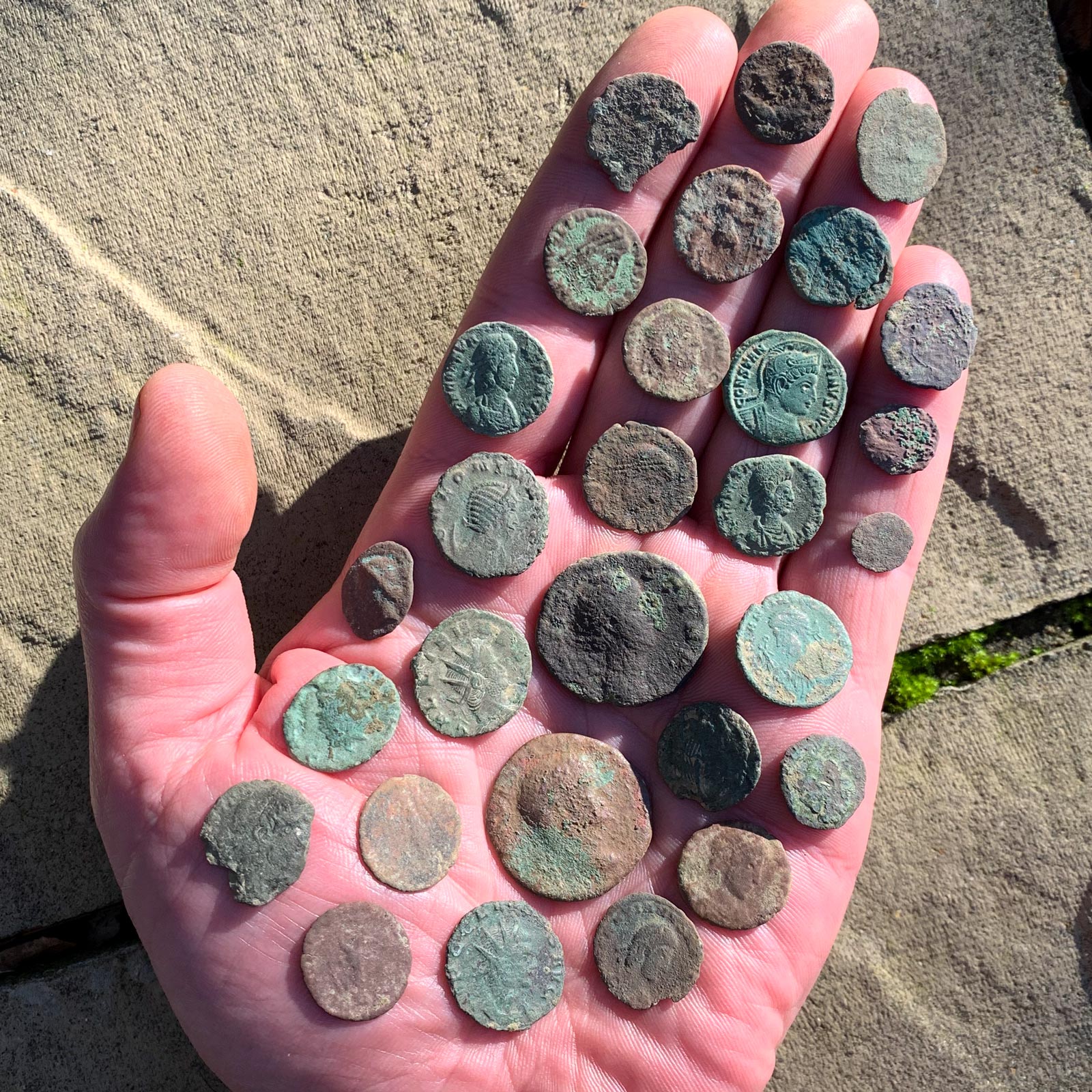
SMALL VILLAGE – Well, recently he revealed that he had secured permission by way of a friend to search the fields in a small village. When I heard where I was amazed as its where I grew up from 1962-82 – He has written a feature about this to be published in a future issue and for me it was fantastic to edit it. From his photographs I knew those old oaks, (I had my first cigarette behind their thick and ancient trunks) that old and dense hedgerow was where I found my first Badger sett, the ridge of that field was where the local gamekeeper caught me and a current girlfriend of the time back in 1977 and later that day told everyone in pub and then my Mum LOL. Perhaps most importantly, in one of his pics is a small field where in 1972 I first switched on the button of a C-Scope fifty years ago. Not often that an Editor gets the opportunity to edit something with such a personal connection. But anyway to things of greater importance James and his mate have discovered the site of a previously unrecorded Roman building the site of which is splattered with coins and brooches and has become a project involving his FLO and other archaeologists in the area as well as having their coin finds assessed and identified by one of the UK’s leading coin experts -This is going to be a great read, all things good about our hobby, so thank you James. Just another example of the positivity that this hobby can, does and most certainly should deliver at all times. Shown is James’s hand loaded with coins from the newly discovered site of the Roman building – a definite ‘Handful of History’ there. Have a great weekend all the very best Jules.
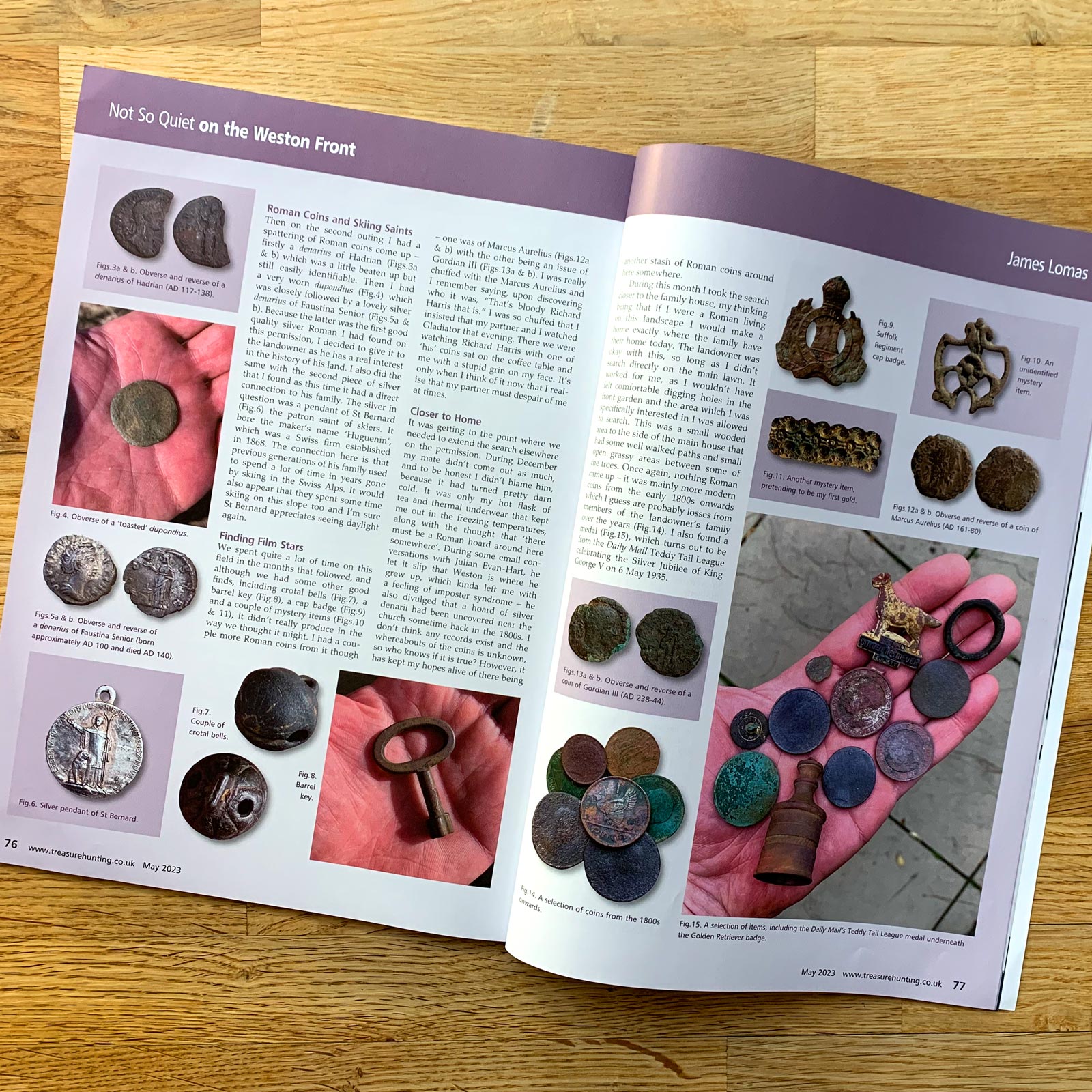
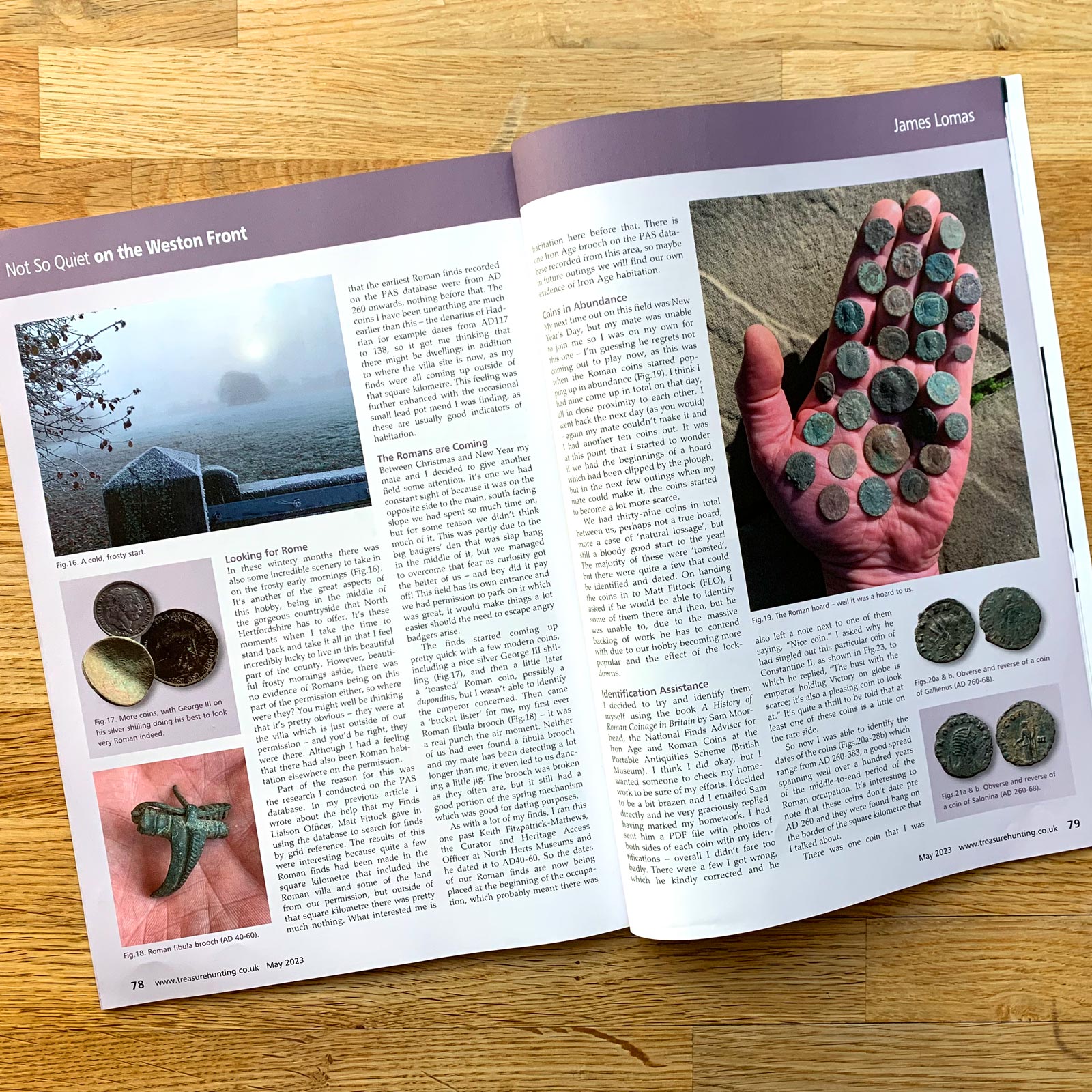
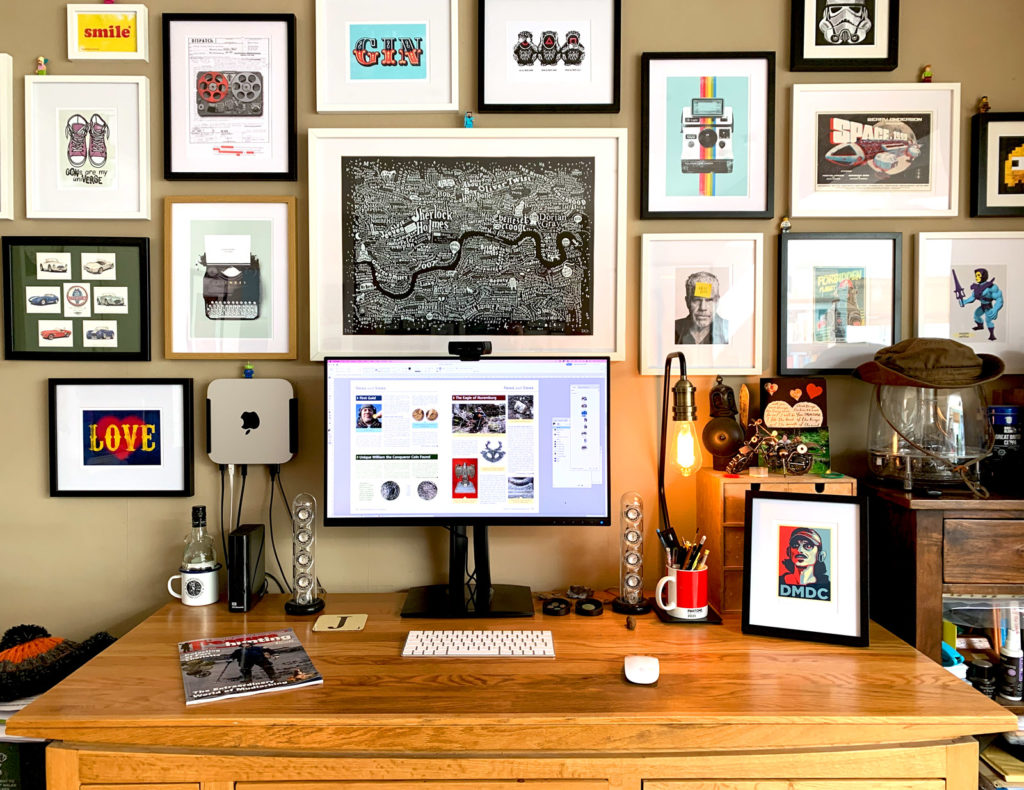
This issue has another significance for me as it is one that I have helped to produce. The publishers of Treasure Hunting Magazine have been very busy this year with other projects and so they asked me if I would like to help out on the magazine as they know that my profession is graphic design. It has been an absolute delight to mix work with my hobby in this way and I hope that I will have the chance to work on future issues of the magazine. My name has also appeared alongside Christine Jennet on the layout and design section of the contents page, it’s a small thing but it makes me smile every time I look at it.
As for the journey at Weston, this will continue and there will hopefully be some exciting developments later on in the year. To find out what they are just keep an eye on my @hertfordshire_history_hunter instagram account where you can follow everything that I find and what developments might be occurring!
All noisy on the Weston front
I’m sure most detectorists would agree that the hardest part of our hobby is obtaining permissions. I have been trying so hard for the past few years to get my own permissions outside of the couple of fields that my family owns but to no avail. I will carry on trying as I’m not the type of person who gives up that easily, but luckily for me I have an old school mate who has been more than generous by taking me out on his permissions. The last article I wrote about the lack of Roman finds at a villa site in Hertfordshire was one of his permissions and the article you’re reading now is much the same situation. But the difference here is that we started searching this site together, so from the off it felt like a level playing field, we both had contact with the landowner and we both arranged times to go detecting.
From the outset I had high hopes of good finds from this permission because the landowner revealed that the farm had been in his family for over 300 years and they had never granted permission for anyone to detect before now. He also revealed that there is a scheduled Roman villa in a neighbouring landowners field which borders with their land, could this permission get any better? Well actually yes, the landowner grows a hay crop so over the autumn and winter months most of the land is left to pasture, it is literally like being on the set of detectorists, heaven! Things did get a bit childish on the first day though when my old mate said “bagsie I get the field next to the Roman Villa”, at which point I started running whilst shouting “last one there’s not allowed on for a month!”. Things haven’t really progressed much from the school playground in the past 50 years.
The playground tactics employed to gain sole access to this particular field were soon to be proven pointless. On paper this should have been the field that produced the most given its close proximity to the villa, but in the 8 months that we have been on this permission it’s the field that has produced the least. I initially put this down to the fact that we started searching in the middle of summer with dry hard ground being a factor in masking what lay beneath. But even during the autumn and winter months when the ground was wet and soft it still didn’t really produce that much.
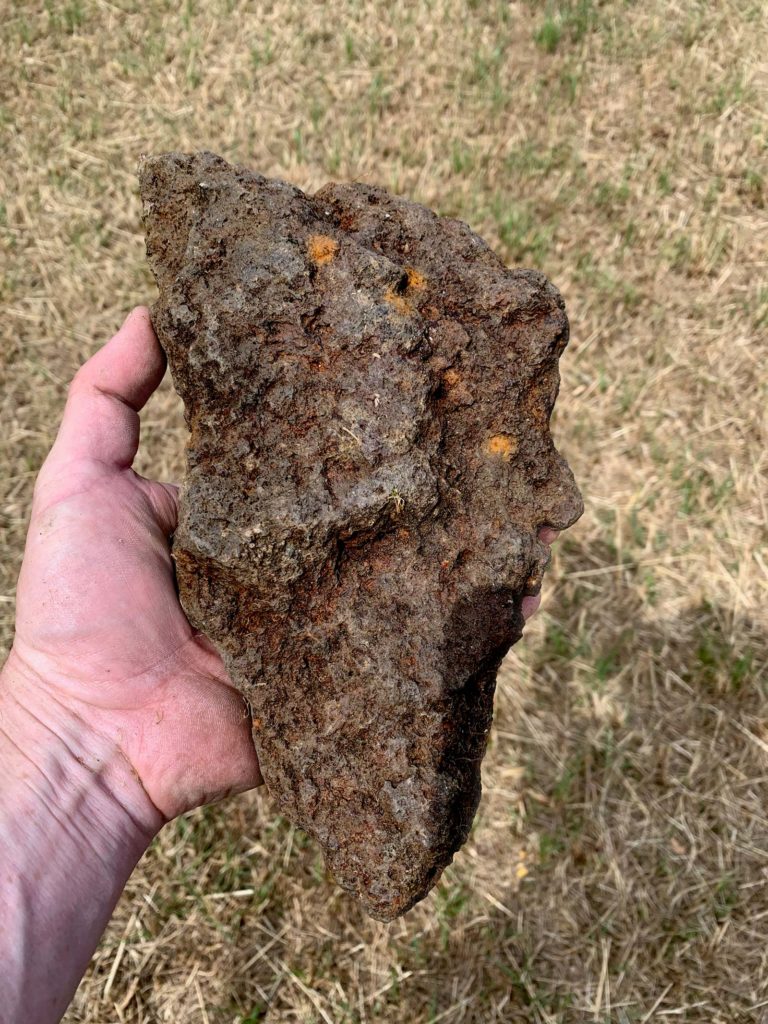
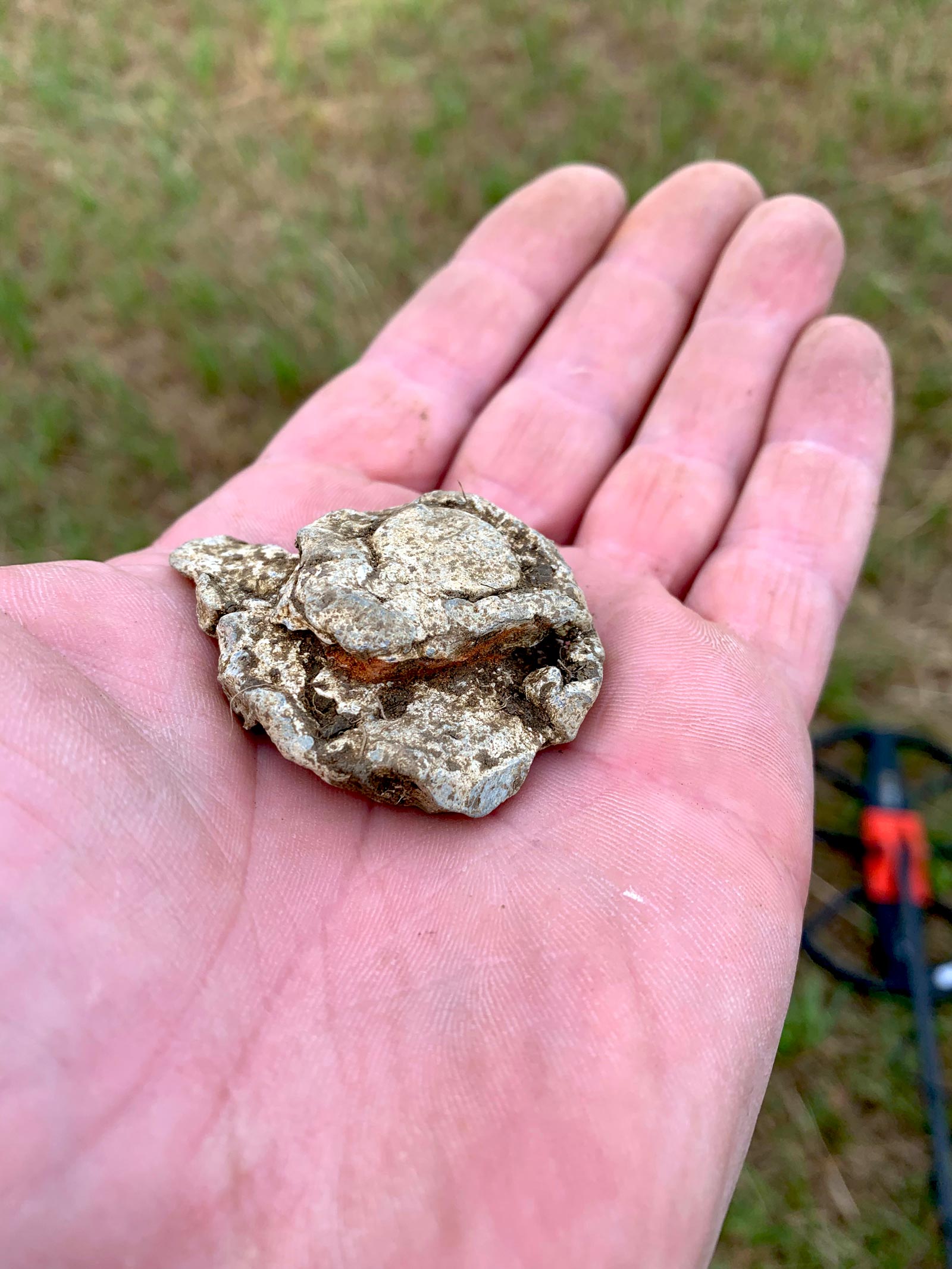
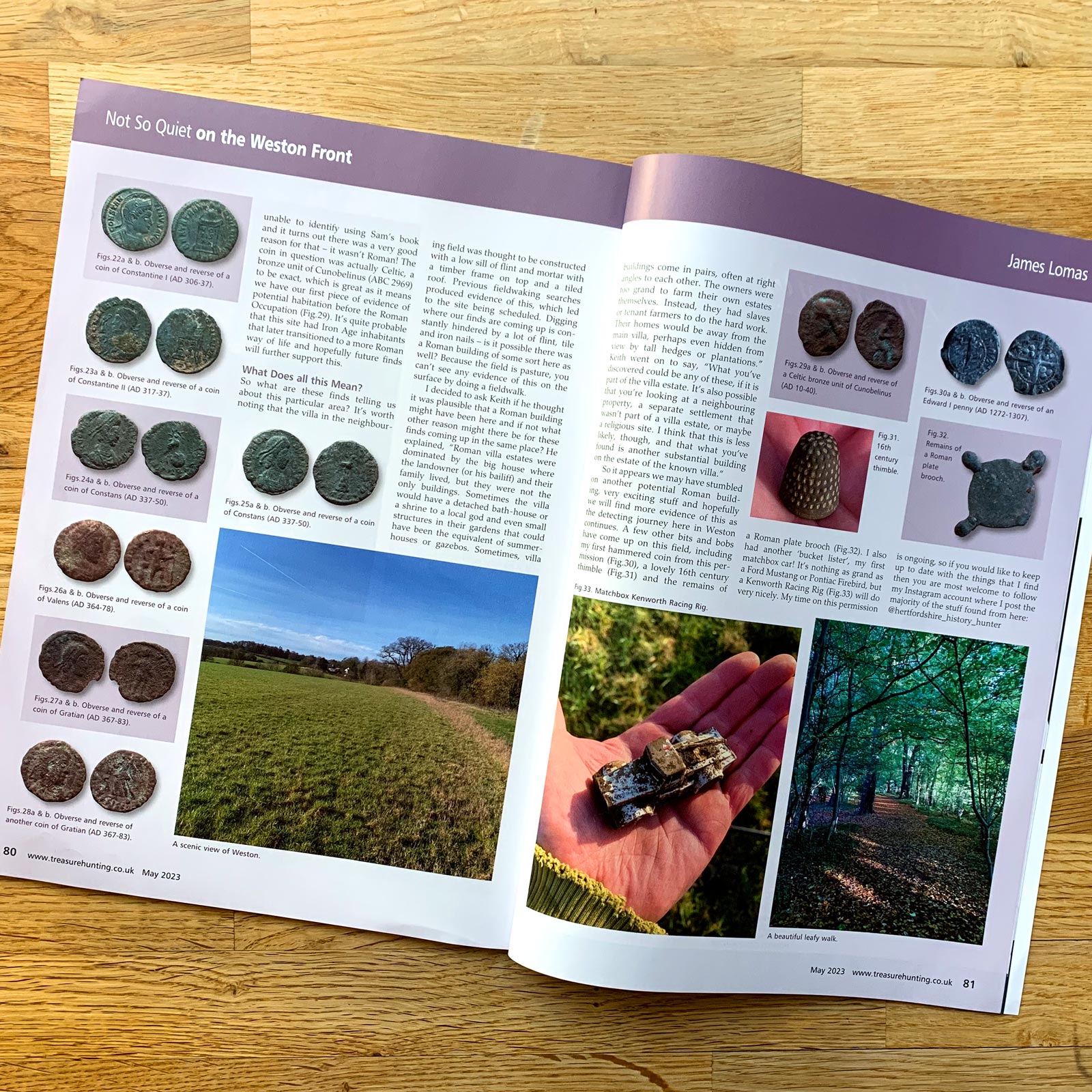
That’s not to say it produced nothing, in between the vast array of shot gun cartridges there has been the odd grotty Roman coin (5 in total between us), a huge lead pot mend and a massive lump of iron slag, all things which could be related to the villa in the next field. There has also been a few modern-ish coins including my first George III penny, even though it was pretty toasted it was still a joy to find.
The permission itself is pretty big, with a gorgeous 16th century country home at the heart of it. There is a lot of land here for us to search and given that it stretches between the Roman villa and a 12th century parish church there should be a lot of history for us to find. Our next target was a huge south facing slope which as luck would have it had just been harvested and was now left to pasture. My mate got chatting to a lady that used to help out farming this land and she told him that the south facing slope was referred to as ‘the vineyard’, could this be a Roman legacy?
I think it’s fair to say that this is where the historical journey really began as the finds started reveal the history we hoped that this permission would hold. My mate started things off on the first outing with a couple of hammy’s, but I wasn’t really getting that much in way of good signals. There is hardly any iron trash on this particular field so I soon learned that when I did get a signal it would more often than not be something good. Then on the 2nd outing I had some Roman coins come up, firstly a denarius of Hadrian which was a little beaten up but easily identifiable. Then I had a very worn dupondius which was closely followed by a lovely silver denarius of Faustina Sr. Because this was the first silver Roman I had found on this permission I decided to give it back to the land owner as he has a real interest in the history of his land.
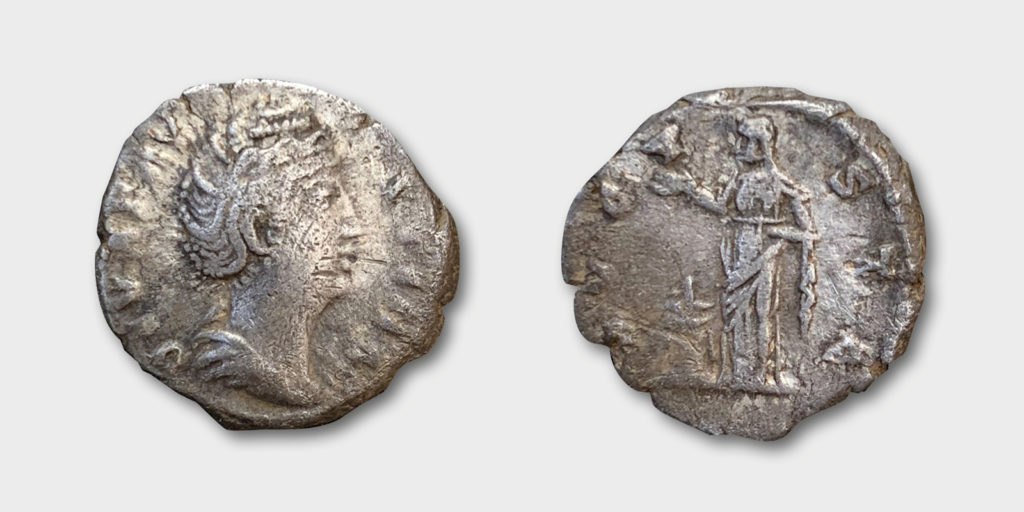
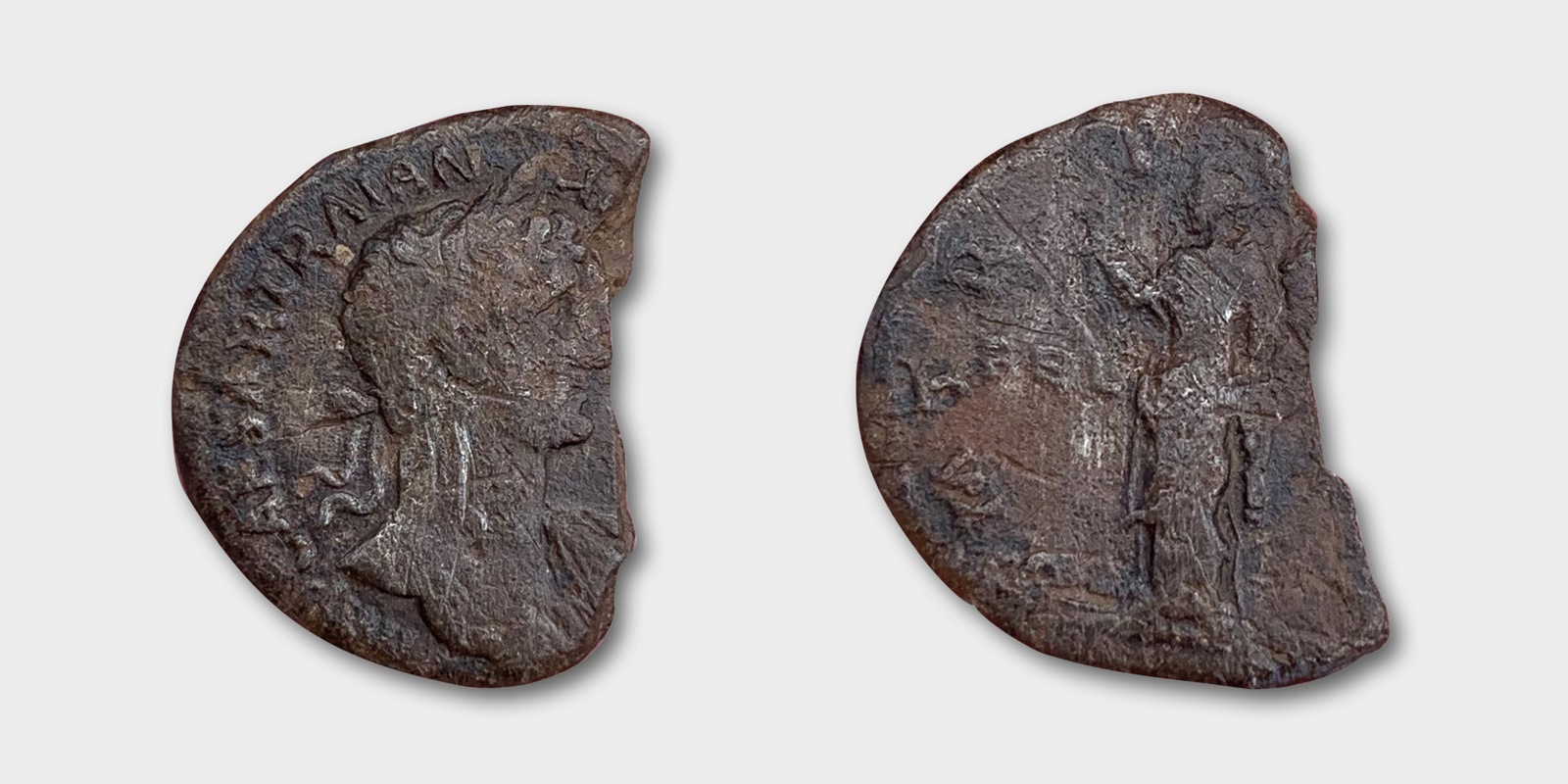
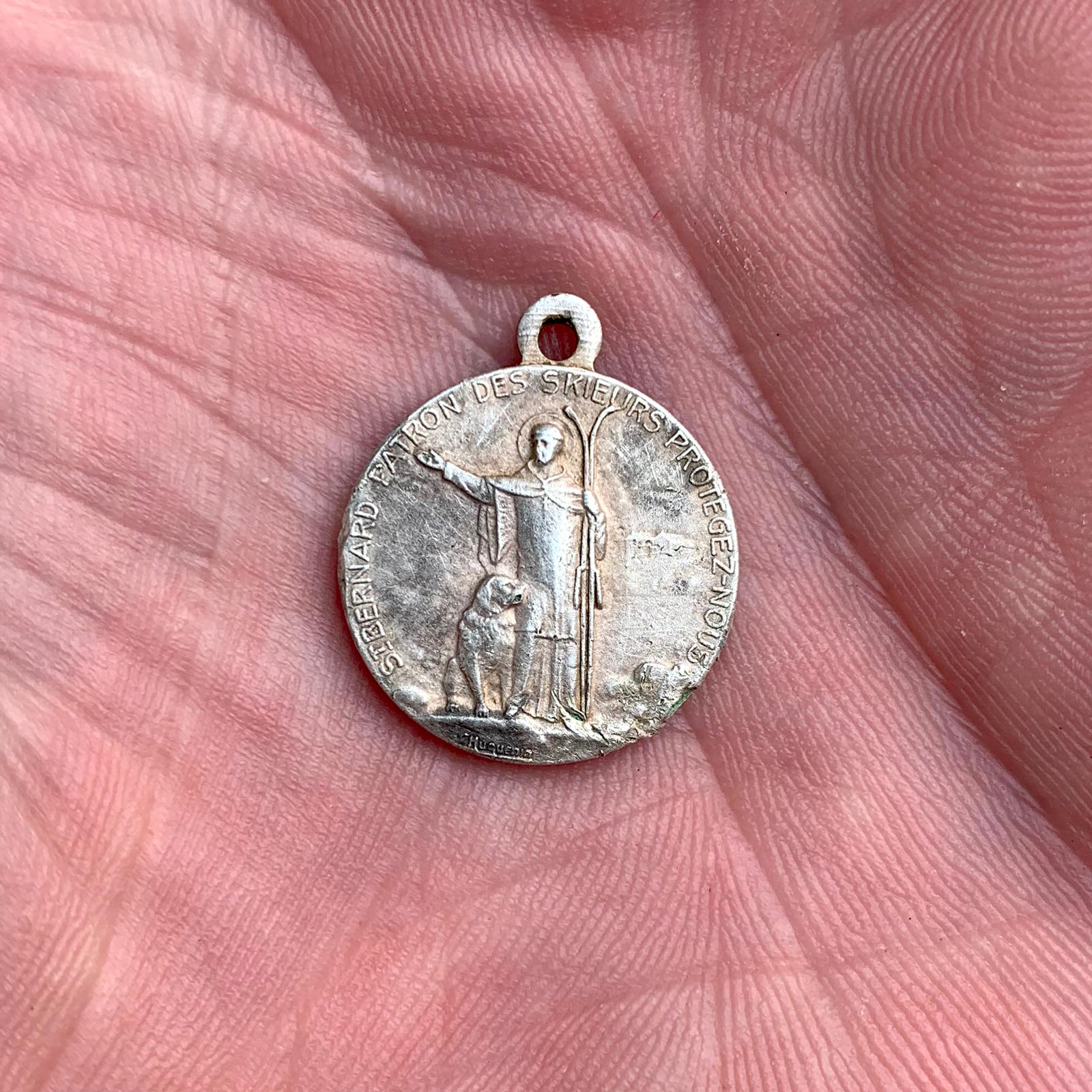
I also did the same with the second piece of silver that I found as this time it had a direct connection to his family. The silver in question was a pendant of St. Bernard the patron saint of skiers! The pendant had the makers name Huguenin which was a Swiss firm established in 1868. The connection is that previous generations of his family used to spend a lot of time in years gone by skiing in the Swiss Alps. It would also appear that they spent some time skiing on this slope too and I’m sure St. Bernard appreciates seeing daylight again.
We spent quite a lot of time on this field in the months that followed and although we had some other good finds it didn’t really produce in the way we thought it might. I had a couple more Roman coins from it though, one was Marcus Aurelius and the other was Gordian III. I was really chuffed with Marcus Aurelius and I remember on discovering who it was saying, “that’s bloody Richard Harris that is”. I was so chuffed that I insisted that my partner and I watched Gladiator that evening. There we were watching Richard Harris with one of his coins sat on the coffee table and me with a stupid grin on my face. It’s only when I think of it now that I realise that my partner must despair of me at times.
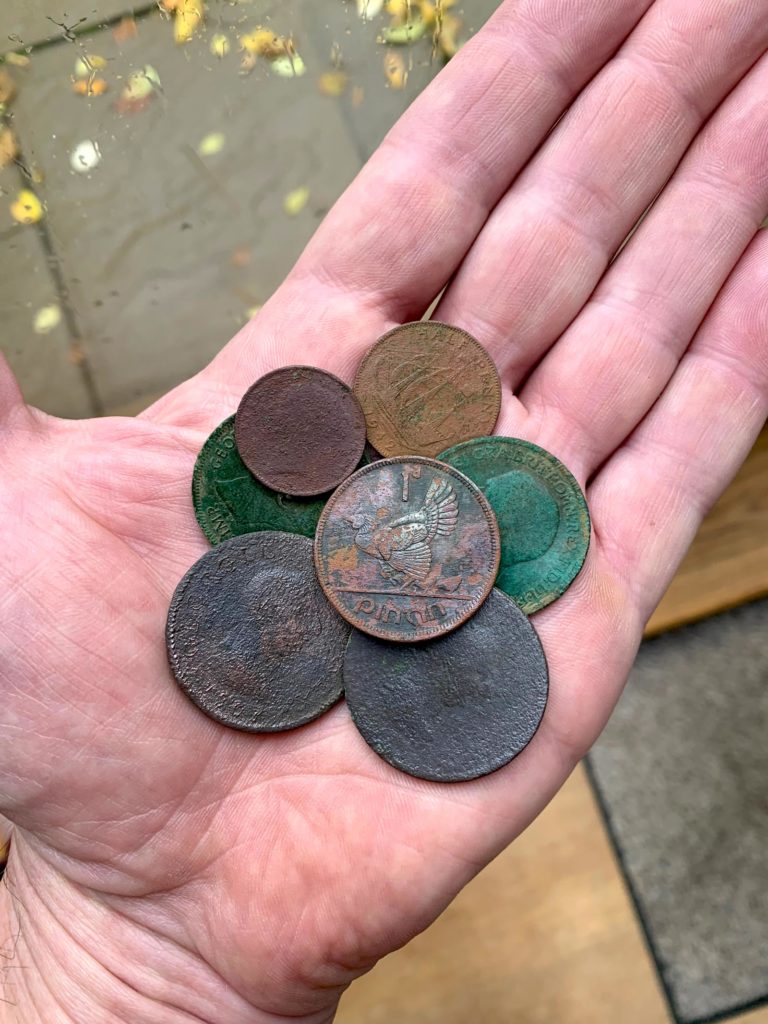
So again it was getting to the point where we needed to extend the search elsewhere on the permission. During December my mate didn’t come out as much, and to be honest I didn’t blame him because it had turned pretty darn cold. It was only my hot flask of tea and thermal underwear that kept me out in the freezing temperatures, along with the thought that there must be a Roman hoard around here somewhere. During some email conversations with Julian Evan-Hart, he let slip that Weston is where he grew up, which kinda left me with a feeling of imposter syndrome. But he also divulged that a hoard of silver denaris had been uncovered near the church sometime in the 1800’s. I don’t think any records exist and the whereabouts of the coins is unknown so who knows if it is true, but it has kept my hopes alive of there being another stash of Roman coins around here somewhere.
During this month I took the search closer to the family house, my thinking being that if I were a Roman living on this landscape I would make a home exactly where the family have there home today. The landowner was ok with this so long as I didn’t search directly on the main lawn. It worked for me as I wouldn’t have felt comfortable digging holes in the front garden and the area that I was specifically interested in I was allowed to search. This was a small wooded area to the side of the main house that had some well walked paths and small open grassy areas between some of the trees. But again, nothing Roman, it was mainly more modern coins from the early 1800’s onwards which I guess are probably loses from members of the landowners family over the years. I also found a medal, it turns out it was from the Daily Mail Teddy Tail League celebrating the Silver Jubilee of king George V in 1935.
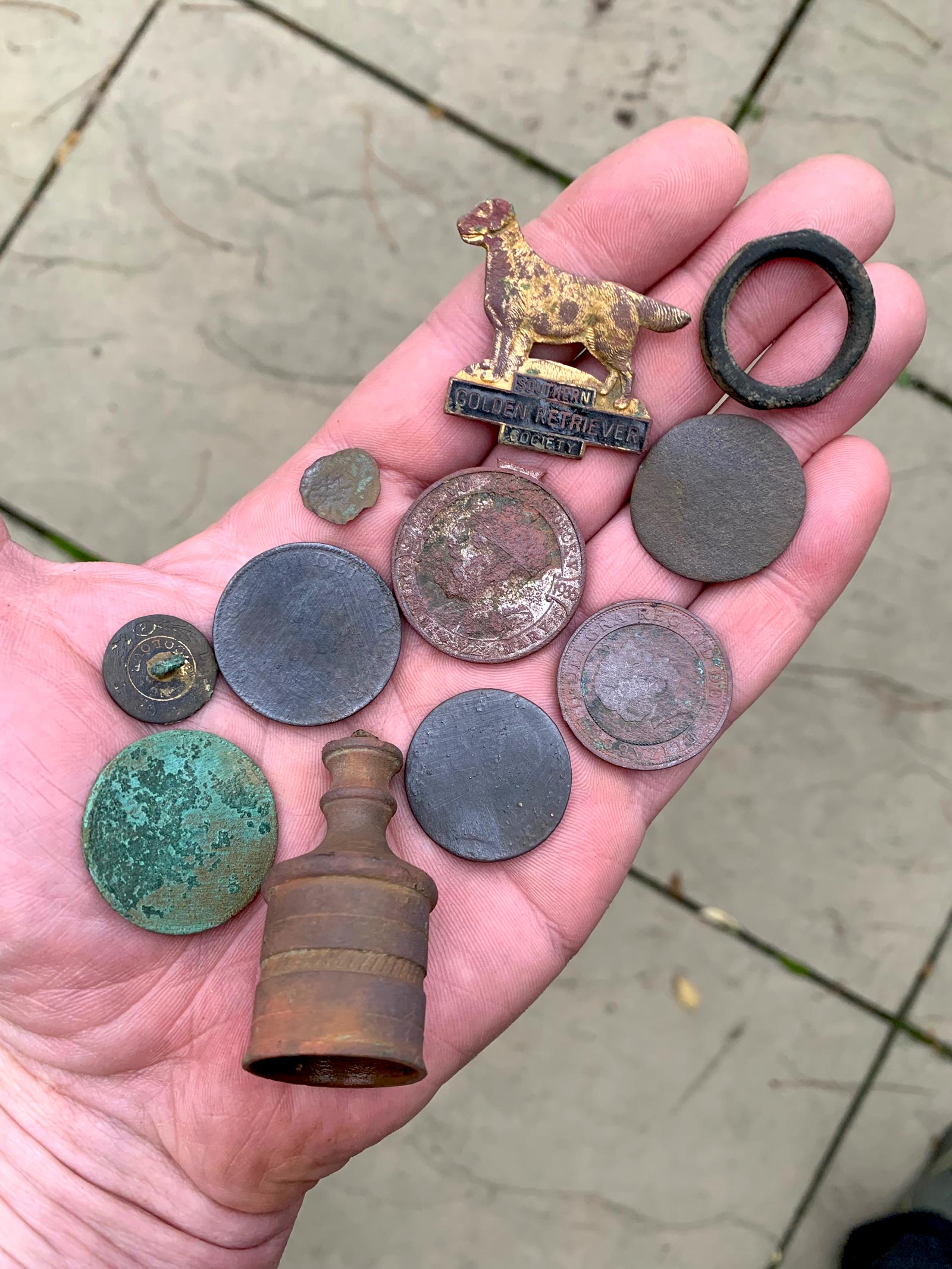
In these wintery months there was also some incredible scenery to take in on the frosty early mornings. It’s another of the great aspects of this hobby, being in the middle of the gorgeous countryside that North Hertfordshire has to offer. It’s these moments when I take the time to stand back and take it all in that I feel incredibly lucky to live in this beautiful part of the county. But beautiful frosty mornings aside, there was no evidence of Romans’ on this part of the permission, so where were they?
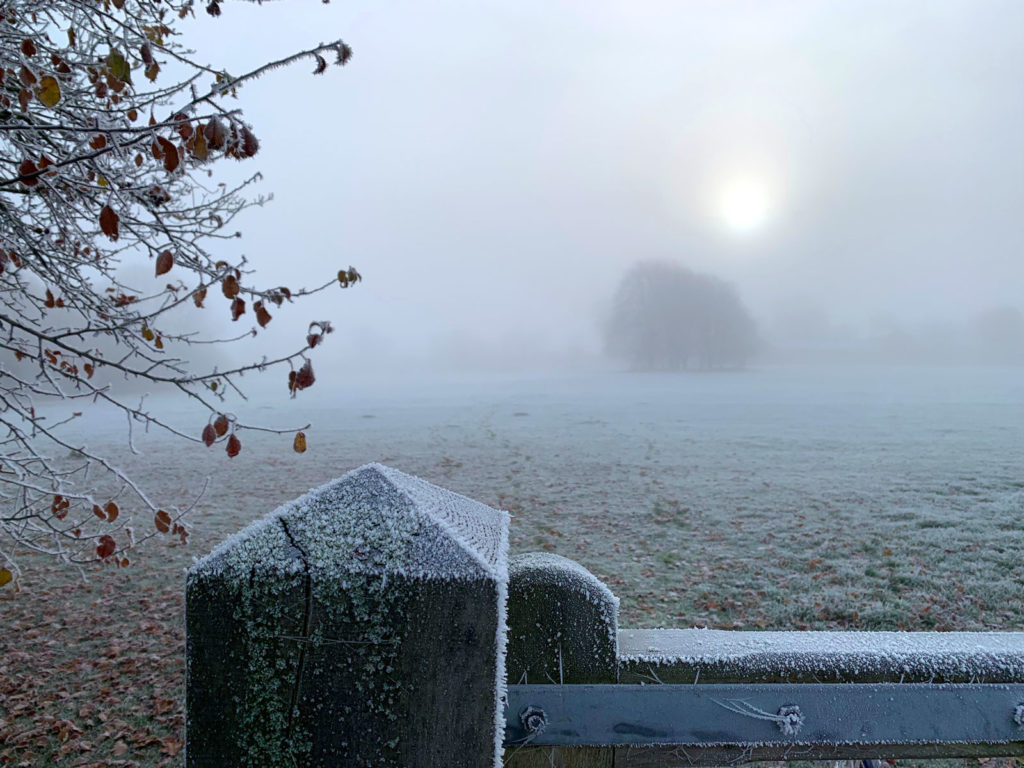
You might well be thinking that it’s pretty obvious, they were at the villa which is just outside of our permission and you’d be right, they were there. But I had a feeling that there had also been habitation elsewhere on the permission. Part of the reason for this was the research I did on the PAS database. In my previous article I wrote about the help that my Finds Liaison Officer, Matt Fittock gave in using the database to search for finds by grid reference. The results of this were interesting because quite a few Roman finds had been made in the square kilometer that included the Roman villa and some of the land from our permission, but outside of that square kilometer there was pretty much nothing. What interested me is that the earliest Roman finds recorded on the PAS database were from 260AD onwards, nothing before that. The coins I have been unearthing are much earlier than this, the denarius of Hadrian for example dates from 117 to 138AD, so it got me thinking that there might be dwellings in addition to where the villa site is now as my finds were all coming up outside of that square kilometer. This feeling was further enhanced with the occasional small lead pot mend I was finding as these are usually good indicators of habitation.
Between Christmas and new year me and my mate decided to give another field some attention. It’s one we had constant sight of because it was on the opposite side to the main south facing slope we had spent so much time on, but for some reason we didn’t think much of it. This was partly due to the big badgers den that was slap bang in the middle of it, but we managed to overcome that fear as curiosity got the better of us and boy did it pay off!
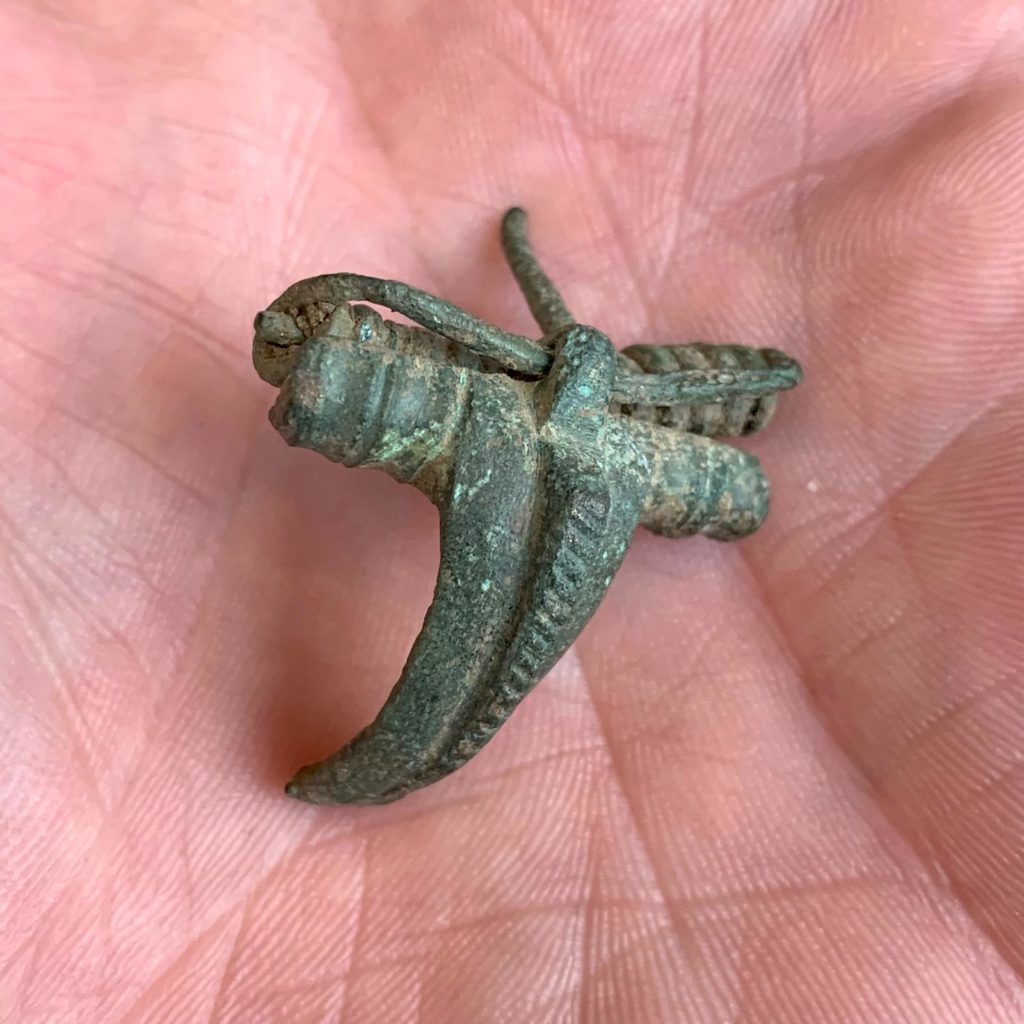
This field has it’s own entrance and we had permission to park on it which was great, it made things a lot easier should the need to escape angry badgers arise! The finds started coming up pretty quick with a few modern coins including a nice silver George III shilling, and then a little later a toasted Roman coin, possibly a dupondius but I wasn’t able to identify the Emperor. Then came a bucket lister for me, my first Roman fibula brooch, it was a real punch the air moment. Neither of us had ever found a fibula brooch and my mate has been detecting a lot longer than me, it even led to us dancing a little jig. The brooch was broken as they usually are but it still had a good portion of the spring mechanism which was good for dating purposes. As with a lot of my finds I ran this one past Keith Fitzpatrick-Mathews, the Curator and Heritage Access Officer at North Herts Museums and he dated it 40-60AD. So the dates of our Roman finds are now being placed at the beginning of the occupation which probably meant there was habitation here before that. There is one Iron Age brooch on the PAS database recorded from this area so maybe in future outings we will find our own evidence of Iron Age habitation.
My next time out on this field was New Years Day, but my mate was unable to join me so I was on my own for this one and he kinda regrets not coming out to play now. This was when the Roman coins started popping up in abundance, I think I had 9 come up in total on that day and all in close proximity to each other. I came back the next day, as you would, and again my mate couldn’t make it and I had another 10 coins out. It’s at his point I started to wonder if we had the beginnings of a hoard clipped by the plough, but in the next few outings when my mate could make it the coins started to become a lot more scarce. We had 39 coins in total between us, not a hoard but still a bloody good start to the year! The majority of these were toasted but there were quite a few that could be identified and dated.
On handing the coins in to Matt Fittock (FLO) I asked if he would be able to identify some of them there and then, but he was unable to because of the massive backlog of work he has to contend with due to our hobby becoming more popular during the lockdowns. I decided to try and identify them myself using the book ‘A History of Roman Coinage in Britain’ by Sam Moorhead the National Finds Adviser for Iron Age and Roman Coins at the Portable Antiquities Scheme (British Museum). I think I did ok but I wanted someone to check my homework to be sure of my efforts. I decided to be a bit brazen and I emailed Sam Moorhead directly and he very graciously replied having marked my homework. I had sent him a pdf with photos of both sides of each coin with my identifications and I didn’t fare too bad. There were a few I got wrong which he corrected and he also left a note next to one of them saying ‘nice coin’. I asked why he had singled out this particular coin (Constantine II) to which he replied “The bust with the emperor holding Victory on globe is scarce; it’s also a nice coin to look at!” It’s a pretty good feeling to be told that at least one of these coins a little on the rare side.
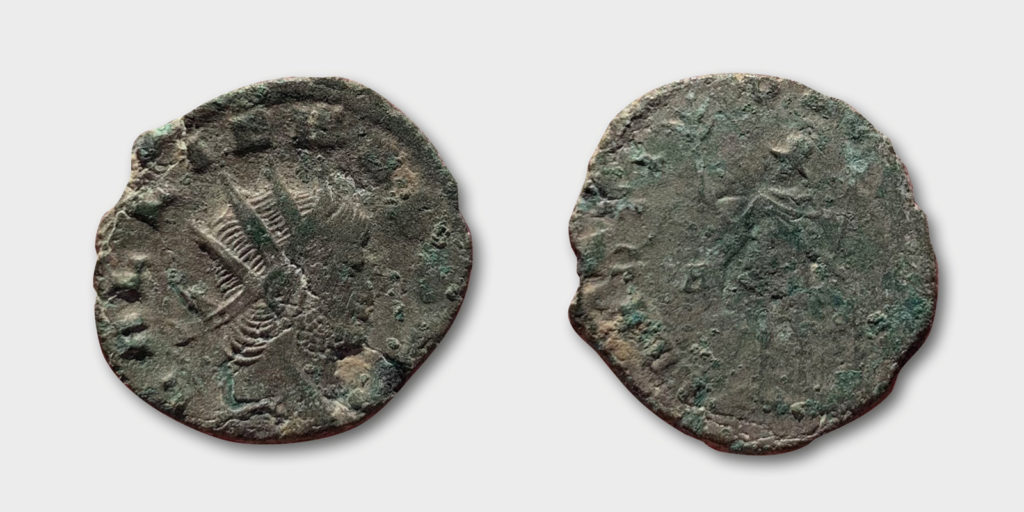
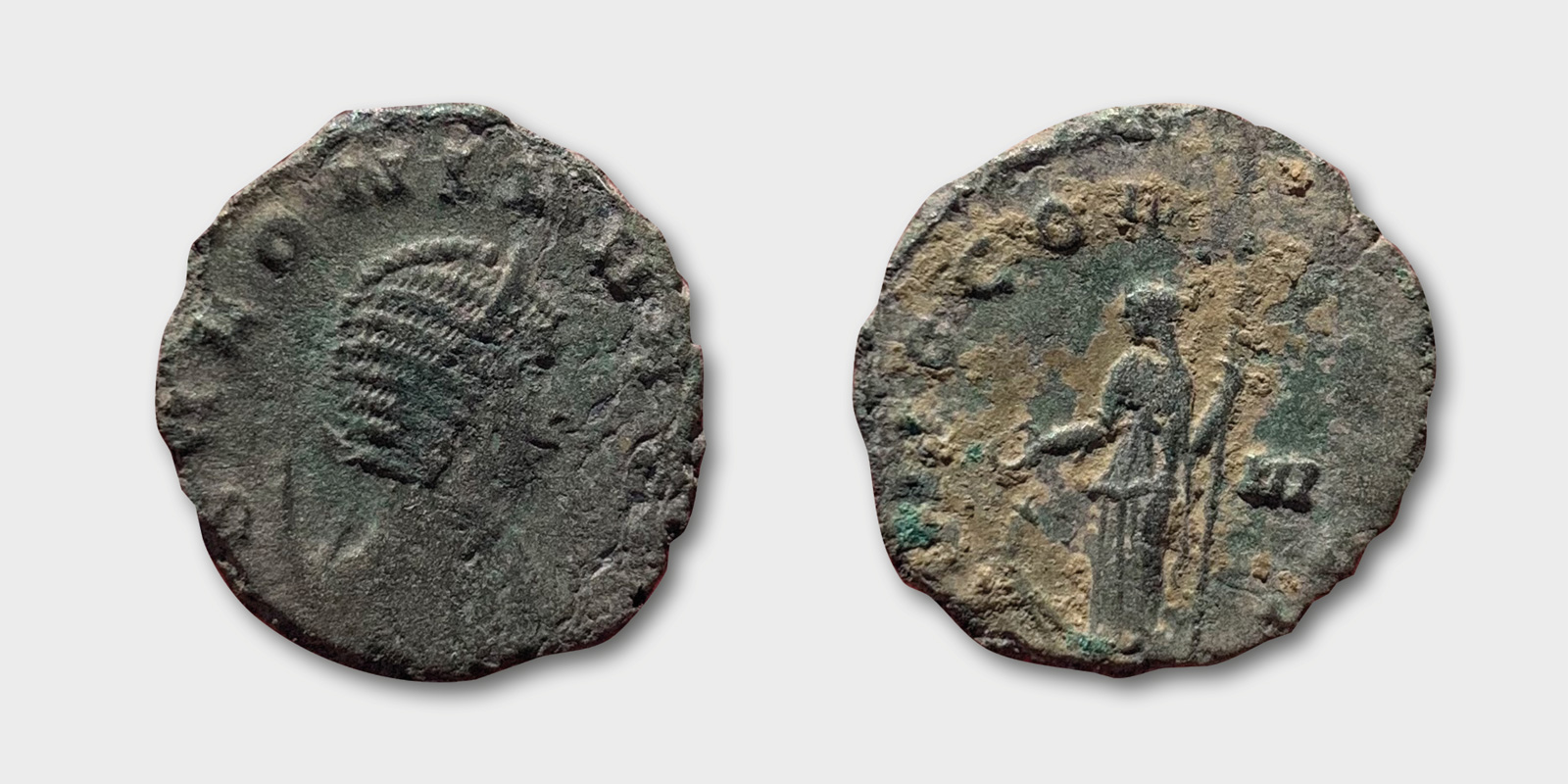
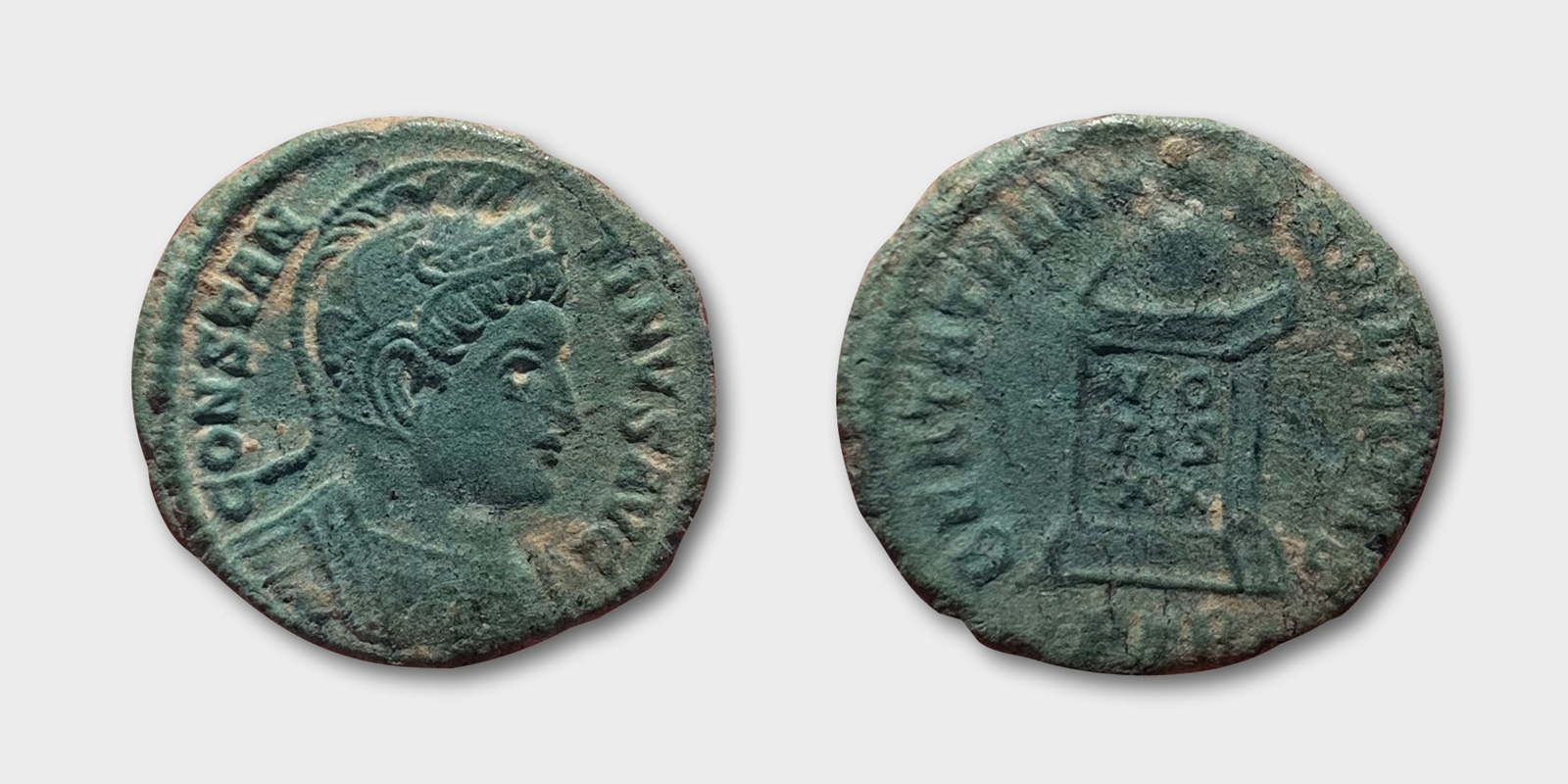
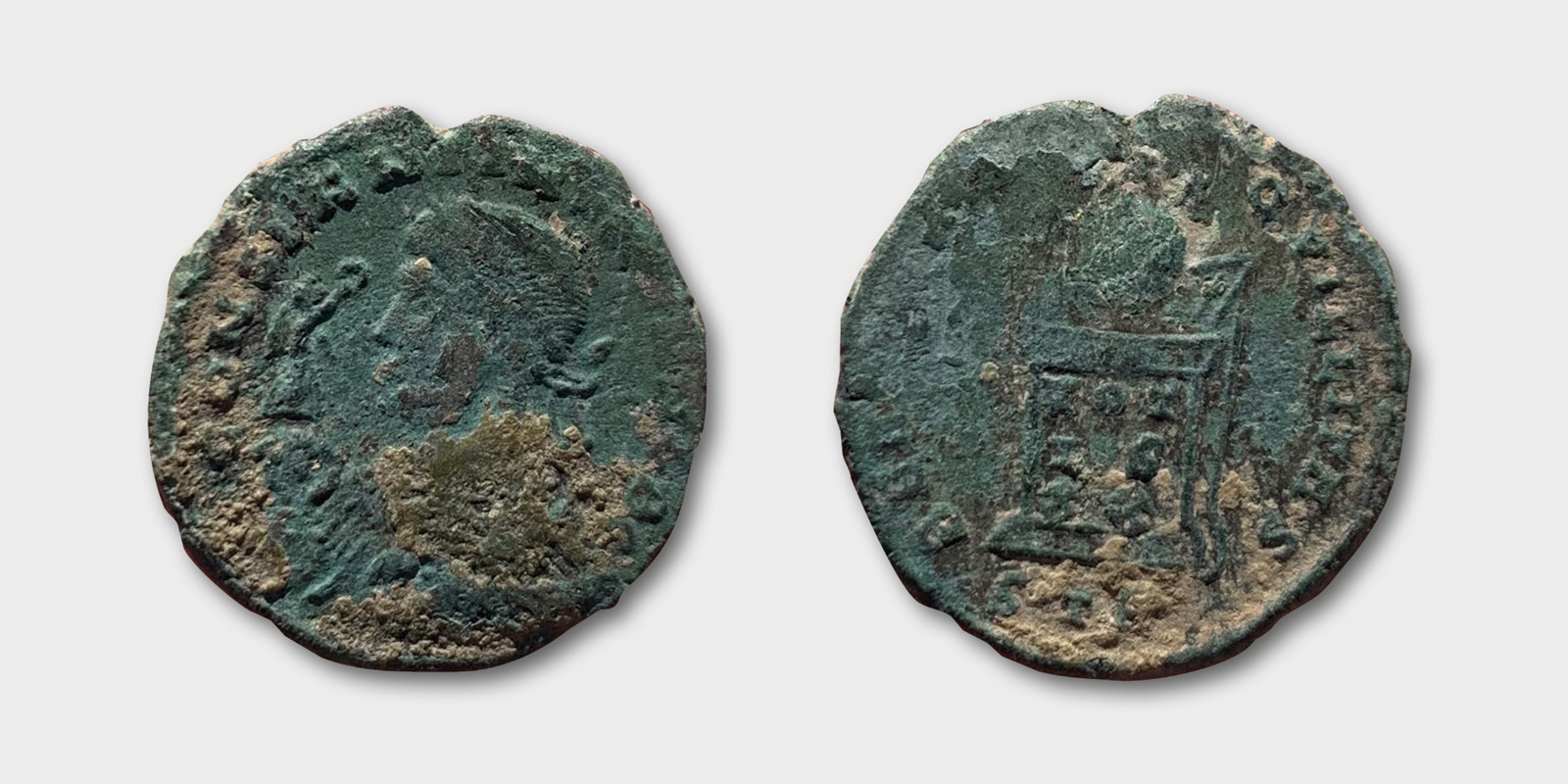
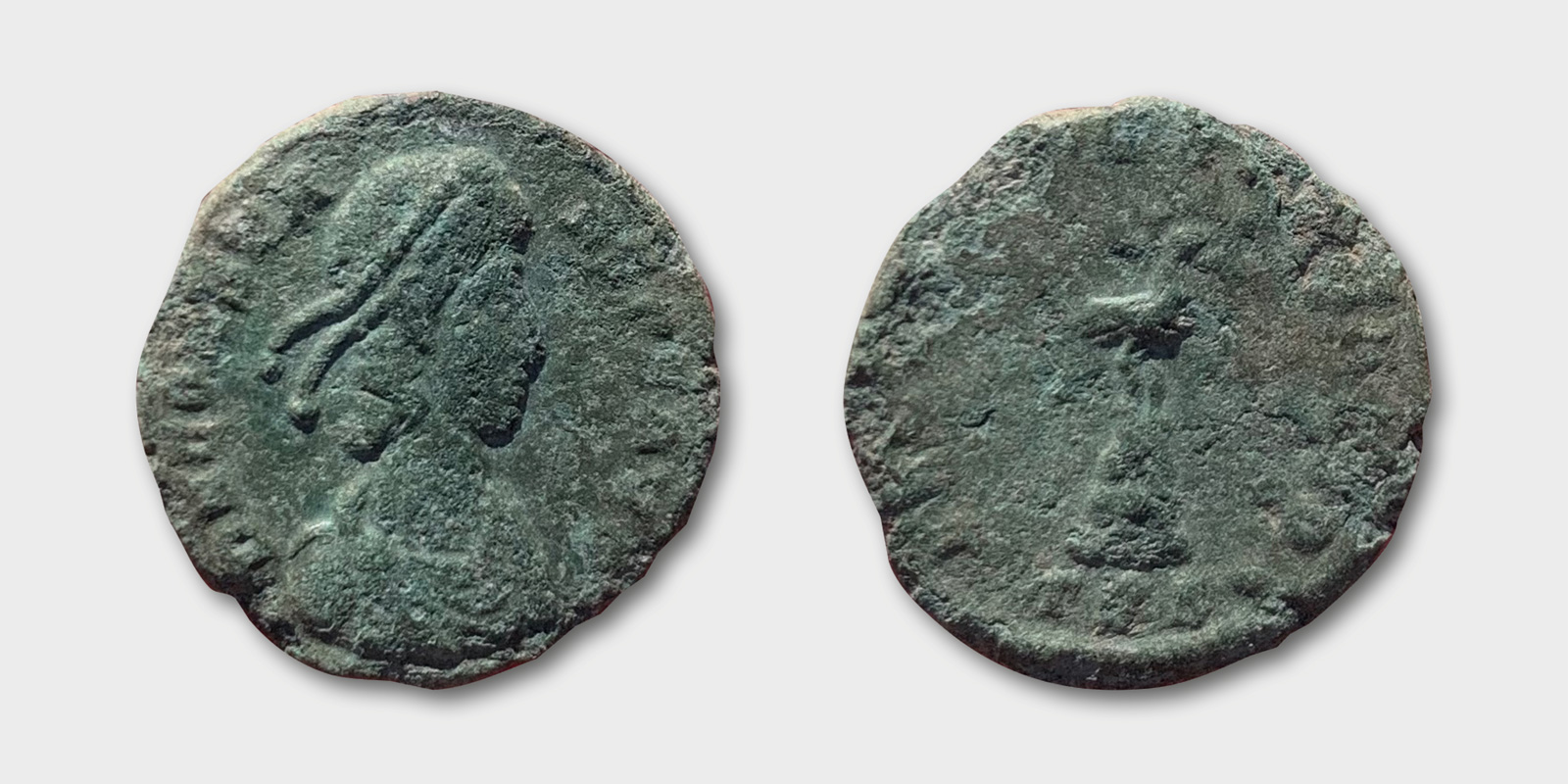
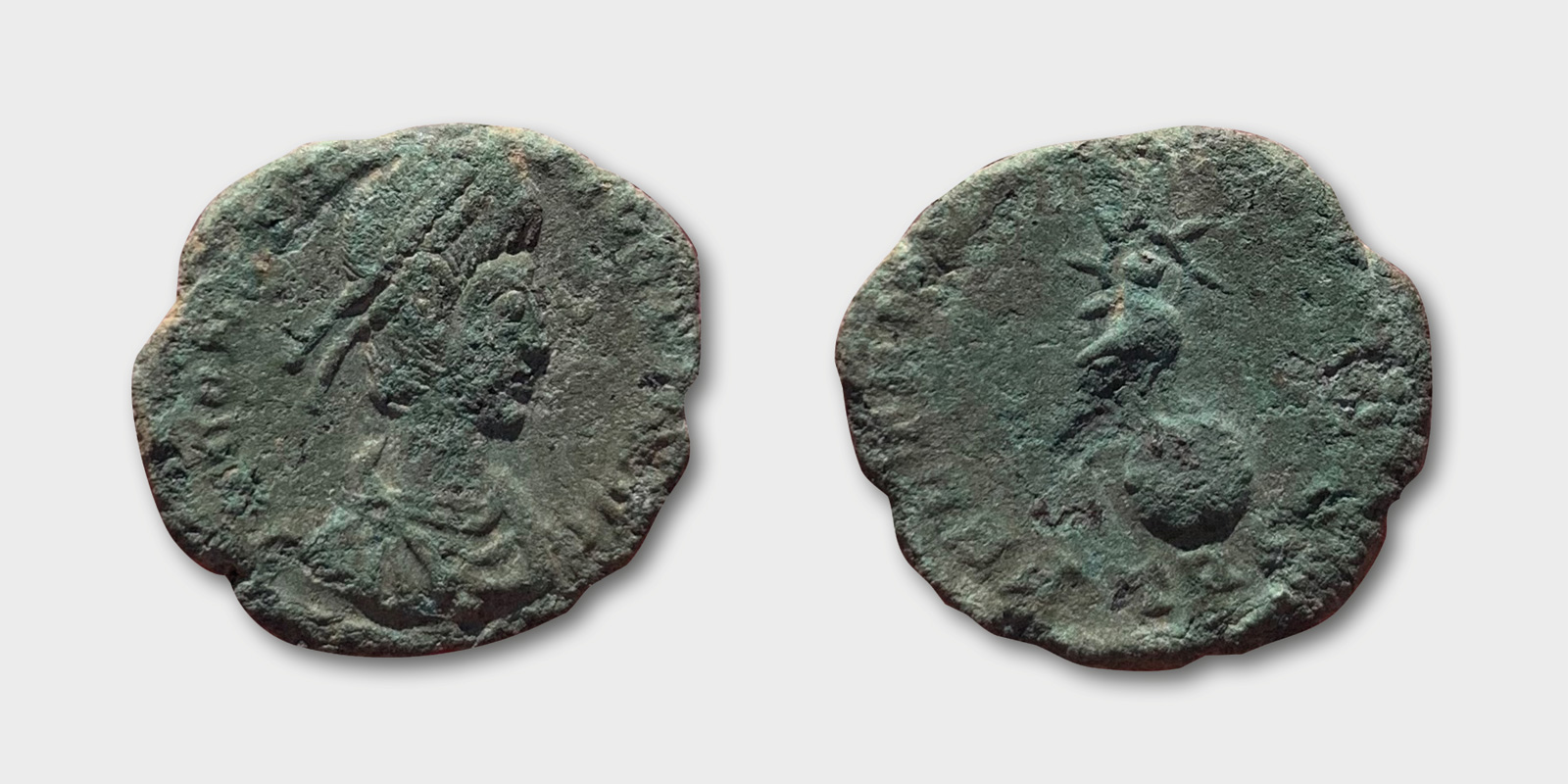
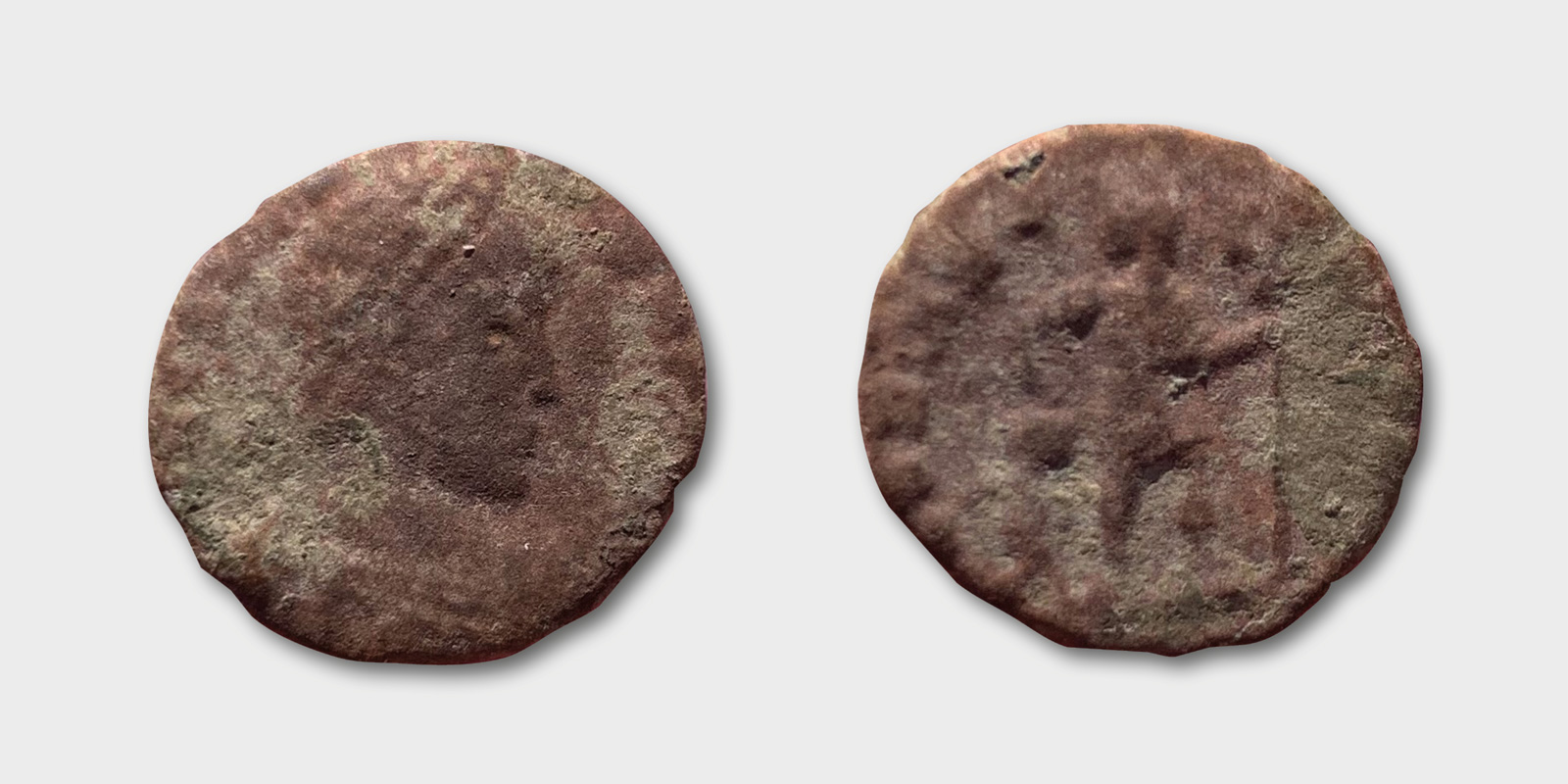
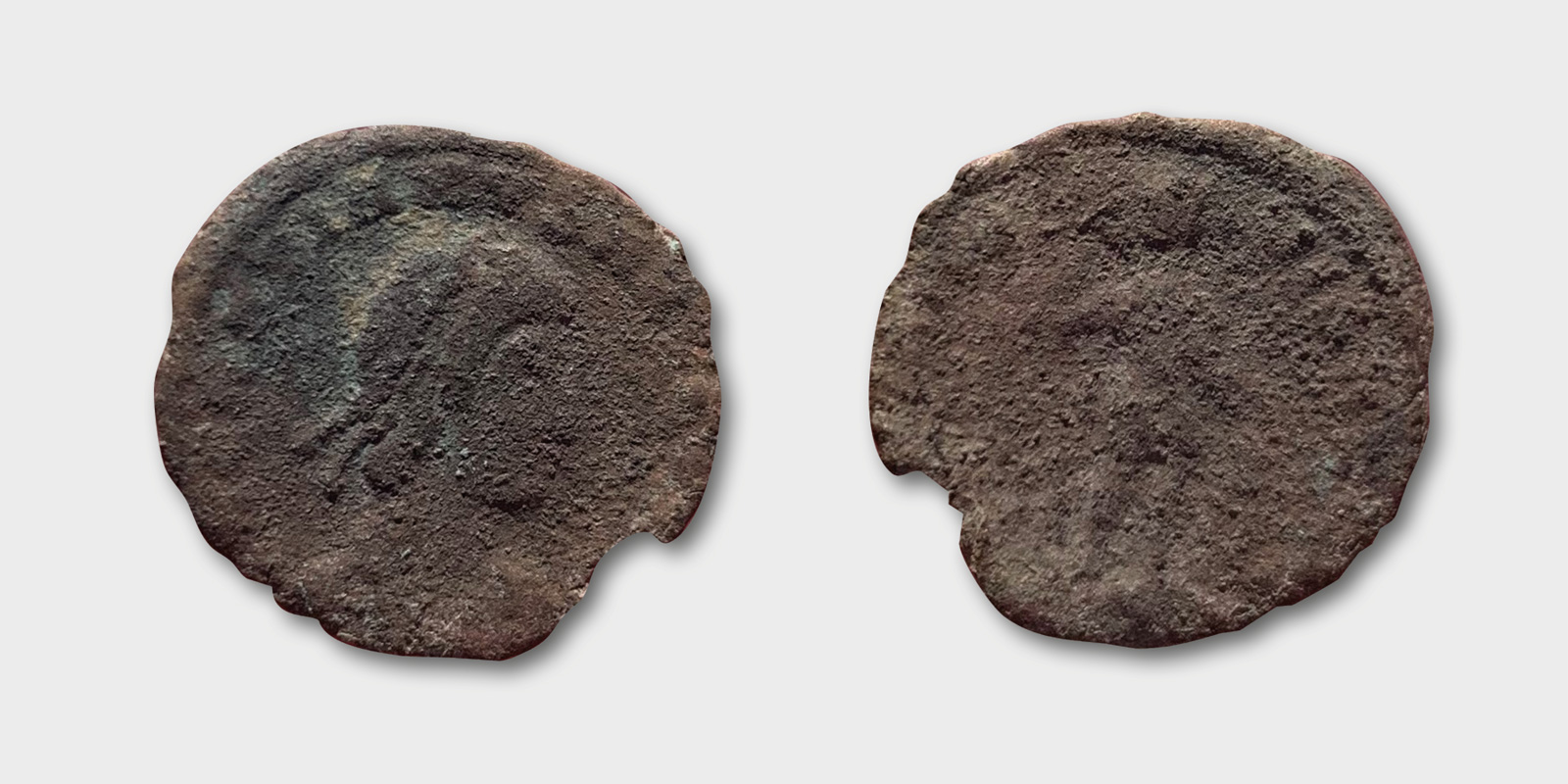
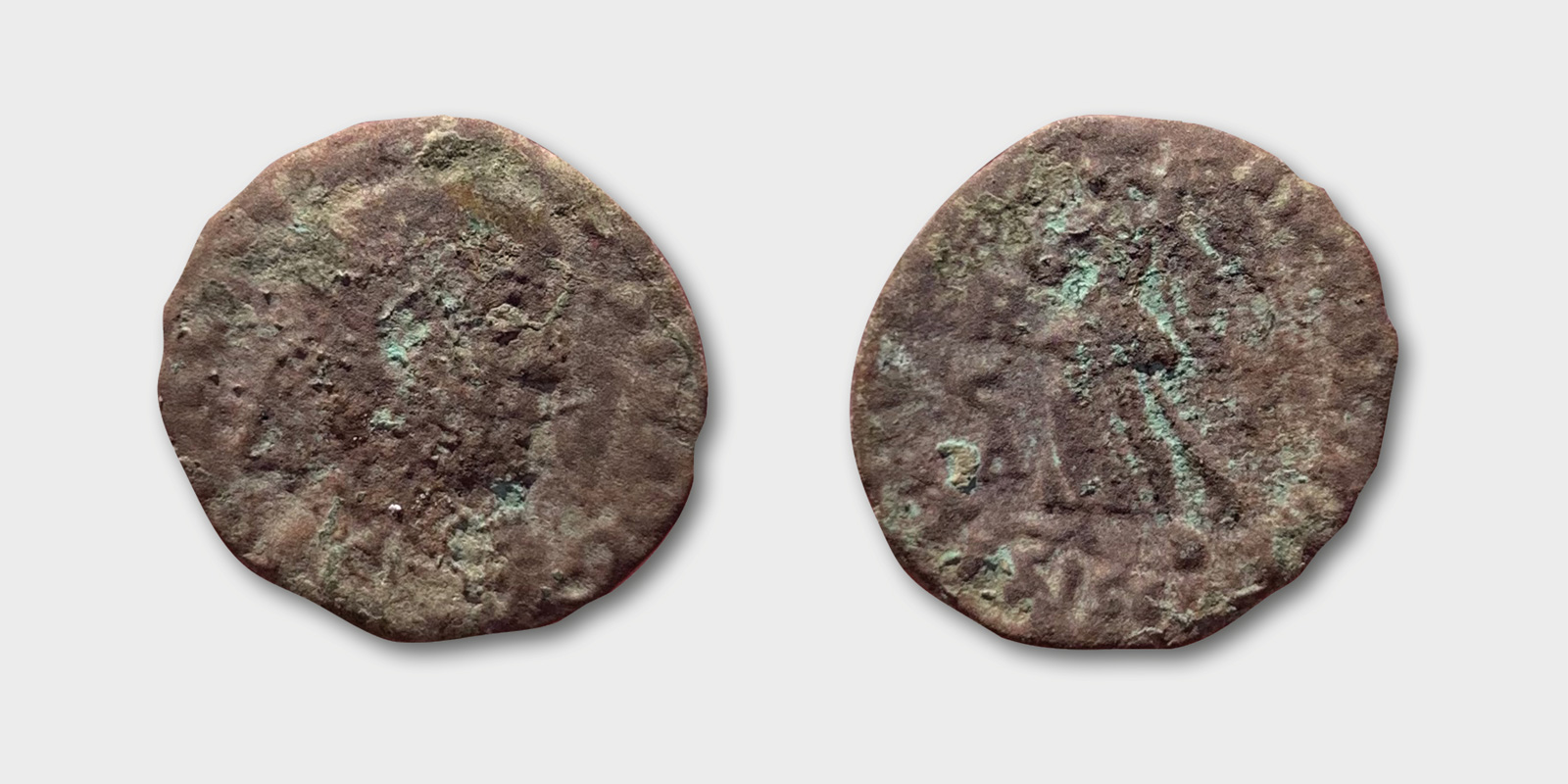
So now I was able to identify the dates of the coins which range from 260-383AD, a good spread spanning well over 100 years of the middle to later end of the Roman occupation. It’s interesting to note that these coins don’t date below 260AD and they were found bang on the border of the square kilometer that I talked about. But there was one coin I was unable to identify using Sam’s book and it turns out there was a very good reason for that, it wasn’t bloody Roman! The coin in question was actually Iron Age, a bronze unit of Cunobelinus (ABC 2969) to be exact, which is great as it means we have our first piece of evidence of habitation before the Roman occupation. It’s quite probable that this site had Iron Age inhabitants that later transitioned to a more Roman way of life and hopefully future finds will further support this.
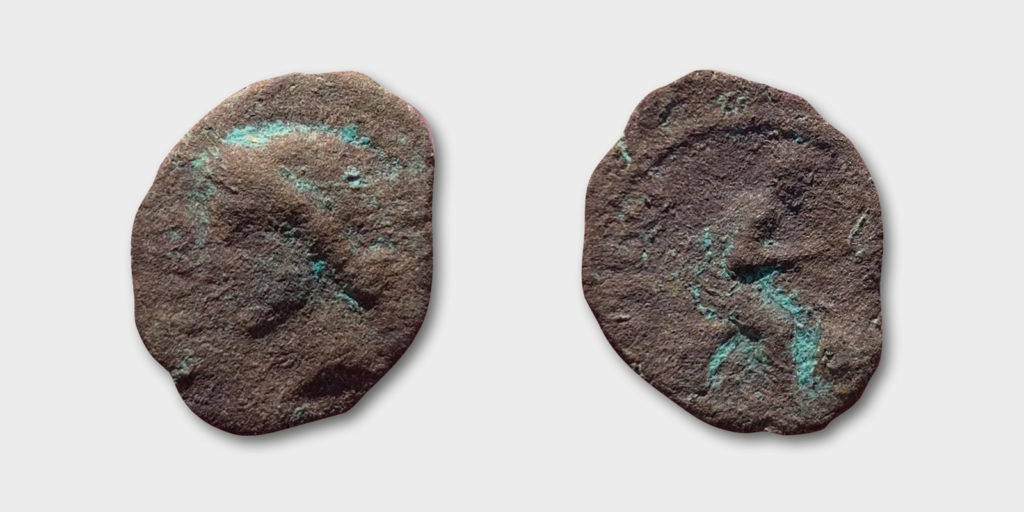
So what are these finds telling us about this particular area? It’s worth noting that the villa in the neighbouring field was thought to be constructed with a low sill of flint and mortar with a timber frame on top with a tiled roof. Previous field waking searches produced evidence of this which led to the site being scheduled. The digging where our finds are coming up is constantly hindered by a lot of flint, tile and iron nails, is it possible there was a Roman building of some sort here as well? Because the field is pasture you can’t see any evidence of this on the surface by doing a field walk. So I decided to ask Keith if he thought it was plausible that a roman building might have been here and if not what other reason might there be for these finds coming up in the same place?
“Roman villa estates were dominated by the big house where the landowner (or his bailiff) and their family lived. But they were not the only buildings. Sometimes the villa would have a detached bath-house or a shrine to a local god and even small structures in their gardens that could have been the equivalent of summerhouses or gazebos. Sometimes, villa buildings come in pairs, often at right angles to each other. But the owners were too grand to farm their estates themselves. Instead, they had slaves or tenant farmers to do the hard work. Their homes would be away from the main villa, perhaps even hidden from view by tall hedges or plantations.”
Keith carried on to say, “What you’ve discovered could be any of these, if it is part of the villa estate. It’s also possible that you’re looking at a neighbouring property, a separate settlement that wasn’t part of a villa estate or maybe a religious site. I think that this is less likely, though, and that what you’ve found is another substantial building on the estate of the known villa.”
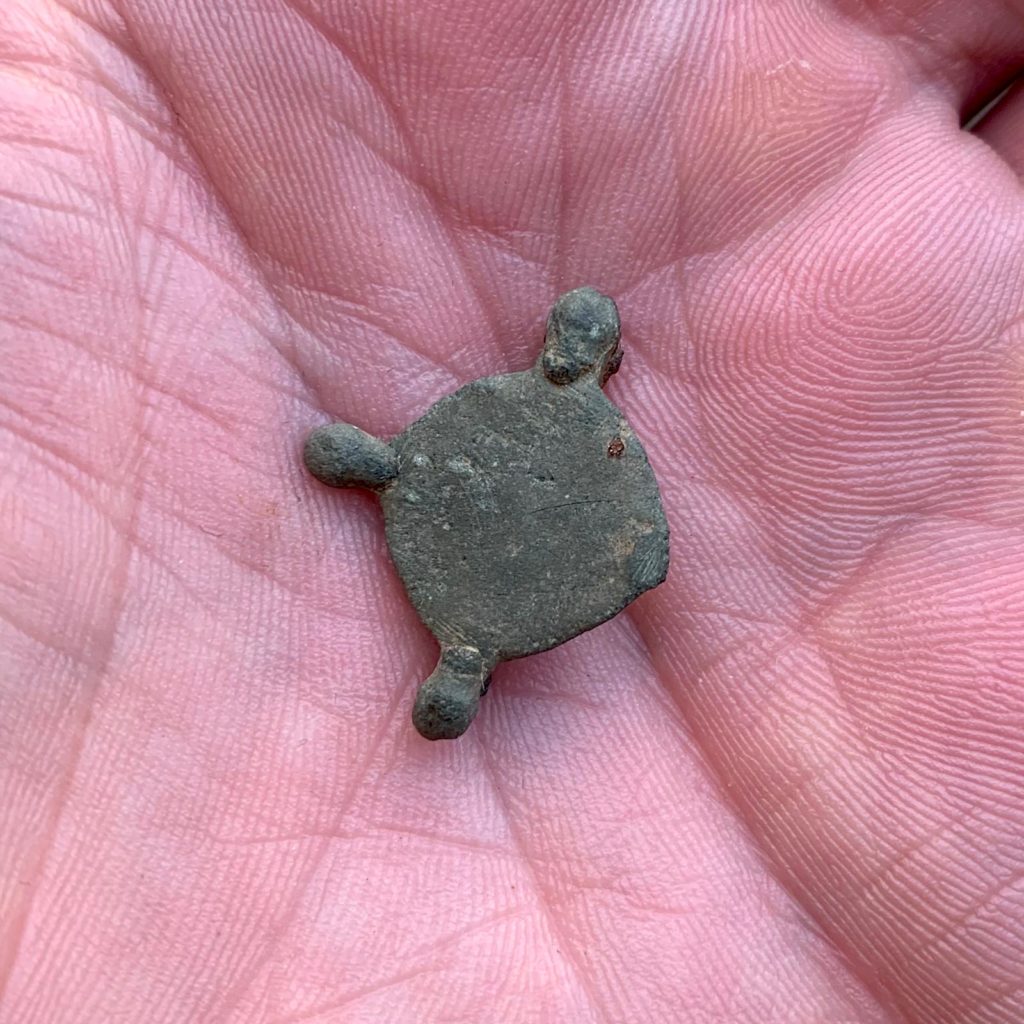
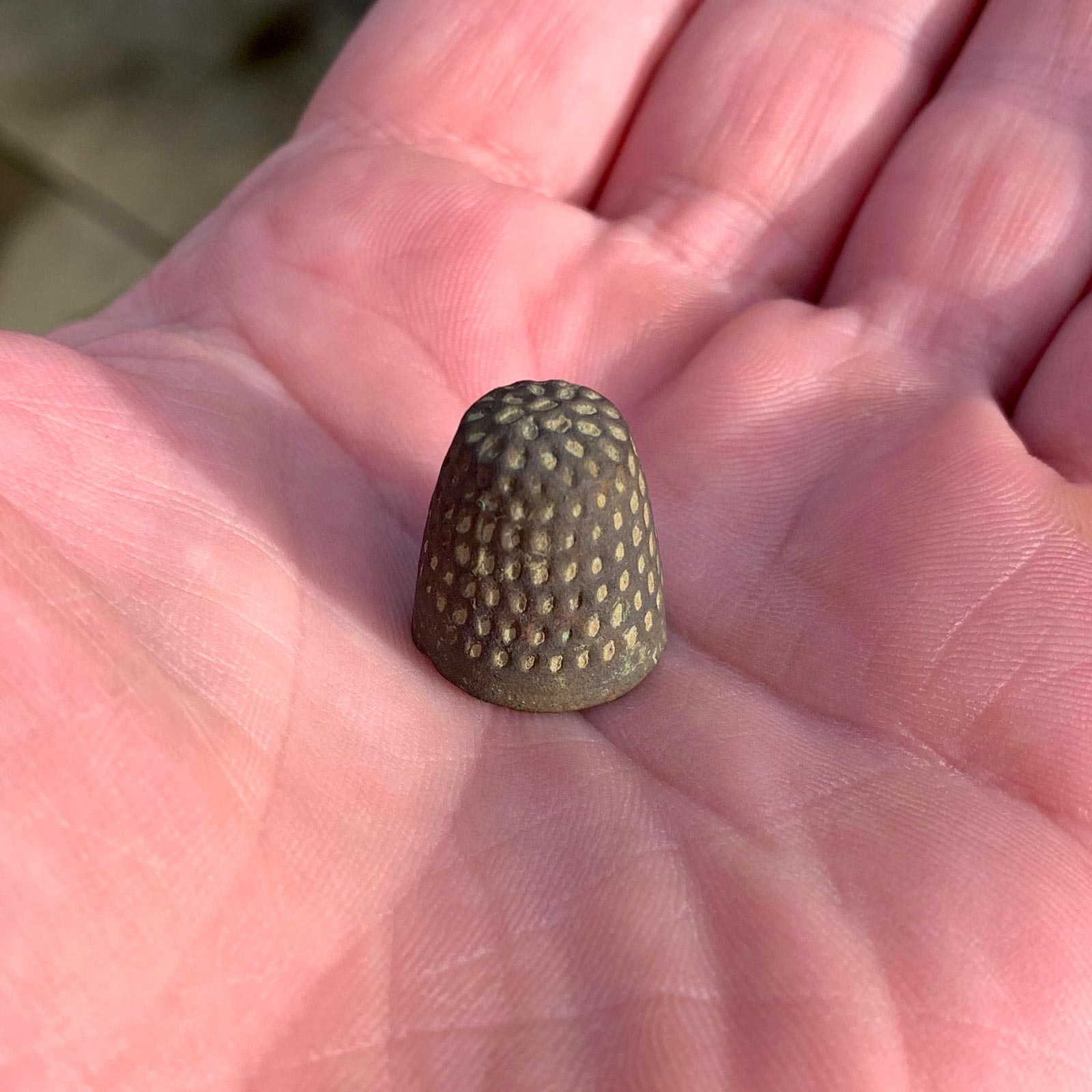
So it appears we may have stumbled on another potential Roman building, very exciting stuff and hopefully we will find more evidence of this as the detecting journey here continues. A few other bits and bobs have come up on this field including my first hammered coin from this permission, a lovely 16th century thimble and the remains of a Roman plate brooch. I also had another bucket lister, my first matchbox car! It’s nothing as grand as a Ford Mustang or Pontiac Firebird but a Kenworth Racing Rig will do very nicely.
My time on this permission is on going so if you want to keep up to date with the things that I find then you can follow my Instagram account where I post the majority of the stuff found from here, so just click on the link below. 🙂
A detectorists best friend
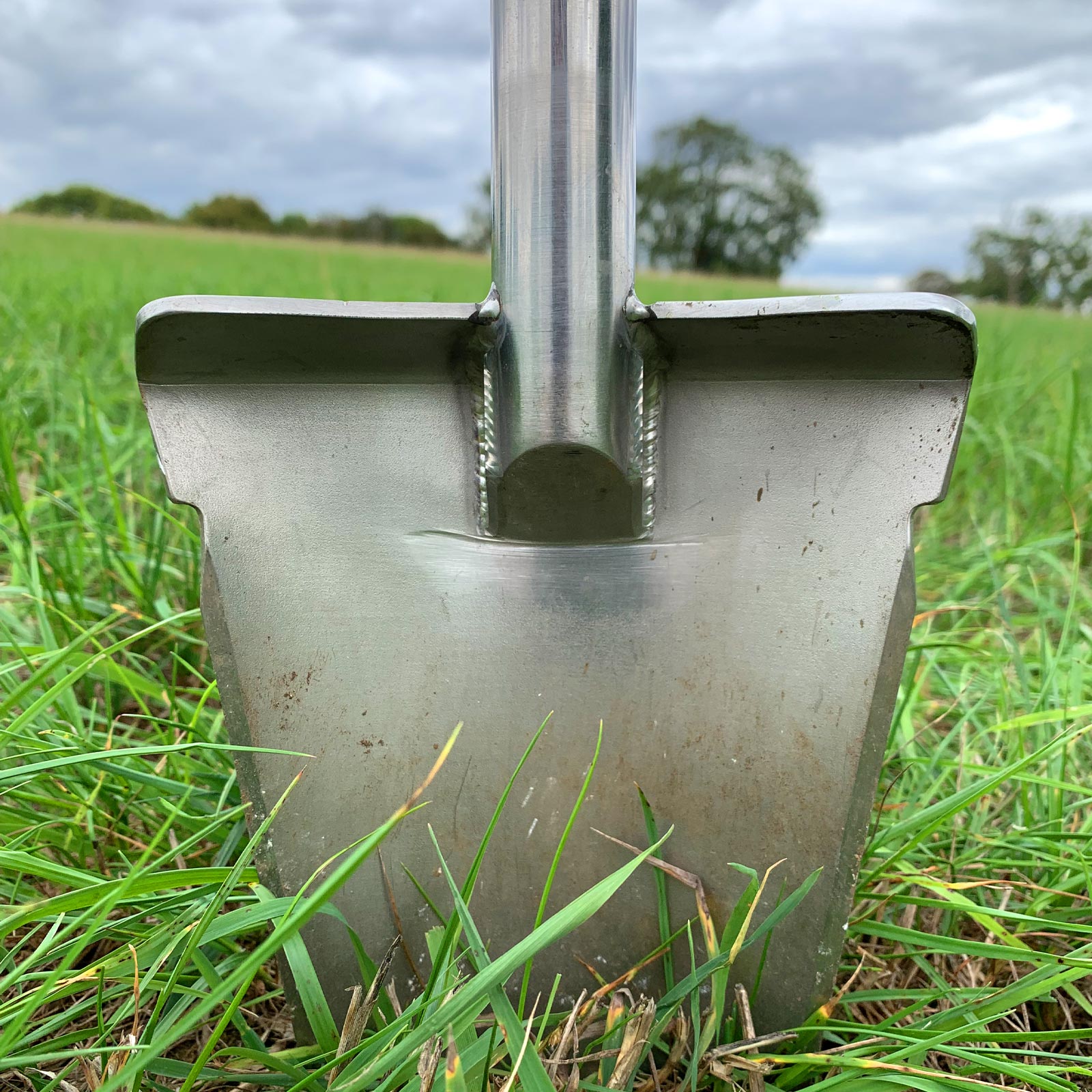
2022 shall be remembered as the year that saw the death of many a detectorists best and trusted friend, the humble spade. Ground conditions in the middle of this year became incredibly hard due to the long hot summer and it got the better of two of my spades in quick succession.
This lead me to doing a lot of research to try and find a new spade that would be up to the job in the toughest of soil conditions come rain or shine. I now find myself writing this blog because I think I may have found just such a spade, so I thought I would give it a little Hertfordshire History Hunter review. It’s funny, if you’d have said to me a few years ago that in the not to distant future I would be writing a review about a metal detecting spade then I would have laughed in your face, stranger things, eh!
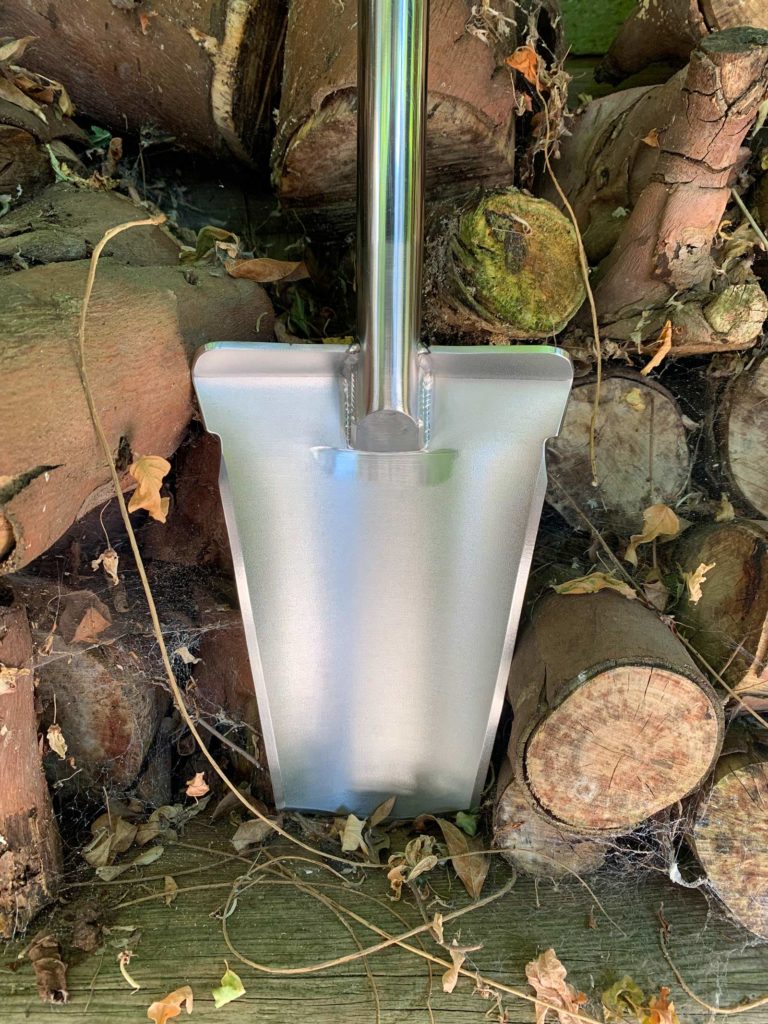
Still, here we are and the spade in question is a hand made product by NobleMDT. After spending many hours trawling the internet for a new spade I finally came across this one on a fellow detectorists instagram account. The owner of this instagram account had just bought the spade after suffering the same issues that I had and he spoke very highly of it so I decided to check it out for myself.
NobleMDT has a dedicated Facebook page and an eBay shop where you can purchase their spades. Produced by Carl Griffin they are all hand made using high quality 316/304 stainless steel, which as I am finding out makes these spades incredibly strong. They come in a few variations where you can choose between a D or T type handle and the blade can be straight edged or with a serrated root cutter.
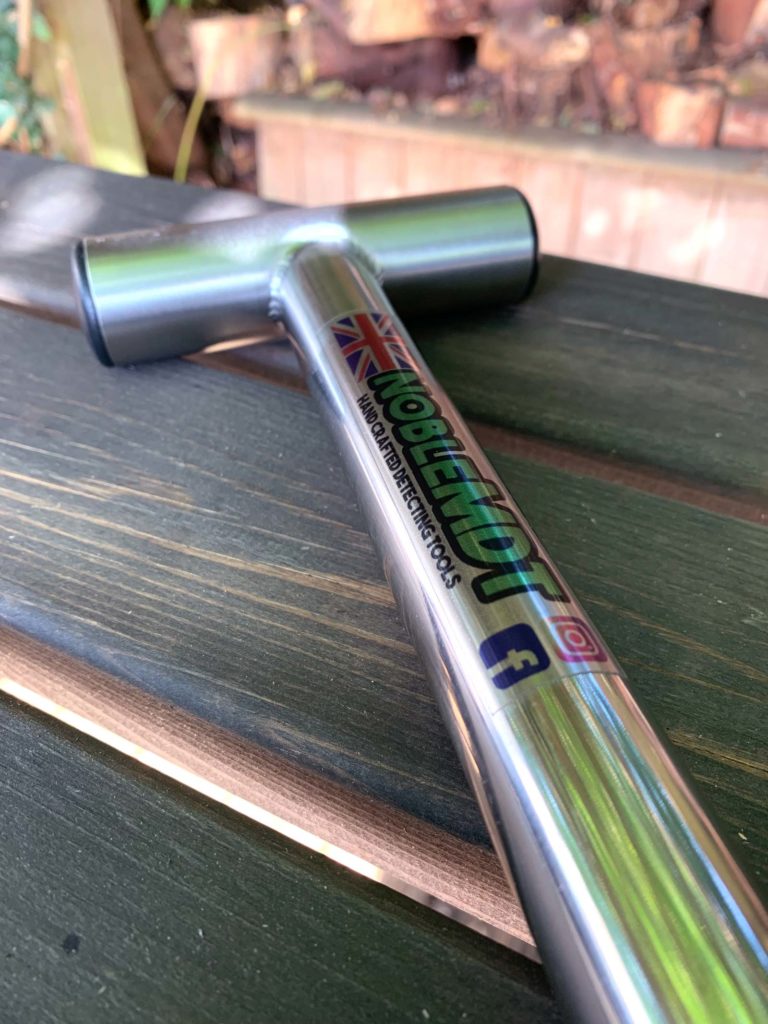
I chose the T type handle with the straight edged blade as this was similar in style to the previous spade I had which I had grown to love, even though it failed when the ground got tough (twice!). On first inspection when the spade arrived it looked and felt like a quality product, I loved the simplicity of the design and the welding is second to none, it’s obvious that a lot of love and care goes into making these spades. The fact that Carl is a detectorist shows as well, as these spades have been made specifically for the hobby which does make a big difference. Carl’s customer service is also worth mentioning as he was more than happy to answer my questions before I purchased the spade which was great.
On it’s first outing I threw it in at the deep end on the same hard ground that saw the demise of my last two spades. I was a little apprehensive at first but it didn’t take long for me to realise that this spade was well up to the task. That’s not to say that this spade won’t have it’s limits, of course it will, but those limits seem to be much higher.
With the conditions as hard as they have been this summer the slightly pointed end of the blade is great for initially peircing the ground. After that it always takes a heavy foot to move the blade back and forth to cut deeper into the ground which this spade does really well. This is in part due to the boot savers seamlessly forming the top part of the blade so you are able to put your weight and pressure right where it needs it to be able to cut through the tough ground. The boot savers on the spades I had before were located higher up the shaft which I believe was partly to blame for those blades buckling because the weight and pressure was being applied in the wrong place.
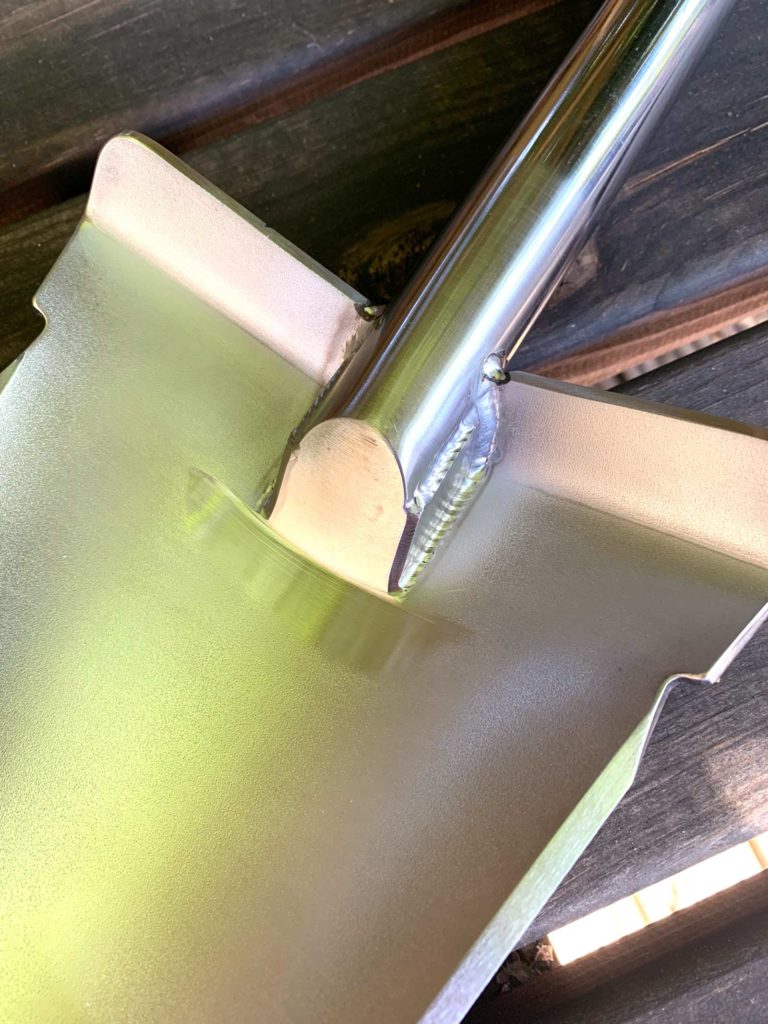
I always thought that the blades on my previous spades at 2mm thick seemed a little on the flimsy side which I think was done to compensate for the added weight of the boot saver. The blade on the Noble is 3mm thick and together with a generous concave and the clever design which sees the seamless boot saver form part of the main shaft weld makes for an incredibly strong spade.
The overall length of the spade at 35 inches is a little shorter than my previous one bit it’s still comfortable to use, my only niggle is that the T handle could be a bit wider so I can grab it with both hands when digging. At 1.4kg it’s lighter than my previous spades and I have no trouble carrying it around for hours on end whilst listening out for those perfectly toned beeps that get the heart racing.
Overall this is a great quality product, designed and hand made by a detectorist for detecorists, which lets be honest makes it feel that little bit more special! I’ve only had the spade for a few months but those months have been the hardest ground conditions I have experienced as a detectors yet and it’s sailed through with no bends or buckles. I have a feeling that this spade will be with me for many years to come, a trusted friend that I can rely on to dig treasures out of many a hole, along with tractor parts, canslaw, ring pulls, nails, shot gun caps, mint viscount wrappers… you all know the score!
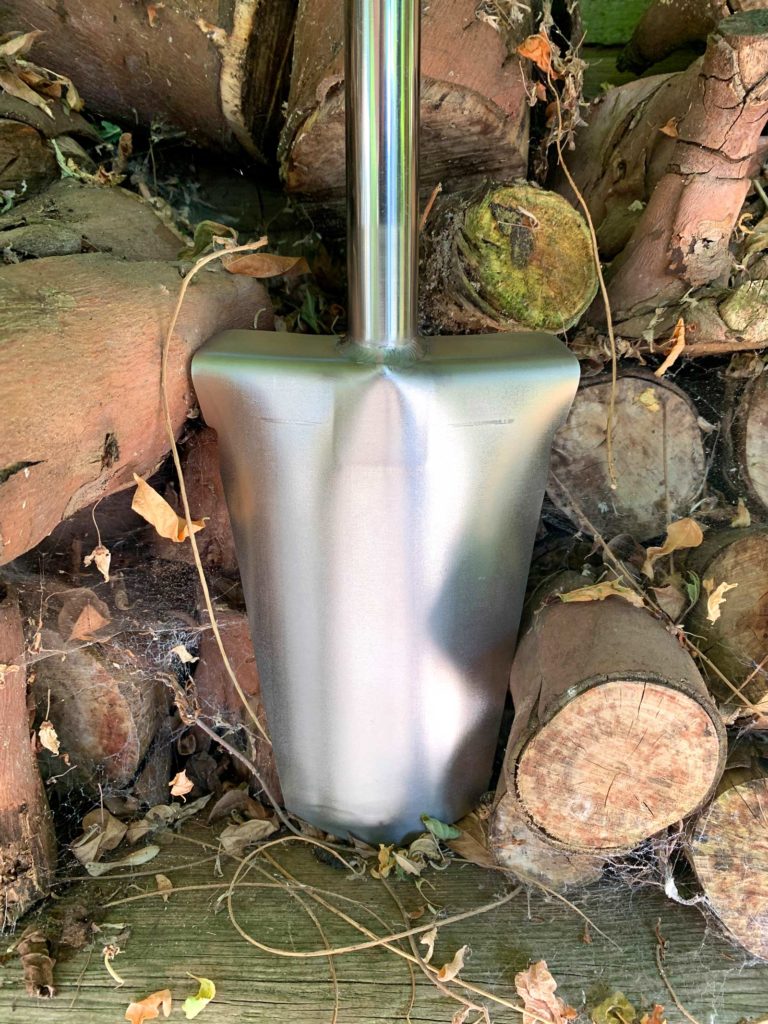
Priced at £66.50 for the T handle and £68.50 for the D handle (with no extra cost for the optional root cutters) these spades are at the higher end of the market, but in my opinion they are well worth the money. If you want to take a look at NobleMDT spades then head over to their Facebook page on the link below, it’s always a good thing when we can support a small British business making a quality product, especially in these tough times!
Writing is now a hobby!
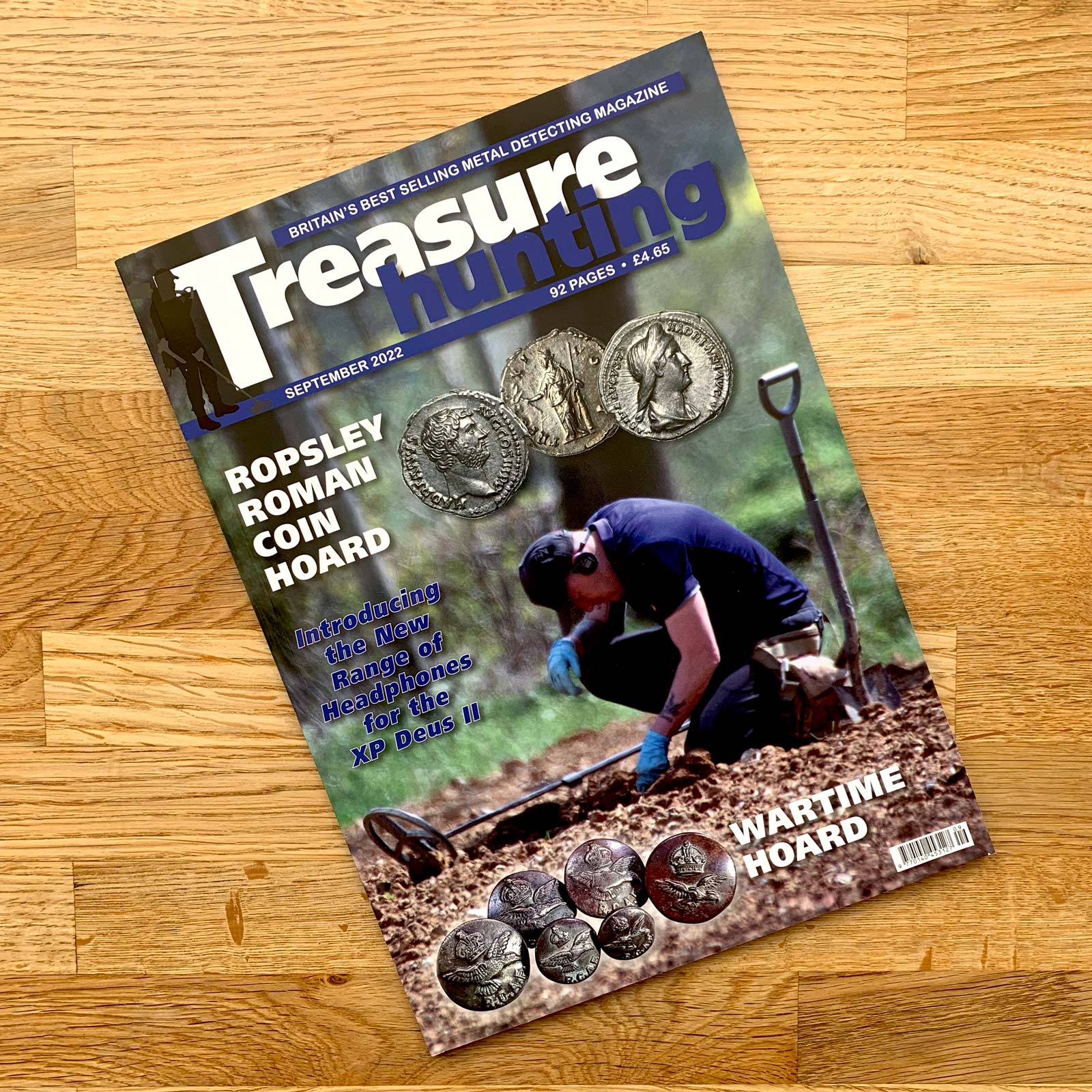
Since I started metal detecting again back in September 2021, I have become so passionate about it that I felt compelled to write about it. This gave birth to the Hertfordshire History Hunter blog in which I write about the things I find and the experiences I encounter. Writing the blog has also been a stepping stone into the publishing world, as I now write regularly for Treasure Hunting Magazine as you can see here with my fourth outing in it’s hallowed pages.
Never in a million years did I ever have think that I would enjoy writing as much as I do, let alone have any of my ramblings actually published. It just goes to show that creativity can be found lurking in places you would never have thought to look.
Having a passion for writing about metal detecting is a great way for me to stay involved in the hobby when I’m unable to actually go out and detect. Take this summer for instance, the hot dry weather has made it almost impossible to dig so writing has been the next best thing and for me it is almost as enjoyable as being out in the fields.
Almost as enjoyable? I say almost, because although I do enjoy writing I don’t get the same buzz from it that I do from being out in the fields unearthing a good find. But actually I need to correct myself here because there is quite a big buzz to be had from seeing my articles published, and there is an extra buzz when I make it onto the contents page as I have in this issue!
I’m grateful to this hobby for so many reasons, but mostly because it makes me happy. Having a pastime that I think about and take part in, in such a positive way has been a revelation for my mental wellbeing which I see filtering into and enhancing other parts of my life.
My Hertfordshire History Hunter persona has now expanded into a branded Instagram account which currently has well over 2000 followers. This has lead to even more opportunities opening up which is hopefully taking me into the incredible world of archaeology (follow the Hertfordshire History Hunter blog or Instagram account for more on this later in the year).
For now though I’m just happy to think of myself a dedicated detectorist, and hopefully anyone who follows the Hertfordshire History Hunter enjoys the content as much as I enjoy creating it.
Where are all the finds?
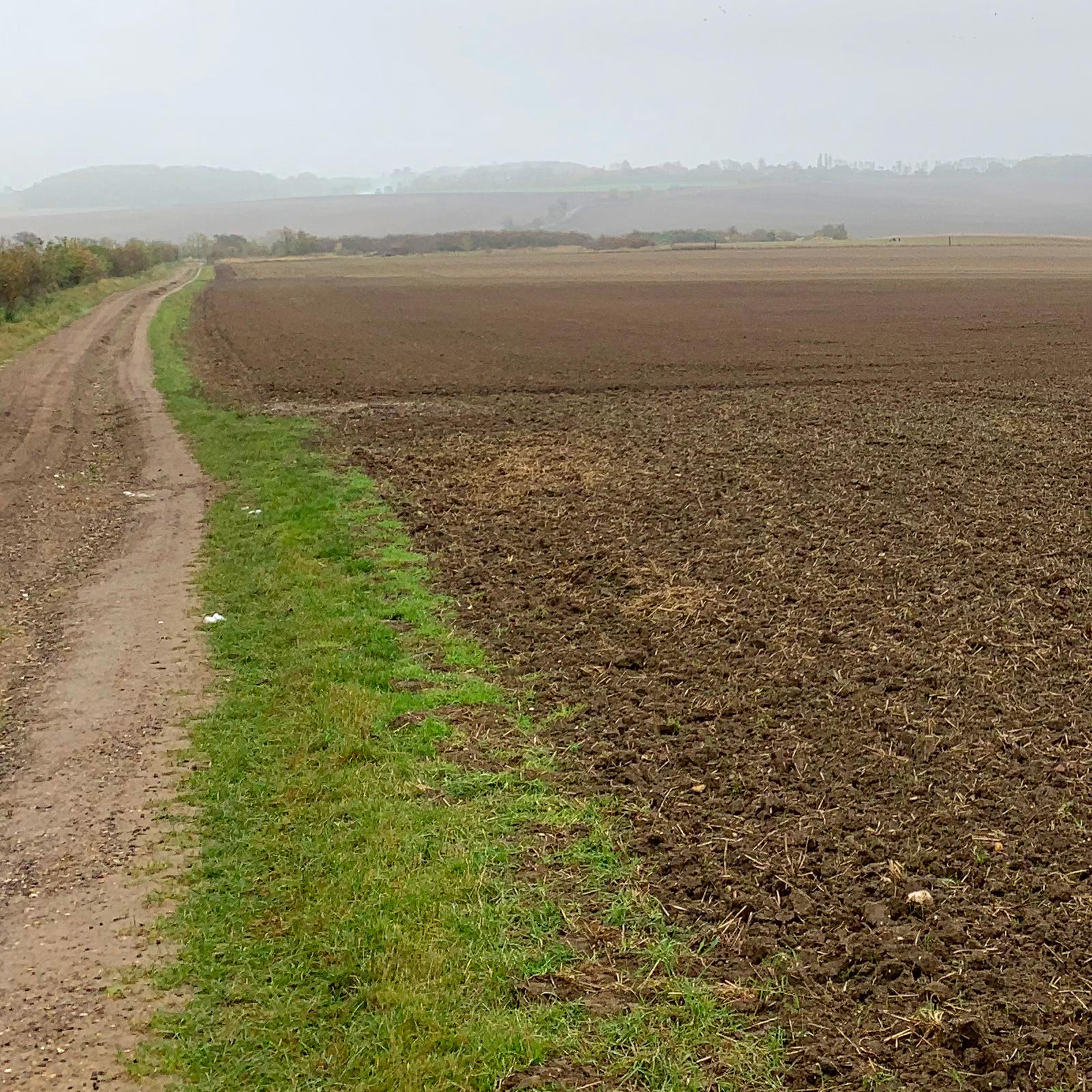
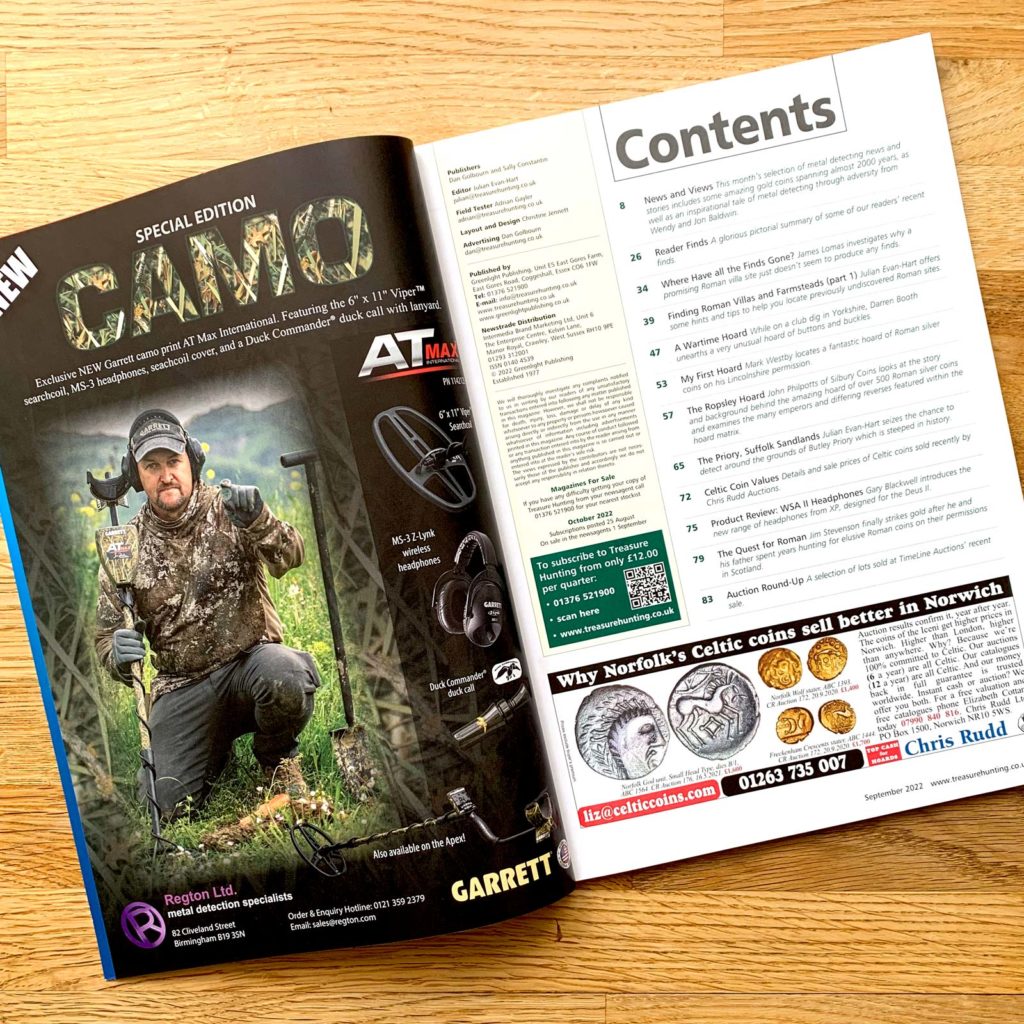
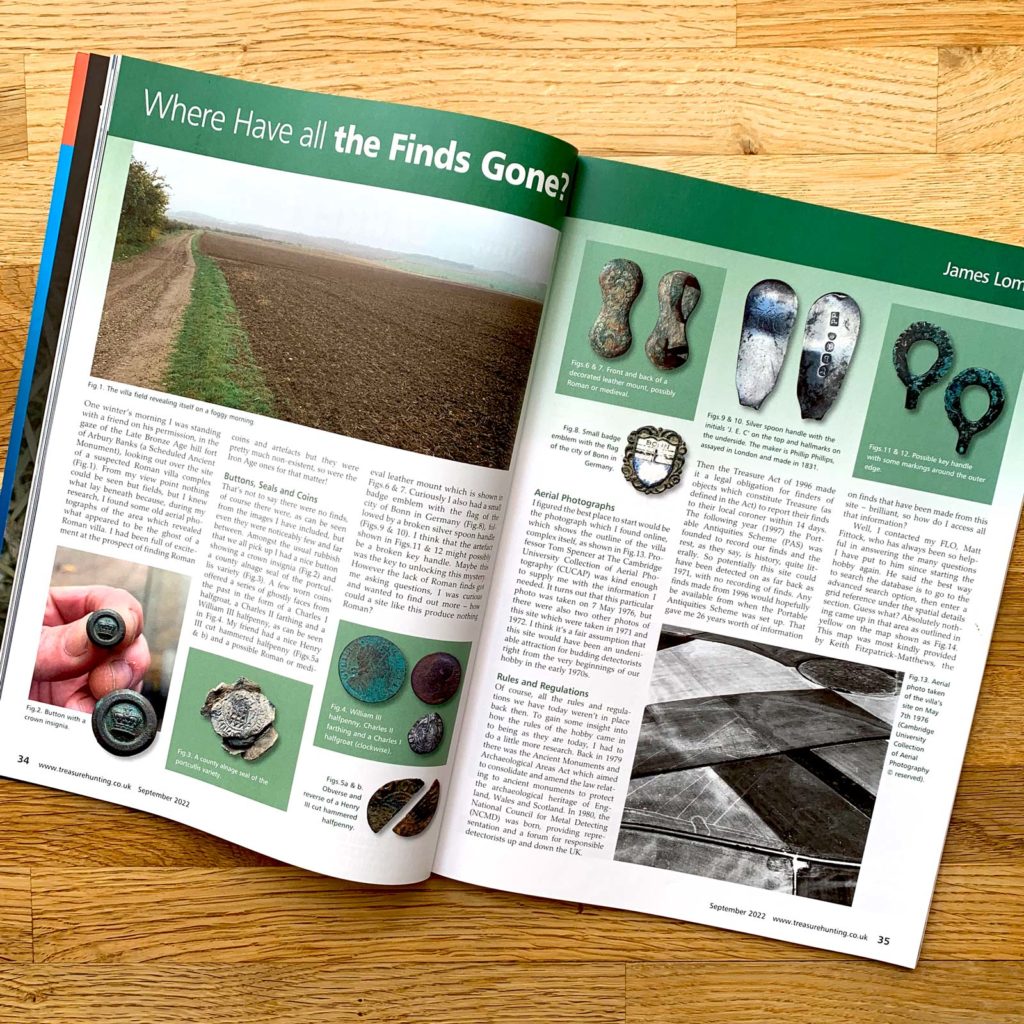
One sunny winter’s morning, I was standing with a friend on his permission, in the gaze of the late bronze age hill fort of Arbury Banks, (a Scheduled Ancient Monument) looking out over the site of a suspected Roman villa complex. From my view point nothing could be seen but fields, but I knew what lay beneath because during my research I found some old aerial photograph’s of the area which revealed what appeared to be the ghost of a Roman villa.
My friend made a comment about this permission before we went, he said “it’s a great place but it has been detected to death”. Alarm bells always ring when you hear a comment like that but it’s because of this and the subsequent outings on this permission that I feel compelled to write about it, as it left me with a certain amount of dissatisfaction. I know all too well the feeling of researching a site and then having expectations which are then ultimately let down, maybe I should learn to curb my enthusiasm in the future.
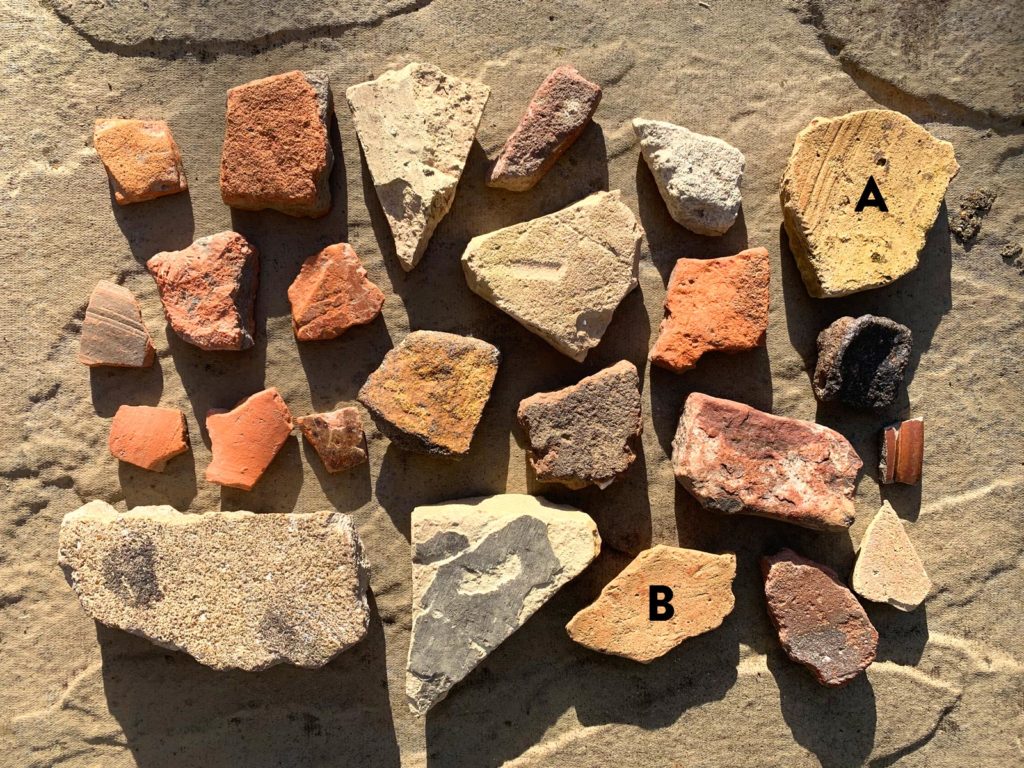
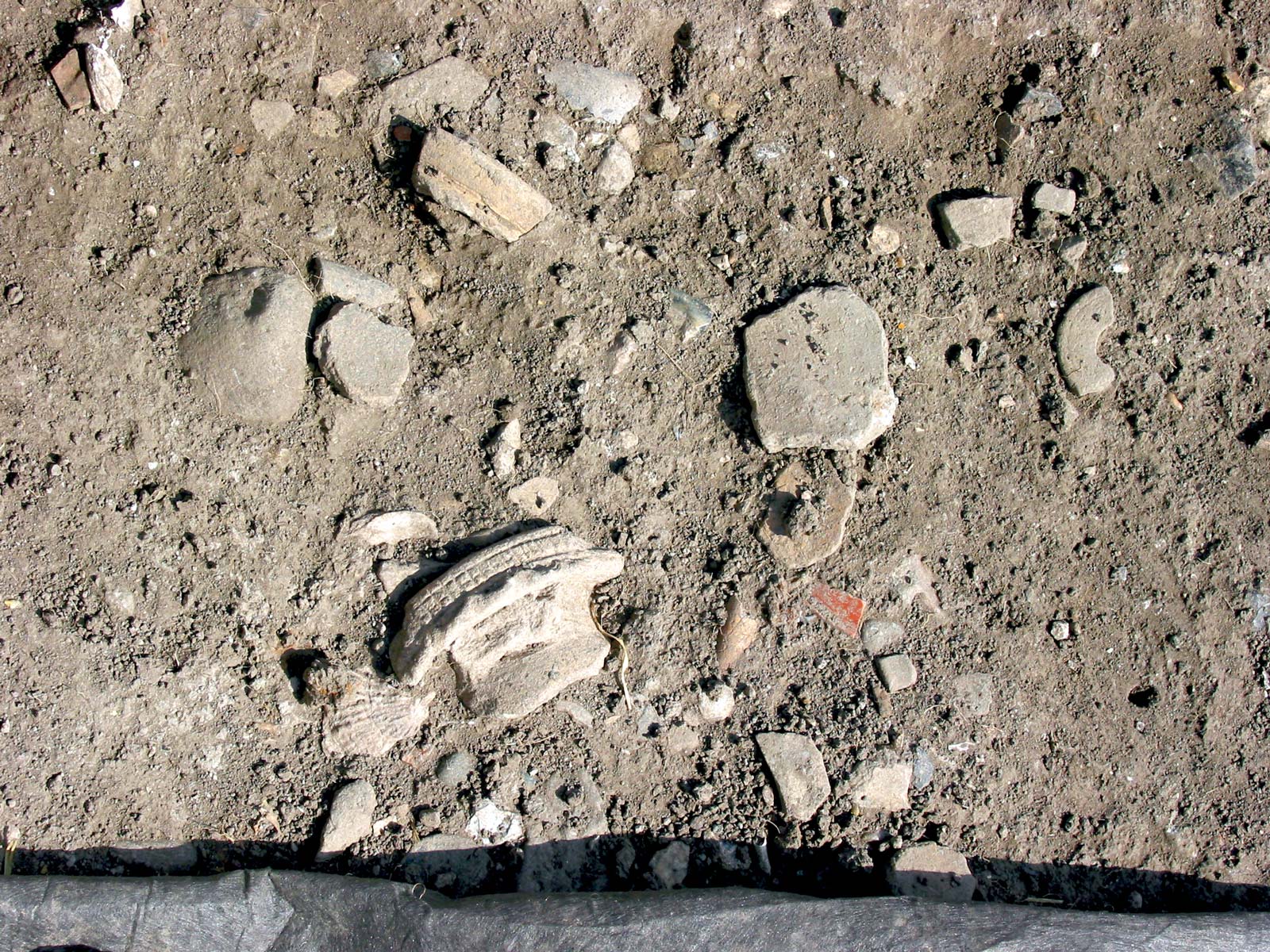
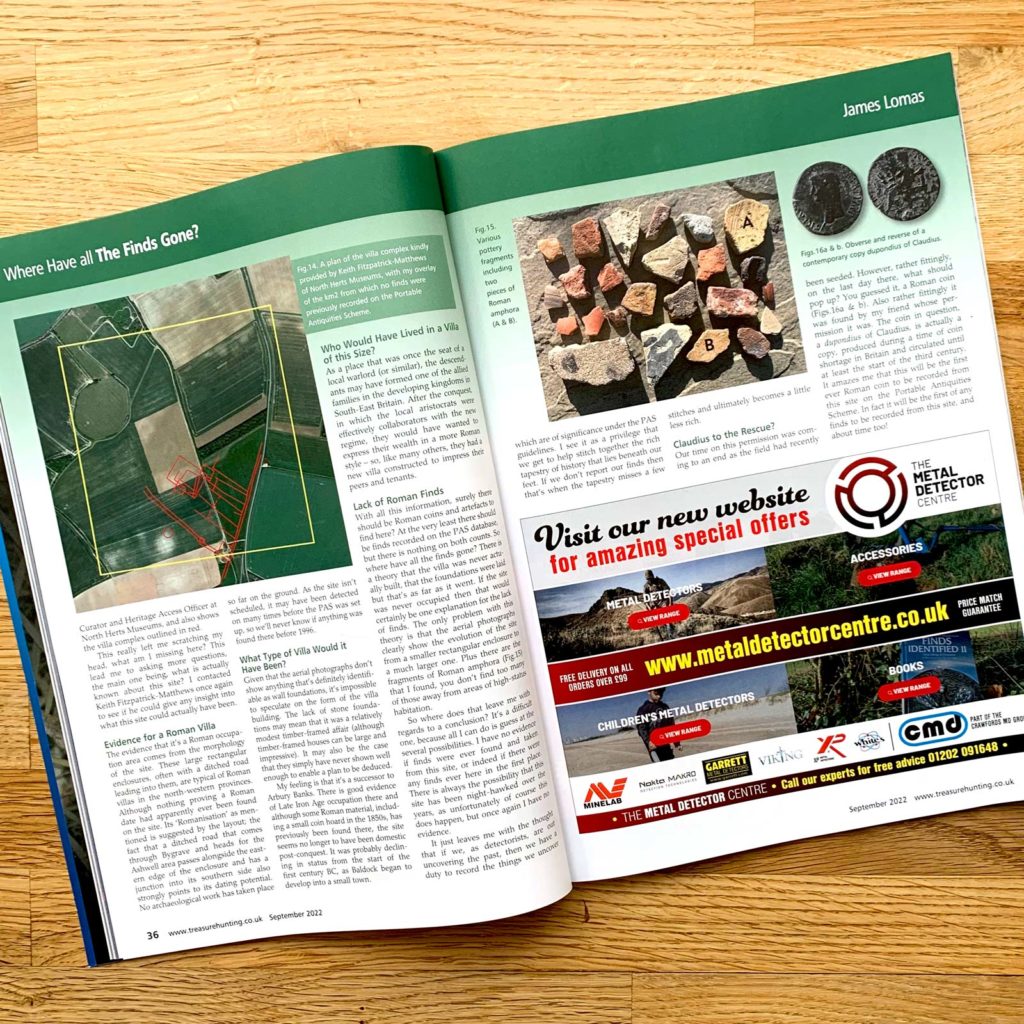
Much like the surveys I did for Keith at North Herts Museums I was full of excitement at the prospect of finding roman coins and artefacts but also like those surveys the roman finds were pretty much non existent, so were the Iron Age ones for that matter! That’s not to say there were no finds, of course there was as you can see from the pics I have included, but even those were few and far between. The clues were there because as well as the aerial photo’s, I also found some Roman pottery, specifically broken parts of Amphora (Fig.1), the containers Roman’s used for transporting goods such as wine and oil.
This got me asking questions and I wanted to find out more, how could a site like this produce nothing Roman, unless like the Purwell Roman site it had been hawked and cleaned out over the years. So where to start? I figured the best place would be the photo which I found online that shows the outline of the villa complex itself. If I could find out the date the photo was taken then I could use that as the base of a possible timeline from when this site was publicly known about and subsequently detected on.
The photo was attributed to The Cambridge University Collection of Aerial Photography (CUCAP), so I contacted them to see if I could find out anymore information. Professor Tom Spencer was kind enough to reply and supply me with the information I needed. It turns out that this particular photo was taken on 7th May 1976 (click the link above to view), but there were two other photos of this site which I enquired about and they had been taken in 1971 and 1972 respectively also showing the villa outline.
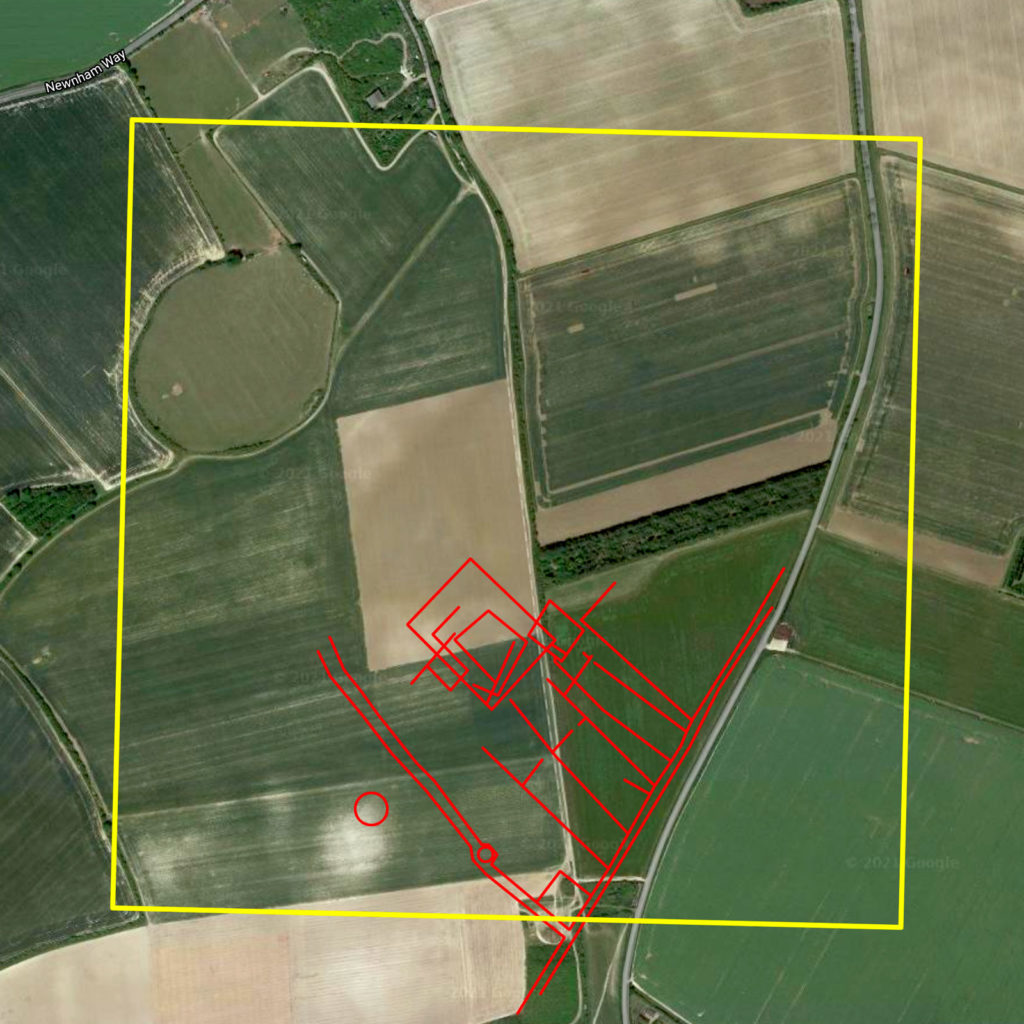
Another interesting feature to note is the shoe-shaped anomaly at the bottom of the photograph that isn’t marked up on the map shown in Fig.2, as it’s not part of the villa complex. It’s most likely the ditch of a completely ploughed-out Neolithic long barrow.
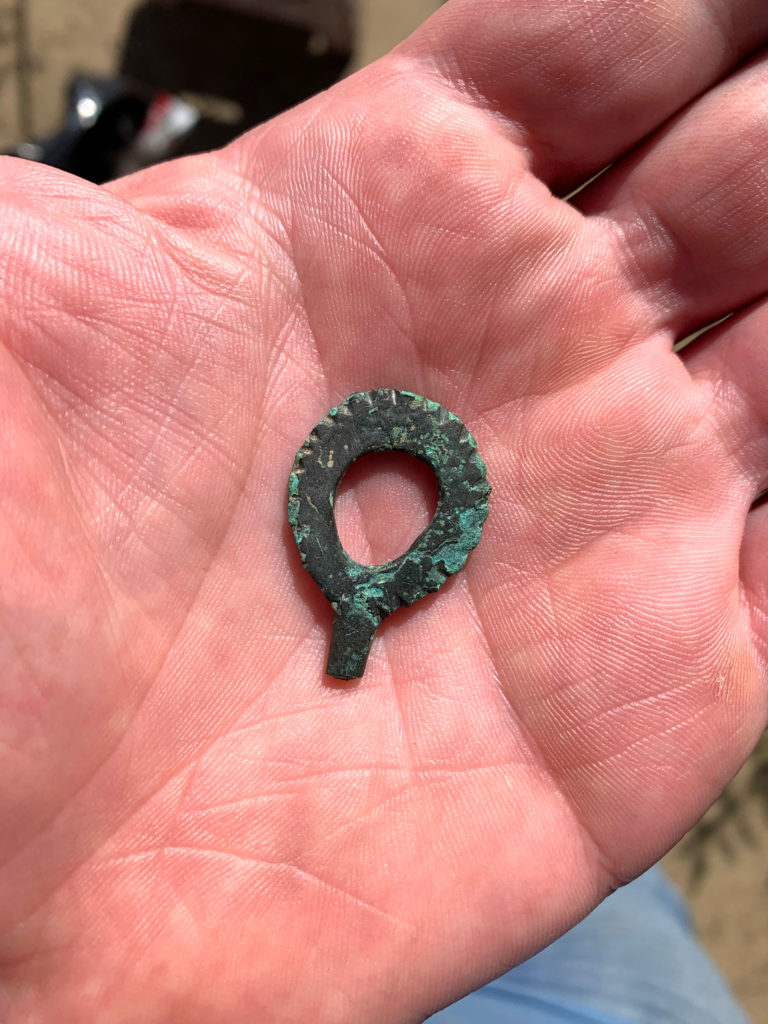
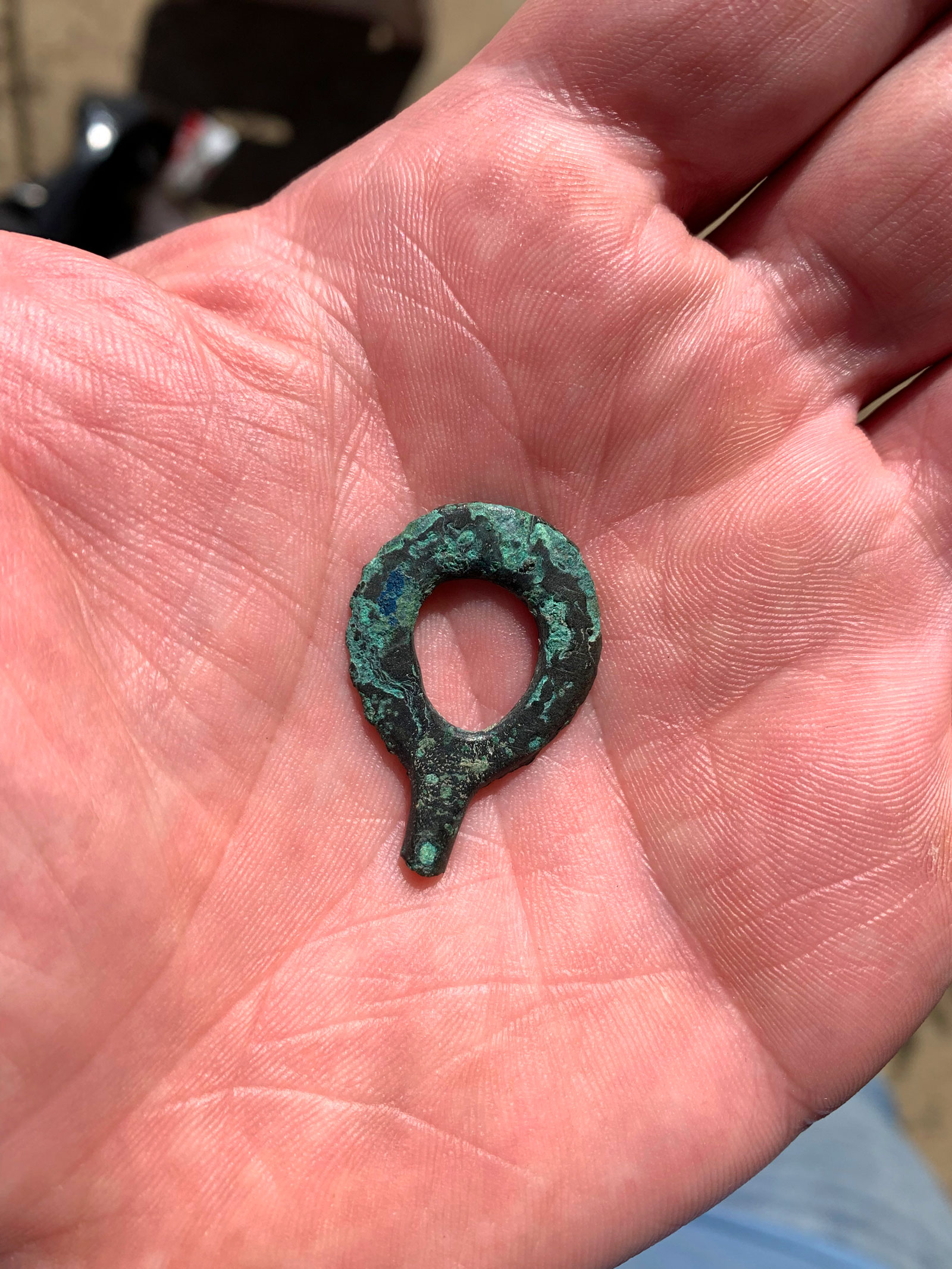
I think it’s a fair assumption that this site would have been an undeniable attraction for budding detecorists right from the very beginning’s of our hobby in the early 1970’s. Such was the growing popularity of detecting back then that towards the end of the decade the ’STOP’ (Stop Taking Our Past) campaign was launched, because there were some in the archaeological community that had their concerns about metal detecting and how historical items were being removed from sites and not being properly recorded.
This is partly because the rules and regulations we have in place today weren’t in place back then. To gain some insight into how the rules of the hobby came in to being as they are today, I had to do a little more research.
Back in 1979 there was the Ancient Monuments and Archaeological Areas Act which was to consolidate and amend the law relating to ancient monuments to protect the archaeological heritage of England & Wales and Scotland. In 1980 the National Council for Metal Detecting (NCMD) was born providing representation and a forum for responsible detectorists up and down the UK. Then the Treasure Act of 1996 made it a legal obligation for finders of objects which constitute as treasure (as defined in the Act) to report their finds to their local coroner within 14 days. The following year (1997) the Portable Antiquities Scheme (PAS) was founded to record our finds and the rest as they say is history, quite literally!
So potentially this site has been detected on with no recording of finds from at least 1971. Any finds made from 1996 would hopefully be available from when the Portable Antiquities Scheme was set up. Potentially that gave me 26 years’ worth of info on finds that have been made from this site, brilliant, so how do I access all that info?
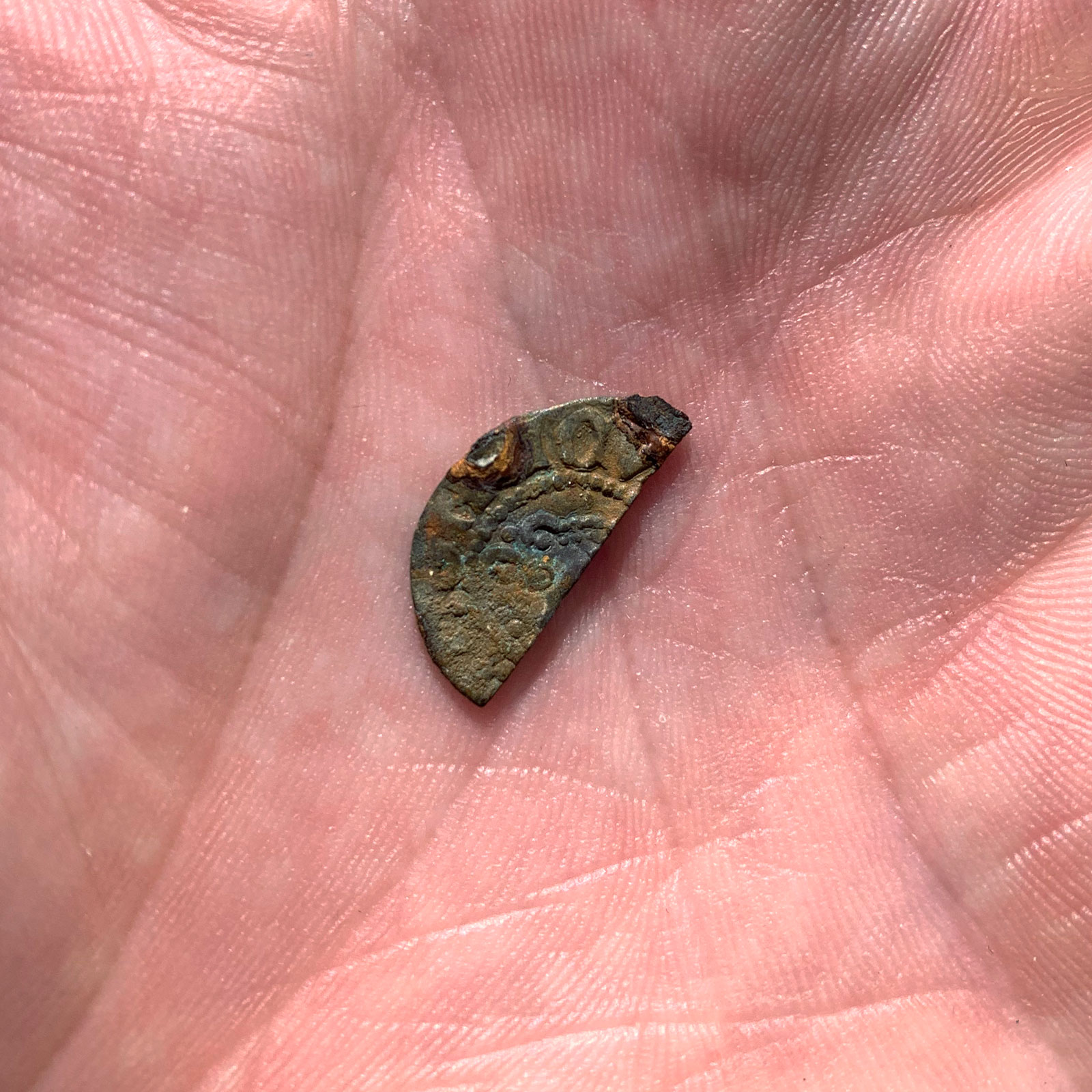
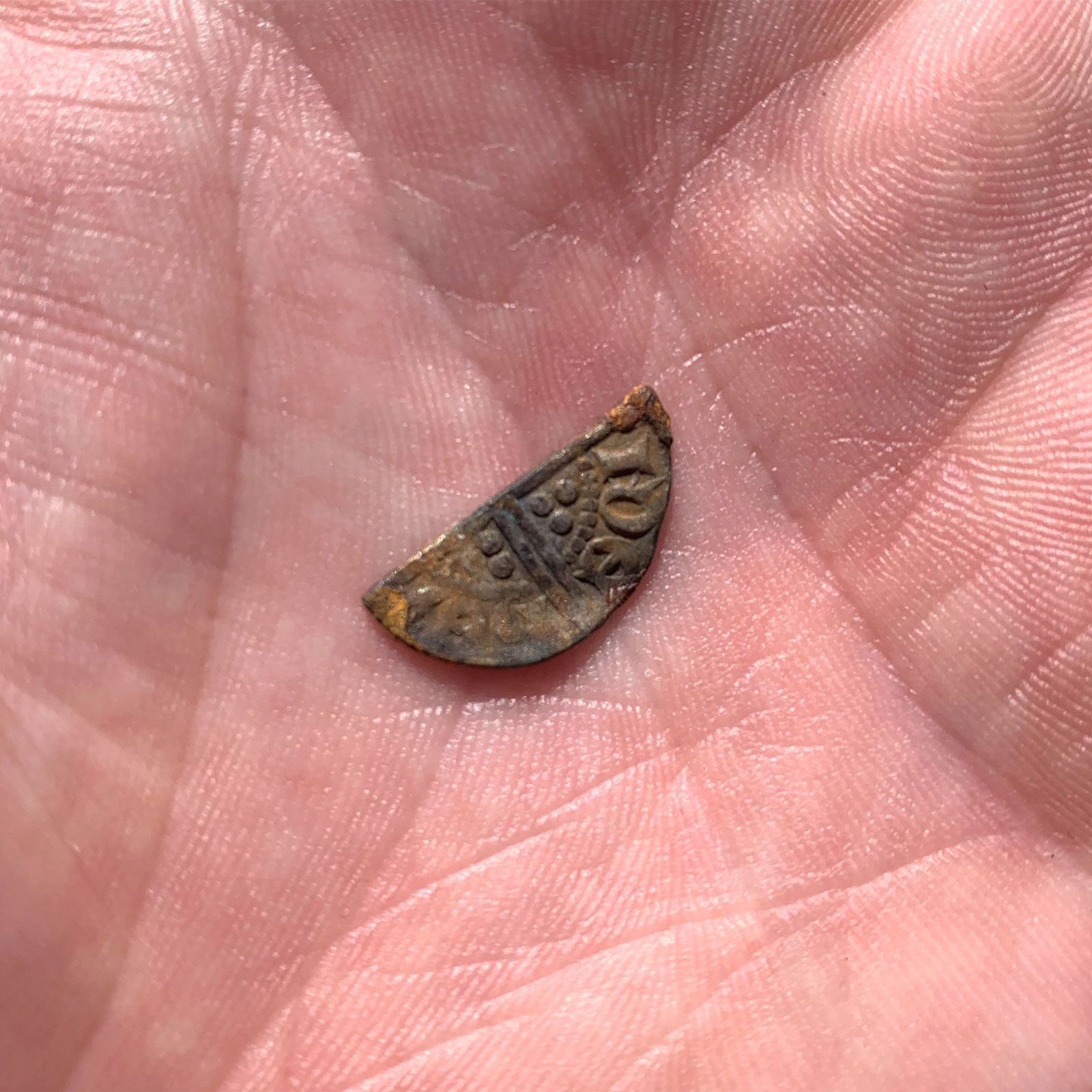
It’s at this point I contacted my FLO Matt Fittock who has always been so helpful in answering the many questions I have put to him since starting the hobby again. I asked if there was a way to use the PAS data base to find out what finds had been recorded in a specific area. He said the best way to search the database is to go to the advanced search option, then enter a grid reference under the spatial details section. Because this way of searching is based on a specific grid reference, if anything has been found and recorded within that reference then it will show up. Guess what… nothing came up!
I was dumbfounded, not one single record, Roman or otherwise is listed on the PAS data base as coming from this site. To give you an idea of the scale of this, I overlayed the km2 reference in yellow on the map of the villa site as shown in Fig.2 which was kindly provided by Keith Fitzpatrick-Matthews at North Herts Museums. How is it possible that no finds have been recorded if this site has been “detected to death”?
This really left me scratching my head, what am I missing? Perhaps this site isn’t a Roman villa after all? This lead me to asking more questions, the main one being what is actually known about this site? Once again this meant contacting Keith at North Herts Museums to see if he could give any insight into what this site could actually have been.
Keith was yet again very kind and generous with his replies to my questions, the first one being…
What evidence is there that this is a Roman Villa?
The evidence that it’s Roman comes from the morphology of the site. These large rectangular enclosures, often with a ditched road leading into them, are typical of Roman villas in the northwestern provinces. Although nothing proving a Roman date has been found on the site, the layout, and the fact that a ditched road that comes through Bygrave and heads for the Ashwell area passes alongside the eastern edge of the enclosure and has a junction into its southern side strongly point to its date.
What archaeological surveys have so far taken place on this site?
No archaeological work has taken place on the ground. As the site isn’t Scheduled, it may have been detected on quite legally many times before the PAS was set up, so we’ll never know if anything was found there before 1996.
What type of villa would it have been?
Given that the aerial photographs don’t show anything that’s definitely identifiable as wall foundations, it’s impossible to speculate on the form of the villa building. The lack of stone foundations may mean that it was a relatively modest timber-framed affair (although timber-framed houses can be large and impressive). It may also be the case that they simply have never shown well enough to enable a plan to be deduced.
My feeling is that it’s a successor to Arbury Banks. There is good evidence of Late Iron Age occupation there and although some Roman material has been found there, the site seems no longer to have been domestic after the conquest (indeed, it had been going into decline from the start of the first century BC, as Baldock developed as a town).
Who would have lived in a villa of this size?
As a place that was once the seat of a local warlord (or similar), the descendants will have formed one of the allied families in the developing kingdoms in southeast Britain. After the conquest, in which the local aristocrats were effectively collaborators with the new regime, they would have wanted to express their wealth in a more Roman way, so like lots of others, they had a new villa built to impress their peers and tenants.
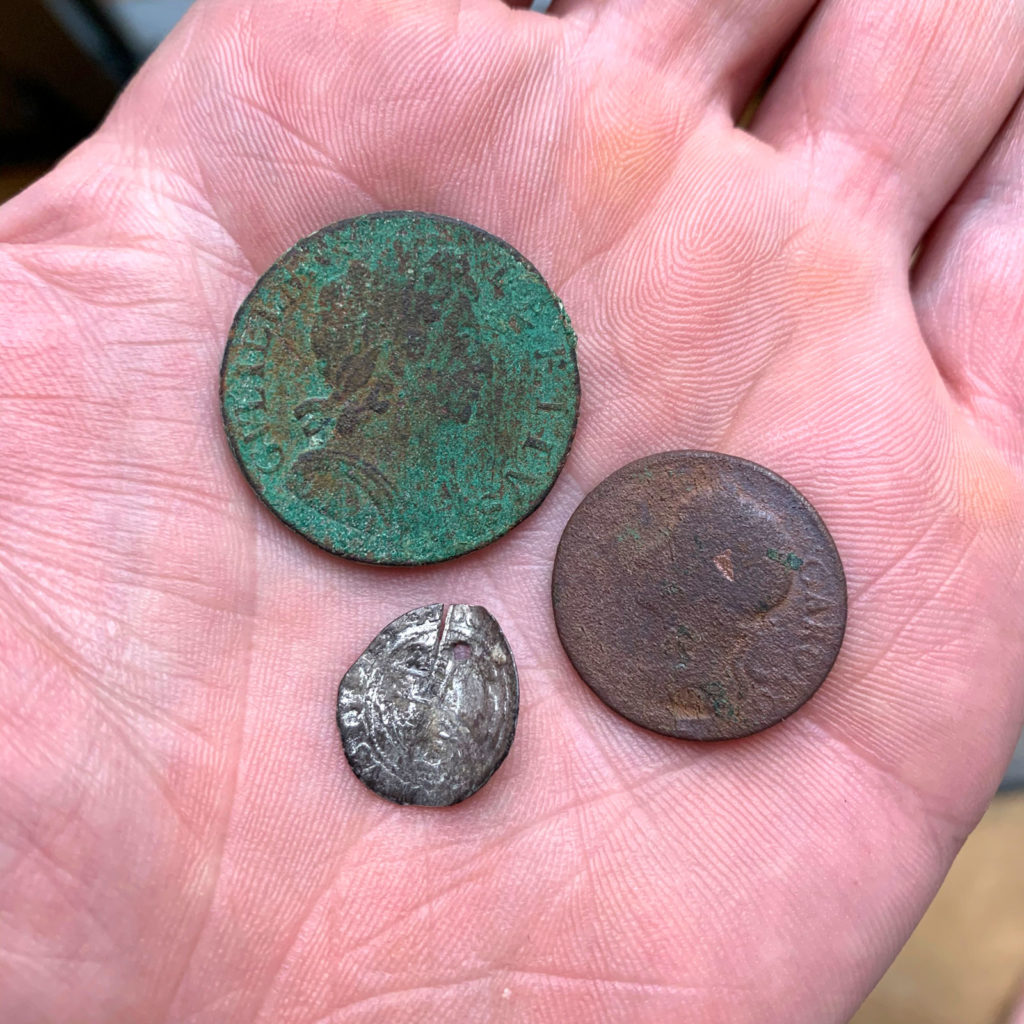
So with all this information, surely there should be Roman coins and artefacts to find here and at the very least there should be finds recorded on the PAS database, but there is nothing on both counts. So where have all the finds gone?
There is a theory that the villa was never actually built, that the foundations were laid but that’s as far as it went. If the site was never occupied then that would certainly explain the lack of finds. The only problem with this theory is that the aerial photographs clearly show the evolution of the site from a smaller rectangular enclosure to the much larger one. Plus there are the fragments of Roman amphora that I found, you don’t find too many of those away from high status habitation.
As a side note, there is also another theory that Arbury Banks is the site of “The Battle of Watling Street” where Boudica was famously defeated by the Romans. If such a battle had taken place here then surely there would be some scattered military remnants of that fight? Again the lack of finds might suggest the battle took place else where, but it is an interesting theory which you can read about by clicking on the link above.
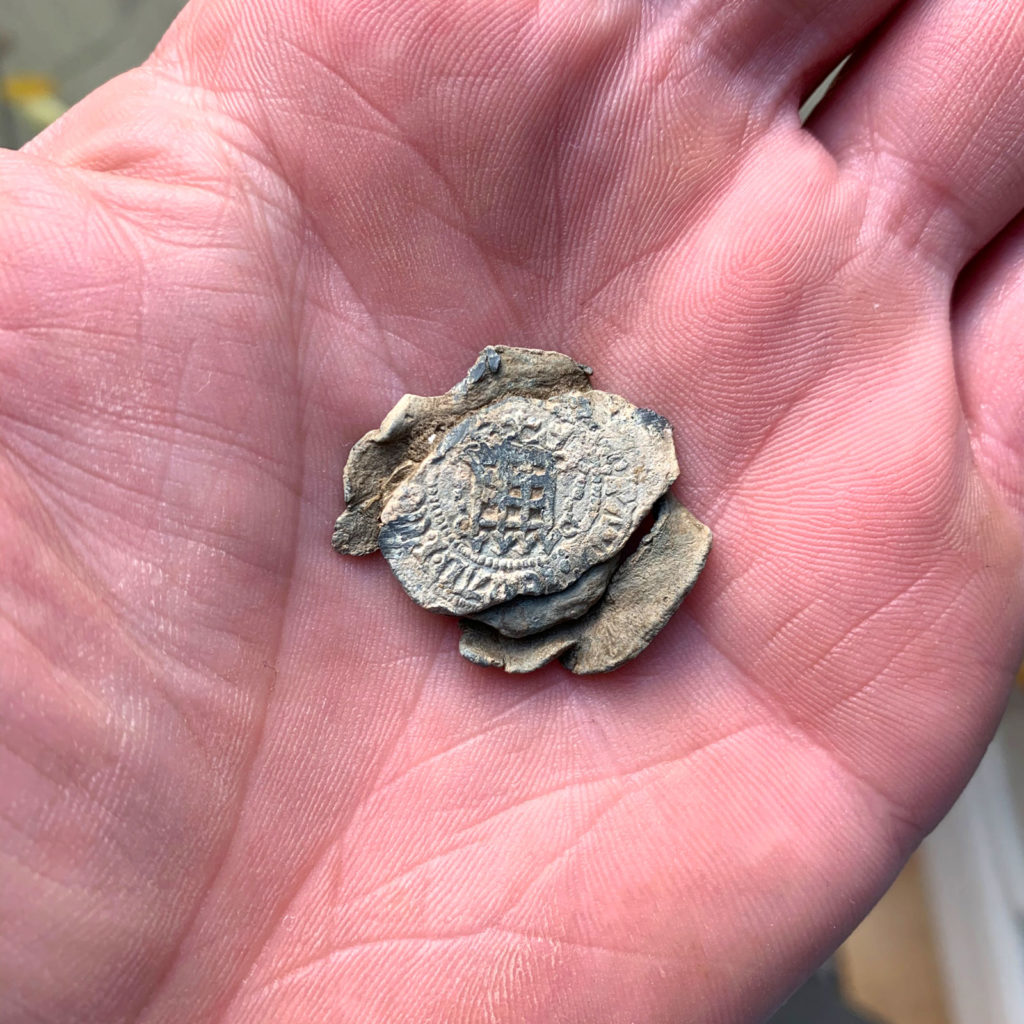
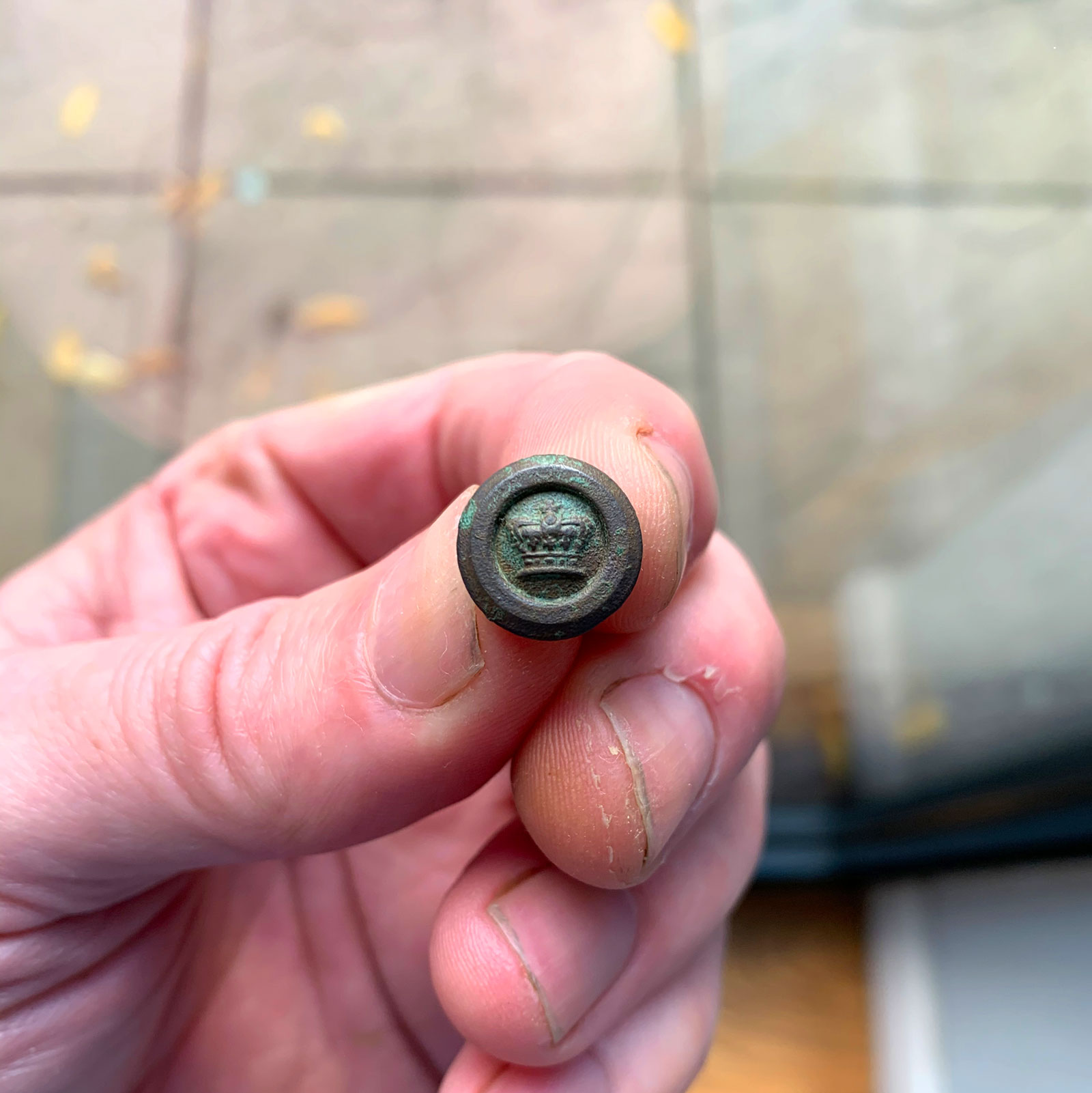
So where does that leave me with regards to a conclusion? It’s a difficult one because all I can do is guess at the several possibilities. I have no evidence if finds were ever found and taken from this site or indeed if there were any finds ever here in the first place. There is always the possibility that this site has been night-hawked over the years, as unfortunately of course this does happen, but once again I have no evidence.
It just leaves me with the thought that if we as detectorists are out uncovering the past then we have a duty to record the things we uncover which are of significance under the PAS guidelines. I see it as a privilege that we get to help stitch together the rich tapestry of history that lies beneath our feet. If we don’t report our finds then that’s when the tapestry misses a few stitches and ultimately becomes a little less rich.
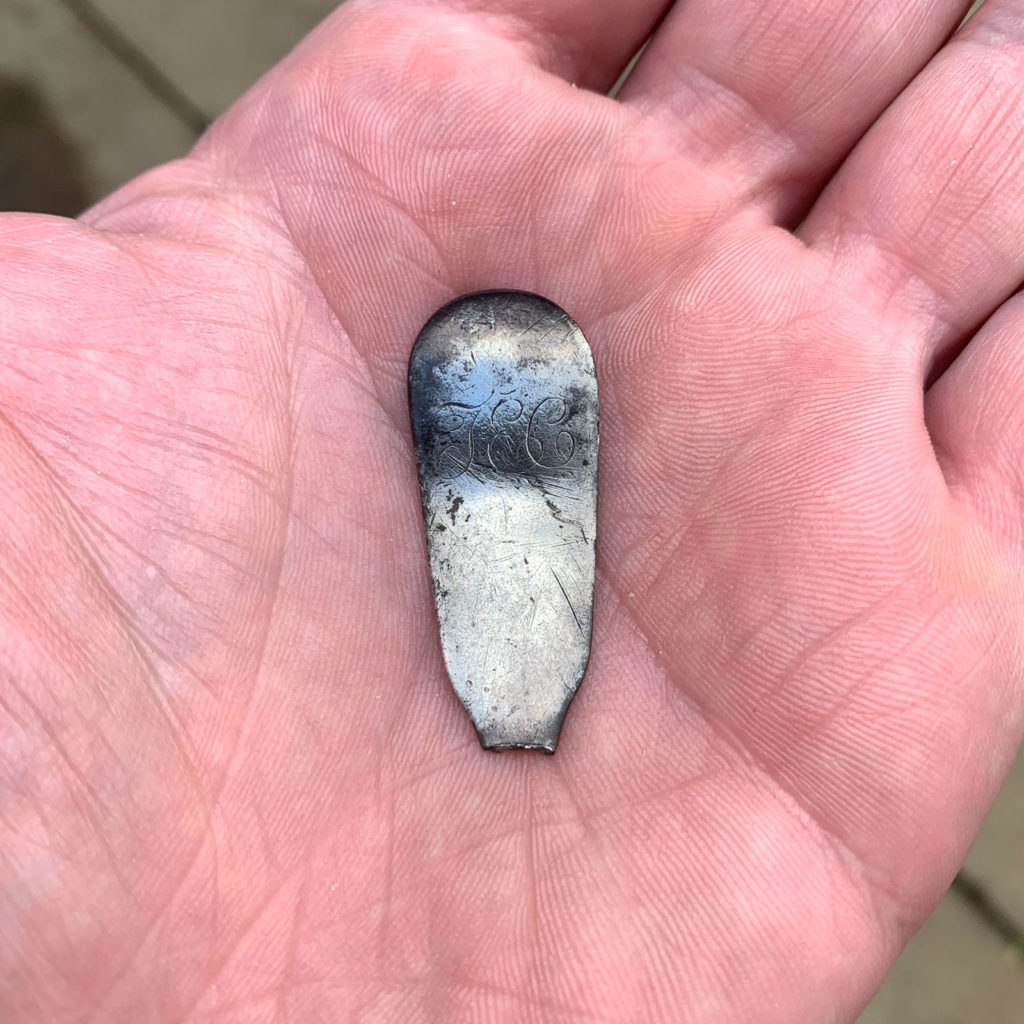
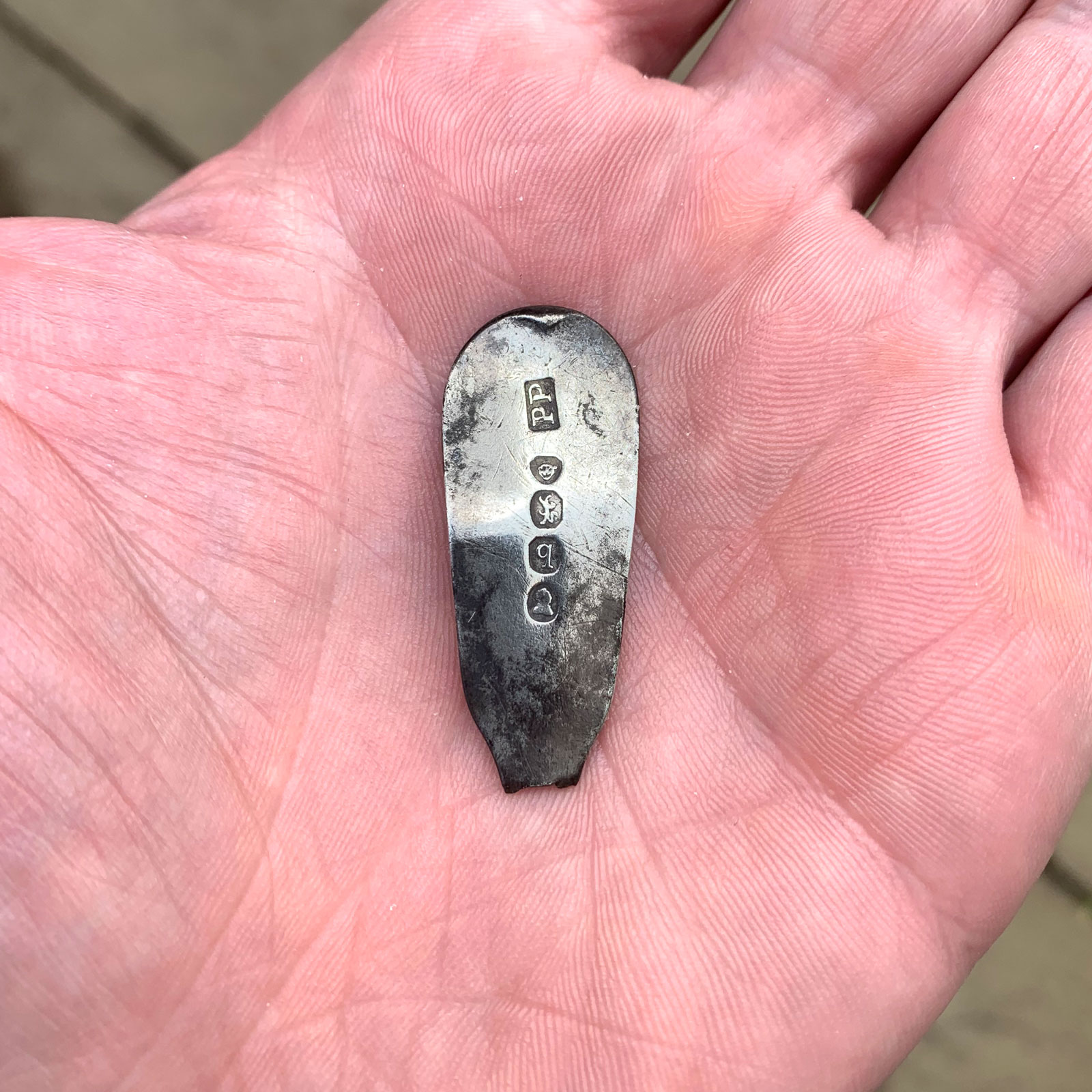
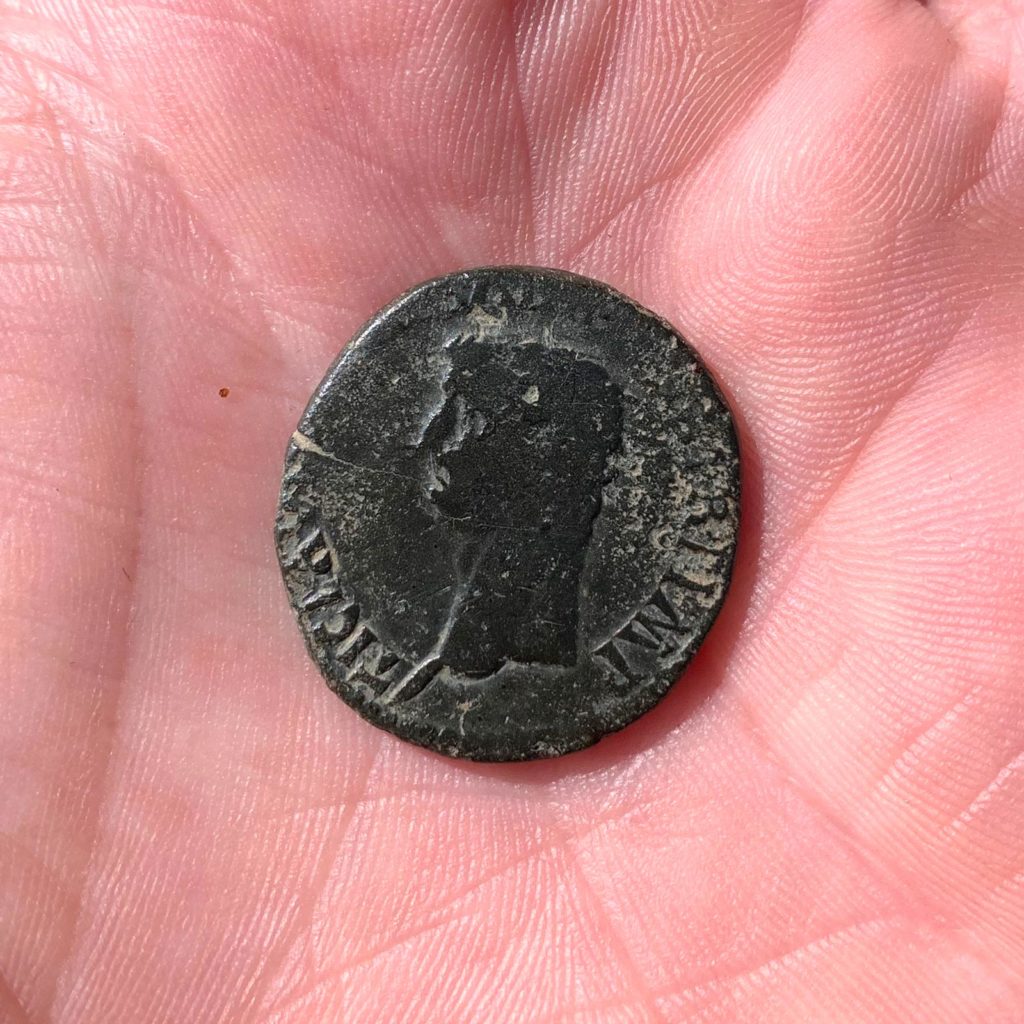
Our time on this permission has come to an end due to the field having now been seeded. However, rather fittingly on the last day there, what should pop up? You guessed it, a Roman coin. Also rather fittingly it was found by my friend whose permission it was. The coin in question, a dupondius of Claudius and is actually a copy, produced during a time of coin shortage in Britain and circulated until at least the start of the third century.
It amazes me that this will be the first ever Roman coin to be recorded from this site on the Portable Antiquities Scheme. In fact it will be the first of any finds to be recorded from this site, and about time too!